Azzam Bilal Chamdy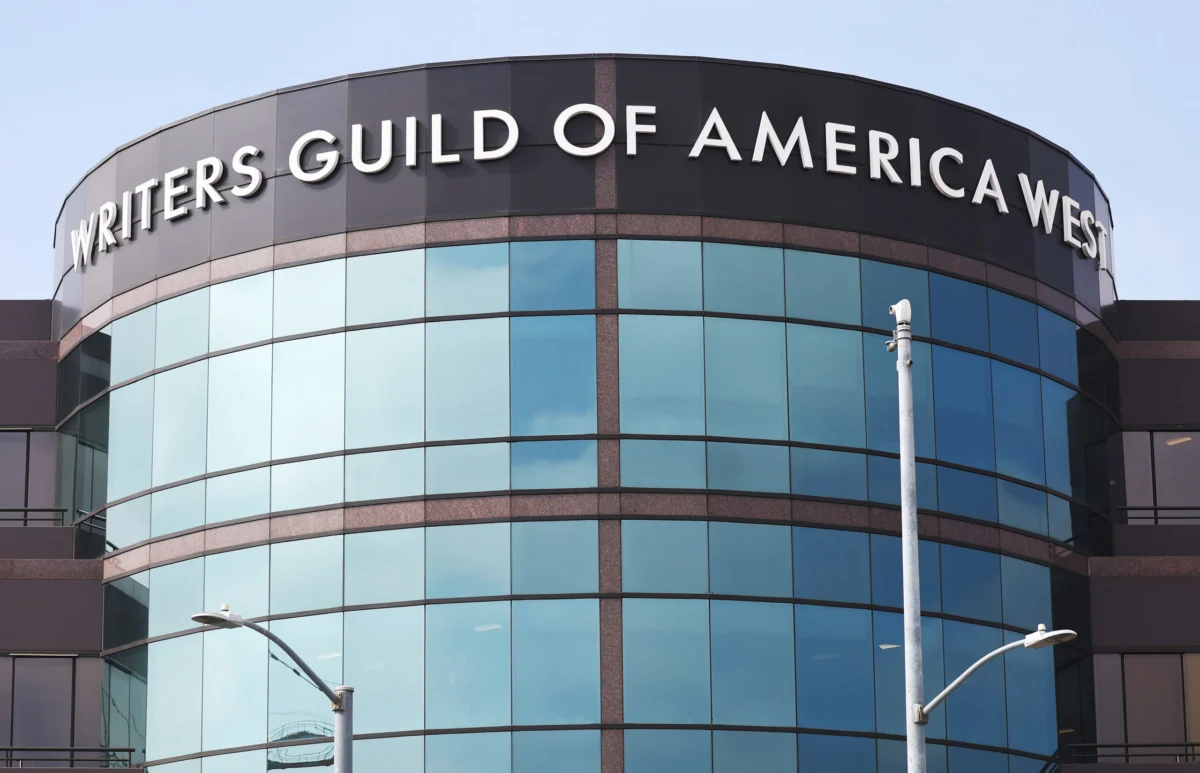
The Writers Guild of America (WGA), representing both its East and West branches, has officially moved to dismiss its landmark antitrust lawsuit aimed at blocking the $111 billion mega-merger between Paramount Skydance and Warner Bros. Discovery. The announcement, released Monday, marks the conclusion of a high-stakes legal battle that had positioned the labor organization as a primary firewall against the consolidation of Hollywood’s major studios.
While the guild remains steadfast in its belief that the merger poses an existential threat to the creative labor market, the reality of a changing legal landscape—specifically the withdrawal of key state-level government opposition—has forced the WGA to recalibrate its strategy.
The Chronology of a Corporate Collision
The legal saga began in July, when the WGA filed a sweeping lawsuit alleging that the proposed takeover of Warner Bros. Discovery by Paramount Skydance violated federal antitrust laws. At the time, the guild argued that the merger would create an entity with unprecedented market power, effectively choking competition in both the theatrical film market and the basic cable television landscape.
The WGA’s move was mirrored by a parallel legal offensive led by 12 Democratic state attorneys general. These officials argued that the consolidation would unfairly stifle the market, leading to increased costs for consumers and decreased bargaining power for industry professionals.
However, momentum shifted significantly last week when Paramount announced it had successfully reached a settlement with the 12 state attorneys general. With the government’s primary antitrust challenge neutralized, the WGA found itself in a precarious position. As a nonprofit entity, the guild faced the daunting prospect of pursuing an incredibly expensive, multi-million-dollar trial against a corporate titan without the backing of federal or state regulatory partners.
The Settlement: Concessions and Safeguards
In exchange for dropping the lawsuit, the WGA secured specific, tangible protections for its membership. The settlement agreement includes several provisions designed to mitigate the immediate impact of the corporate restructuring:
- Job Security: Paramount has committed to a five-year moratorium on writer layoffs specifically within the CBS News Broadcast division.
- Financial Compensation: The agreement stipulates a $17.5 million payment to the WGA’s health fund.
- Legal Fees: Paramount will cover the legal costs incurred by the WGA throughout the litigation process.
While these measures do not stop the merger, they provide a degree of insulation for a specific segment of the workforce, reflecting a pragmatic shift from an "all-or-nothing" strategy to a "mitigation-focused" approach.
Analyzing the Economic Implications
The WGA’s core argument against the merger centers on the mechanics of supply and demand in the entertainment labor market. According to the original complaint, a merged Paramount-Warner Bros. entity would possess both the incentive and the structural ability to suppress wages by consolidating "buying power."
"With fewer competitors, the merged entity would have the ability to lower costs by suppressing writers’ wages and reducing output," the WGA complaint stated. "Writers will be paid less and have fewer employment opportunities."
Industry analysts point out that this is not merely a dispute over individual paychecks, but a fundamental conflict over the structure of the modern entertainment economy. As major studios consolidate, the number of "green-lighting" entities—the companies that actually purchase scripts and hire writers—shrinks. When fewer companies control the pipeline, creators lose their ability to leverage competing offers, effectively putting a ceiling on earnings and limiting the diversity of stories that make it to the screen.
Official Responses and Strategic Reflections
In its formal statement, the WGA was characteristically transparent about the necessity of its withdrawal.
"We continue to believe the merger will cause damage to writers and the industry at large," the guild noted. "Now that the Attorneys General have settled with Paramount, however, as a nonprofit, the WGA must contend with the reality of forging ahead alone, with no backing from government enforcers, with a complex antitrust lawsuit that would cost millions of dollars to pursue through trial."
Despite the setback, the leadership of the WGA emphasized that the lawsuit was never purely about the outcome of the merger itself, but about raising the alarm regarding the dangers of industry-wide consolidation.
"While we were not successful in blocking the merger, our advocacy brought more attention to the harms that this merger—and others like it—will cause," the statement continued. "We will continue to fight the harms of industry consolidation."
The Long-Term Vision: A Return to Structural Regulation?
The WGA’s statement concluded with a forward-looking proposal that echoes a bygone era of television regulation. The guild explicitly called for a return to industry-wide structural separations between streamers and traditional studios, similar to the "Financial Interest and Syndication Rules" (Fin-Syn) that once governed broadcast television.
The Fin-Syn rules, which were implemented by the FCC in 1970, prohibited major networks from owning the programming they aired, thereby preventing them from holding a monopoly on both distribution and content creation. By proposing a modern iteration of these rules, the WGA is signaling that its fight is not over; it is merely shifting from the courtroom to the halls of legislative and regulatory power.
The Broader Context of Industry Consolidation
The Paramount-WBD merger is part of a larger, global trend of media consolidation. Over the past decade, as the shift from linear cable to streaming has accelerated, companies have sought scale to compete with tech giants like Apple, Amazon, and Google.
However, critics of this trend—including the WGA and various labor advocacy groups—argue that this "bigger is better" logic ignores the social and economic cost to the creative class. When media landscapes become dominated by three or four massive conglomerates, the "diversity of programming" the WGA highlights begins to wane. Smaller, independent projects are often the first to be shelved in favor of safer, high-budget franchise content that appeals to global audiences.
What Lies Ahead for Writers?
For the average WGA member, the immediate future is a mix of relief and anxiety. The $17.5 million injection into the health fund is a significant win for union stability, and the five-year job protection for CBS News writers serves as a critical buffer.
However, the looming merger remains a reality. As Paramount and Warner Bros. Discovery begin the arduous process of integrating their massive operations, the industry will be watching closely to see if the promised "synergies"—corporate speak for cost-cutting and layoffs—materialize in ways that the WGA feared.
The WGA has made it clear that while it lost this specific battle, it is preparing for a longer war. By framing the current merger as a warning sign for the future of the industry, the guild is positioning itself as a primary advocate for legislative reform. Whether or not they can gain traction in Washington to enforce a new version of structural separation remains to be seen, but the guild’s willingness to challenge a $111 billion entity demonstrates that organized labor remains a potent, if currently constrained, force in Hollywood.
As the industry moves forward, the WGA’s focus will likely turn toward collective bargaining agreements that specifically address the dangers of media monopolies. The era of the "Mega-Studio" has arrived, and with it, a new chapter in the history of creative labor advocacy, where the fight for fair pay is inextricably linked to the fight for market competition.

 Evan Lee Salim
 Ammar Sabilarrohman