

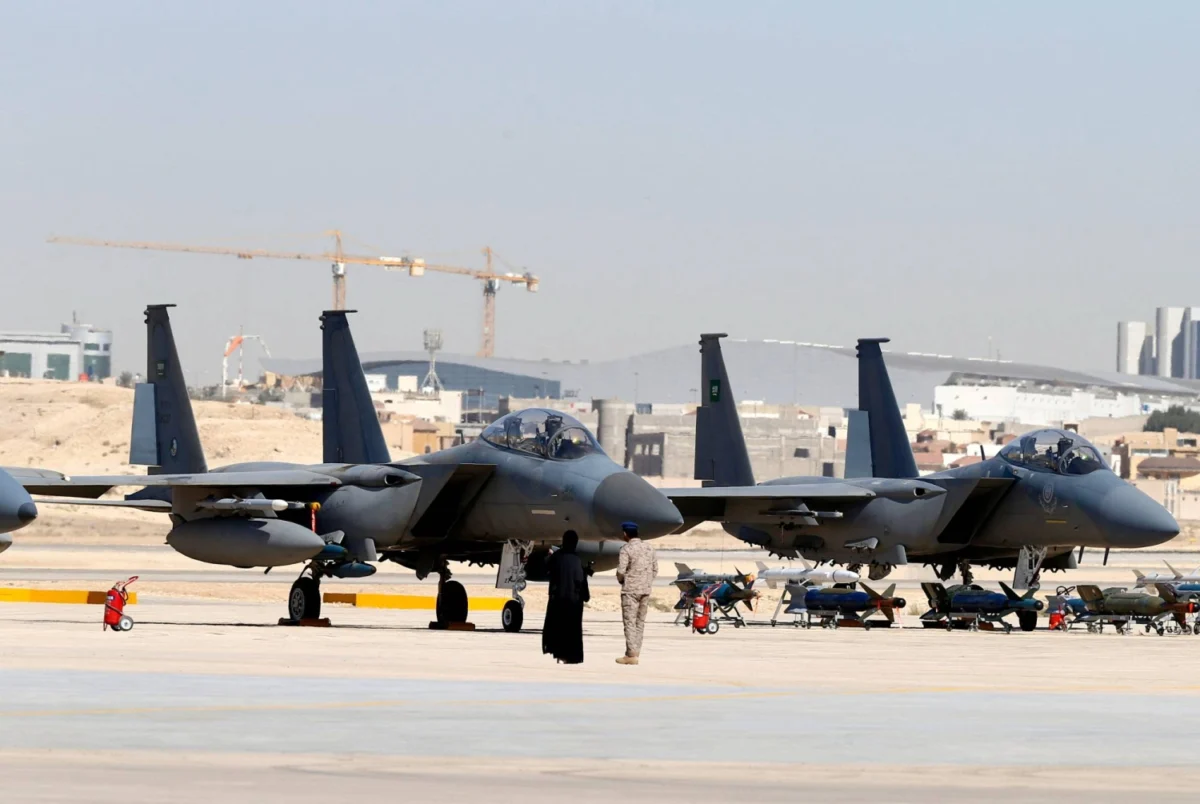
RIYADH/BAGHDAD/WASHINGTON — As the dust settles on the initial phases of the regional conflagration sparked by U.S.-Israeli operations against Iran, a clandestine layer of the conflict has emerged. New reports confirm that Saudi Arabian fighter jets, alongside retaliatory sorties launched from Kuwait, conducted precision strikes against Iran-aligned Shi’ite militia targets deep within Iraqi territory.
These operations, which remained largely obscured by the fog of war, highlight the extent to which the conflict has metastasized beyond the borders of Iran, drawing neighboring Gulf states into an increasingly complex web of kinetic engagements. According to three Iraqi security and military officials, one Western official, and two high-level sources briefed on the matter, the strikes were calculated responses to the rising threat posed by proxies operating under the Tehran umbrella.
The Strategic Landscape: A Conflict Transformed
The ongoing conflict, which ignited following coordinated U.S.-Israeli strikes on Iranian military infrastructure, has evolved from a targeted campaign into a multi-theater regional struggle. While the world focused on the exchange of ballistic missiles and aerial bombardment between Tehran and its adversaries, a secondary, "shadow war" was being fought along the porous border regions of Iraq and Saudi Arabia.
For years, the rise of Iran-backed militias in Iraq—collectively known as the Popular Mobilization Forces (PMF) and their associated splinter groups—has been a source of existential anxiety for Riyadh. These groups, equipped with Iranian-supplied drone technology and short-range ballistic missiles, have long been viewed as an extension of the Islamic Revolutionary Guard Corps (IRGC). When the wider regional conflict began, these militias were mobilized to exert pressure on Saudi border security, necessitating a kinetic response from the Kingdom.
Chronology: From Border Skirmishes to Aerial Strikes
The timeline of these operations provides a clearer picture of how the regional situation escalated into direct intervention.
- Early Conflict Phase: Following the initial U.S.-Israeli strikes on Iran, intelligence reports indicated that Iranian-backed militias in Iraq were preparing to launch retaliatory strikes against Gulf Cooperation Council (GCC) infrastructure.
- The Escalation: Throughout March, border security forces reported an increase in unauthorized drone activity and reconnaissance missions originating from southern Iraqi provinces.
- The April 7 Ceasefire Window: A pivotal moment occurred around the April 7 U.S.-Iran ceasefire. While the primary combatants paused their direct exchanges, militia activity in Iraq did not cease. It was during this period that Saudi Air Force jets, utilizing advanced F-15SA platforms, launched sorties across the northern border.
- Post-Ceasefire Dynamics: Following the Saudi strikes, reports confirm that retaliatory launches also originated from Kuwait, targeting supply depots and staging grounds used by these militias to move equipment toward the Saudi frontier.
Technical Analysis: The Saudi Air Force in Action
The use of the F-15SA (Saudi Advanced) fighter jet is significant. This platform, a highly customized variant of the Boeing F-15E Strike Eagle, is equipped with state-of-the-art radar, digital electronic warfare systems, and a high-capacity payload of precision-guided munitions.
The decision to deploy these assets suggests that the strikes were not merely warning shots but were intended to neutralize hardened targets. According to analysts, the Saudi military has integrated its intelligence-sharing capabilities with Western partners to identify mobile militia assets—specifically truck-mounted rocket launchers and command-and-control centers hidden within the complex terrain of the Iraqi desert.
Official Responses and Diplomatic Silence
The reticence of Riyadh and Kuwait to officially acknowledge these strikes is a calculated diplomatic strategy. By keeping these operations "under the radar," these nations avoid the diplomatic fallout of violating Iraqi sovereignty while still effectively defending their borders.
The Iraqi Perspective
Iraqi officials are in a precarious position. Baghdad has historically struggled to maintain a balance between its security ties with the United States and its deep political and religious entanglements with Iran. Acknowledging that Saudi and Kuwaiti jets are operating in their airspace exposes the weakness of the Iraqi state and its inability to control its own borders. Privately, however, some Iraqi security officials have expressed frustration that their territory has become a "battleground for foreign interests," acknowledging the presence of these militia targets but fearing the political consequences of a public admission.

The Western Stance
Washington has remained tight-lipped regarding the tactical decisions of its Gulf allies. A Western official speaking on condition of anonymity stated that the U.S. supports the right of its partners to defend themselves against "malign non-state actors," but declined to comment on the specific logistics of the Saudi-led missions. This tacit approval indicates that the strikes are viewed by the Pentagon as a necessary component of the broader effort to contain Iranian influence.
Implications: A New Regional Paradigm
The revelation of these strikes carries profound implications for the future of the Middle East.
1. The Erosion of Sovereignty
The fact that regional powers feel compelled to strike targets inside Iraq demonstrates the erosion of the Iraqi state’s authority. If sovereign nations believe they can no longer rely on the Iraqi government to police its own territory, they will continue to take matters into their own hands, leading to a permanent state of "borderless warfare."
2. The Limits of Ceasefires
The April 7 ceasefire, while heralded as a diplomatic success, proved to be little more than a pause in direct U.S.-Iran hostilities. The continuation of militia-driven regional conflict shows that proxies have a high degree of autonomy. Even when Tehran agrees to a pause, the militias—driven by their own ideological and regional agendas—continue to act, effectively sabotaging broader peace efforts.
3. The GCC Security Architecture
Saudi Arabia and Kuwait are clearly moving toward a more proactive, independent security posture. The reliance on U.S. air support is being supplemented by an increasingly capable domestic air force. This signals a shift in the regional security architecture, where Gulf states take a more assertive, interventionist role in protecting their interests against asymmetric threats.
Conclusion: The Path Forward
The shadow war in Iraq is a stark reminder that the Middle East is entering a period of prolonged instability. As state and non-state actors clash in the spaces between traditional borders, the risk of miscalculation remains high.
The strikes by Saudi and Kuwaiti forces were intended to provide a buffer against Iranian expansionism, but they have also deepened the regional divide. For the international community, the challenge is to move beyond the current cycle of tactical responses and address the underlying drivers of the conflict: the proliferation of advanced weaponry to non-state actors and the continued erosion of governance in the Levant.
As the situation evolves, the transparency of these operations—or the lack thereof—will continue to define the diplomatic landscape. For now, the skies over the northern border remain a volatile frontier, where the decisions of pilots in cockpits hold the power to either contain the conflict or inadvertently spark the next major escalation.
This report is based on interviews with multiple security and government sources. As the situation remains fluid, further updates will be provided as more data becomes available.












No comments yet. Be the first to join the conversation!