Tokyo, Japan – October 4, 2024 – Excitement is palpable within the anime community as the official website for the highly anticipated television anime adaptation of Kyouko Hikawa’s celebrated fantasy romance manga, Kanata kara (known internationally as From Far Away), has unveiled a wealth of crucial details. The announcement, made on Wednesday, includes the revelation of the main cast, key production staff, a captivating teaser visual, and a glimpse into the animated world through a teaser promotional video. Fans can mark their calendars for October 5th, when the series is slated to premiere on Tokyo MX at the stroke of midnight, followed by subsequent broadcasts on ABC TV and WOWOW.
This adaptation marks a significant milestone for a manga that has garnered a devoted following over its extensive publication run. Kanata kara has long been a cornerstone of fantasy romance storytelling, and its transition to the animated medium is poised to introduce its rich world and compelling characters to a new generation of viewers, while undoubtedly satisfying the long-held desires of its existing fanbase.
Main Facts: A Glimpse into the Animated Realm
The official unveiling has provided concrete information about the individuals who will breathe life into the beloved characters and the creative minds steering the project. Leading the charge as the voice of Noriko Tachiki is Tomoyo Kurosawa, an actress recognized for her versatile performances in titles such as Skip to Loafer. Portraying the enigmatic Izark Kia Tarj will be Kentarou Kumagai, whose recent work in Dungeon Meshi has garnered significant attention. The esteemed Yuuichirou Umehara, known for his role in Douse, Koishite Shimaunda., is set to voice Rachef, adding another layer of gravitas to the ensemble. Completing the core cast revealed today is Eiji Takeuchi, who will embody Keimos Lee Goda, an actor with a notable presence in productions like Karasu wa Aruji wo Erabanai.
Behind the scenes, the production is being helmed by a team of seasoned professionals. Rika Nakase, whose work on Raise wa Tanin ga Ii has been praised, will oversee the series composition, ensuring a cohesive and engaging narrative. The intricate character designs will be brought to life by Eiji Abiko, known for his contributions to Replica datte, Koi wo Suru.. The sonic landscape of the anime will be crafted by composer Takeshi Hama, whose work under the moniker Cosmic Wave, including his contributions to Champignon no Majo, promises a memorable score. The animation itself will be produced by the reputable Studio Deen, a studio with a long history of bringing popular manga and anime to the screen. Guiding the entire production as director is Noriyuki Abe, a veteran of the industry whose directorial credits include the immensely popular Bleach series.
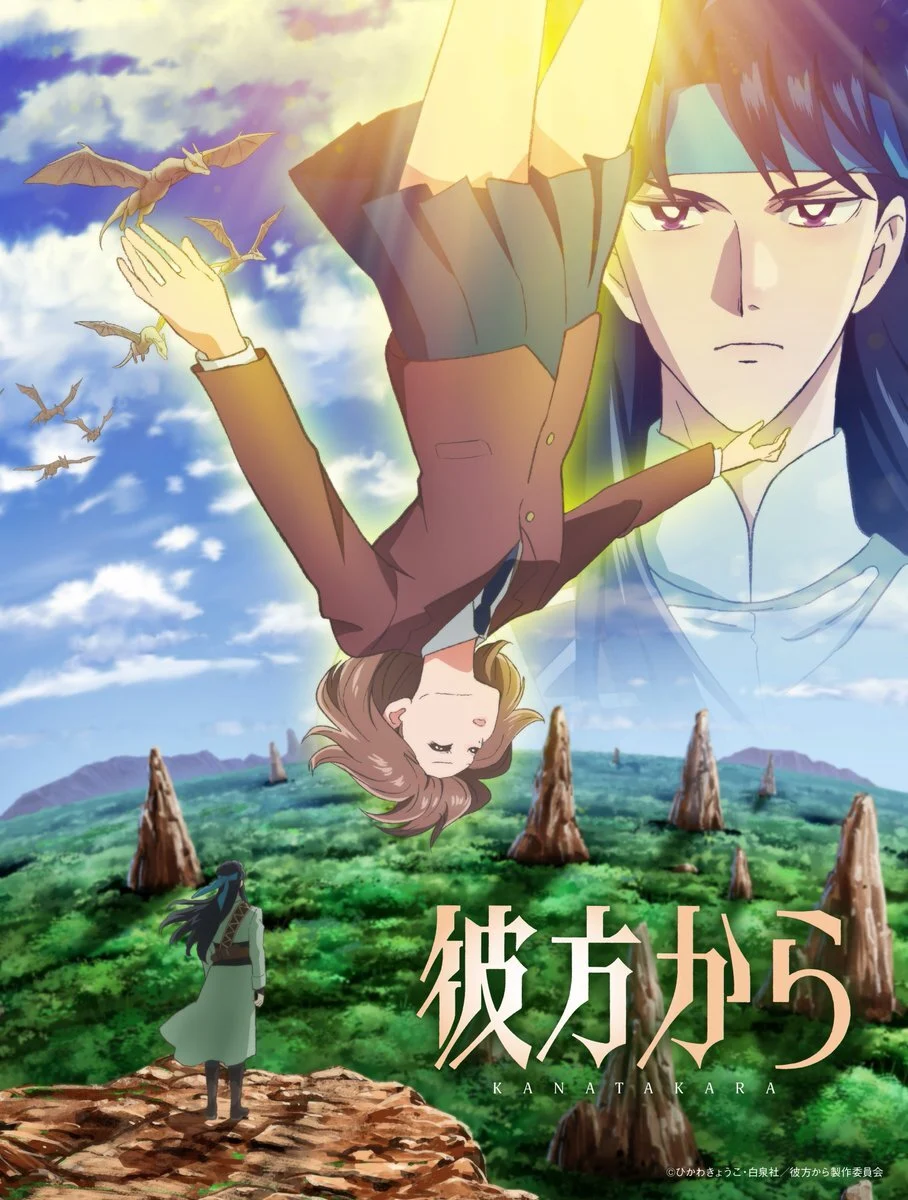
The teaser visual, a static yet evocative representation of the anime’s aesthetic, offers a tantalizing glimpse into the visual style that fans can anticipate. Coupled with the teaser promotional video, which provides a dynamic preview of the characters and their world in motion, these assets serve as powerful indicators of the quality and faithfulness that the adaptation aims to deliver.
Chronology: From Manga’s Genesis to Animated Debut
The journey of Kanata kara from a serialized manga to an anime adaptation is a testament to its enduring appeal and the passion of its creator and fans. Kyouko Hikawa’s fantasy romance masterpiece first graced the pages of LaLa magazine, a prominent shojo manga publication, in September 1991. For over a decade, Hikawa meticulously crafted the intricate narrative and developed the compelling characters that would capture the hearts of readers worldwide. The manga’s serialization continued until January 2003, culminating in a total of 14 volumes. The final volume was published by Hakusensha in April 2003, marking the end of an era for its print run.
The manga’s international recognition and accessibility were significantly bolstered when VIZ Media licensed it for English-language publication in 2004. This move allowed a broader audience to experience the magic of Kanata kara, with the final volume becoming available in January 2007. The critical acclaim for the series was further solidified when it garnered the prestigious 35th Seiun Award in the Comics category in 2004, a significant honor that underscores its impact and artistic merit within the fantasy genre.
Now, after years of dedicated readership and fervent anticipation, Kanata kara is poised to transcend the page and come alive on screen. The announcement of the anime adaptation, complete with its premiere date and key personnel, marks the culmination of this long journey, ushering in a new chapter for the beloved franchise. The October 5th premiere date signifies the moment when this cherished story will unfold in a new dimension, bringing its fantastical world and emotional resonance to television screens across Japan and, hopefully, to a global audience through streaming platforms.
Supporting Data: The Foundation of a Beloved Story
The success and lasting impact of Kyouko Hikawa’s Kanata kara are not merely anecdotal; they are supported by its critical reception and its significant presence in the manga landscape. The manga’s serialization in LaLa magazine, a publication known for its high-quality shojo offerings, placed it within a prestigious context and exposed it to a dedicated readership. The extended run of over 11 years, from 1991 to 2003, speaks volumes about the manga’s ability to sustain reader interest and its consistent quality. This longevity is a rare feat in the competitive world of manga publishing, indicating a deep connection between the story and its audience.
The decision by VIZ Media to license the manga for English publication in 2004 further demonstrates its international appeal and commercial viability. The fact that the final volume was released in January 2007, nearly three years after the initial licensing, suggests a strategic and well-managed rollout that allowed for thorough translation and localization. This accessibility was crucial in building a global fanbase for Kanata kara.
Perhaps the most compelling piece of supporting data is the 35th Seiun Award for Comics in 2004. The Seiun Awards are among Japan’s most prestigious science fiction and fantasy awards, and winning in the Comics category is a significant endorsement of the manga’s imaginative scope, narrative depth, and artistic merit. This award not only validated the quality of Hikawa’s work but also cemented its place as a significant contribution to the fantasy genre. The manga’s ability to resonate with critics and audiences alike for over a decade, culminating in such an esteemed award, provides a strong foundation for the anticipated success of its anime adaptation. The anime now carries the weight of these past achievements, aiming to translate the magic that captivated readers into a visually stunning and emotionally resonant animated experience.
Official Responses and Industry Reactions
While no direct quotes from the production team or Kyouko Hikawa were included in the initial announcement, the very act of unveiling such comprehensive details—main cast, staff, teaser visual, and PV—is a clear indication of the studio’s confidence and enthusiasm for the project. The release of these assets on the official website and through industry news outlets like Comic Natalie signifies a strategic effort to generate buzz and engage with the fan base.
The selection of a seasoned director like Noriyuki Abe, whose work on Bleach speaks to his ability to handle epic narratives and large casts, suggests a commitment to delivering a high-quality adaptation. Similarly, the involvement of Studio Deen, a studio with a proven track record in adapting popular manga, further reassures fans of the production’s potential. The choice of Studio Deen is particularly noteworthy, as they have a history of tackling beloved shojo properties.
The professional journalistic tone of the original announcement, focusing on factual reporting of the unveiled information, sets a standard for how the industry is responding. The immediate dissemination of these details through anime news aggregators and fan communities indicates a widespread positive reception and anticipation. The inclusion of links to the original manga and character profiles on MyAnimeList.net suggests a deliberate effort to connect the anime adaptation with its source material and to provide resources for those unfamiliar with the series, thereby broadening its potential audience. The industry, by and large, views this announcement as a significant development, recognizing the potential for Kanata kara to become another successful anime adaptation that bridges the gap between manga and animation.
Implications: A New Era for Fantasy Romance Anime
The anime adaptation of Kanata kara carries significant implications for both the fantasy romance genre and the broader anime industry. For the fantasy romance genre, this adaptation represents a potential revitalization and a renewed focus on the intricate storytelling and character development that Hikawa’s work is known for. In an era where many anime adaptations prioritize action or fast-paced narratives, Kanata kara offers a chance to showcase a more nuanced and emotionally driven fantasy experience. Its success could encourage further adaptations of classic and beloved shojo manga that possess rich lore and complex character arcs, demonstrating that there is a substantial audience for these types of stories in animated form.
For the anime industry, the adaptation of a manga with such a long and established history is a testament to the enduring power of well-crafted narratives. It signifies a continued interest in adapting beloved properties that have a pre-existing fanbase, a strategy that often leads to strong viewership and commercial success. The involvement of established voice actors and production staff from Studio Deen further suggests a commitment to quality that can elevate the perception of the genre and the studio itself.
Furthermore, the premiere on multiple broadcast channels, including Tokyo MX, ABC TV, and WOWOW, indicates a significant push for viewership and broad accessibility. This multi-platform release strategy is common for highly anticipated series and aims to maximize reach. The potential for international streaming distribution, while not yet confirmed, is highly probable given the global popularity of anime and the established English license of the manga.
Ultimately, the Kanata kara anime adaptation is more than just a new show; it’s a celebration of a classic. It’s an opportunity to reintroduce a cherished story to a new generation and to reignite the passion of long-time fans. Its success could pave the way for more thoughtful and character-driven fantasy romance anime, enriching the diverse landscape of animated storytelling and reminding audiences of the profound impact that well-told stories, regardless of their medium, can have. The anticipation surrounding its October 5th premiere is a clear indicator that the world is ready to journey From Far Away once again.