Raul Delapena Setiawan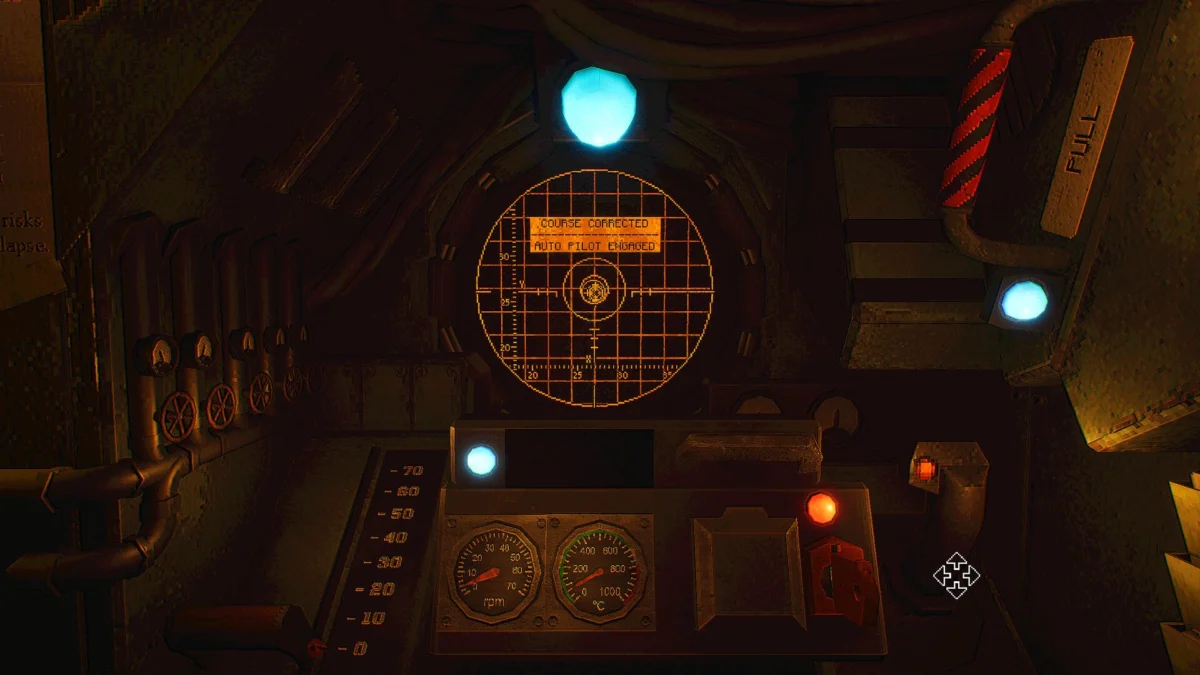
In the tradition of literary existential dread, where the world is not merely a place of existence but a void waiting to be filled with anxiety, comes MOLE. As Ursula K. Le Guin once wrote in The Farthest Shore, "There is a hole in the world, and the light is running out of it." While Le Guin’s prose serves as a masterclass in cosmic melancholy, the developers at Off Black Creations have taken that sentiment and turned it into a tangible, suffocating mechanical experience.
MOLE, now available on Steam, is not simply a game about operating a drilling vessel; it is a claustrophobic psychological horror experience that weaponizes tactile simulation to explore themes of madness, faith, and the crushing weight of one’s own past.
The Premise: A Sarcophagus in the Deep
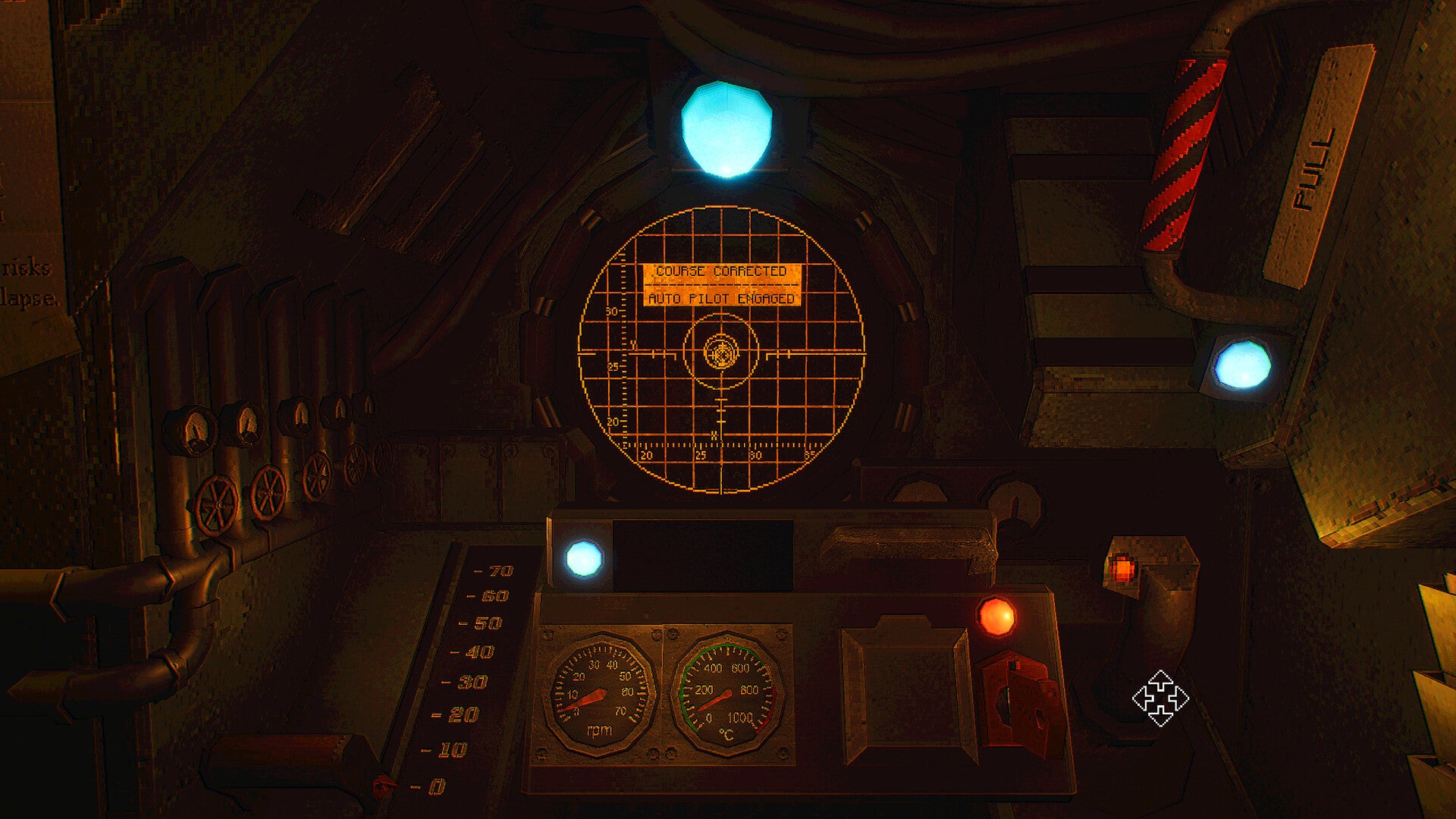
In MOLE, the player assumes the role of the "Navigator." You awaken to find yourself aboard a fortress-sized drilling vessel, a massive, rusted construct buried miles beneath the Earth’s surface. The setting is intentionally oppressive. The game is played from a first-person perspective, requiring the player to physically interact with the ship’s environment—pulling levers, twisting knobs, and tapping dials with a cursor-based interface that feels intentionally cumbersome, mimicking the desperation of a lone operator struggling to keep a failing machine alive.
The narrative hook is deceptively simple: you are alone, the vessel is drifting dangerously off course through magma-filled tunnels, and your crew has vanished. Whether they are missing, murdered, or simply never existed in the way you remember, remains the central tension of the journey. As you navigate the rumbling, industrial corridors, you are confronted with surrealist anomalies: carpets of flowers blooming in the dark, four-winged angelic entities, and a mysterious, recurring "Signal" that defies conventional radio theory.
Chronology of Development and Release
The journey of MOLE began with a vision of blending high-fidelity mechanical interaction with narrative-driven psychological horror.
- Conceptualization: Designers Sean Falk and artist Daryna Tolmachova—both veterans of 10 Chambers, the studio behind the notoriously difficult and terrifying GTFO—sought to create an experience that leaned into the "bad vibes" of industrial isolation.
- Production Phase: Drawing from their background in creating complex, oppressive environments, the duo focused on "diegetic" puzzles—problems that exist within the game world rather than as overlays or menus. This requires players to learn the ship’s idiosyncratic systems to survive.
- The Steam Launch: After a period of anticipation, MOLE officially hit the digital shelves, positioning itself as a 4-to-5-hour experience. This runtime is a deliberate design choice, intended to be a concentrated, potent dose of tension that leaves the player feeling unsettled rather than exhausted.
Supporting Data: The Anatomy of "Bad Vibes"
To understand why MOLE resonates so deeply with current horror enthusiasts, one must look at its lineage. It shares DNA with a specific subgenre of indie horror—often referred to as "clicky torture instruments"—that prioritize the tactile frustration of user interfaces to induce panic.
Comparative Analysis
- Iron Lung: Similar to David Szymanski’s Iron Lung, MOLE utilizes the concept of the "unseen exterior." When you are trapped in a vessel under intense pressure, the outside world becomes a terrifying abstraction. You are forced to trust your instruments, even when those instruments are clearly lying to you.
- Mouthwashing: Like Mouthwashing, MOLE utilizes the trope of "cabin fever." The narrative is not just about the external threats of the magma or the machine; it is about the internal erosion of the protagonist’s sanity.
- The GTFO Influence: The pedigree of the developers cannot be overstated. At 10 Chambers, Falk and Tolmachova mastered the art of "industrial horror"—the sound of grinding metal, the flickering of low-voltage lights, and the feeling that the environment itself is a hostile, living organism.
The gameplay loop of MOLE is designed to mirror the descent of the Navigator. You must solve puzzles to keep the drill moving, but the more you interact with the ship, the more the game forces you to confront fragments of your own memory. As the Steam page notes, these are "choices that refuse to stay buried." The ship is not just a vessel; it is a manifestation of the protagonist’s history, a self-propelled sarcophagus where the past is as dangerous as the surrounding rock.
Official Responses and Creative Vision
In discussing their work, the developers at Off Black Creations have highlighted a departure from standard horror tropes. Rather than relying on "jump scares," the team focused on what they call "psychological erosion."
"The goal," says the development team, "was to make the player feel the weight of their own actions." By forcing the player to manually control the vessel’s complex systems, the game bridges the gap between the character’s labor and the player’s frustration. Every lever pulled is a reminder of your isolation. Every dial turned is a chance to misinterpret the signal.
Beyond the digital realm, Off Black Creations has demonstrated a commitment to exploring the fragility of human memory. They are currently developing a tabletop board game centered on the concept of "gambling with your memories," suggesting that their interest in the intersection of human trauma and interactive mechanics is a long-term creative mission.
Implications for the Horror Genre
MOLE serves as a case study for the current state of indie horror. We are witnessing a shift away from combat-heavy games toward "systems-heavy" horror, where the primary antagonist is the environment, and the primary weapon is the player’s own inability to understand the world around them.
1. The Death of the "Safe UI"
Traditionally, games use clean, readable menus to keep players informed. MOLE rejects this. By making the interface part of the game world (diegetic), it ensures the player never feels "in control." The lack of clarity is a deliberate narrative device.
2. Metaphor as Mechanics
The vessel itself acts as a metaphor for a troubled psyche. The deeper the drill goes into the earth, the more the player’s memories surface. This integration of setting and character arc is becoming a gold standard for narrative-driven horror, moving the genre closer to literary fiction.
3. The Short-Form Narrative
By limiting the experience to 4-5 hours, MOLE avoids the "filler" content that often dilutes the effectiveness of horror games. It is a focused, brutal, and intimate experience that respects the player’s time while demanding their full emotional investment.
Conclusion: A Descent Worth Taking
MOLE is not for the faint of heart, nor is it for those who seek the comfort of traditional heroic narratives. It is a grueling, introspective, and terrifying experience that succeeds because it understands that true horror does not come from monsters in the dark—it comes from the realization that you are the one steering the machine, you are the one responsible for the carnage, and there is no way to turn back.
As you sit in that chair, surrounded by the hum of the drill and the silence of the void, remember: the machine is just a machine. It is the history you are unearthing that will truly haunt you. If you are prepared to confront what lies in the depths—both beneath the crust and within your own mind—MOLE is waiting to be started. Just be careful what you pull.


 Asro
Asro
 Muslim