

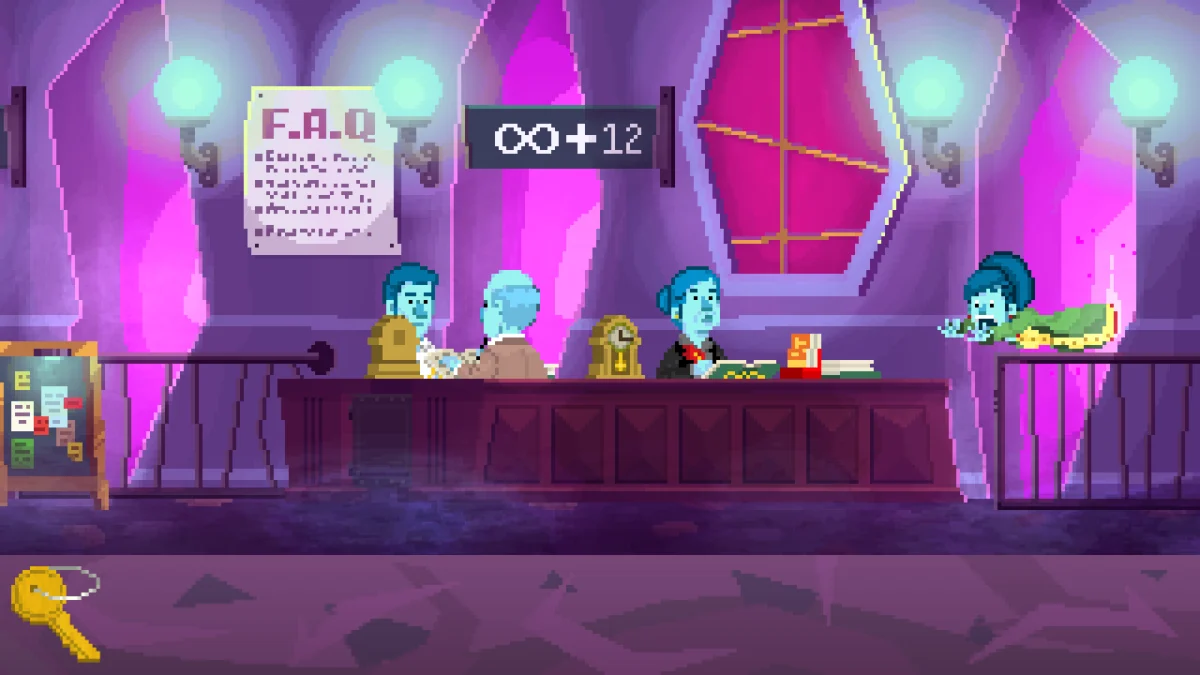
In the landscape of modern indie gaming, few genres carry as much nostalgic weight as the point-and-click adventure. Games like Shadows of the Afterland arrive with the heavy burden of legacy, visually echoing the golden age of Sierra Entertainment and LucasArts. While the aesthetic suggests a return to the pixelated trials of 1988, the actual gameplay experience offers a vastly modernized, accessible approach to the genre. Yet, as players peel back the layers of this ethereal murder mystery, they are forced to ask: does the charm of the afterlife sustain a compelling narrative, or does it fade into the background of its own mechanics?
The Premise: A Tale of Two Identities
The story opens in the gray, suffocating atmosphere of Madrid, 1960. We are introduced to Pilar Cuevas, a weary mother struggling to balance the crushing demands of her domestic life as a maid with the quiet desperation of her nightly visits to the local zoo. Her only confidant is a caged tiger—a mirror of her own trapped existence.
The inciting incident is as abrupt as it is surreal. As the zoo prepares to shutter for the night, Pilar’s soul is violently excised from her physical shell. In a haunting sequence, her incorporeal form watches in horror as her own body, seemingly possessed by an unseen force, climbs the railing of the polar bear enclosure, only to be struck down by a stray lightning bolt.
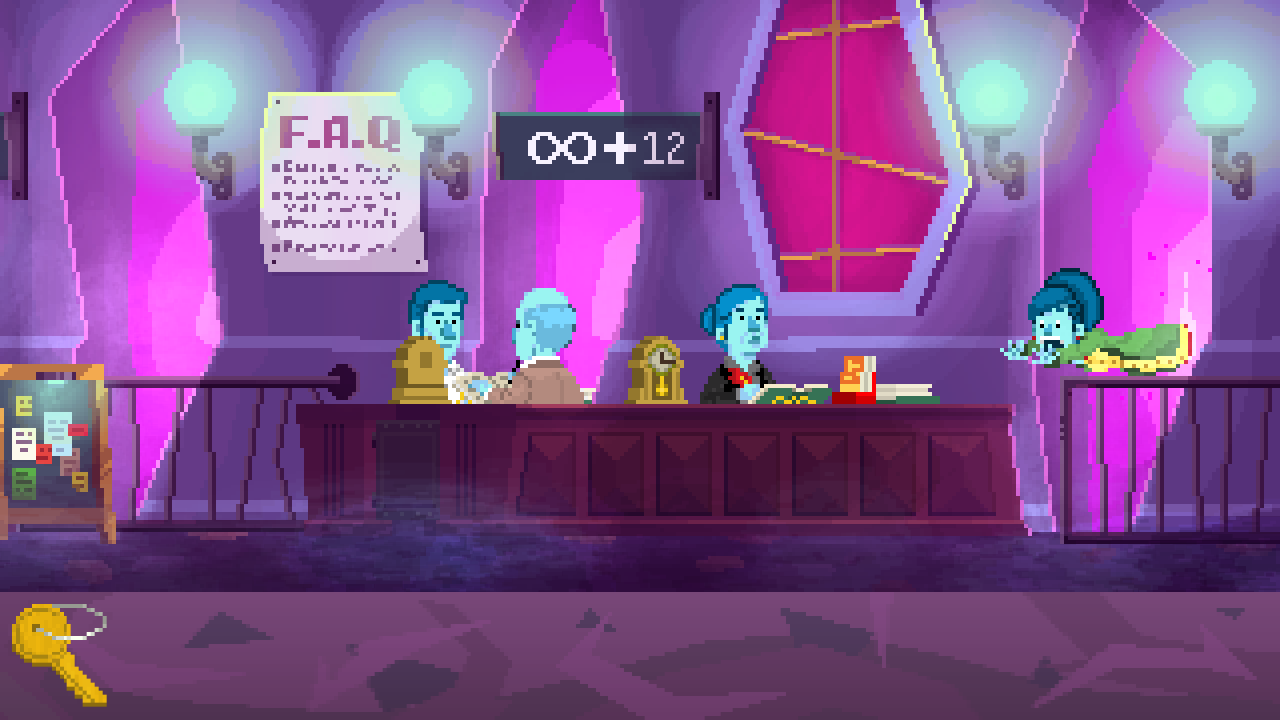
What follows is a descent into a bureaucratic purgatory reminiscent of the afterlife depicted in Beetlejuice. Pilar, now a ghost, finds herself in a chaotic visa processing office, stripped of her memories. She refuses to accept her identity as Pilar, instead insisting she is Carolina, a police officer from 1988—a woman who, according to the timeline, should not have been born until weeks after the zoo tragedy. This existential dissonance forms the core of the game’s mystery: Who is the woman in the afterlife, and why is her history so violently fractured?
Chronology and Thematic Progression
The narrative of Shadows of the Afterland unfolds across a four-hour runtime, shifting from the grounded, bleak reality of 1960s Spain to a vibrant, surreal afterlife.
Phase 1: The Heady Mystery (The Opening Hour)
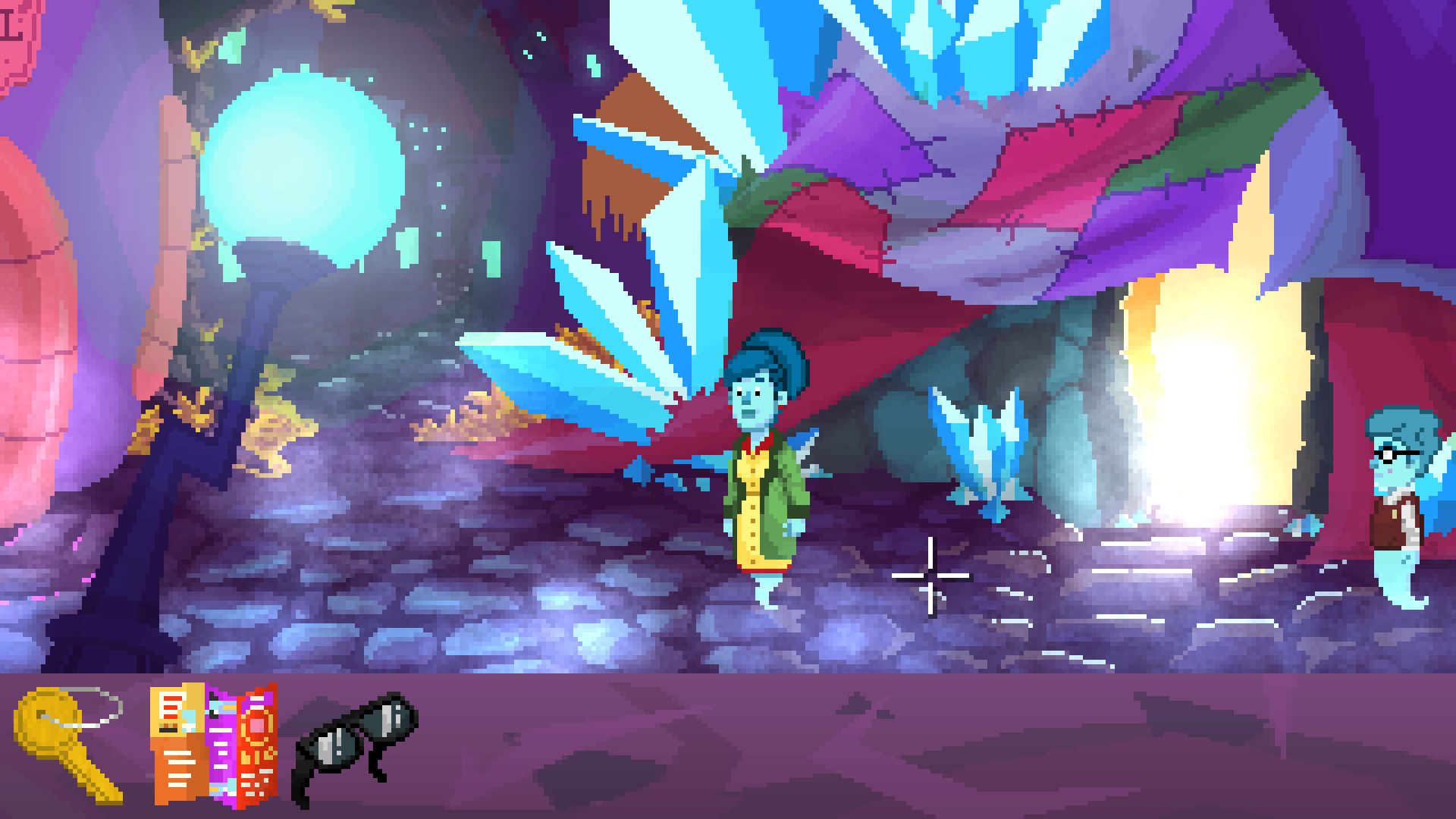
The first hour is the most intellectually demanding. Players are introduced to the afterlife’s rules—or lack thereof—through a series of "menial" puzzles. It is here that the game establishes its tone, touching upon the historical weight of the Spanish Civil War and the shadow of the Franco dictatorship. These mentions are subtle, often whispered, suggesting a deeper thematic exploration of martyrdom and political ethics.
Phase 2: The Bureaucracy of Death
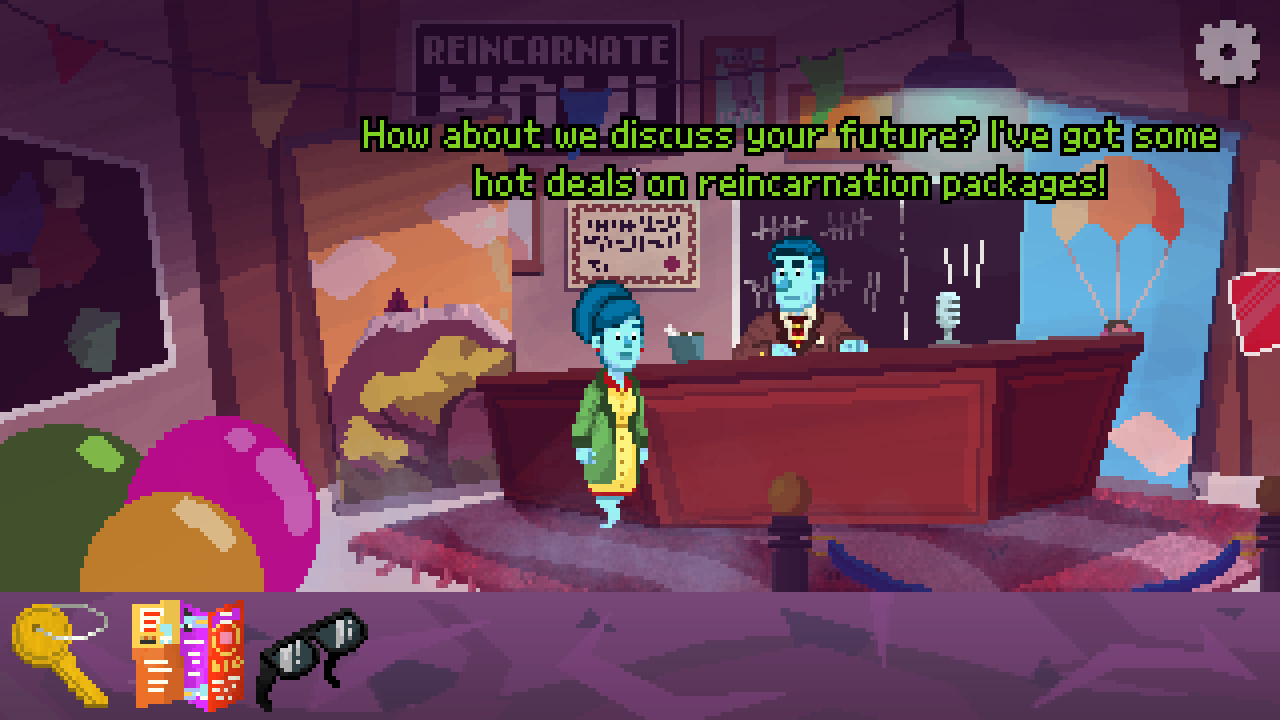
As the game progresses, the initial intrigue regarding the protagonist’s identity is slowly sidelined by the procedural nature of the afterlife. Players navigate various locales, from a library to a "reincarnation store" run by a sleazy salesman. While the world-building is imaginative, the narrative momentum occasionally stumbles. Characters who seem pivotal to the mystery—such as Pilar’s husband—remain underdeveloped, leading to frustration regarding their true motivations.
Phase 3: Resolution and The Villain’s Arc
The latter half of the game moves toward a more conventional murder mystery structure. While the plot picks up pace, it does so largely through cutscenes, which periodically wrest control away from the player. The final confrontation, while structurally sound, features an antagonist who lacks the gravitas required for such a high-stakes setting, often coming across as petulant rather than truly menacing.
Design Philosophy: Art and Atmosphere
The visual identity of Shadows of the Afterland is perhaps its greatest strength. The game employs a mixture of cartoony character designs and bespoke pixel art that evokes the spirit of Day of the Tentacle. The afterlife is rendered with jagged, expressionist angles that pay homage to 1960s Spanish art, creating a sense of place that feels both disjointed and cohesive.
Soundtrack and Voice Acting
Juan R. Salgueiro’s score is a masterclass in atmospheric composition. It is playful, unobtrusive, and perfectly complements the shifting moods of the afterlife. The voice acting, however, remains a point of contention. While the lead performance as Carolina/Pilar is strong, conveying a rebellious, gritty edge, the supporting cast is inconsistent. Some NPCs deliver lines with heartfelt emotion, while others sound jarringly wooden. Furthermore, the inclusion of modern, sharp profanity feels disconnected from the game’s otherwise whimsical and stylized visual presentation.
Technical Execution and Control Schemes
Shadows of the Afterland offers a hybrid control scheme, allowing players to utilize the right analog stick as a virtual mouse or rely on button-based object cycling. On the Nintendo Switch, specifically in handheld mode, the game runs smoothly. The developers have included helpful quality-of-life features, such as text resizing and a button to highlight all interactable points, which significantly reduces the "pixel-hunting" fatigue common in older adventure titles.
However, the "mouse" emulation is finicky. Any inadvertent nudge of the controller resets the cursor, leading to frustration when managing complex inventory screens. While the game is accessible, these technical friction points occasionally hamper the flow of the experience.
The Puzzle Paradox: Simple or Simplistic?
The gameplay loop centers on puzzle-solving, which is surprisingly straightforward. For genre veterans, the solutions may feel pedestrian. The "backtracking" is frequent, though the game’s pacing is designed to mitigate the tedium.
The puzzles often rely on "fetch-quest" logic—a notable example involves a convoluted process of replacing a magical microphone with a fake one just to hear a song. While this provides a moment of levity, it highlights the game’s tendency to create artificial barriers. The most interesting mechanics, specifically the "possession puzzles" where the player jumps into the bodies of the living, are underutilized. These moments provide a glimpse of what the game could have been had it leaned more heavily into its unique ghostly mechanics rather than standard inventory management.
Official Clarification and Developer Interaction
Following the initial release, a point of confusion regarding the game’s dialogue led to a public correction. Critics initially attributed the "hit-or-miss" nature of the script to a poor translation. However, the development team reached out to clarify that Shadows of the Afterland was written in English as its primary language and subsequently translated into other tongues. This clarification highlights the deliberate, albeit occasionally polarizing, stylistic choices made by the writers.
Implications for the Adventure Genre
Shadows of the Afterland acts as a bridge between the archaic and the contemporary. It proves that the "point-and-click" format is not dead, but it also demonstrates that modern audiences expect a level of fluidity that the classics rarely provided.
The game’s success lies in its world-building. It captures a specific, melancholic beauty that is rare in the genre. However, by choosing to focus on a relatively simple mystery, it misses the opportunity to fully explore the darker, more profound implications of its setting. The background of the Spanish Civil War is a compelling narrative hook that is sadly relegated to the periphery.
For the average player, Shadows of the Afterland is a satisfying, if flawed, experience. It is a short, colorful, and occasionally moving journey that succeeds as a tribute to its predecessors without being shackled by their clunky design choices. It does not reinvent the wheel, but it cleans it, polishes it, and offers a smooth ride through a very strange, very charming afterlife. Whether the destination was worth the journey is a question that will likely vary from player to player, but the trip itself is one worth taking.











No comments yet. Be the first to join the conversation!