

In the modern digital landscape, marketing budgets are often funneled into a predictable triumvirate: Google Ads, LinkedIn campaigns, and Meta retargeting. These platforms offer the siren song of "measurable ROI"—a comforting metric that allows marketers to present neat, linear reports to stakeholders. However, a growing cohort of industry experts is challenging this status quo. They argue that by obsessing over easily trackable clicks, brands are neglecting the nuanced, often messy, but significantly more effective reality of the customer journey.
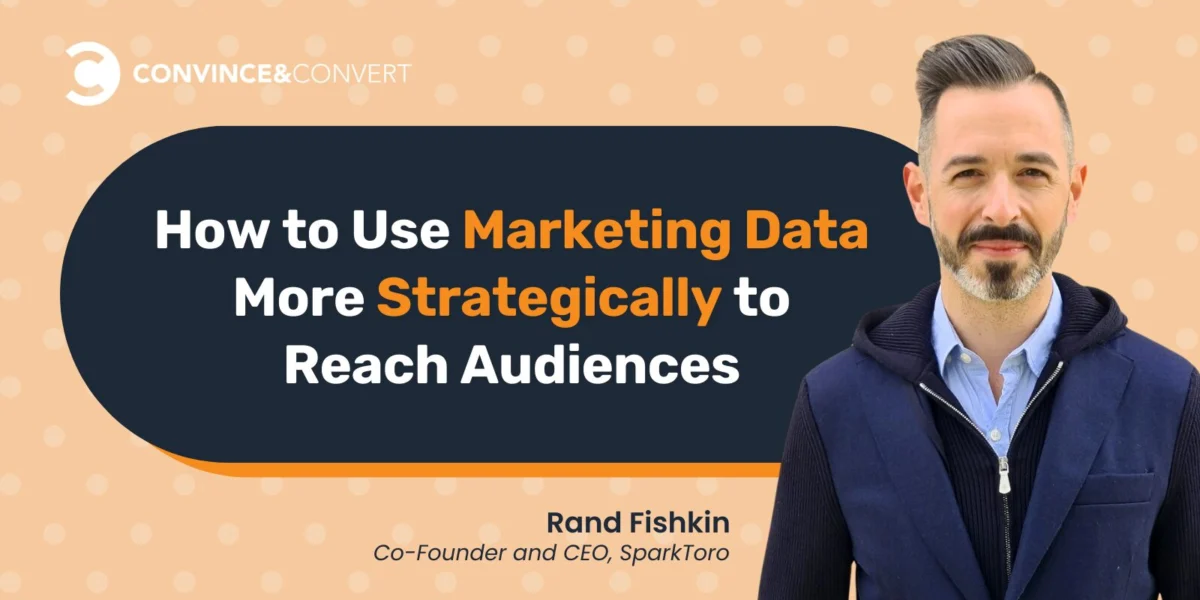
On a recent episode of the Data-Driven Decisions podcast, Rand Fishkin, co-founder of SparkToro, argued that the industry’s reliance on "safe" paid platforms is blinding marketers to where their customers actually live, learn, and make decisions.
The Illusion of Attribution: Why "Safe Bets" Can Be Risky
For years, the gold standard for marketing success has been direct attribution. If a user clicks a Google ad and makes a purchase, the ad gets the credit. But Fishkin warns that this model frequently misinterprets the role of these platforms.
"A ton of what happens in Google is actually a response to something else," Fishkin explains. "People who performed a search query in Google, very rarely was that a spontaneous first-touch thing. It was like, ‘Oh, I heard about this software, so I went to Google and searched for it.’ Of course, the attribution looks like Google drove all the value. No, Google was just the middleman."
When companies rely exclusively on these platforms, they fall into a trap of optimizing for what is easy to measure rather than what is effective. This creates a feedback loop where marketing budgets are locked into platforms that may be capturing "low-hanging fruit"—customers who were already sold on the brand—while ignoring the channels that actually built the brand awareness and trust in the first place.
Chronology of a Shift: From Tracking Clicks to Building Trust
The evolution of digital marketing can be viewed in three distinct phases:
- The Wild West (Early 2000s): Marketing was about volume and presence. If you were on the web, you were found.
- The Measurement Era (2010–2020): With the rise of advanced tracking, marketers shifted to a "performance-first" mindset. The focus turned to Cost-Per-Click (CPC) and Return on Ad Spend (ROAS). This era gave birth to the current obsession with Google and Meta as the primary drivers of growth.
- The Audience-Intelligence Era (Present): As ad costs rise and privacy regulations (like the deprecation of third-party cookies) make tracking more difficult, companies are pivoting back to first-party audience intelligence. The goal is no longer just to "track" the user, but to "understand" them.
By utilizing tools like SparkToro, marketers are moving away from broad, demographic-based targeting toward behavioral, interest-based targeting. Instead of bidding on keywords, companies are now identifying the specific podcasts their prospects listen to, the influencers they follow, and the niche communities where they congregate.
Supporting Data: Efficiency Through Niche Targeting
The evidence suggests that when companies shift their focus from broad, expensive ads to high-relevance niche channels, the efficiency of their spend increases dramatically.
Consider the case of the podcaster who needed to drive sponsorship revenue. Rather than spending money on ads to grow their audience, they used SparkToro to identify high-reach, relevant influencers within their specific niche. By bringing those influencers on as guests, they tapped into pre-existing, engaged communities. The "cost" was simply time and effort; the return was a direct influx of listeners that attracted high-paying sponsors.
Similarly, an event organizer in the tech space moved away from generic lead-gen ads. Instead, they identified speakers who already held the attention of their ideal attendee. By inviting those specific speakers, they attracted a high-quality audience that sponsors were eager to pay to reach.
These examples illustrate a fundamental shift: Targeting the audience where they are already engaged is exponentially more effective than trying to drag them to your platform through paid ads.
The Rise of "Zero-Click" Marketing
Perhaps the most radical departure from traditional strategy is the concept of "zero-click" marketing, a term championed by Amanda Natividad, VP of Marketing at SparkToro.
In the traditional mindset, every piece of content—a social post, a video, an infographic—is a "lead magnet" designed to force a click to the company website. However, as social platforms have become more protective of their user experience, they have begun to penalize content that tries to drive traffic off-site.
"Zero-click" marketing flips this on its head. The goal is to provide enough value—an insightful graphic, a data-driven thought, or an educational video—directly within the platform. By doing so, the brand builds credibility, authority, and top-of-mind awareness without the friction of a click.
A prime example is the company Chartr, which gained massive traction by posting data visualizations in the Reddit community r/dataisbeautiful. They didn’t spam the community with links to their site or calls-to-action. They simply provided value. Over time, that community came to associate Chartr with high-quality, insightful data, driving organic traffic and brand affinity in a way that paid ads never could.
Official Perspectives: The Role of Data-Informed Strategy
While the push toward audience intelligence is strong, leaders like Fishkin caution against the total abandonment of data. The key is distinguishing between being "data-driven" and being "data-informed."
"I’m not saying don’t be data-informed," Fishkin notes. "But I think it pays to be responsible in your recognition of what problems data can solve and what it can’t."
Data is excellent for answering where your audience is or what they are consuming. However, data often fails to capture the "why"—the human emotions, frustrations, and motivations that drive a customer to solve a problem. This is where qualitative methods, such as customer interviews and surveys, remain irreplaceable.
Zontee Hou, Managing Director at Convince & Convert and author of Data-Driven Personalization, echoes this sentiment. In her work, she emphasizes that data is merely a mirror of past behavior. To create a strategy that resonates, marketers must combine that quantitative evidence with a deep, qualitative understanding of the customer’s journey.
Implications for Future Marketing Strategies
The implications of this shift are significant for both CMOs and marketing managers:
- Redefining Success: Marketing teams must move away from vanity metrics (clicks, impressions) and toward impact metrics (brand sentiment, community engagement, and long-term customer lifetime value).
- Budget Reallocation: If the top 10% of your current ad spend is yielding no incremental growth, that budget should be redirected toward testing niche channels or content-driven, zero-click strategies.
- The Power of Synthesis: Successful future strategies will not be "either/or." They will be "both/and." Organizations will continue to use paid ads to capture intent, but they will complement that with audience-intelligence-led strategies that build the awareness before that intent ever arises.
Ultimately, the most successful companies will be those that view their audience not as a collection of data points to be targeted, but as a community of individuals with specific habits and preferences.
Conclusion: Investing in Meaningful Connections
Achieving superior marketing results is no longer about who can outbid the competition for the most expensive keywords. It is about who can be the most relevant.
By using data to identify where your audience actually spends their time, and by focusing on providing value in those spaces—rather than just trying to extract a click—marketers can build a more sustainable, authentic, and effective strategy. As the digital landscape continues to evolve and the noise grows louder, the brands that win will be those that stop chasing the algorithm and start chasing the audience.
For those looking to deepen their understanding of this transition, the full conversation with Rand Fishkin is available on the Data-Driven Decisions podcast. Additionally, Zontee Hou’s book, Data-Driven Personalization, offers a comprehensive framework for leaders looking to integrate these insights into their broader organizational culture.











No comments yet. Be the first to join the conversation!