

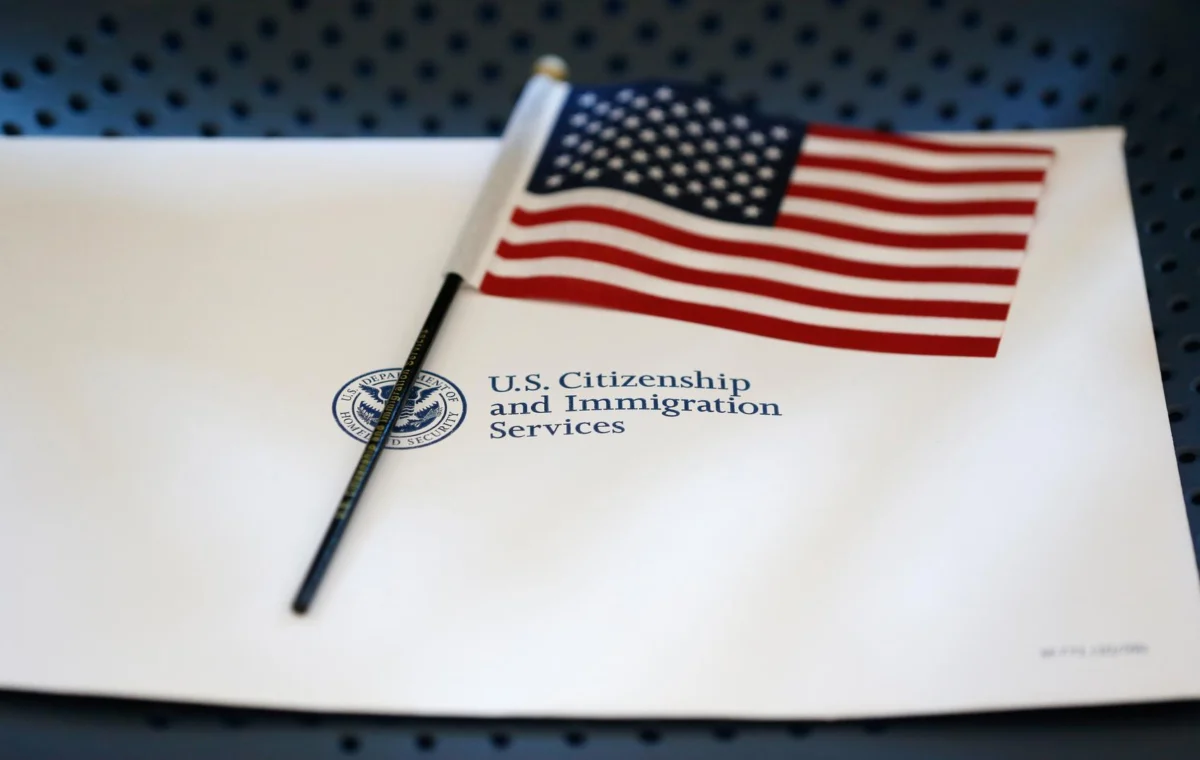
In a move that has sent shockwaves through the American immigration landscape, the Trump administration announced on Friday a sweeping shift in policy regarding how foreign nationals transition to permanent residency. Under the new directive issued by U.S. Citizenship and Immigration Services (USCIS), foreign nationals currently residing in the United States on temporary visas—including students, workers, and even those married to U.S. citizens—will now be required to return to their home countries to complete the green card application process.
The policy, described by the administration as a return to the "original intent of the law," marks a radical departure from more than half a century of established practice. For decades, the U.S. immigration system has allowed for "adjustment of status," permitting individuals already legally present in the country to transition to permanent residency without leaving U.S. soil. The abrupt reversal has left legal scholars, humanitarian organizations, and the estimated 600,000 annual applicants in a state of profound uncertainty.
A Historical Shift in Immigration Processing
For over 50 years, the American immigration framework has functioned on the premise of administrative efficiency and family stability. Individuals who entered the U.S. legally—whether on H-1B work visas, F-1 student visas, or as refugees—could file for permanent residency while remaining in their homes, jobs, and communities. This process, known as "adjustment of status," was designed to prevent the unnecessary disruption of the lives of people who were already contributing to the U.S. economy and society.
The Trump administration, however, has characterized this practice as a "loophole" that deviates from the foundational purpose of nonimmigrant visas. In a statement released Friday, USCIS officials asserted that temporary visas are intended for short-term, specific purposes, and that the domestic adjustment process has inadvertently created a "backdoor" to citizenship.
"Nonimmigrants, like students, temporary workers, or people on tourist visas, come to the U.S. for a short time and for a specific purpose," the agency stated. "Our system is designed for them to leave when their visit is over. Their visit should not function as the first step in the Green Card process."
Chronology and Scope of the Policy
While the exact implementation date remains unconfirmed, the announcement has triggered an immediate crisis for those currently in the middle of the legal pipeline. The USCIS notice remains ambiguous on several critical fronts:
- Retroactivity: It is currently unclear whether the policy will apply to applications already pending before the agency or if it will exclusively affect future filings.
- Duration of Absence: There is no guidance on whether applicants will be required to remain in their home countries for the duration of the entire, often years-long, processing period.
- "Extraordinary Circumstances": The policy allows for exceptions, but the criteria for what constitutes "extraordinary circumstances" or "national interest" remain vague, leaving individual USCIS officers with significant discretionary power to grant or deny an applicant’s right to remain in the country.
Legal analysts are currently parsing the memo to determine how these changes will interact with existing regional travel bans or countries where U.S. consular services have been suspended, such as Afghanistan. The lack of a clear timeline for the rollout has only exacerbated the confusion, with immigration law firms reporting an influx of inquiries from panicked clients across the country.
Supporting Data and the Scale of Impact
The scope of this change is immense. According to figures cited by immigration policy experts, approximately 600,000 individuals apply for permanent residency from within the United States each year. This group encompasses a vast cross-section of the U.S. workforce and society, including:
- Skilled Professionals: Medical doctors, engineers, and researchers on temporary work visas who fill critical gaps in the American economy.
- Academic Populations: Students and scholars at U.S. universities whose research and tuition contribute to the nation’s academic standing.
- Family Units: Spouses of U.S. citizens who have relied on the domestic adjustment process to keep their families together while pursuing legal residency.
- Humanitarian Cases: Refugees and asylum seekers who have sought safety in the United States and are now being told they may have to return to the very regions they fled to secure their legal status.
Doug Rand, a former senior advisor at USCIS during the Biden administration, emphasized that the logistical burden of this change is staggering. "The goal of this policy is very explicit," Rand noted. "Senior officials in this administration have said over and over that they want fewer people to get permanent residency because permanent residency is a path to citizenship and they want to block that path for as many people as possible."
Official Responses and Administrative Rationale
The administration defends the change as a necessary recalibration of the immigration system. USCIS maintains that the policy is a return to legal rigor, arguing that the U.S. should prioritize the sovereignty of its visa categories. According to the agency, those who provide a clear "economic benefit" or are deemed to be in the "national interest" may be granted exceptions, though the metrics for these definitions are currently undefined.
Critics, however, argue that the "national interest" exemption is a thin veneer for a broader restrictionist agenda. By forcing applicants to process their paperwork at consulates abroad, the administration creates a "Catch-22" for many immigrants. As World Relief pointed out, if an applicant is forced to return to their home country—only to find that U.S. consular services in that nation are shuttered or suspended—they are effectively trapped in a state of permanent exile.
The Human and Legal Implications
The legal community has been quick to condemn the policy as an "upending of decades of processing." Shev Dalal-Dheini, senior director of government relations at the American Immigration Lawyers Association, pointed out the systemic bottleneck this will create.
"This all applies very broadly to anyone seeking a green card," Dalal-Dheini warned. "At some U.S. consulates abroad, wait times for a visa appointment could take up to more than a year."
The implications for families are particularly dire. For those married to U.S. citizens, the requirement to return home for processing risks forcing families into long-term separation. For the individual, the move may mean resigning from a job, withdrawing from a university program, or leaving their children and spouse behind in the United States.
The "Chilling Effect"
Beyond the direct impact on active applicants, legal aid organizations are worried about the "chilling effect" this policy will have on the broader immigrant community. Jessie De Haven, a senior staff attorney with the California Immigration Project, noted that the mere existence of such a policy, even before its full implementation, creates a climate of fear.
"It’s really hard to tell how this is going to be applied," De Haven said. "The uncertainty alone is causing people to rethink their future in the U.S. Many who were considering applying for a green card are now afraid to step forward, fearing that by declaring their intent, they will be flagged for deportation or forced to abandon their lives here."
Conclusion: A New Era of Uncertainty
The USCIS announcement represents a fundamental shift in the U.S. approach to immigration. By dismantling the "adjustment of status" process, the administration is effectively moving to end the era of domestic integration for legal visa holders.
As the policy moves toward implementation, the tension between the administration’s stated goals of "legal rigor" and the practical reality of thousands of families and professionals hangs in the balance. For the legal community, the battleground will likely shift to the courts, where advocates are expected to challenge the legality of such a drastic departure from established norms. For now, however, the uncertainty remains the only constant, leaving hundreds of thousands of people in the United States wondering if their path to a permanent future has just been closed.












No comments yet. Be the first to join the conversation!