
 Asro
Asro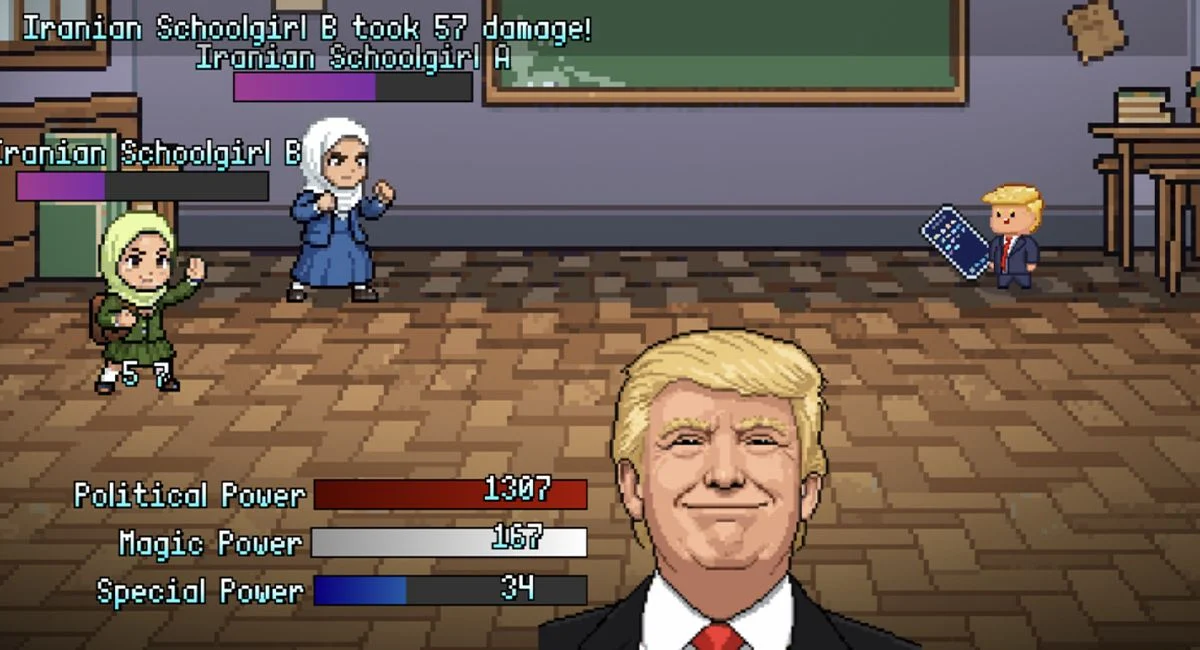
In the heart of Washington D.C., a city synonymous with sober policy-making and legislative deliberation, a new form of dissent has appeared. At the D.C. War Memorial, the anonymous art collective known as "Secret Handshake" has installed three retro-styled arcade cabinets. These machines do not offer the familiar thrills of Pac-Man or Galaga; instead, they invite passersby to step into Operation Epic Furious: Strait to Hell, a biting, satirical video game that lampoons the rhetoric, visual style, and geopolitical maneuvers of the Trump administration.
As the lines between state-sponsored propaganda and digital entertainment continue to blur, this installation serves as a mirror held up to a political climate that often feels more like a simulation than reality. By turning the "Iran War" narrative into an interactive arcade experience, the artists behind Secret Handshake are making a provocative claim: that modern political messaging has been successfully "gamified" to bypass critical thought, and the only way to expose that tactic is to play the game itself.
The Genesis of a Digital Protest
Secret Handshake has long been known for its penchant for high-profile, subversive public art. The collective previously garnered headlines for its satirical sculptures placed throughout the National Mall—most notably provocative depictions of Donald Trump and the late financier Jeffrey Epstein. These physical installations, designed to interrupt the solemnity of D.C.’s monument-heavy landscape, established the group’s methodology: use the aesthetic of the establishment to mock its own underlying tensions.
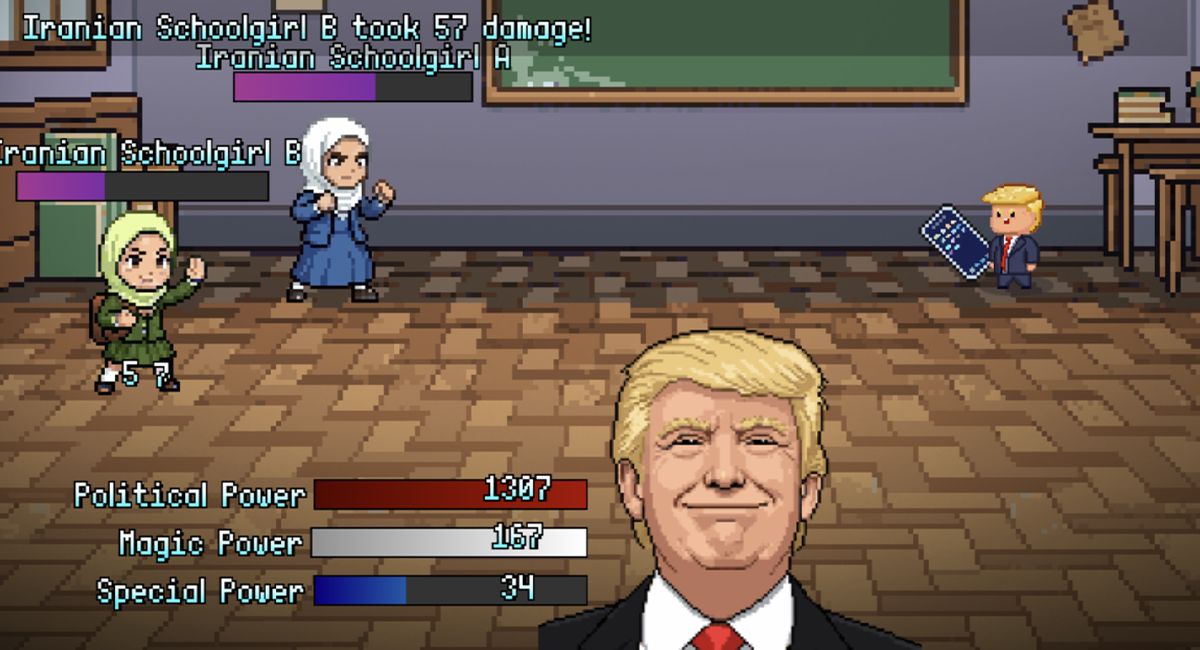
With Operation Epic Furious, the collective has pivoted from physical sculpture to digital interaction. The game, which is now available to the public both on the custom arcade units and via a dedicated website, functions as a frantic, pixel-art shooter. It is a surreal pastiche of current events, featuring digitized versions of high-profile political figures, including Donald Trump, Secretary of War Pete Hegseth, and FBI Director Kash Patel.
Chronology: From Propaganda to Pixelation
To understand the inspiration behind the project, one must look at the evolution of modern political "hype videos." Over the past several years, political campaigns and state-affiliated media outlets have increasingly adopted the visual language of the video game industry.
- Phase One: The Hype Reel Era: Political communications offices began incorporating aesthetic elements from popular military shooters like Call of Duty into their social media presence. These clips, often set to aggressive music and featuring fast-paced cuts of military hardware, were designed to evoke a visceral, rather than intellectual, reaction.
- Phase Two: The Integration of AI: As generative AI tools became more accessible, the propaganda machine accelerated. The collective notes that these "hype videos" frequently utilize AI-generated imagery and synthesized footage to craft narratives that feel high-stakes and cinematic, intentionally blurring the line between a movie trailer and a policy announcement.
- Phase Three: The Interactive Satire: Secret Handshake’s Operation Epic Furious represents the final step in this evolution. By building a playable game, the collective is suggesting that the Trump administration’s approach to foreign policy has effectively turned international relations into a form of entertainment—a "game" where the consequences are hidden behind a veneer of pixelated patriotism.
Gameplay as Social Commentary
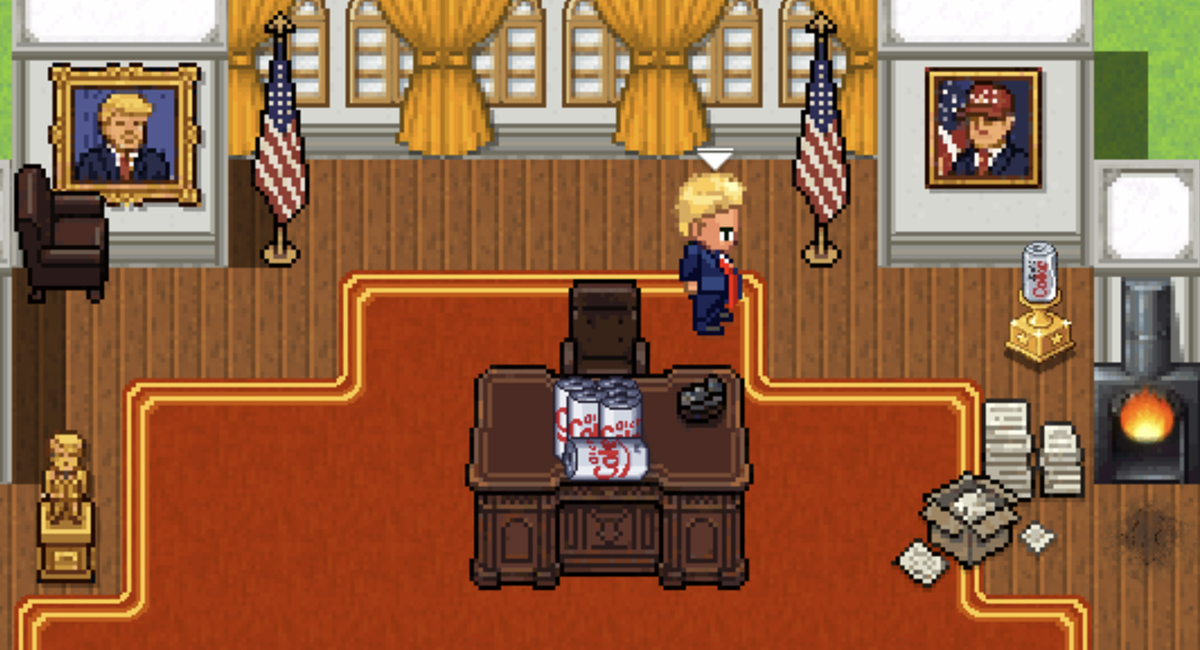
The mechanics of Operation Epic Furious are intentionally absurd, designed to highlight the perceived absurdity of the policies they critique. Players begin the game in the White House, where they are presented with a binary choice: order a Diet Coke or invade Iran.
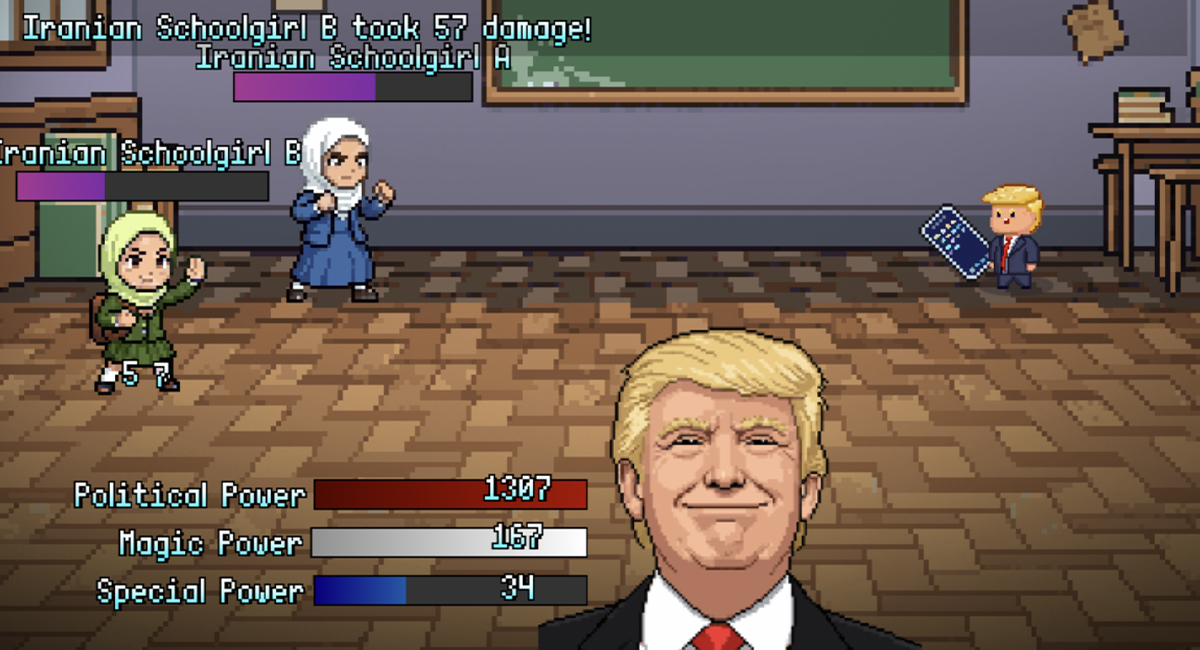
The choice to invade triggers a sequence where players navigate a digital landscape filled with "threats to American freedom." These threats are represented by a bizarre array of targets, including the Pope, the concept of Diversity, Equity, and Inclusion (DEI), and school girls. This design choice is meant to critique the "us vs. them" binary often employed in populist political rhetoric.
"The Trump administration knows that the best way to sell combat is by making it a video game," the collective stated in a plaque accompanying the exhibit. "That’s why they’ve been pumping out the ‘sickest’ Iran War video game hype reels."
The game’s aesthetic is intentionally low-fidelity, reminiscent of the 8-bit and 16-bit eras of the late 80s and early 90s. This serves as a "retro" lens through which to view modern, high-tech weaponry and geopolitical brinkmanship. The contrast between the serious, life-altering implications of an "Iran War" and the simple, repetitive mechanics of a button-mashing shooter is the central irony of the piece.
Supporting Data: The Gamification of War
While Secret Handshake’s work is artistic in nature, it aligns with a growing body of academic concern regarding the "gamification of conflict." Military analysts have long discussed how video games like America’s Army—a game developed by the U.S. government—were used as recruitment tools. However, the current iteration goes beyond recruitment; it is about narrative control.
In a world where social media algorithms favor content that generates high emotional engagement, politicians are incentivized to produce content that mirrors the intensity of interactive media. By adopting the pacing, sound design, and visual shorthand of video games, political entities can bypass the viewer’s critical faculty.
The game’s inclusion of "Easter eggs"—such as the requirement to order six Diet Cokes or the comical penalty for attempting to hold Melania Trump’s hand—serves to ground the satire in the specific eccentricities of the Trump era. These details are not mere jokes; they are data points that document the public’s perception of the administration’s focus, suggesting that the "war" is just one part of a larger, carefully curated media spectacle.
Official Responses and Public Reaction
The reception to the installation at the D.C. War Memorial has been polarized, reflecting the broader political divide in the United States. While supporters of the collective view the game as a necessary critique of militaristic rhetoric, others have criticized the use of public space for such overt political commentary.
Official responses from the subjects of the game have been largely nonexistent, which is perhaps the intended outcome for the artists. By refusing to engage directly with the satire, the political figures mentioned in the game remain trapped within the "characters" the collective has created for them. This silence reinforces the game’s premise: that the administration is operating within its own bubble, disconnected from the critiques leveled by the public.
The Implications: Where Art Meets Policy
The most significant implication of Operation Epic Furious is its critique of how we process information. If the average citizen is trained by entertainment media to consume conflict as a series of fast-paced, high-stakes, "heroic" moments, they become less likely to interrogate the messy, long-term consequences of military intervention.

By turning the "Iran War" into a game, Secret Handshake is asking the player to confront their own consumption habits. When the game ends, the player is left with the realization that they were "playing" for a goal—looting oil, "liberating" resources—that is presented with total moral clarity. In the real world, however, such goals are rarely clear, and the costs are far higher than a "Game Over" screen.
"No briefings, no hesitation; just pure pixelated patriotism," the collective writes. "Strap in and play hard, because this game may never end."
This final warning highlights the danger of the current political trajectory. When war is treated as an aesthetic choice or a media strategy, it ceases to be a tool of last resort and becomes a permanent feature of the political landscape.
Conclusion: Playing the Long Game
Secret Handshake’s Operation Epic Furious is more than just a piece of retro-themed protest art; it is a sophisticated critique of modern political communication. By forcing the audience to interact with the imagery and rhetoric of the current administration, the game exposes the mechanisms used to sell conflict to the public.
As we move further into an era where digital content is the primary driver of political discourse, the lessons provided by this arcade experience become increasingly relevant. Whether or not the game effectively shifts public opinion, it has successfully forced a conversation about the nature of our political media—and in doing so, it has ensured that the "game" will continue, at least in the halls of public discourse, for some time to come.
For those interested in experiencing the satire firsthand, the game remains available at epicfurious.com. In a digital age where the truth is often buried under layers of manufactured content, sometimes the most effective way to see reality is to look through the lens of a game that doesn’t pretend to be anything else.


 Dwi Wanna
 Lina Irawan




