

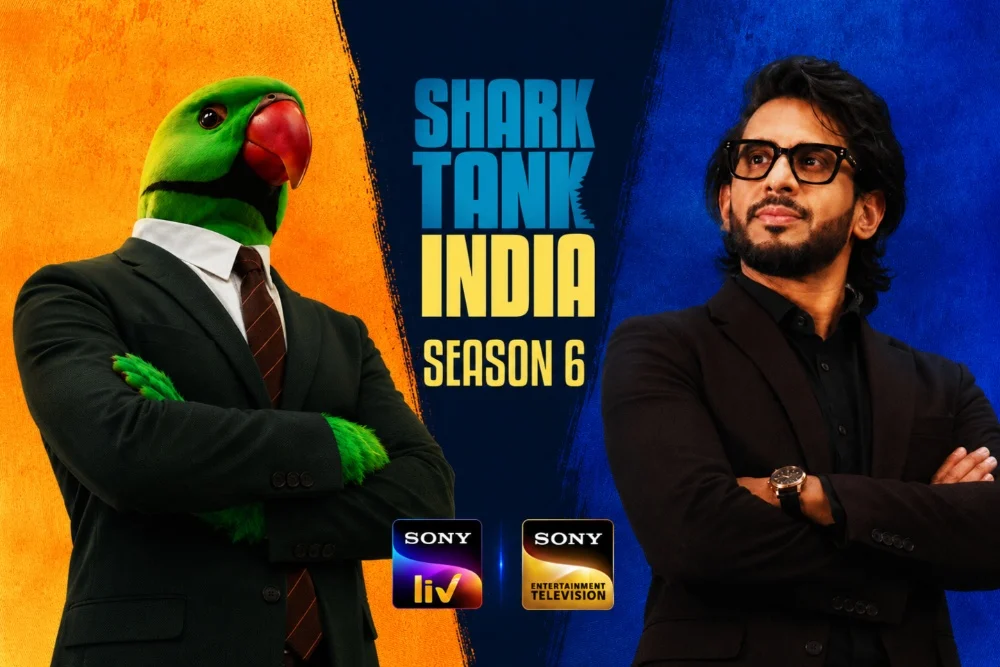
As Shark Tank India prepares to open its doors for its highly anticipated sixth season on SonyLIV, the show is doing more than just scouting for the next unicorn. It is launching a cultural critique of the modern startup ecosystem. With the debut of its latest campaign, "#DontBeATota," the franchise is taking a pointed aim at a growing trend among aspiring entrepreneurs: the tendency to prioritize the performance of business intelligence over the actual substance of a venture.
In an era where "burn rate," "EBITDA," and "valuation" have permeated coffee shop conversations and LinkedIn feeds alike, the show is asking a fundamental question: Has the language of entrepreneurship begun to overshadow the business itself? By introducing a parrot named "Tota"—a creature that can mimic the jargon of a CEO but lacks the capacity to run a company—Shark Tank India is setting a new tone for Season 6, one that demands authenticity, grit, and granular business knowledge above all else.
The Genesis of a Movement: Main Facts of the Campaign
The "#DontBeATota" campaign arrives at a critical juncture in the Indian startup landscape. After five successful seasons, Shark Tank India has arguably become the single most influential platform for grassroots entrepreneurship in the country. It has transformed the vocabulary of the boardroom into a mainstream dialect. However, the production team noticed a shifting pattern in auditions: applicants were increasingly well-versed in industry buzzwords but were frequently stumbling when asked about the fundamental mechanics of their P&L statements or customer acquisition costs.
The campaign features Tota, a colorful parrot who serves as a satirical mascot for the "performative founder." The character’s narrative is simple: he believes that by reciting high-level terminology, he can secure funding from the Sharks. The campaign highlights the jarring contrast between those who have memorized the script of a founder and those who have put in the labor to build a business.
Submissions for Season 6 are now officially open via the SonyLIV platform. The network is explicitly signaling that this cycle will be characterized by a "no-nonsense" vetting process, prioritizing founders who can demonstrate real-world resilience over those who can simply deliver a polished pitch deck filled with industry-standard jargon.
The Anatomy of an Entrepreneurial Evolution: A Chronology
To understand why this campaign is so timely, one must look at the evolution of the startup ecosystem in India over the past decade.
- 2021–2022: The Awakening: Shark Tank India debuted, bringing the concept of "startup culture" to living rooms across the nation. For the first time, millions of viewers learned the difference between equity and debt, and the "Shark" persona became a blueprint for success.
- 2023: The Saturation of Terminology: As the show’s popularity surged, so did the proliferation of "startup influencers" and social media gurus. The lexicon of the valley—terms like "hockey-stick growth," "pivot," and "disruption"—began to be used indiscriminately.
- 2024: The Reality Check: Market corrections and a tighter funding environment led to a shift in investor sentiment. The focus moved from "growth at all costs" to "profitable unit economics." This shift revealed that while the vocabulary of startups had become mainstream, the financial literacy required to sustain a business had not necessarily followed suit.
- 2025: The #DontBeATota Launch: With the launch of Season 6, the franchise is pivoting to address this disconnect. By branding the "buzzword-heavy but business-light" founder as a "Tota," the show is actively attempting to reshape the archetype of the Indian entrepreneur.
Data and Trends: The Cost of Performative Entrepreneurship
The data suggests that the "Tota" phenomenon is not merely an aesthetic concern for television—it is a reflection of a broader market shift. According to recent venture capital reports, the success rate of early-stage startups that focus on "hype" rather than "fundamentals" has seen a marked decline.
Analysis of funding rounds in India shows that investors are increasingly conducting "deep-dive" due diligence earlier in the process. In previous years, a charismatic founder with a compelling "vision" could often secure seed funding. Today, that same founder is often met with questions that require a deep understanding of their supply chain, customer churn, and long-term path to profitability.
- The Literacy Gap: Market research indicates that while 70% of early-stage founders are capable of explaining their "TAM" (Total Addressable Market), less than 30% can clearly explain their CAC (Customer Acquisition Cost) vs. LTV (Lifetime Value) ratio in detail.
- The Survival Rate: Statistically, startups that can explain their business model in simple, non-jargon terms have a 40% higher probability of surviving beyond the three-year mark compared to those that rely on complex industry terminology to mask operational deficiencies.
The #DontBeATota campaign acts as a corrective measure, encouraging founders to return to the basics: problem-solving, market-product fit, and execution.
The Voice of the Sharks: Official Responses
Aman Gupta, a recurring Shark on the show, co-founder of boAt, and founder of Off/Beat, has become the primary face of this initiative. His commentary underscores the frustration many investors feel when they encounter "scripted" founders.
"If repeating startup buzzwords was enough to build a business, we would all be investing in parrots," Gupta remarked during the campaign launch. "That is the core philosophy we want to drive home this season. Over the years, Shark Tank India has played a pivotal role in making entrepreneurship a mainstream conversation, which is a legacy we are incredibly proud of. But we have to be clear: building a company has never been about sounding like an entrepreneur. It is about solving real problems, understanding your business inside out, and showing the grit to keep building every single day. That is the kind of founder we are looking for in Season 6."
This sentiment is echoed by the broader production team and the creative minds behind The Script Room, the agency responsible for conceiving and producing the campaign. By framing the campaign through the lens of humor and satire, they have managed to make a serious critique accessible to a wide audience. The goal is to demystify the startup world and strip away the vanity, ensuring that the next generation of founders understands that the "Shark Tank" boardroom is not a stage for a performance, but a place for a rigorous business inquiry.
Implications: What Does This Mean for the Future?
The shift in messaging by Shark Tank India has significant implications for the future of the Indian startup ecosystem.
1. A Higher Bar for Auditions
For aspiring entrepreneurs, the message is clear: do not come prepared to recite a textbook. Come prepared with data, passion, and a genuine understanding of your business’s unique challenges. The production team is signaling that Season 6 will be less forgiving of those who cannot substantiate their claims.
2. The Normalization of Plain-Speak
By mocking the over-use of jargon, the show is setting a new standard for business communication. There is a growing consensus that "plain-speak" is the mark of a true expert. If a founder cannot explain their business to an average consumer, they likely do not understand the mechanics of their own product well enough.
3. Strengthening the Ecosystem
Ultimately, this campaign is a form of "tough love" for the ecosystem. By discouraging performative behavior, Shark Tank India is helping to curate a more resilient, capable, and grounded cohort of entrepreneurs. This is not just about entertainment; it is about building a sustainable business culture that values substance over style.
Conclusion: The Path Ahead
As SonyLIV opens the portal for Season 6 applications, the #DontBeATota campaign stands as a defining moment for the franchise. It challenges the "Tota" in every aspiring entrepreneur to grow into a founder who leads with clarity and conviction rather than a memorized script.
The success of Shark Tank India has always been rooted in its ability to mirror the aspirations of a nation. If the show is now shifting its focus to prioritize "real" business over "jargon-heavy" business, it is because the market itself is maturing. The era of the "hustler" who relies on buzzwords to climb the ladder is fading, replaced by the era of the "operator" who relies on facts, logic, and an unwavering commitment to solving real-world problems. For those who can clear this new, higher bar, the opportunity to secure a deal—and more importantly, a partnership with a Shark—has never been more valuable.
The question for every applicant remains: Are you a founder with a vision, or are you just a parrot with a script? Season 6 of Shark Tank India is ready to find out.










