

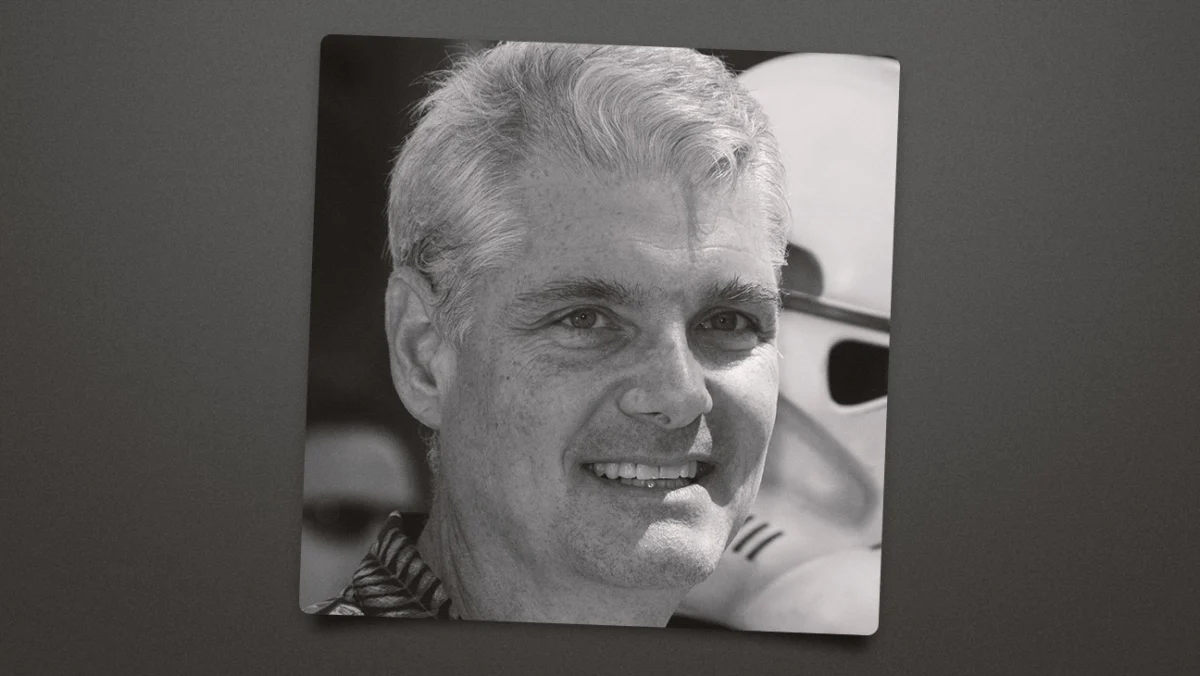
Tom Kane, a luminary in the voice-acting industry whose vocal range helped define the childhoods of millions, passed away this Monday at the age of 64. His death, resulting from complications related to a stroke, occurred at a hospital in Kansas City, Missouri. The news was confirmed by his talent agency, Galactic Productions, leaving a void in the animation and gaming communities that will be difficult to fill.
For over four decades, Kane served as a versatile chameleon of the microphone. Whether he was channeling the ancient, rhythmic wisdom of Master Yoda, the endearing paternal anxiety of Professor Utonium, or the cold, metallic menace of Marvel’s Ultron, Kane approached his craft with a dedication that elevated every production he touched.
A Life Defined by Versatility: The Professional Legacy
To categorize Tom Kane as merely a "voice actor" is to overlook the sheer breadth of his contribution to modern pop culture. His career was characterized by a remarkable ability to inhabit disparate personas, moving seamlessly from the high-stakes drama of the Star Wars galaxy to the whimsical, colorful chaos of Cartoon Network’s golden era.
Perhaps most famously, Kane became the definitive voice for Yoda in the modern era of Star Wars media. His work on Star Wars: The Clone Wars went beyond mere mimicry; he captured the cadence, the breathing, and the soul of the character, providing the narration that introduced every episode with a gravitas that felt like a bridge between the original trilogy and the new generation of fans.
Beyond the Force, his resume reads like a syllabus for 21st-century animation history. He voiced the fastidious, long-suffering valet Woodhouse in the hit FX series Archer, inheriting the role from George Coe and imbuing it with a dry, weary loyalty. He brought life to the dignified Mr. Herriman in Foster’s Home for Imaginary Friends, the sinister Lord Monkey Fist in Kim Possible, and the inquisitive Darwin in The Wild Thornberrys. For Marvel fans, he was a frequent collaborator, providing the definitive vocal portrayals for both Magneto and Ultron across various animated series and video game adaptations.
Chronology: From Overland Park to Galactic Icon
Early Ambitions (1962–1984)
Born Thomas Kane Roberts on April 15, 1962, in Overland Park, Kansas, Kane’s trajectory into the entertainment industry was not the result of a calculated Hollywood plan, but rather an early, intuitive discovery of his own talent. By the age of 15, while a student at Shawnee Mission South High School, Kane began cold-calling local businesses to offer his services as a voice talent.
"I started calling local advertisers and offered my services," Kane recounted in a 2010 interview. "It didn’t occur to me anyone got actually paid for it." This youthful curiosity blossomed into a professional pursuit, leading him to the University of Kansas, where he graduated in 1984, fully prepared to embark on a career in broadcast and performance.
The Lucasfilm Connection (1996–2021)
Kane’s professional integration into the Star Wars universe began in 1996, handling minor vocal roles for LucasArts video games. His big break arrived in 1999 when he was tapped to voice Yoda for a game project. His performance was so convincing that it captured the attention of Lucasfilm leadership.
Kane often attributed his success with Yoda to sheer immersion. Having watched the original films 53 times, the character’s voice was, in his words, "very much in my head." His accidental audition—goofing around while reading Yoda lines for a LucasArts project—reached the ears of Frank Oz, the original puppeteer and voice of Yoda. The rest became history. From the 2003 Clone Wars series to the 2008 feature film and beyond, Kane became the primary custodian of the character’s voice.
The Twilight of a Career (2020–2024)
In 2020, Kane suffered a severe stroke that left him unable to speak or write—a cruel irony for a man whose life’s work was the gift of voice. He officially retired from the industry in 2021. Despite these hardships, he remained a beloved figure in the convention circuit. In March of this year, he made a poignant public appearance at the Lexington Comic and Toy Convention in Kentucky, where he reunited with the cast of The Powerpuff Girls. It was a final, heartwarming capstone to a career defined by community and connection.
Supporting Data: The Scope of Influence
The sheer volume of Kane’s work is staggering. Beyond his television and film appearances, his voice became an institutional fixture in global entertainment:
- Theme Parks: He served as the official voice of the Walt Disney World Monorail System, guiding millions of tourists through the resort.
- Academy Awards: For several years, he acted as the announcer for the Academy Awards broadcasts, lending his professional, authoritative tone to the most prestigious night in film.
- Gaming: His voice appeared in dozens of titles, from Star Wars entries to Marvel: Ultimate Alliance and the LEGO game franchises.
- Television: Between 2016 and 2019, he provided the voice for Professor Utonium and the villain HIM in the Powerpuff Girls reboot, showcasing his range from the heroic and dorky to the truly bizarre and menacing.
Official Responses and Industry Impact
The outpouring of grief following the announcement of his death reflects the deep personal connection fans and colleagues felt toward him. Galactic Productions, in their official statement, captured the essence of his impact: "From his unforgettable performances in Star Wars to countless animated series, documentaries and games, Tom brought wisdom, strength, humor and heart to every role he touched. His voice became part of our lives, our memories and the stories we carry with us."
Colleagues throughout the industry have cited not only his technical proficiency—his ability to nail a take in a single pass—but his character. Despite his status as an industry veteran, he was known for his kindness, his humility, and his devotion to his family. He is survived by his wife, Cindy, whom he married in 1982, and their nine children, a family unit that included several children through adoption and fostering.
The Broader Implications of a Lost Voice
The passing of Tom Kane signals the end of an era for voice acting. As the industry shifts toward new technologies, including AI-driven vocal synthesis, the loss of a practitioner like Kane serves as a reminder of the "human" element in performance. Kane did not just "read lines"; he curated characters. He understood the subtext of a scene, the emotional weight of a narrative, and the necessity of humor.
His work on The Clone Wars and The Powerpuff Girls demonstrates how a singular performer can provide continuity across different iterations of a franchise. By becoming the "standard" for these characters, he provided a sense of stability and comfort for generations of viewers.
In his final years, after his stroke, the community rallied around him, proving that his impact extended far beyond the screen. He leaves behind not just a library of recorded work, but a blueprint for how a voice actor can build a legacy through integrity, adaptability, and the generous application of their own humanity. As his family and fans mourn, the industry finds itself reflecting on a life that proved that while a voice can be captured on tape, the spirit behind it is irreplaceable.











No comments yet. Be the first to join the conversation!