Nila Kartika Wati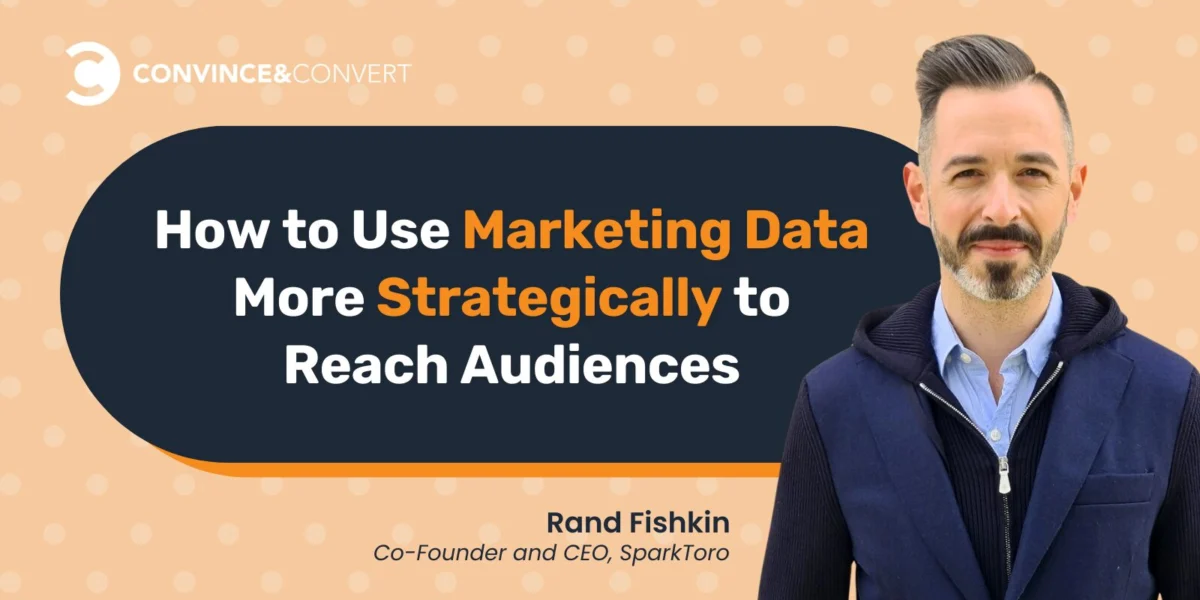
In the modern digital landscape, marketing teams often find themselves trapped in a cycle of predictability. Strategies are frequently reduced to a familiar triad: Google Ads, LinkedIn campaigns, and Facebook retargeting. These platforms are the “safe bets” of the industry, offering clear metrics, predictable reporting, and a sense of comfort for stakeholders who demand ROI. However, this reliance on established channels may be masking a fundamental flaw in how brands connect with their audiences.
Is it possible that by clinging to these familiar digital corridors, marketers are ignoring the very places where their potential customers actually live, learn, and make decisions? According to Rand Fishkin, founder of audience research platform SparkToro, the answer is a resounding yes. In a recent episode of the Data-Driven Decisions podcast, Fishkin argued that the obsession with trackable, “last-click” attribution is leading brands to overlook the most high-value, under-invested spaces on the internet.
The Illusion of Attribution: Why Google is Often Just a Middleman
The core of the issue, according to Fishkin, is a widespread misunderstanding of the customer journey. Many marketers operate under the assumption that if a user clicks a Google ad and subsequently makes a purchase, the ad is the sole driver of that conversion. This is the bedrock of modern performance marketing, but it is often a mirage.
“A ton of what happens in Google is actually a response to something else,” Fishkin explains. “People who performed a search query in Google—very rarely was that a spontaneous first-touch thing. It was, ‘Oh, I heard about this software on a podcast or from a peer,’ so I went to Google and searched for it. And of course, the attribution looks like Google drove all the value. No, Google was just the middleman.”
This phenomenon creates a dangerous feedback loop. When marketers prioritize channels that offer easy-to-package metrics, they become blind to the "top-of-funnel" interactions that actually build brand awareness and trust. By optimizing for the easiest path to measurement rather than the most effective path to engagement, companies are systematically under-investing in the channels where their audiences truly discover solutions.
The SparkToro Philosophy: Mapping the Customer’s Digital DNA
To break this cycle, marketers must move beyond surface-level demographics and delve into behavioral intelligence. SparkToro aims to solve this by providing a window into where a specific target audience spends its time. Instead of relying on broad, interest-based ad targeting, brands can identify the niche websites, podcasts, influencers, and online communities that their customers already trust.
The implications are profound. If a business knows that its ideal customers frequent a specific, obscure industry newsletter or a niche subreddit, they can stop shouting into the void of general social media advertising and instead build a presence where it actually matters.
Case Study: From Influencer Outreach to Revenue
The effectiveness of this approach is best illustrated through real-world application. Fishkin points to a podcaster struggling to increase sponsorship revenue. Rather than throwing money at social media ads to grow their listener base, the creator used SparkToro to identify high-reach influencers in their specific niche. By inviting these guests onto the show, the podcaster tapped into established, loyal audiences, which in turn attracted the sponsors who were eager to reach those specific listeners.
Similarly, an event organizer in the tech sector moved away from broad outreach. By identifying speakers who held high influence over specific sub-segments of the industry, the organizer was able to curate a speaker lineup that naturally drew in the high-value sponsors the event needed to remain profitable. In both instances, the data did not just optimize a campaign; it fundamentally changed the business model by focusing on where the audience was already congregating.
Embracing the "Zero-Click" Marketing Paradigm
Perhaps the most radical departure from traditional strategy is the concept of "zero-click" marketing. Coined by Amanda Natividad, VP of Marketing at SparkToro, this strategy shifts the objective from driving traffic to providing value.
The strategy is simple but requires a shift in mindset: create content that is so valuable it stands on its own, without requiring the user to leave the platform they are currently using.
A prime example is the data-storytelling company Chartr. Rather than using Reddit to spam links to their website, they began posting high-quality, standalone data visualizations on the subreddit r/dataisbeautiful. They engaged with the community, answered questions, and provided insights without a heavy-handed call-to-action. By consistently providing value, they built brand affinity among the exact group of people most likely to need their services.
“The goal isn’t to drive users back to your site, but to build credibility and recognition,” says Fishkin. “When your audience needs a product or service, your brand should be top of mind because you’ve been providing value in the places they already frequent.”
Aligning Data Strategy with Business Goals
It is important to note that Fishkin does not advocate for the total abandonment of paid advertising. Instead, he calls for a more "responsible" use of data. The danger lies in using data as a crutch rather than a compass.
Distinguishing Between Data Types
Not all data is created equal. Marketers must learn to distinguish between what data can solve and what it cannot:
- Qualitative Data: Surveys and direct customer interviews are superior for understanding why people think about a product, their pain points, and their frustrations.
- Quantitative/Behavioral Data: Tools like SparkToro are superior for understanding where your audience hangs out, which media they consume, and which influencers they follow.
The failure to recognize these boundaries leads to significant blind spots. If a company only looks at in-app usage data to guide its roadmap, it only understands the people who are already using the product. It remains entirely ignorant of the people who abandoned the product, or those who never tried it in the first place.
Implications for Future Marketing Departments
The shift toward audience-centric, data-informed marketing suggests a future where the role of the "Performance Marketer" evolves. The emphasis will move away from being a "dashboard watcher"—someone who obsesses over Google Analytics—toward being a "community builder"—someone who understands the cultural and digital ecosystem of their customer.
This transition requires a change in how we report to stakeholders. If an organization measures success purely by direct, click-through attribution, they will continue to fund the status quo. However, if the culture shifts to valuing brand awareness, community engagement, and long-term trust, the budget can be reallocated toward more creative, thoughtful, and high-impact strategies.
As Zontee Hou, Managing Director at Convince & Convert and author of Data-Driven Personalization, highlights, the goal of data is to direct time, money, and energy to where it has the most value. If the top 10% of a company’s ad spend is yielding no incremental growth, that capital is effectively being wasted. Redirecting that spend toward creative, community-led initiatives is not just a marketing tactic; it is a fiduciary responsibility to the business.
Conclusion: A Call for Strategic Intent
The message from industry leaders like Fishkin and Hou is clear: stop chasing the metric, and start chasing the audience. Data-driven marketing is not about automating the decision-making process; it is about using insights to inform where you show up and how you interact.
By moving beyond the comfort of the "safe" platforms and embracing a strategy that values relevance over raw volume, brands can break through the digital noise. Success in the next decade of marketing will not be determined by who has the biggest budget for Google Ads, but by who has the deepest understanding of their audience’s digital landscape.
As you audit your own marketing efforts, ask yourself: Are you investing in the channels that provide the best ROI on your spreadsheet, or are you investing in the channels where your customers are actually solving their problems? The answer to that question may be the difference between a brand that simply survives and one that leads.
For more on how to navigate the evolving world of data-driven strategy, listen to the full interview with Rand Fishkin on the Data-Driven Decisions podcast. To explore how these insights apply to your broader organization, learn more about Zontee Hou’s book, Data-Driven Personalization.


 Nana
Nana
 Jia Lissa