In the decade since Lucas Pope’s Papers, Please redefined the "bureaucratic simulator" genre, the gaming landscape has been flooded with 2D titles attempting to capture the same tension of stamps, permits, and moral compromise. Most of these titles operate within a familiar, top-down, or side-scrolling paradigm, leaning heavily into the "paper-pusher" aesthetic. However, a new entry from developer Raw Take Games is poised to disrupt this trend. Dreadwoods Gatekeeper transitions the high-stress administrative gameplay of its predecessors into a fully immersive, 3D first-person environment, adding a layer of visceral horror that threatens to make the workday far more dangerous than simple document verification.
The Core Concept: Bureaucracy Meets Survival Horror
At its heart, Dreadwoods Gatekeeper is a game of scrutiny. Players take on the role of a lone official stationed at a remote, dilapidated outpost in the titular Dreadwoods region. Your task is simple in theory: manage the flow of travelers, inspect their permits, and ensure that the rules of the gate are strictly upheld.
However, the "Dreadwoods" part of the title is no misnomer. This is not a bustling city checkpoint; it is an isolated, atmospheric corner of the world where the thin veil between reality and the supernatural seems to be fraying. By moving the genre into a 3D first-person perspective, Raw Take Games has prioritized spatial awareness. You are not just looking at a digital interface on a desk; you are physically interacting with the environment—walking to the gate, inspecting the cargo of horse-drawn wagons, and manually repairing the infrastructure of your outpost.
Chronology and Gameplay Loop: A Day in the Life of a Gatekeeper
The gameplay in Dreadwoods Gatekeeper follows a rigorous diurnal cycle, creating a sharp contrast between the mundane stresses of daytime labor and the encroaching terror of the night.
The Daytime Shift: The Banality of Evil
During daylight hours, the game functions as a high-stakes simulation of authority. You are the sole arbiter of who passes and who stays. The player must:
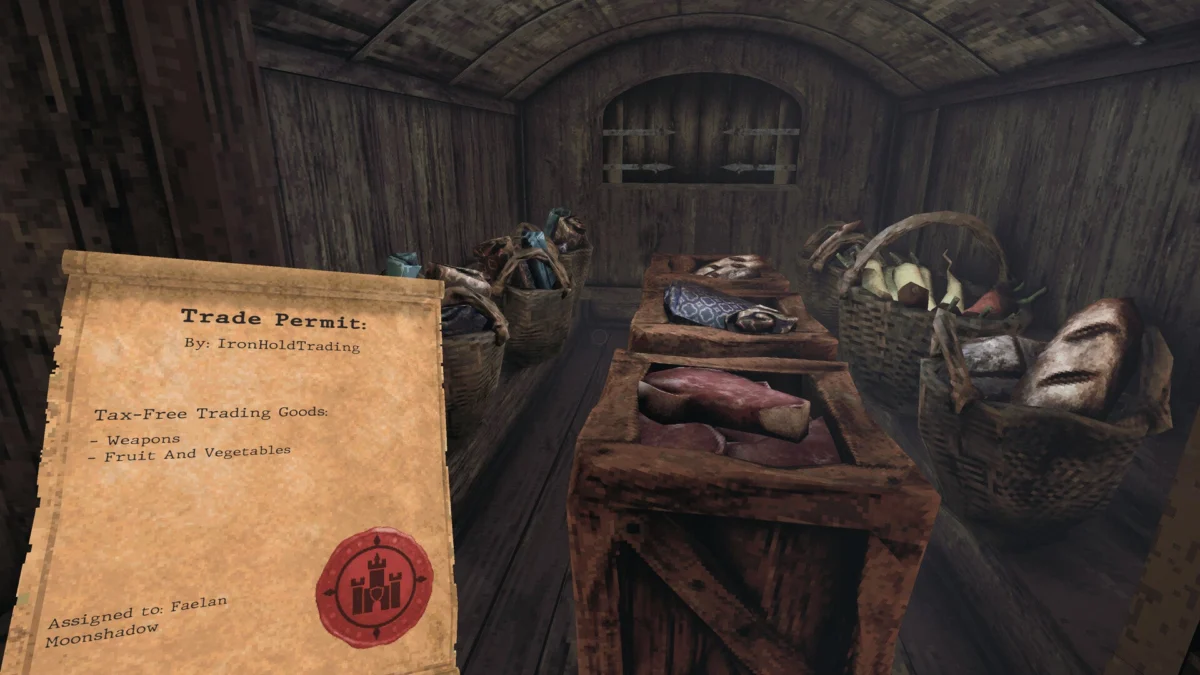
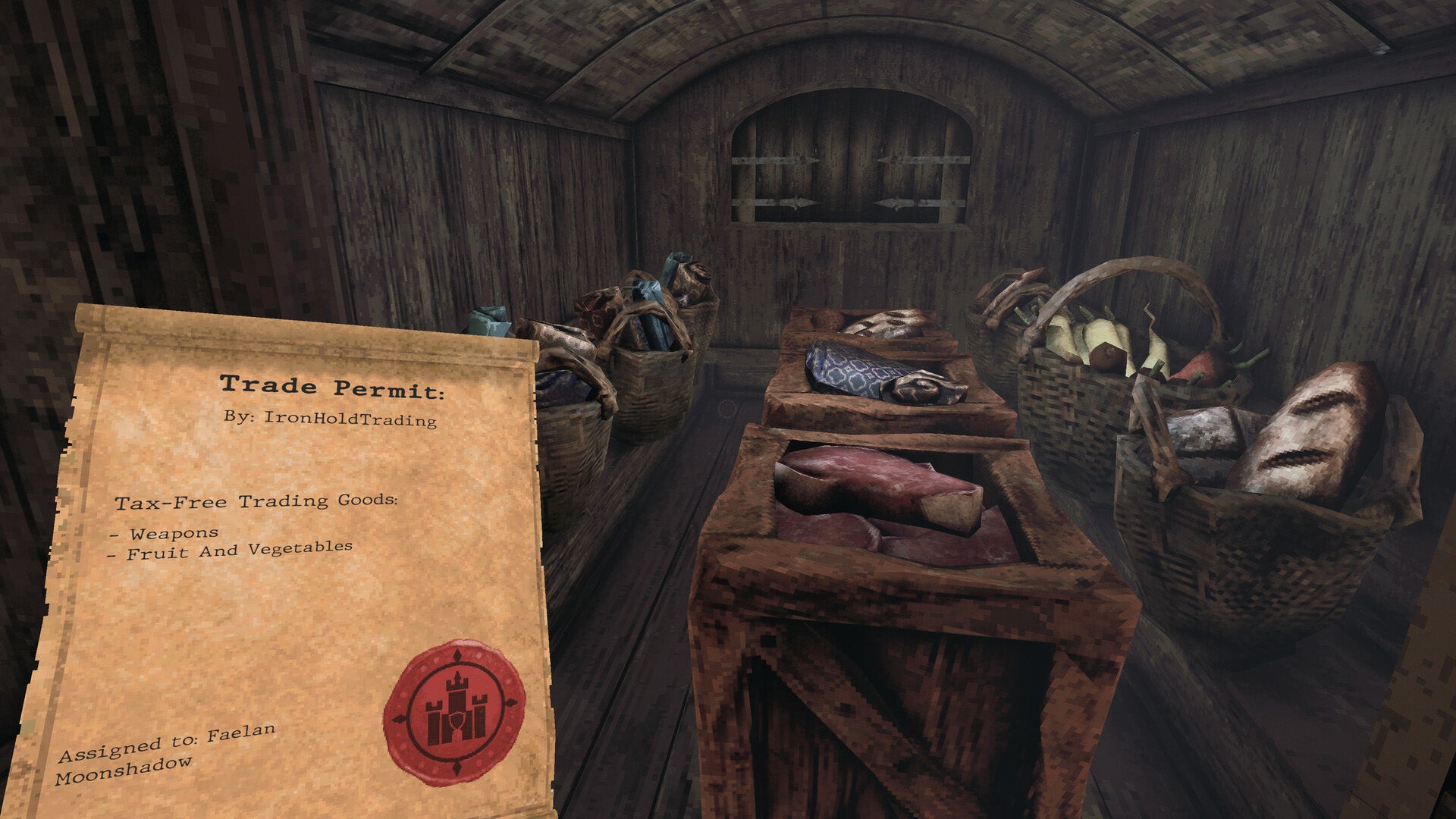
- Verify Credentials: Check travel permits against an ever-changing list of regulations. Forged stamps, expired documents, and discrepancies in identity are all common.
- Manage Cargo: Beyond documentation, you are responsible for the physical inspection of goods. When a traveler claims to be carrying vegetables, you must verify the cargo. Discovering a crate of chickens instead of produce triggers a secondary layer of administrative burden—you must not only deny entry or levy fines but also process the tax implications of the smuggled goods.
- Ethical Compromise: The game frequently tests your integrity. Travelers may offer bribes to ignore contraband, such as illicit weaponry stashed in the back of a wagon. As the gatekeeper, you are constantly faced with the choice: uphold the letter of the law and risk your safety, or accept the bribe and face the moral and potentially physical consequences.
- Maintenance: Beyond the desk, the outpost requires constant care. Players must engage in cleaning and basic structural repairs, adding a "chore-based" survival element that highlights the loneliness and thankless nature of the position.
The Night Shift: When the Woods Wake Up
As the sun sets, the tone of Dreadwoods Gatekeeper undergoes a drastic shift. The environment becomes shrouded in thick, unnatural fog. The atmosphere becomes heavy with dread, and the gameplay moves from administrative tasks to active survival. The game introduces psychological and physical threats: cryptic messages are scrawled on your walls overnight, such as the ominous "Leave," and the sounds from the surrounding forest suggest that something—or someone—is watching from the tree line.
While the developer has remained tight-lipped regarding the specific mechanics of the nighttime combat, the inclusion of defensive tools—most notably a spear—indicates that players will eventually have to defend their station from more than just bureaucratic audits.
Supporting Data: Why the 3D Shift Matters
The move from 2D to 3D is a significant technical and stylistic evolution for the genre. In traditional "Papers-like" games, the player is essentially playing a game of "spot the difference" against a timer. By moving to a 3D space, Raw Take Games is introducing:
- Immersive Tension: In 2D, the threat is usually abstract (e.g., a "Game Over" screen if you make too many mistakes). In 3D, the threat is tangible. You can see the traveler’s eyes, hear the rustle of the forest behind them, and physically move around the vehicle you are inspecting.
- Environmental Storytelling: Because you are inhabiting the space, the world can tell a story without a single line of dialogue. The decay of the outpost, the wear and tear on your equipment, and the encroaching nature of the woods serve as a narrative backdrop that 2D interfaces struggle to replicate.
- Dynamic Interaction: The physicality of the game—opening a gate, manually checking a crate, holding a spear—adds a tactile feedback loop that creates a stronger sense of ownership over the player’s role.
Official Responses and Developer Intent
While Raw Take Games has not released a formal manifesto regarding the game’s philosophy, the gameplay trailer and early promotional materials suggest a focus on the "loneliness of power." The developer has emphasized that this is not merely a simulator, but an experience about the weight of isolation.
The studio’s decision to move away from the established 2D norm suggests a desire to push the genre toward "Immersive Sim" territory. By stripping away the comfort of a desk and forcing the player into the woods, the developers are asking a poignant question: when you are truly alone, in a place where the rules don’t seem to apply anymore, does your sense of duty remain, or does it dissolve under the pressure of survival?
Implications for the Genre
Dreadwoods Gatekeeper could represent a watershed moment for simulation games. If successful, it proves that the "bureaucratic sim" is not a sub-genre limited by its 2D roots, but rather a thematic framework that can be applied to almost any genre, including survival horror.
The implications are twofold:
- For the Simulation Genre: It opens the door for more complex, 3D administrative games. Imagine a border control sim in a cyberpunk city or a space-station customs officer dealing with alien stowaways.
- For Horror Gaming: It highlights a growing interest in "mundane horror"—the idea that performing a tedious, boring job becomes infinitely more terrifying when supernatural elements are introduced into the routine.
Conclusion: A Title to Watch
As of this writing, Dreadwoods Gatekeeper does not have a set release date, though it is currently available for players to add to their Steam wishlists. While we have yet to see how the combat mechanics integrate with the administrative duties, the concept is undeniably compelling.
By combining the meticulous, stressful gameplay of an inspector with the high-stakes, atmospheric dread of a survival game, Raw Take Games is crafting something unique. For those who enjoy the "gatekeeping" sub-genre but have grown tired of the standard 2D formula, Dreadwoods Gatekeeper offers a promising, and potentially terrifying, evolution. Whether you are stamping permits or defending your outpost from the horrors lurking in the fog, one thing is clear: your shift at the gate is going to be a long one.