Pevita Pearce
Welcome back to the Indie App Spotlight, our weekly deep dive into the most innovative corners of the independent developer ecosystem. This week, we turn our attention to Brink, a groundbreaking iOS application that aims to do more than just play audio—it aims to synthesize, organize, and elevate the entire podcasting medium for the modern, high-information listener.
As the podcast industry faces a saturation of content, the challenge for listeners has shifted from finding shows to effectively managing the deluge of information. Brink arrives as a sophisticated solution, specifically optimized for the cutting-edge capabilities of iOS 26 and the Liquid Glass design language, offering a refined, fluid, and deeply intelligent interface.
Main Facts: What is Brink?
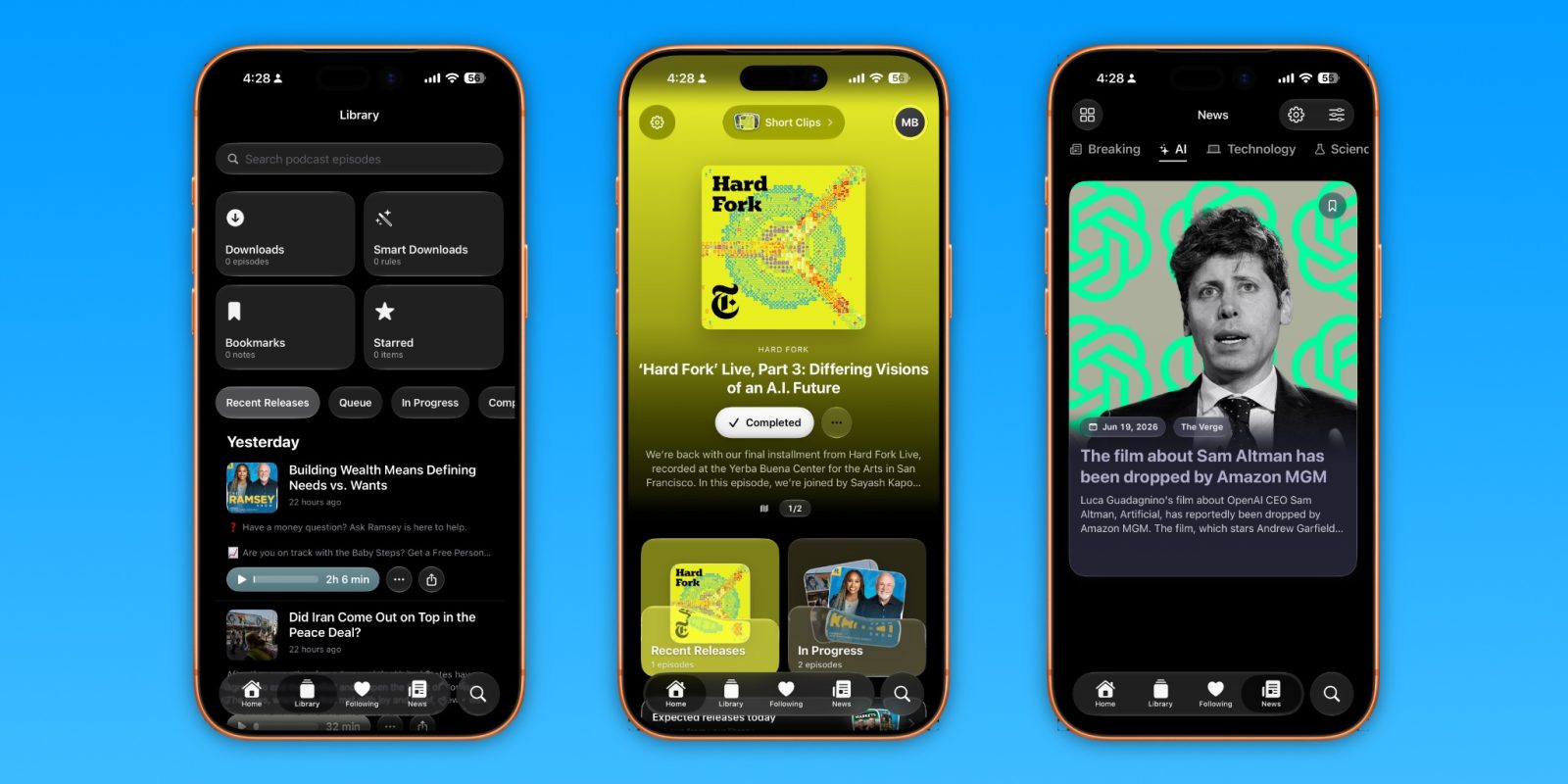
At its core, Brink is a premium podcast and news aggregator built specifically for the Apple ecosystem. While standard players focus on the simple playback of MP3 files, Brink functions as a productivity suite for the ear. By leveraging advanced machine learning, the app bridges the gap between passive listening and active knowledge retention.
Key Features at a Glance:
- AI-Powered Transcriptions: Multi-language, high-accuracy transcriptions allow users to search within audio, highlight key quotes, and follow along in real-time.
- Contextual News Integration: Brink identifies news stories relevant to the specific episode being played, presenting them in a sidebar or dedicated tab so users can verify facts or gain deeper context without leaving the app.
- Intelligent Summarization: For listeners short on time, the app provides AI-generated summaries that distill hour-long conversations into actionable bullet points.
- Notes and Bookmarks: The app features a robust internal note-taking system, allowing users to save timestamps with custom annotations—a feature long requested by power users.
- The "Brief" Feature: A unique editorial tool that enables users to clip segments from various podcasts and stitch them together into a personalized, curated audio episode.
The Chronology of Innovation
The development of Brink did not happen in a vacuum. To understand why this app feels so vital, we must look at the evolution of the podcast player market over the last decade.
Phase 1: The Basic Playback Era
In the early 2010s, podcast apps were essentially RSS feed readers. Their primary function was to fetch a file and play it. Reliability was the only metric that mattered.

Phase 2: The Social Discovery Phase
As podcasting exploded in popularity, the market saw the rise of apps that focused on social sharing and discovery. These platforms prioritized the "what" rather than the "how."
Phase 3: The Intelligence Era (The Brink Paradigm)
Brink represents the third generation of podcasting technology. The developers began work on the application in late 2024, focusing on a post-AI landscape where the value of a podcast is measured by the user’s ability to extract information from it. By early 2025, the team integrated the first wave of LLM (Large Language Model) features, allowing for the "Summarize" function. With the release of iOS 26 and the Liquid Glass interface, the team pivoted to ensure that the UI was not just functional, but an extension of the operating system’s aesthetic, leading to the current version available on the App Store today.
Supporting Data: Why Power Users Need Brink
The data regarding consumer behavior in audio media is shifting. According to internal metrics provided by the developers and industry benchmarks, the average podcast listener is now consuming roughly 6.5 hours of content per week. However, retention—the ability to recall information from those hours—is remarkably low.
The Retention Gap
Studies suggest that users who utilize visual aids (transcripts) and note-taking tools retain nearly 40% more information than those who engage in "passive listening." Brink’s integration of these features directly addresses this "retention gap."
The Fitness Synergy
Furthermore, Brink’s integration with Apple Health provides a novel dataset for the listener. By tracking steps, heart rate, and caloric burn during playback, the app provides a unique "Life-Sync" report. Users can see, for example, that their most productive listening sessions—where they take the most notes—occur during their morning walk or gym session, allowing them to optimize their day for both physical and mental health.
Official Developer Perspective
In an exclusive exchange with the lead developer of Brink, we gained insight into the philosophy behind the app.
"We didn’t want to build just another player," the developer stated. "We felt that the podcast format was being treated like radio, but it should be treated like a library. When you listen to a long-form interview, you are often hearing the synthesis of hours of research. Our goal is to provide the listener with the tools to access that research, not just the audio stream."
Regarding the implementation of AI, the team emphasized that their focus is on "Human-Centric Intelligence." The goal is not to replace the host, but to augment the listener’s ability to process information at a higher speed. "The AI isn’t there to write the show," they added, "it’s there to help you navigate the ocean of content you’ve already subscribed to."
Implications: The Future of Audio Media
The release of Brink signals a broader shift in the digital media landscape. As we move further into the age of AI, the distinction between "reading" and "listening" is blurring.
Implications for Creators
For podcasters, apps like Brink change the landscape of content creation. Creators now have to consider how their audio translates to text. Because Brink allows users to read transcripts and news stories related to the show, creators who provide clean, detailed metadata and show notes will be prioritized by the app’s search and discovery algorithms. This encourages a higher standard of production and documentation across the board.

Implications for the OS Ecosystem
The adoption of "Liquid Glass" design principles in third-party apps like Brink shows that Apple’s latest UI guidelines are effectively bridging the gap between hardware and software. By feeling "at home" on the iPhone, Brink reduces the cognitive load of navigation. Users aren’t just using an app; they are interacting with an interface that feels like an extension of the system settings, which is key for long-term user retention.
The Monetization Model
Brink’s tiered pricing structure—offering a free tier alongside a $3.99/month or $49.99 lifetime option—reflects a maturing market. Users are increasingly willing to pay for "premium utility." By avoiding an ad-supported model, Brink ensures that the user’s data and attention remain focused on the content, rather than being exploited by third-party advertisers. This "subscriber-first" model is likely to become the gold standard for high-utility indie apps in the coming years.
Conclusion: A Must-Have for the Digital Age
Whether you are a student using podcasts to supplement your education, a professional trying to stay informed on global trends during your commute, or a casual listener who simply wants more from their audio experience, Brink is a compelling addition to your home screen.
It is rare to see an app that balances such high-level technical complexity—AI-driven summaries, multi-language processing, and health data integration—with such a clean, user-friendly aesthetic. Brink manages to be both a power user’s dream and an approachable tool for the everyday listener.
If you are tired of the clutter and looking for a way to turn your podcast feed into a source of genuine intellectual value, it is time to upgrade. You can download Brink today on the App Store for both iPhone and iPad. For those ready to commit, the lifetime license offers a rare opportunity to invest in a product that is clearly poised to grow alongside the future of audio.

Disclaimer: This review contains affiliate links. We may earn a commission if you click through and make a purchase. Our editorial independence remains our top priority, and we only recommend software we believe brings genuine value to our readers.
For more information on the latest in the indie developer scene, keep your browser pointed to 9to5Mac’s Indie App Spotlight. If you are a developer with a new project, please reach out via our contact page.


 Laily UPN
 Nana Muazin