Ali Ikhwan
In the modern digital landscape, social media has graduated from a mere broadcasting tool to the heartbeat of organizational intelligence. For years, social media teams have fought the perception that their work is restricted to "vanity metrics"—likes, shares, and superficial engagement. However, as the digital economy matures, forward-thinking enterprises are realizing that effective social media management is a sophisticated investment that provides a real-time, unfiltered stream of customer and market data.
To unlock this potential, social marketers must bridge the gap between their creative output and the executive boardroom. Communicating the value of social media is no longer just about justifying a budget; it is about positioning social intelligence as a foundational element of long-term business strategy.
The Evolution of Social Value: From Awareness to Intelligence
Historically, the value of social media was measured by brand reach. While awareness remains vital, the most successful brands have shifted their focus toward social intelligence. This represents a deeper level of insight into audience preferences, industry shifts, and competitor movements.
Unlike traditional market research, which can be slow and expensive, social media provides an instantaneous feedback loop. When a brand monitors conversations on platforms like Reddit or X (formerly Twitter), they are essentially conducting a global focus group that never sleeps. When this data is properly captured and analyzed, it transforms from "noise" into actionable intelligence that can influence product development, customer service protocols, and even long-term market positioning.
The Chronic Disconnect: Why Strategic Communication Matters
Despite the abundance of data, a persistent "push and pull" remains between social media practitioners and senior leadership. Executives, often focused on bottom-line performance, frequently view social media as a cost center rather than a growth engine. This creates a dangerous paradox: social teams have the most direct line to the consumer, yet their insights often fail to reach the stakeholders who could best utilize them.
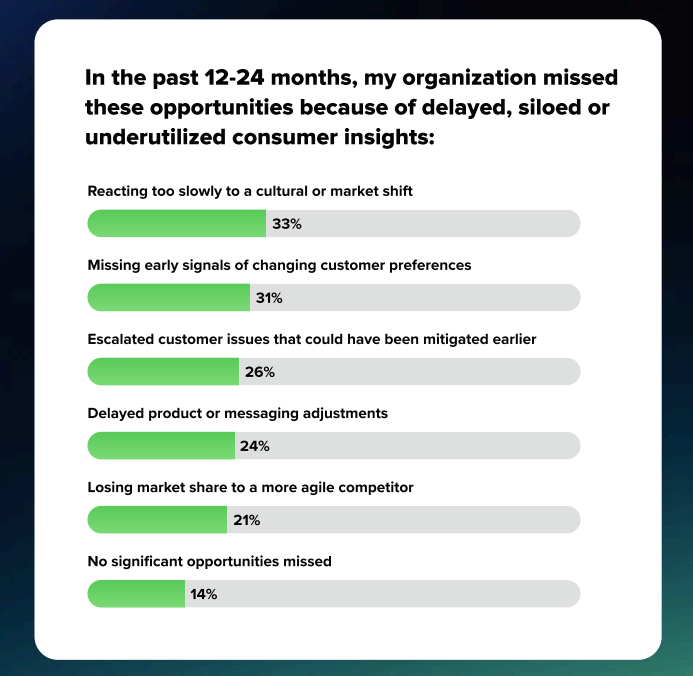
According to the 2026 Social Intelligence Report, the consequences of this disconnect are severe. When social data remains trapped in silos, brands miss out on critical growth opportunities. Whether it is failing to pivot a product feature based on community sentiment or missing a shift in consumer behavior, siloed social teams represent a loss of competitive agility. The report emphasizes that 67% of industry professionals now consider social intelligence to be "mission-critical" to future growth, suggesting that the barrier to success is not a lack of data, but a lack of integration.
A Chronology of Strategic Integration
To move from "the social team" to "a strategic partner," organizations must follow a structured path toward total integration.

Phase 1: Breaking the Silos
The journey begins by moving social data out of marketing-only dashboards. When social teams proactively share insights with product, sales, and events departments, they shift the organizational culture. For example, by channeling feature requests from Facebook comments directly to the product team, the social department accelerates the feedback cycle, allowing the company to build what the customer actually wants rather than what they think the customer wants.
Phase 2: Aligning with Executive Priorities
The second phase involves changing the language of reporting. As Olivia Jepson, Social Media Intelligence Manager at Sprout Social, notes: "Social teams are driving revenue, but last-touch attribution only tells part of the story." To gain buy-in, teams must adopt a full-funnel reporting approach that connects top-of-funnel engagement to down-funnel demand and eventual revenue.
Phase 3: The Unified Data Ecosystem
In the final phase, social data is integrated with existing CRM and Business Intelligence (BI) systems. By connecting platforms like Salesforce or Tableau with social management tools, brands can track the customer journey from the first social interaction to the final purchase. This level of visibility makes social value undeniable to even the most skeptical CFO.
Data-Driven Framework: Measuring the Impact
To demonstrate business value effectively, social media professionals should follow a five-step framework:
1. Define Objectives through Alignment
Before generating a single report, teams must define what success looks like for their specific organization. An emerging brand might prioritize market penetration and reach, while an established enterprise might focus on community retention and conversion rates. Crucially, these objectives must align with the broader company goals. If the company is launching a new product line, the social team’s goal should be to generate qualified leads for that specific launch, rather than simply chasing generic engagement.
2. Differentiate Qualitative and Quantitative Metrics
A balanced report includes both numbers and narrative:
- Quantitative Metrics: These include conversion rates, engagement frequency, and response times. These are the "hard numbers" that finance departments require.
- Qualitative Metrics: These track audience sentiment, brand health, and competitive positioning. While harder to quantify, these metrics provide the "why" behind the numbers.
3. Implement Advanced Attribution Tracking
Using UTM parameters and integrated tracking systems is no longer optional. By assigning specific attribution models to social campaigns, marketers can prove exactly which content led to a website visit, a form fill, or a sale. This technical precision is what separates high-performing social teams from those still struggling for budget.
4. Benchmarking Against the Market
Performance in a vacuum is meaningless. Organizations must use industry benchmarks—such as those found in the 2025 Content Benchmarks Report—to understand how they stack up against the competition. Understanding if your engagement rate is "good" compared to the industry average allows for more accurate forecasting and strategy refinement.
5. Calculating ROI: The Final Hurdle
Calculating Return on Investment (ROI) is the ultimate test of a social strategy. Using tools like dedicated ROI calculators, teams can factor in efficiency gains—such as time saved through automated customer care—alongside direct revenue attribution. When the math is sound, the narrative becomes compelling. At Sprout Social, for example, a shift to multi-touch attribution revealed a 5,800% increase in pipeline impact, a figure that provides immediate, undeniable justification for increased investment.
The Art of Data Storytelling
Even the best data will fail if it is not presented effectively to an executive audience. Leadership teams are typically short on time and high on demand for brevity. The most effective social media leaders act as "data storytellers."
This involves:
- Curating the Narrative: Don’t overwhelm leadership with every metric. Highlight only the data that impacts the bottom line.
- The "Executive Scorecard": Use a recurring, simplified report that shows trends over time rather than isolated spikes.
- Proactive Insight Sharing: Don’t wait to be asked. By packaging insights and delivering them regularly, the social team shifts from being a reactive service provider to a proactive business consultant.
Implications for the Future of Enterprise
The integration of social intelligence into the corporate DNA is not just a trend; it is a necessity for survival in a hyper-competitive digital economy. As social platforms continue to evolve, the distinction between "marketing" and "business strategy" will continue to blur.
Brands that treat social media as a mere megaphone will find themselves losing touch with the rapid pace of consumer change. Conversely, those that treat social media as an intelligence hub—a place where the voice of the customer is captured, analyzed, and integrated into every department—will secure a sustainable competitive advantage.
Ultimately, the power of social media lies in its ability to humanize data. By effectively communicating this value to leadership, social teams can move beyond the constraints of vanity metrics and become the architects of their company’s future growth. The question is no longer "what is the ROI of our social media," but rather "what is the cost of ignoring the intelligence that social media provides?"


 Nana
Nana
 Jia Lissa