For decades, the Costco sample station has served as a retail institution. It is a place of culinary discovery, where shoppers navigate the labyrinthine aisles of bulk goods, guided by the siren call of small paper cups and toothpick-skewered appetizers. From gourmet cheeses and piping-hot ravioli to the legendary Kirkland Signature snack line, the “sample run” is an essential part of the member experience.
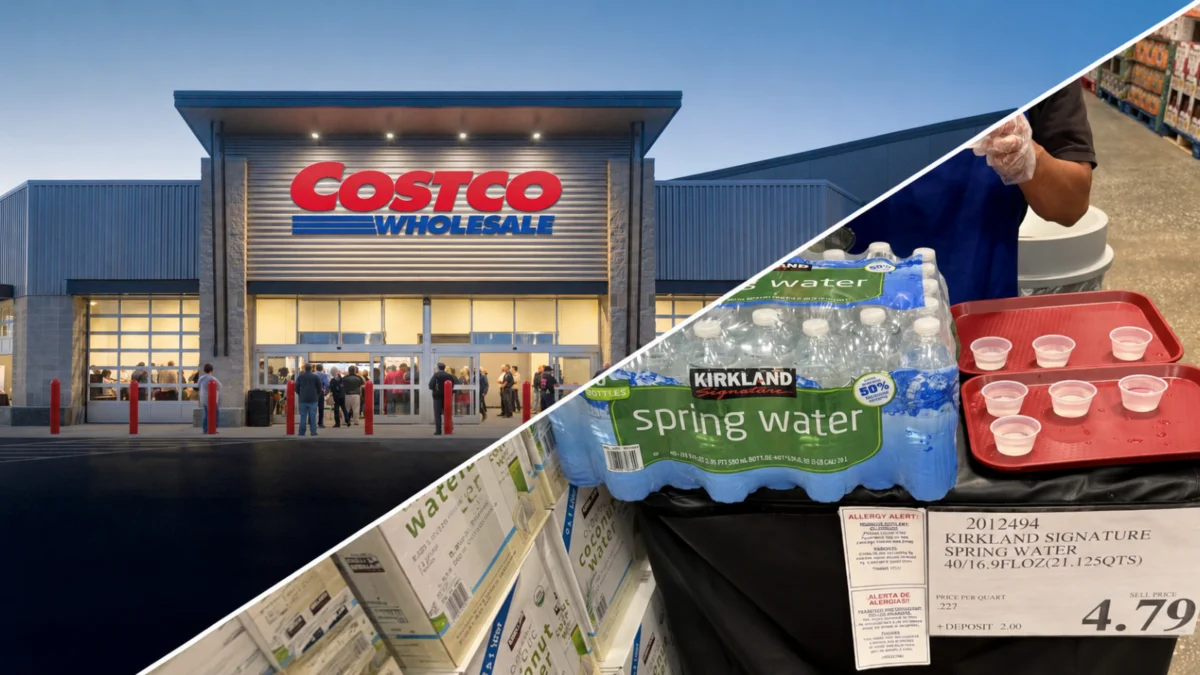
However, a recent incident at a Costco location in Nova Scotia, Canada, has left the internet both amused and bewildered. A shopper captured an image of a promotional station offering something remarkably mundane: small, plastic-cupped portions of Kirkland Signature bottled water. The incident has since ignited a wide-ranging conversation about retail marketing, the ethics of single-use plastics, and the unpredictable nature of the “Costco experience.”
The Nova Scotia Incident: A Hydration Station or a Retail Gaffe?
The controversy began when a social media user posted a photograph from a warehouse in Nova Scotia. The image, which quickly went viral, depicted a standard Costco sample table staffed by an employee offering passersby small, open cups of Kirkland Signature water.
“Saw this the other day and thought it was quite funny yet the weirdest sample I have ever seen at Costco,” the shopper noted in their post.
For many, the sight was jarring. Costco’s sample program is traditionally associated with value-added items—products that require a taste test to justify a bulk purchase. Bottled water, a commodity item that is chemically identical across most brands, rarely requires a “try-before-you-buy” approach. The post prompted immediate skepticism from the online community, with many questioning the logic of pouring bottled water into smaller, disposable cups.
Chronology of the Costco Sample Phenomenon
To understand why this specific incident struck such a chord, one must look at the history of the Costco sample.
The Origins of the “Sample Run”
The practice of sampling in warehouse clubs originated in the early 1980s. The objective was two-fold: to drive sales of new or premium items and to provide an “entertainment” factor that would keep shoppers inside the warehouse longer. According to retail studies, the “treasure hunt” aspect of the warehouse club model is a primary driver of customer loyalty. By keeping shoppers engaged through constant, small-scale interactions, Costco has managed to cultivate a unique emotional bond with its members.
The Evolution of the Strategy
Over the years, the samples became more sophisticated. No longer just a slice of processed cheese, samples often included full-course items, such as stir-fry, steak, or even frozen desserts. This created an expectation among the customer base: if you are going to give us a sample, make it worth our time.
The Shift Toward “The Bizarre”
In recent years, as social media platforms like TikTok and Reddit have allowed users to document their shopping trips, the “weirdest sample” contest has become a sub-genre of Costco content. From the aforementioned water cups to rolls of toilet paper and raw sea salt, the inventory of bizarre samples is growing. This reflects a shift in marketing strategy: sometimes, the goal of a sample is not just to sell the product, but to create a “viral moment” that cements the brand in the public consciousness.
Supporting Data: Why Sampling Drives Revenue
While the water samples might seem absurd, retail analytics suggest that sampling is an incredibly potent tool. According to industry reports, a successful in-store demonstration can increase the sales of a specific product by as much as 600% to 2,000% during the period of the demonstration.
The Psychology of Reciprocity
The success of the sample station is rooted in the psychological principle of reciprocity. When a shopper receives something for free, they often feel a subtle, subconscious obligation to return the favor. In a retail environment, that return favor is often the purchase of the item being sampled.
The “Costco Effect”
Costco’s model relies on the “Member Value” proposition. The $1.50 hot dog-and-soda combo is a famous loss leader, designed to ensure that the price perception of the entire store remains low. When a member sees a sample, even something as simple as water, it reinforces the idea that the store is constantly looking for ways to provide “extra” value, even if the utility of that specific sample is questionable.
The Environmental Backlash: Plastic and Precedent
The primary criticism leveled against the water sample initiative has been environmental. In an era where corporate sustainability is under the microscope, the optics of pouring water from a plastic bottle into a plastic-lined paper cup—only to have it discarded immediately—has drawn significant ire.
“It’s a massive waste of plastic,” one commenter argued on the viral Reddit thread. “Why would you put water that is already in a container into a smaller container? It defeats the purpose of buying in bulk.”
This reflects a growing tension between consumer convenience and environmental responsibility. Costco has, in the past, made strides to reduce packaging, yet these sample stations remain a persistent source of waste. For a company that prides itself on efficient logistics and minimal overhead, the water sample station appears to be an outlier in its commitment to sustainability.
Social Media Reactions: A Window into Consumer Culture
The viral nature of the water sample post opened the floodgates for users to share their own experiences with unusual Costco samples. The anecdotes illustrate the diversity—and sometimes the chaos—of the shopping experience:
- The Toilet Paper Trial: One user recounted being offered a single roll of Kirkland toilet paper in a Ziploc bag. The instruction to “sample at home” turned a mundane household necessity into a humorous interaction that eventually led to a recurring purchase.
- The Sea Salt Confusion: Another shopper noted seeing a table dedicated entirely to raw sea salt. Without a base item like a piece of meat or a vegetable to pair it with, the sample was essentially a dry, grainy encounter, leaving many customers confused as to how they were supposed to “taste” the salt without a delivery vehicle.
- The Competitive Shopper: One user described a near-collision involving raw baby carrots, highlighting the intensity that some shoppers bring to the sample circuit. It is a testament to the power of the “free” label that people will physically maneuver to obtain a small portion of a vegetable they could buy for a few dollars.
Official Responses and Strategic Implications
While Costco has not issued an official press release regarding the water samples, internal store policies usually leave these decisions to regional managers and third-party demonstration companies.
Industry analysts suggest that such moves are often part of a “trial” to see how customers respond to hydration-focused marketing. Given the record-breaking heatwaves affecting much of the Northern Hemisphere this summer, the water sample may have been a well-intentioned, albeit poorly executed, attempt to provide relief to overheated shoppers.
Is the Strategy Working?
From a marketing perspective, the answer is a resounding yes. Even if the sample itself is ridiculed, the resulting online chatter ensures that the “Costco” name remains at the top of the social media algorithm. By becoming a topic of conversation, the brand stays relevant without having to pay for traditional advertising.
The Future of the Sample Station
As retail continues to shift toward an omnichannel model, the physical experience of being in a store becomes more important than ever. The “sample station” is one of the few remaining elements of brick-and-mortar retail that cannot be replicated by e-commerce.
However, the backlash to the water samples indicates that shoppers are becoming more discerning. They appreciate the “treasure hunt,” but they also demand a level of common sense. Moving forward, it is likely that Costco will continue to experiment with unusual samples, but they may need to balance these “viral” stunts with a greater awareness of their environmental footprint and the practical needs of their customer base.
Ultimately, the water sample saga serves as a microcosm of the modern retail landscape. It is a blend of corporate strategy, consumer psychology, and the undeniable power of social media to turn a mundane act into a national discussion. Whether it was a stroke of genius or a lapse in judgment, one thing is clear: as long as Costco continues to offer free samples, people will keep showing up—if only to see what bizarre item will be waiting for them next.