Asep Darmawan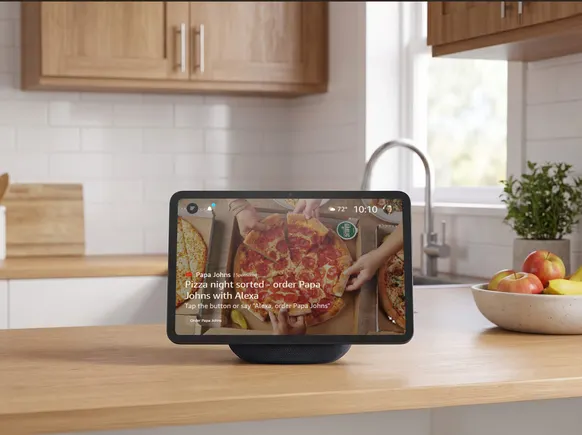
CANNES, FRANCE — If there is one singular theme dominating the sun-drenched corridors of the Cannes Lions International Festival of Creativity this year, it is the pivot from "generative AI as a novelty" to "agentic AI as a utility." While the festival grounds are teeming with vendors promising futuristic leaps, Amazon has cut through the noise with a tangible, functional deployment that moves the goalposts for digital advertising: the launch of Alexa+ Agentic Ads.
This new ad format represents a departure from the passive, static advertisements that have defined the internet age. Instead of merely showing a user a product, Alexa+ engages the user in a dialogue, understands the nuance of their intent, and facilitates a complete transaction—all within the voice-activated ecosystem of Amazon’s Echo Show devices.
The Mechanics of Intent: How Alexa+ Works
At its core, the Alexa+ Agentic Ads format is designed to shrink the "distance to purchase." In a live demonstration, Amazon showcased a user inquiring about concert tickets for a specific artist. Rather than simply being directed to a link, the user engaged in a natural, multi-turn conversation with Alexa. She clarified that the occasion was her mother’s birthday and expressed a willingness to pay a premium for better views.
The AI processed these constraints—birthday, premium, front-row—and surfaced specific, actionable options from Ticketmaster. The entire procurement process, from discovery to the final transaction, was executed via voice commands, effectively turning the ad into a personal digital concierge.
This capability relies on the agentic nature of the new Alexa+ model. Unlike older, command-and-response interfaces that required rigid, syntax-heavy prompts, this iteration interprets semantic meaning. It understands context, remembers preferences, and manages complex, multi-step workflows.
A Chronology of Integration
The path to this moment has been a calculated, multi-year progression for Amazon.
- Early 2025: Amazon initiated a closed beta period for its revamped, generative AI-powered Alexa assistant, gauging user sentiment and model accuracy.
- June 2025: Internal milestones revealed that over 1 million users had gained access to the advanced generative AI assistant, proving the viability of the technology at scale.
- Early 2026: Following the success of the beta, Alexa+ was officially made available to the general public in the United States.
- Present Day (Cannes Lions): Amazon formally unveiled the "Alexa+ Agentic Ads" format. Early partners, including Papa Johns and The Orchard (a subsidiary of Sony Music Entertainment), are currently testing the format on Echo Show devices.
Amazon has confirmed that the rollout will not stop at Echo Show hardware. The company plans to integrate these ad experiences into Fire TV’s "Feature Rotator" interface, signaling an intent to bring conversational commerce to the living room’s largest screen.
Supporting Data: Scale and Reach
While many AI startups are struggling to find a user base, Amazon’s advantage lies in its existing, massive footprint. According to data shared by the company, the Alexa ecosystem is currently integrated into tens of millions of homes globally.
This scale is the primary differentiator for Amazon as it navigates the crowded AI landscape. While competitors are still building their user bases, Amazon is layering advanced agentic capabilities onto an already established, habit-forming utility.
Furthermore, the advertising engine behind this—a $70 billion operation—is being retrofitted to support these new formats. By integrating agentic ads into its Demand-Side Platform (DSP), Amazon is ensuring that the transition for its current stable of advertisers is seamless, allowing for programmatic, self-service implementation of these complex voice-based campaigns.
Official Responses: Moving from "What If" to "What Is"
Charlotte Maines, Amazon’s Vice President of Devices Content and Advertising, addressed the skeptical industry crowd at Cannes with a clear directive: the technology is no longer in the conceptual phase.
"We have ad products that are live today," Maines stated during an interview. "This isn’t something that we’re talking about or saying ‘we’re working on it.’ My job is to make sure that, as customer engagement grows, advertisers can participate in those high-intent conversations."
Maines emphasized that the goal is not to force-feed ads, but to weave them into the fabric of the assistant’s utility. For a brand like Papa Johns, this means Alexa might remember a user’s previous order history, suggest their favorite toppings, and streamline the reorder process.
"This is literally the first thing of so much more opportunity for innovation," Maines added. "Because Alexa+—just as all of these agentic AI assistants—is new, we are building the foundation for how brands will engage with consumers in the future."
Implications for the Industry
1. The Death of the "Click"
For two decades, the "click-through rate" (CTR) has been the north star of digital advertising. Alexa+ signals a potential shift toward "Conversation Completion Rate." When a consumer interacts with an ad via voice, the success metric shifts from a mere landing page visit to the successful resolution of a need. This fundamentally changes how brands must structure their marketing funnels.
2. The Data Firewall and Privacy
The most sensitive aspect of AI-driven advertising is the potential for intrusion. As chatbots become more "intimate," consumers are rightfully wary of how their personal data—such as their son’s preferred water bottle color or their mother’s birthday—is used to target them.
Amazon is attempting to solve this through a "firewall" approach. Maines noted that while the information gathered from conversations is used to refine the user’s first-party profile and improve the AI’s model, this data is siloed from the ad-tech stack in a way that respects consumer privacy.
"We’re lucky that we just have decades of a foundation of building products based on both creating a very personalized and relevant experience and doing it in a way that’s safe for customers’ privacy," Maines explained. The challenge, however, will be maintaining this trust as the sophistication of the "agent" increases.
3. The "Creative Agent" Synergy
Amazon is not just automating the delivery of ads; it is automating the creation of them. By offering a suite of creative AI tools, Amazon is allowing brands to generate assets that are optimized for Alexa+ environments. This "plug-and-play" infrastructure allows smaller advertisers to compete on a level playing field with legacy brands, as the platform itself handles the heavy lifting of campaign development and deployment.
4. A New Competitive Moat
The Cannes Lions festival is a proving ground where tech giants go to assert their dominance. Amazon’s message is clear: while others have the "brains" (the AI models), Amazon has the "backbone" (the data, the DSP, and the transaction infrastructure).
By leveraging its existing retail infrastructure, Amazon is positioning itself to be the primary winner in the shift toward "Conversational Commerce." When a consumer asks for a product, they are not asking a generic chatbot; they are asking an assistant that already has their credit card on file, their address saved, and a history of their past purchases.
Conclusion: The Road Ahead
As the festival concludes, the industry is left with a stark reality: the barrier between consumer intent and brand fulfillment is evaporating. The move toward agentic ads is not just a trend—it is a total restructuring of the shopping experience.
Amazon’s integration of Alexa+ into the advertising stack is a bold bet that the future of marketing will be less about shouting from a billboard and more about participating in a conversation. Whether consumers will fully embrace the idea of their digital assistants acting as persistent sales agents remains to be seen. However, with millions of homes already equipped with the necessary hardware, the foundation is set. The era of the "Agentic Ad" has officially arrived.

 Neng Nana
 Lina Irawan