

By Parth Shah
Published May 31, 2026
The current landscape of software development is undergoing a seismic shift, driven by the emergence of "vibe coding"—a phenomenon where AI models generate polished, functional landing pages in mere seconds. While these demos are undeniably impressive, they often mask a fundamental reality of the software industry: the chasm between a flashy, ephemeral prototype and a robust, production-ready codebase.
As an engineer, I’ve seen countless tools promise to revolutionize the workflow, yet few survive the transition from a simple "Hello World" request to a complex, multi-page site with intricate UI requirements. To determine which AI agents are truly ready for the rigors of professional development, I moved beyond basic prompts and subjected three industry-leading tools—Codex, Google Antigravity 2.0, and Claude Code (Opus 4.8)—to a rigorous stress test.
The Stress Test: Defining "Production-Ready"
To move beyond the superficiality of typical AI evaluations, I tasked each tool with designing a comprehensive, multi-page portfolio for a fictional luxury architectural firm, "Rajhans." This was not a request for a generic template; I intentionally embedded "Senior Developer traps," including custom layout math, fluid typography requirements, complex semantic HTML structures, and the need for sophisticated asset integration.
The goal was to measure how these models handled high-level architectural decisions, design aesthetics, and the nuanced technical debt that often plagues automated code generation.
Chronology of the Evaluation
The Codex Experience: A Legacy Struggle
I initiated the experiment with Codex, configuring it to "5.5 Extra High" mode to ensure maximum attention to detail. This proved to be a miscalculation. The latency was immediate and severe; the generation phase felt like waiting for a legacy server deployment from over a decade ago.
After waiting for a progress bar that refused to advance, I was forced to abandon the high-fidelity settings and revert to "Medium" just to facilitate token generation. The result was disappointing. Codex delivered a bare-minimum structure that resembled a skeleton wireframe more than a finished product. It lacked the visual polish required for a high-end luxury site, missing crucial design logic like fluid typography and responsive grid systems. It functioned, but it felt like the work of an overwhelmed junior developer rushing to meet a deadline rather than a sophisticated engineering assistant.
Google Antigravity 2.0: The Speed Demon
The transition to Google Antigravity 2.0 (powered by the Gemini 3.5 engine) was transformative. The speed was unparalleled; where Codex struggled to generate lines, Antigravity deployed entire modules to the screen in an instant.

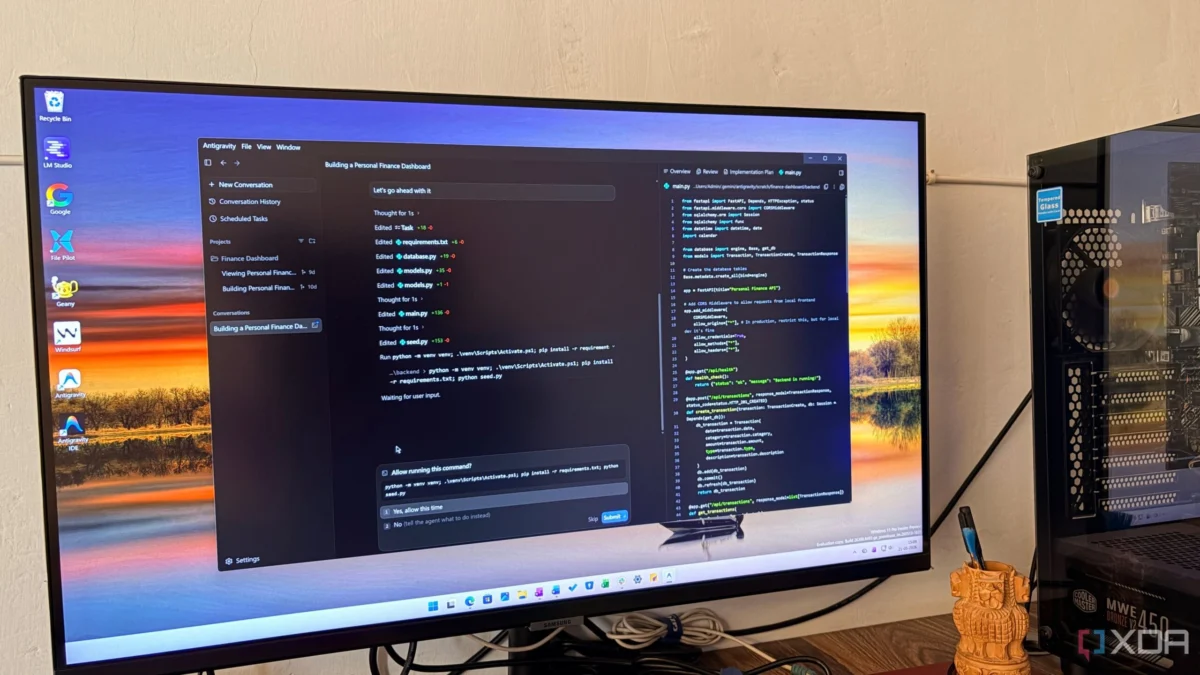
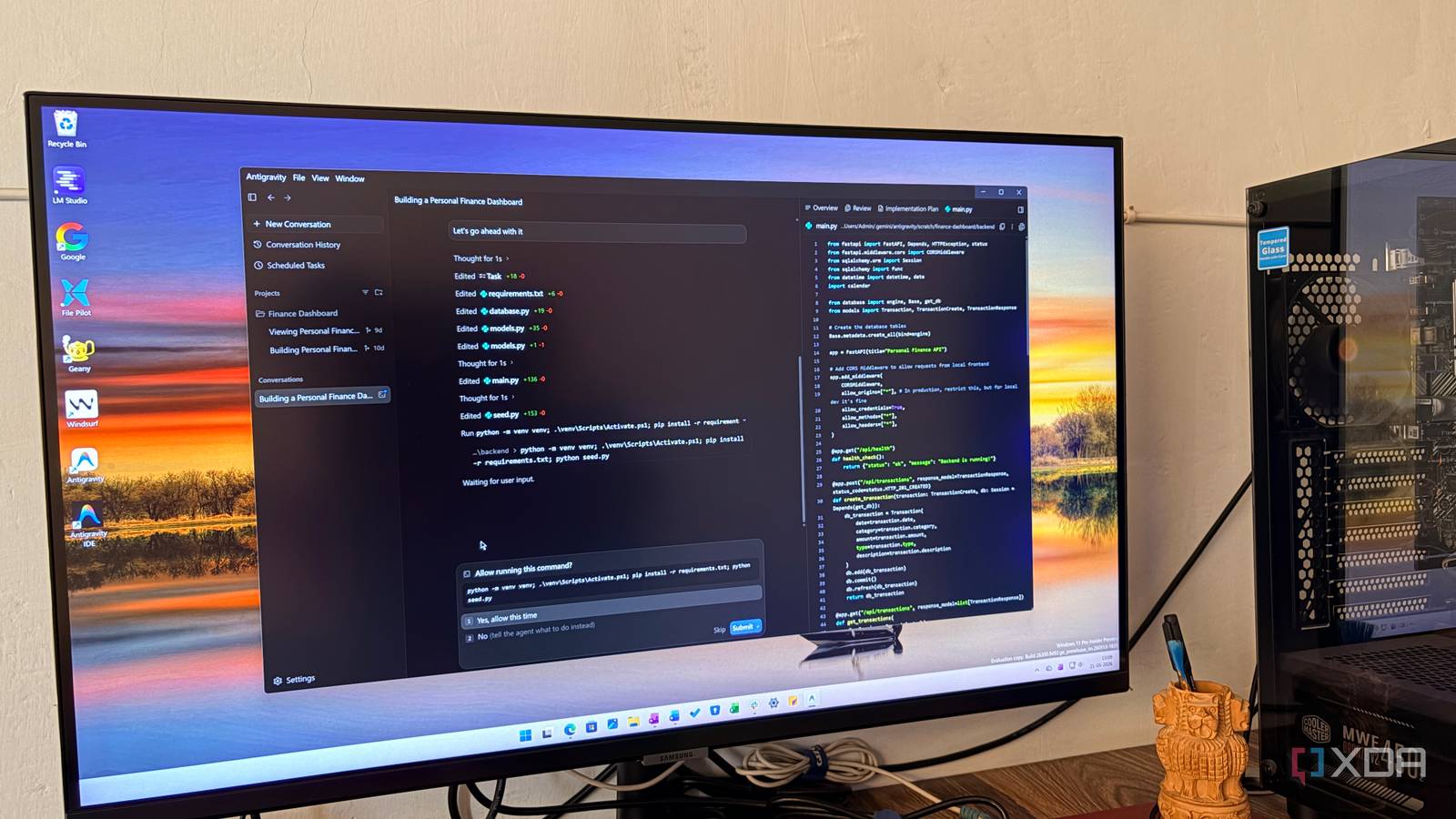
Google’s 2.0 update marks a significant shift in its interface. By adopting a layout reminiscent of Claude Code and Codex, while retaining an option for a traditional IDE interface, Google has clearly signaled its intent to compete for the professional developer’s primary workspace. When tasked with the Rajhans project, Antigravity produced a cohesive black-and-gold aesthetic that immediately communicated a premium brand identity. The transitions and multi-step form animations were remarkably fluid. However, it wasn’t perfect; the menu layout suffered from cramped padding, and the AI’s reliance on basic color blocks instead of rich, imagery-heavy layouts hindered its ability to mimic high-end editorial design.
Claude Code: The Senior Architect
Finally, I put Claude Code (Opus 4.8) to the test. If Antigravity provided the speed, Claude Code provided the maturity. It approached the prompt with the mindset of a senior systems architect, leaning into the complexity of the image-centric design requirements rather than avoiding them.
Claude Code’s output was defined by its attention to detail. It handled white space with an expert touch, allowing the luxury branding to breathe in a way that the more cramped Antigravity output could not. The semantic HTML was flawless, and the typography scaling felt intentional and precise. While the creative direction of its image assets leaned slightly toward classic architecture rather than the hyper-minimalist modernism I had requested, the technical execution was, without question, the strongest of the trio.
Supporting Data and Comparative Analysis
| Feature | Codex | Google Antigravity 2.0 | Claude Code (Opus 4.8) |
|---|---|---|---|
| Execution Speed | Poor (High Latency) | Excellent (Near-Instant) | Good |
| Visual Polish | Minimalist/Wireframe | Premium/Sleek | Sophisticated/Detailed |
| Engineering Logic | Basic/Template-heavy | Advanced/Smooth | Senior-level/Semantic |
| Resource Usage | High (System Heat) | Efficient | Moderate |
| Final Score (1-10) | 4/10 | 8/10 | 9/10 |
The data underscores a clear hierarchy in the current AI coding market. Codex, once the gold standard, is struggling to keep pace with the newer generation of models, suffering from significant performance overhead. Google Antigravity 2.0 represents the best balance of speed and visual flair, making it an ideal choice for rapid prototyping. However, for complex production work where the structural integrity of the code is paramount, Claude Code currently holds the advantage.

Official Responses and Industry Context
While individual companies remain tight-lipped regarding specific model training data, the industry consensus is moving toward "agentic" workflows. Representatives from Anthropic and Google have both emphasized that the next generation of coding assistants is moving away from "auto-complete" functionality and toward "system-level reasoning."
In recent developer forums, the feedback loop has been consistent: developers are no longer looking for tools that write more code, but rather tools that write better code. The focus has shifted toward integration—how well these models handle existing file structures, dependencies, and complex environmental configurations.
Implications for the Future of Development
The results of this stress test carry profound implications for the future of software engineering.
- The Death of the "Junior" Task: As models like Claude Code begin to master the nuances of semantic HTML, spacing, and structural integrity, the role of the entry-level developer is destined to change. The tasks that previously occupied a junior developer’s day—boilerplate creation, simple layout adjustments—are increasingly being offloaded to agents.
- The Rise of the "Architect-Developer": The value of the human engineer is shifting toward high-level architectural decision-making, code review, and the orchestration of multiple AI agents. We are moving toward a paradigm where a single human can manage the output of several specialized AI models to build products that previously required large teams.
- Performance as a Feature: As demonstrated by the disparity between Codex and Antigravity, speed is not just a luxury; it is a critical component of the development experience. A tool that consumes excessive system resources or causes significant latency is a barrier to the "flow state" that engineers rely on.
Conclusion
Building a complex website using three different AI tools has provided a rare, behind-the-scenes look at the state of AI-assisted development. Codex, while historically significant, currently struggles with the demands of modern web standards. Google Antigravity 2.0 is a formidable contender, offering blistering speed and impressive visual results that make it a top-tier choice for front-end heavy projects.
However, for those seeking a partner that understands the "why" behind the code—the importance of white space, semantic precision, and long-term maintainability—Claude Code remains the gold standard. It is the only model among the three that consistently demonstrated the foresight and attention to detail expected of a senior developer.
As we look toward the remainder of 2026, the question is no longer whether AI can write code, but how effectively it can integrate into a professional production environment. For now, the crown belongs to the model that treats code not as a series of tokens, but as a structural craft.












No comments yet. Be the first to join the conversation!