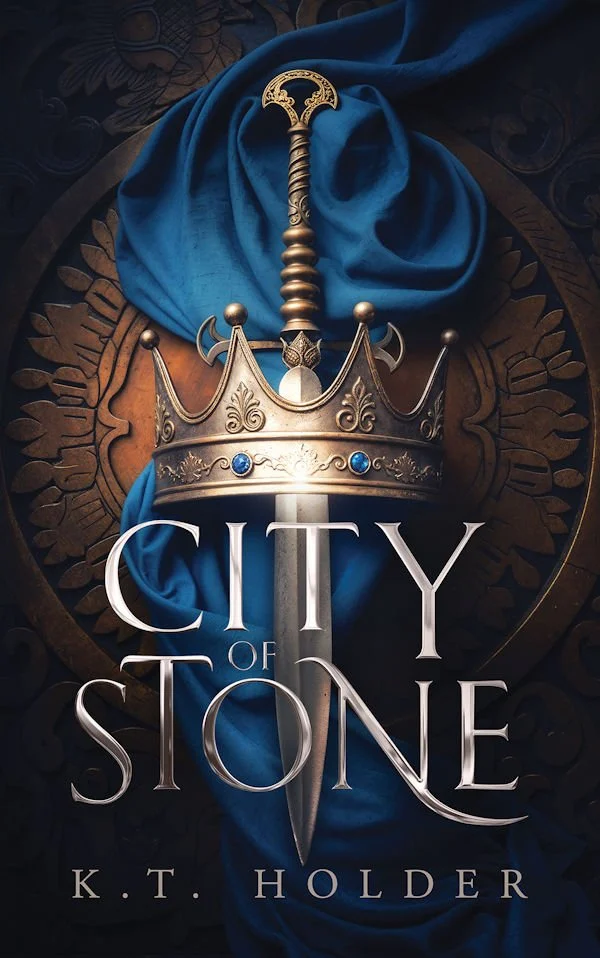
As the 11th annual Self-Published Fantasy Blog-Off (SPFBO) reaches its climactic final stretch, one title has emerged as a lightning rod for debate among the judging panel: City of Stone. A tale defined by its brutal beginnings and its exploration of the "found family" trope, the novel has proven that a story doesn’t need to be universally acclaimed to be undeniably significant. As the competition prepares to announce its finalists, City of Stone stands as a testament to the complex, subjective nature of modern fantasy literature.
The Narrative Foundation: A Tale of Blood and Redemption
At the heart of City of Stone is Kasperi Ironstone, a protagonist whose life is defined by the high cost of loyalty. The narrative opens with a desperate act: Kasperi, attempting to secure a future for his younger brother, Soli, is ensnared in a criminal underworld that leads him directly into the maw of the Empire’s most notorious labor camps.
Eight years later, the landscape of the realm has shifted. Kasperi emerges from the shadows of his incarceration only to find a world teetering on the precipice of total war. His brother, once the object of his protection, has transformed into a polarizing figure leading a burgeoning rebellion. The novel’s central conflict is as intimate as it is epic: Kasperi must navigate a treacherous web of political sabotage and military posturing, all while struggling to reconcile his duty to the realm with his unconditional, yet increasingly complicated, love for his brother.
Chronology of a Conflict: From the Mines to the Throne
The trajectory of the novel is marked by a clear, three-act progression that has elicited varied responses from readers and critics alike:
- The Descent (The Prologue Years): The story establishes the brutal, grinding reality of the labor camps. This period serves to ground the reader in the physical and emotional toll exacted by the Empire, establishing the camaraderie that forms the "found family" backbone of the plot.
- The Awakening (The Post-Camp Era): Upon release, Kasperi and his companions are thrust into the political machinations of a crumbling Empire. Here, the story expands its scope to include the perspectives of figures like the Empress—a ruler struggling against the calcified, patriarchal structures of her own court.
- The Fracture (The Climax): The narrative accelerates toward a final confrontation where personal betrayal forces a choice between familial loyalty and the greater good. It is in this final act that the pacing reaches a "frenetic" peak, according to several judges, effectively closing the first installment while seeding plot hooks for future entries.
Critical Analysis: A House Divided
The reception of City of Stone among the SPFBO judges serves as a fascinating case study in reader preference. The panel’s feedback highlights a distinct divide between those who prioritize pacing and narrative efficiency and those who value character-driven emotional resonance.
The Case for the Prosecution: Pacing and Predictability
Not all judges were captivated by the journey. E.G., one of the panelists, noted a significant disconnect by the midway point. For this perspective, the reliance on overt character dynamics—spelled out repeatedly—led to a sense of predictability. "The character dynamics were spelled out over and over again," E.G. observed, noting that the plot twists felt telegraphed rather than earned. When the characters were perceived as "angry or childish" rather than nuanced, the stakes of the rebellion failed to land, leading to a loss of engagement.
The Case for the Defense: Emotional Core and Worldbuilding
Conversely, judges like Maureen and Julia found the book to be a masterclass in character-centric storytelling. Maureen highlighted the layering of the political landscape, noting that the "info-dumping" common in many fantasy debuts was notably absent here. The world, she argues, was built through action and consequence rather than exposition.
Julia provided a more granular critique, praising the novel’s "emotional clarity." She specifically pointed to the way the book handles the "unlearning" of bias—a rare, quiet strength where the protagonist, Kasperi, corrects his own derogatory language toward marginalized groups like the Jatte and the Kikachi. "It’s not framed as a big moral moment, just a quiet adjustment," Julia noted. This subtlety, combined with a refreshing approach to romance—where LGBTQ+ existence is treated with gentle, realistic adjustment rather than overt dramatic conflict—offered a "genuinely comforting" reading experience.
Supporting Data: Thematic Strengths and Weaknesses
The following table summarizes the key critical takeaways regarding the novel’s execution:
| Feature | Strength | Weakness |
|---|---|---|
| Characterization | Strong, relatable found-family dynamics. | Potential for characters to come across as childish or one-dimensional. |
| Worldbuilding | Avoids info-dumps; immersive political landscape. | Magic system clarity remains a point of contention. |
| Pacing | High energy in the final act. | Mid-section slumps reported by some readers. |
| Thematic Depth | Excellent handling of social growth and empathy. | Conflict resolution can feel "too easy" or rapid. |
Official Responses and the SPFBO Context
As the SPFBO contest nears its conclusion, the editors and judges of Fantasy Faction have emphasized that City of Stone represents the inherent risks and rewards of self-publishing. The competition is designed to surface hidden gems, and the presence of such a divisive book is, in many ways, the desired outcome of the process.
"Reading is subjective," the organizers reminded the public. The varying reviews for City of Stone are not a failure of the competition, but an illustration of its necessity. For readers who enjoy a slow-burn emotional journey, this book is a triumph; for those who demand tight, unpredictable plotting, it may leave something to be desired.
Implications for the Genre
The success and critique of City of Stone offer several implications for the current state of independent fantasy:
- The Demand for "Kind" Fantasy: The praise for the book’s gentle handling of social adjustment and non-dramatic LGBTQ+ relationships suggests a growing appetite among readers for "kind" or "cozy-adjacent" emotional arcs within traditionally "grim" settings like labor camps and war zones.
- The "Found Family" Ceiling: While the found family trope is a perennial favorite, it requires a high level of character development to sustain a long-form series. The judges’ feedback suggests that when the banter and loyalty are strong, readers will overlook "rough edges" in plot, but when the plot lacks tension, the trope alone cannot carry the narrative.
- The Rise of the Political Empress: The positive reception of the Empress’s POV chapters indicates a reader desire for stories that critique systemic patriarchy and entitlement, even in secondary-world settings. This provides a template for future authors looking to add weight to their political subplots.
Conclusion: A Work in Progress
City of Stone is a novel that wears its heart on its sleeve. While it may suffer from the occasional narrative shortcut or a pacing dip that tests the reader’s patience, its strengths—a deep commitment to kindness, loyalty, and the internal growth of its protagonists—are undeniable.
As the author looks toward the sequels, the challenge will be to tighten the "rough edges" identified by the judges while maintaining the warmth that made this book a standout for many. For fans of character-driven fantasy, City of Stone is a worthy addition to the reading list, and a prime example of why the SPFBO continues to be a vital platform for emerging voices in the genre. Three more semi-finalists await their turn in the spotlight, but City of Stone has already left an indelible mark on this year’s competition.