Reynand Wu
The Japanese "konbini" (convenience store) is more than a place to pick up a bento box or pay a utility bill; it is a cultural anchor, a beacon of light in the quiet hours of the night, and a crossroads for the community. Capturing this specific, melancholic, and deeply comforting atmosphere is the indie title inKONBINI: One Store. Many Stories., developed by Nagai Industries. Following its digital success, the game is now making the jump to physical media, offering collectors and fans of "cozy" gaming a tangible way to preserve the experience of managing their own little slice of Japanese suburban life.
Main Facts: The Convenience Store Experience
inKONBINI is a narrative-driven management simulator that eschews the frantic pace of typical retail games in favor of a deliberate, slow-burn approach. Players assume the role of a store clerk, tasked with the rhythmic duties of stocking shelves, organizing inventory, and—most importantly—interacting with the eclectic cast of locals who wander into the shop.
The core loop of the game revolves around these interpersonal connections. Every customer brings a fragment of their life into the store, allowing the player to engage in branching conversations that reveal the neighborhood’s secrets and dramas. As we noted in our initial preview: "Nothing feels rushed in inKONBINI. Instead, it feels deliberate and like taking on the role of working in a small town in a known shop. I do like finding the little post-it notes with side quests on them as well, giving you something to do to pass the time."
The physical release serves as a tribute to this atmosphere. Beyond the base game, the publishers have curated two distinct tiers of physical editions, both packed with lore-heavy collectibles designed to immerse the player further into the world of the game.
Chronology: From Digital Gem to Collector’s Item
The journey of inKONBINI from a digital indie concept to a physical collector’s item reflects the growing market demand for boutique physical releases of smaller, high-quality titles.
- Initial Reveal and Development: inKONBINI first gained attention for its hyper-realistic aesthetic and its commitment to the "cozy" genre, focusing on the sensory details of a store—the hum of the refrigerators, the chime of the door, and the specific lighting of a rainy Japanese evening.
- The Preview Phase: Early previews lauded the game for its unique narrative pacing. Unlike games that prioritize high-octane action, inKONBINI was praised for its ability to simulate the quiet dignity of service work.
- Launch in Asian Markets: The game successfully launched its physical edition in Japan and across Asia, setting a high bar for the quality of materials included in the box.
- Upcoming Western Release: Fans in North America and Europe have been eagerly awaiting the arrival of these editions, which are slated for a September release.
- The Beep Store Exclusive Window: To celebrate the global rollout, the Beep Store has initiated a promotional period where early buyers receive an exclusive Yojoki Masters trading card set, a move that highlights the publisher’s intent to cater to the dedicated collector community.
Supporting Data: Dissecting the Physical Editions
The physical editions of inKONBINI are a masterclass in "value-added" merchandise, moving beyond simple plastic cases to provide an artifact-rich experience.
The Standard Edition
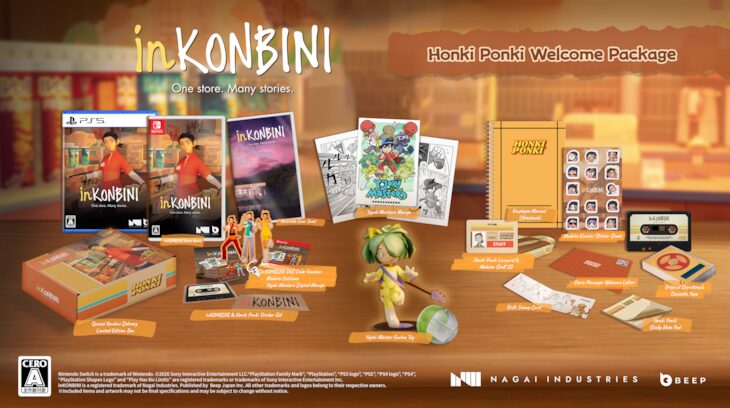
The Standard Edition provides the essentials for the player, ensuring that the core experience is supported by digital and physical bonuses:
- Base Game: A high-quality cartridge for the Nintendo Switch 2 or disc for the PlayStation 5.
- Honki Ponki Sticker Set: Featuring the game’s charming branding.
- Digital DLC Codes: These include the "Makoto" exclusive costume and the Yojoki Master digital manga, bridging the gap between the game’s internal lore and extended media.
The Limited Edition
The Limited Edition is a comprehensive box set designed for those who want the full "Store Manager" experience. Its contents are extensive:
- Stationery & Roleplay Items: A welcome letter for the Store Manager, a Honki Ponki ID Lanyard, and Makoto’s employee ID badge.
- Organization Tools: A custom notebook and a memo pad styled specifically like the in-game sticky notes, allowing players to track their own "real-world" to-do lists.
- Gamified Extras: A shift schedule stamp card, which acts as a playful nod to the game’s mechanics.
- Multimedia: A physical soundtrack provided in the form of a nostalgic cassette tape, alongside the Yojoki Masters physical manga and a collectible Gacha toy.
- Presentation: All items are housed in a premium collector’s box, designed to sit proudly on a shelf alongside other boutique gaming releases.
Official Perspectives: The Value of "Cozy"
While the development team has remained humble, the reception of the physical release suggests that inKONBINI has tapped into a significant psychological need in the gaming market. By simulating a job that is often seen as monotonous, the game transforms the "drudgery" of retail into a meditative practice.
Industry analysts note that titles like inKONBINI are part of a broader trend: "The rise of cozy games isn’t just about cute aesthetics; it’s about the desire for agency and community in a world that often feels disconnected," says a spokesperson for the project’s distribution team. "By offering a physical edition that includes real-world items—like a shift schedule or an employee ID—we are helping the player transition from simply playing the game to feeling like they are actually part of the neighborhood."
The inclusion of a physical soundtrack on cassette is particularly poignant. It signals that the developers understand the "lo-fi" appeal of their game, where the soundscape of a buzzing fluorescent light and rain against the window is just as important as the dialogue.
Implications: The Future of Indie Preservation
The physical release of inKONBINI carries several implications for the future of the indie gaming industry.
First, it validates the "Limited Run" model for small-budget games. Historically, only AAA titles received such elaborate physical collector’s editions. The success of this release demonstrates that indie fans are not only willing to pay for physical copies but are eager to own high-quality, physical ephemera that deepens their connection to the story.
Second, it highlights the importance of cultural localization. inKONBINI is fundamentally a Japanese story. By including elements like the Yojoki Masters manga and traditional Gacha toys, the physical edition acts as a cultural bridge, allowing players worldwide to appreciate the specific nuances of the Japanese retail experience.
Finally, this release suggests that the "cozy" genre is maturing. No longer content with just digital storefronts, these games are carving out a permanent place on physical shelves. As players grow tired of the ephemeral nature of digital-only licenses, the demand for tangible assets—notebooks, stamps, cassettes, and cards—will likely continue to rise.
For the collector, inKONBINI: One Store. Many Stories. is a must-have. It represents the pinnacle of what a small, focused indie project can achieve when it leans into its identity. Whether you are a fan of the slow-paced management genre or simply a collector of beautiful, tactile gaming artifacts, the physical edition of inKONBINI offers a level of care and detail that is rare in today’s high-speed market. With the September release date approaching for the West, it is time for store managers-in-waiting to prepare their counters, organize their shelves, and get ready to welcome the neighborhood into their store.
As we look toward the future of the medium, one thing remains clear: in a world of endless digital downloads, there is still something profoundly comforting about holding a piece of your favorite story in your hands. inKONBINI isn’t just a game; it is a small, quiet, and wonderfully detailed world that you can now hold, touch, and keep forever.


 Asep Darmawan
 Ali Ikhwan