

In the modern digital landscape, social media has graduated from a simple brand-awareness playground to a core pillar of revenue generation. However, despite the platform’s massive influence—with a global user base projected to hit 5.75 billion by 2026—many marketing teams remain trapped in a cycle of ambiguity. A staggering 68% of marketers report significant anxiety when it comes to justifying their social media budgets to stakeholders.
As businesses move toward an era where social commerce is expected to surpass the $1 trillion mark by 2028, the ability to translate "likes" and "shares" into concrete financial metrics is no longer just a "nice-to-have" skill—it is a business imperative.

The Core Mechanics: What is Social Media ROI?
At its most fundamental level, social media Return on Investment (ROI) is the measurement of value a business receives from its social media marketing relative to the resources—time, personnel, advertising spend, and software costs—invested.
The classic formula for calculating this return is:
((Value Generated – Total Investment Costs) / Total Investment Costs) x 100

While the math appears straightforward, the complexity lies in the definition of "value." In a sophisticated strategy, value is not limited to direct, last-click sales. It encompasses a spectrum of outcomes, including lead generation, customer lifetime value (CLV) increases, brand sentiment improvements, and cost savings in customer support.
The Chronology of Attribution: Why Measurement Fails
To understand why ROI is often misunderstood, one must examine the customer journey. Historically, marketers relied on "last-click" attribution, which credits the final interaction before a purchase. In this model, social media is frequently the "unsung hero" that introduces a brand to a customer weeks before a conversion occurs via an email link or a direct website visit.

- The Discovery Phase: A user encounters a brand through an Instagram Reel or a LinkedIn thought-leadership post.
- The Consideration Phase: The user engages with content, saves a carousel, or visits the brand’s profile.
- The Conversion Phase: The user makes a purchase, often through a different channel (search or email) after being nurtured by social content.
Because social media often plays a role in the "middle" of the funnel, simple measurement models fail to capture its impact. Modern, sophisticated teams are moving toward multi-touch attribution, which assigns partial credit to each touchpoint in the journey, ensuring social media is recognized for its vital role in the long-term sales cycle.
Supporting Data: The Case for Social Investment
The data supporting social media’s impact on the bottom line is overwhelming. According to recent market analysis from Statista, social commerce is currently on a growth trajectory of 10.7% year-over-year.
Furthermore, 46% of marketing professionals cite social media as a primary driver for sales growth. This isn’t just about direct transactions; it’s about "Dark Social"—the unmeasurable traffic coming from private shares, direct messages, and word-of-mouth recommendations that social media stimulates. When brands fail to measure the full scope of this influence, they drastically undercount their actual contribution to revenue, often leading to premature budget cuts.
The Five-Step Framework for ROI Success
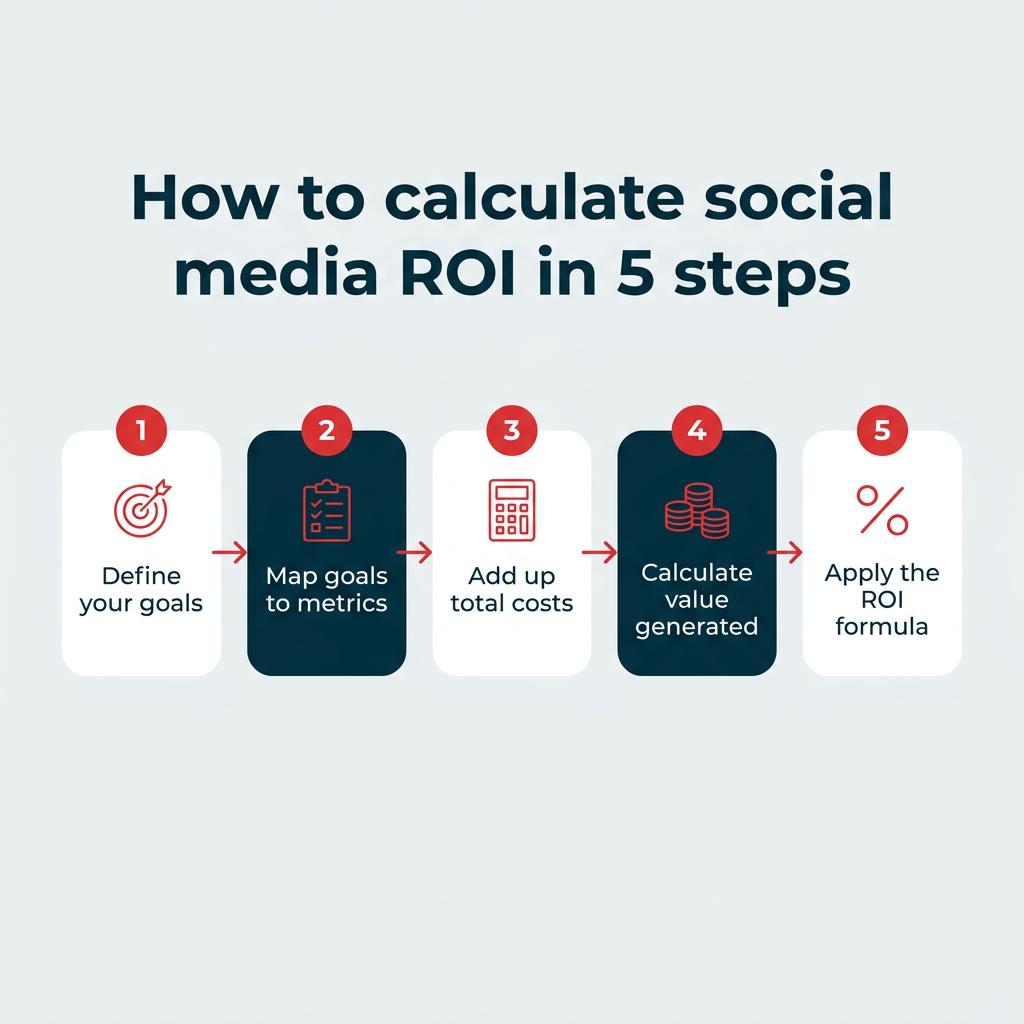
To move from "guessing" to "proving" ROI, teams should adopt a standardized five-step methodology:
1. Define Strategic Goals
ROI is meaningless without a target. Are you trying to drive e-commerce sales, B2B lead generation, or brand awareness? Each goal requires a different metric.
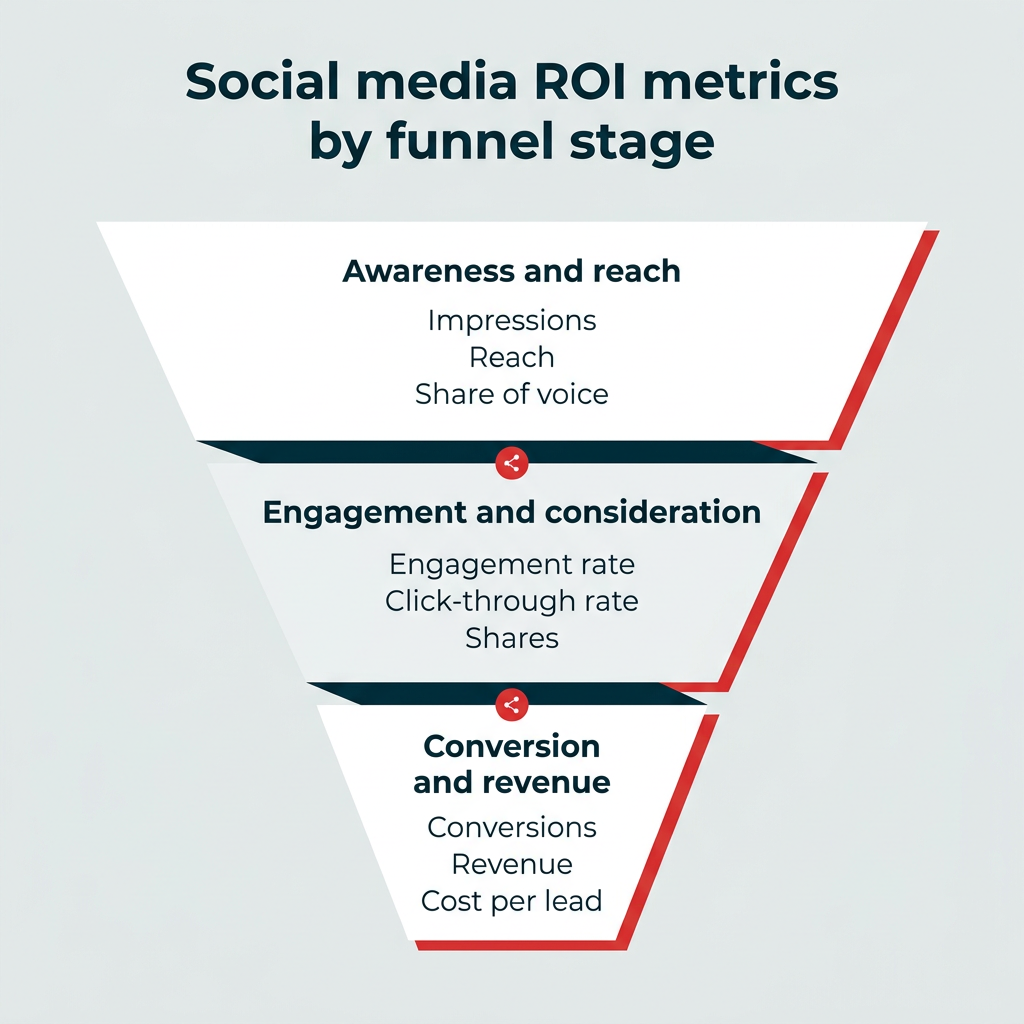
2. Map Metrics to Outcomes
- Awareness: Focus on reach, impressions, and share of voice.
- Engagement: Focus on click-through rates, shares, and saves.
- Conversion: Focus on cost-per-acquisition (CPA), return on ad spend (ROAS), and revenue per lead.
3. Aggregate Total Costs
Do not stop at ad spend. True costs include:
- Human Capital: The salary cost of social media managers, copywriters, and designers.
- Software: Subscriptions to analytics tools, scheduling platforms, and design suites.
- Production: Costs associated with video shoots, graphic design, and influencer partnerships.
4. Assign Monetary Value to Non-Monetary Actions
This is where many teams falter. If you cannot track a direct sale, use a proxy. For example, if your average lead is worth $500 and your social content generates 100 leads, you can assign an estimated value of $50,000 to those social efforts.
5. Execute the Formula
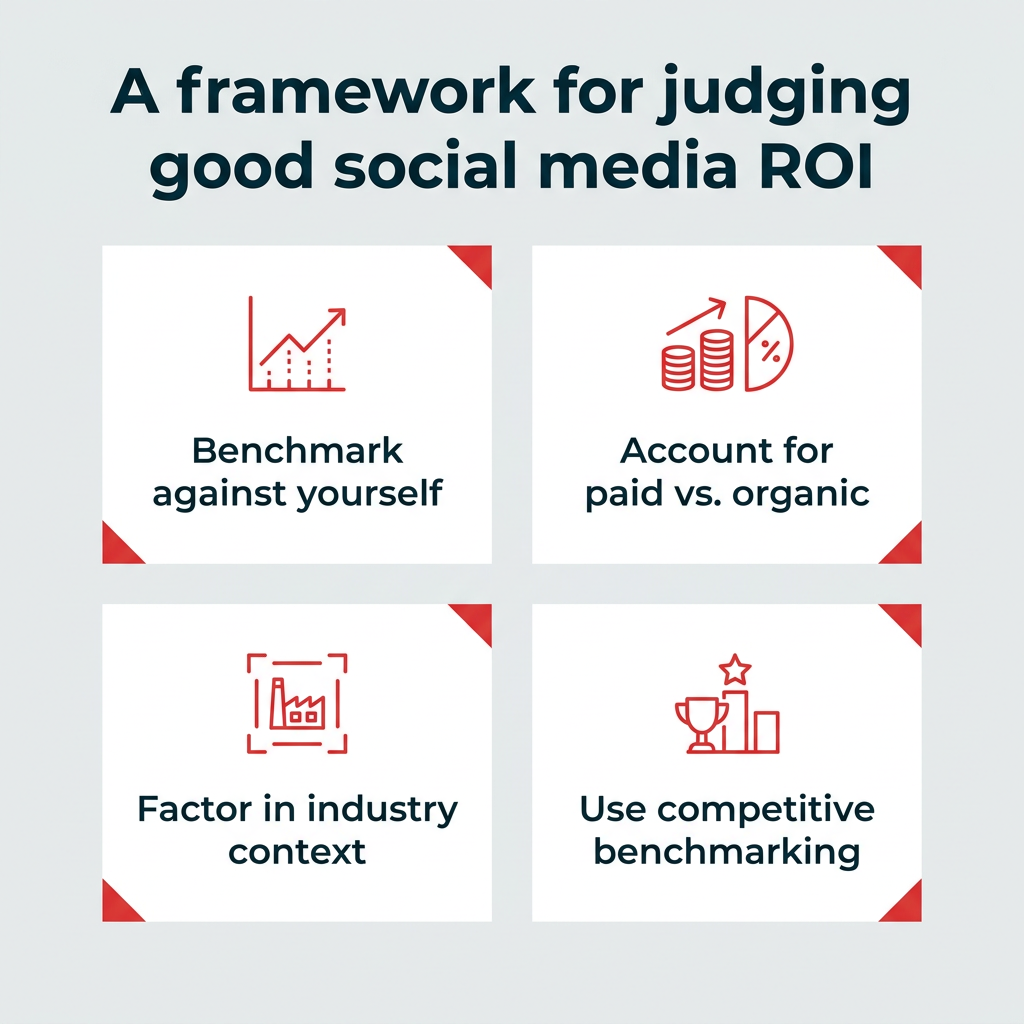
Plug these numbers into the ROI formula and compare your result against previous quarters or industry benchmarks.

Addressing the Roadblocks: Data Silos and Complexity
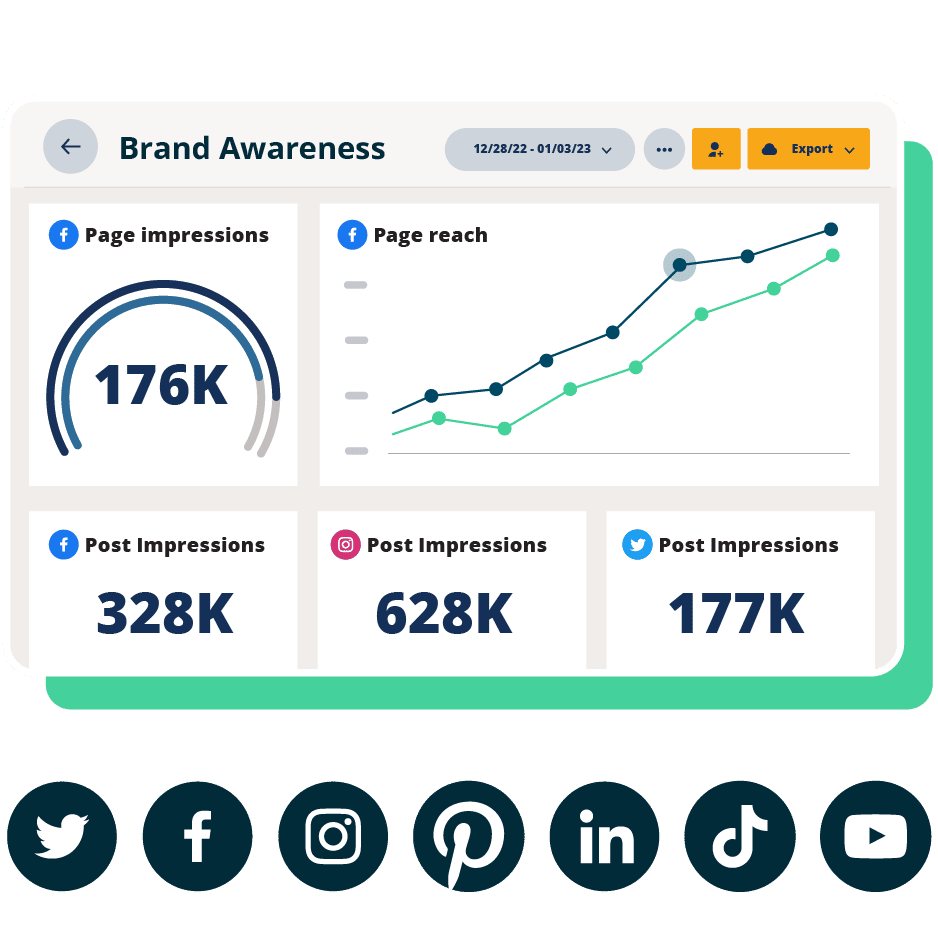
A primary barrier to accurate reporting is the "silo effect." With data fragmented across native dashboards (Meta, LinkedIn, TikTok, X), manual consolidation is prone to human error and inefficiency.
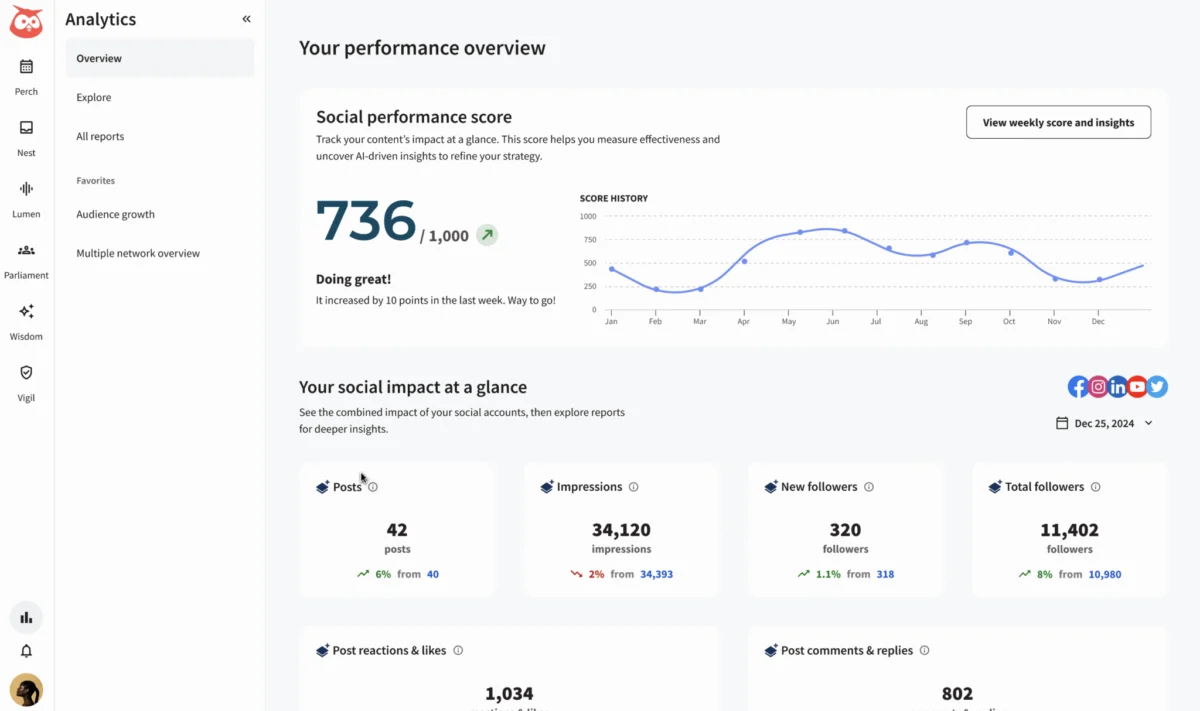
Leading enterprise teams are solving this by adopting centralized platforms like Hootsuite. By unifying data streams into a single dashboard, marketers can track performance holistically. Advanced tools allow for the integration of web analytics (like Google Analytics) with social data, enabling marketers to see exactly how a post from three months ago contributed to a conversion today.
Implications for Future Strategy: The Power of Experimentation
The most successful organizations do not treat their social strategy as a static plan. They treat it as a laboratory. By running A/B tests on content formats—comparing, for example, the conversion efficacy of short-form video against static carousels—brands can optimize their spend in real-time.
Key areas for optimization include:

- Refining Targeting: Utilizing lookalike audiences and retargeting pixels to ensure ad spend reaches high-intent users rather than a broad, disinterested audience.
- Leveraging Social Commerce: Utilizing in-app checkout features to reduce friction, effectively creating a "closed-loop" measurement system that is easier to track than traditional web-based sales.
- Competitor Benchmarking: Using tools to track competitor success allows teams to identify gaps in their own strategy, effectively "outsourcing" some of their R&D to the competition.
Reporting to the C-Suite: Speaking the Language of Leadership
To protect and grow social budgets, reporting must shift from "vanity metrics" to "business outcomes." Executives do not necessarily care about follower counts; they care about how social media reduces Customer Acquisition Cost (CAC) or increases Customer Lifetime Value (CLV).
When preparing reports for stakeholders, focus on:

- Trend Analysis: Show how social activity correlates with overall revenue growth.
- Efficiency Metrics: Highlight improvements in cost-per-lead over time.
- Actionable Insights: Always explain why the numbers shifted and what the team will do differently next quarter to improve the results.
Conclusion: The Path Forward
Social media ROI is not a destination, but a continuous cycle of observation, calculation, and refinement. As the digital economy continues to integrate social platforms deeper into the purchasing journey, the divide between "social" and "sales" will continue to shrink.
By standardizing measurement, breaking down data silos, and aligning social goals with broader business objectives, marketing teams can transform their social media channels from expense items into high-performing revenue engines. In an environment where every dollar is scrutinized, the ability to prove that social media works isn’t just good marketing—it is the hallmark of a resilient and future-proof business.











