

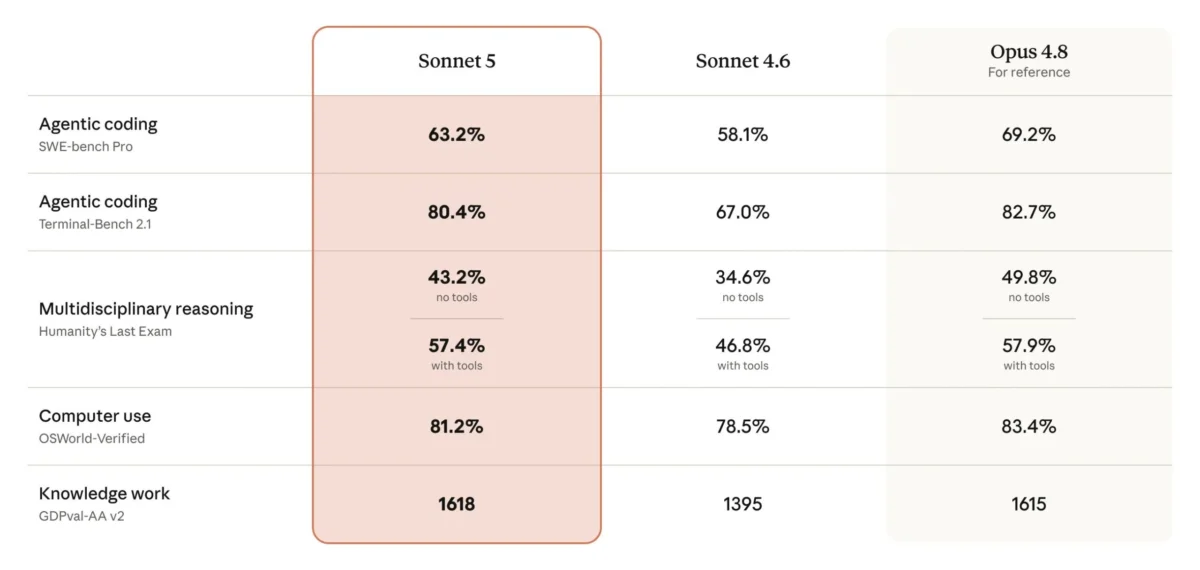
In a significant leap forward for artificial intelligence accessibility and capability, Anthropic has officially launched Claude Sonnet 5. Replacing the Sonnet 4.6 model that debuted just four months ago in February, the new iteration positions itself as the most sophisticated "medium-sized" model in the company’s current hierarchy. By prioritizing "agentic" functionality—the ability for AI to plan, interact with software environments, and execute complex workflows autonomously—Anthropic is signaling a shift from simple chatbot interactions to true digital workspace automation.
The Evolution of the Claude Ecosystem
To understand the weight of the Sonnet 5 release, one must look at the broader architecture of Anthropic’s model lineup. The company classifies its AI models into three distinct tiers:
- Haiku: Designed for speed and high-volume, low-latency tasks.
- Sonnet: The middle-ground "workhorse" model, balancing high-level intelligence with cost-efficiency.
- Opus: The flagship, high-compute model intended for the most complex, multi-step reasoning tasks.
For most users, the Sonnet line serves as the primary gateway to Anthropic’s intelligence, acting as the default engine for the Claude web interface and many API-driven applications. With the release of Sonnet 5, Anthropic has effectively "democratized" agentic capabilities, offering performance metrics that, until recently, were reserved for the much larger and more expensive Opus 4.8 architecture.

A Chronology of Recent Anthropic Developments
The release of Sonnet 5 is the latest in a rapid-fire sequence of model updates and regulatory hurdles that have defined the summer of 2026 for Anthropic.
- Late May 2026: Anthropic introduces Claude Opus 4.8, a significant upgrade to their flagship model, setting a new high-water mark for reasoning and accuracy.
- Early June 2026: The company experiments with advanced, high-capability models labeled "Mythos 5" and "Fable 5." These models were designed to push the boundaries of autonomous operation.
- Mid-June 2026: Following a directive from the U.S. government, Anthropic is forced to temporarily pull access to both Mythos 5 and Fable 5, citing concerns over the safety and security implications of such highly autonomous systems.
- Late June 2026: A partial restoration of Mythos 5 occurs, limited strictly to vetted U.S. institutions and select security researchers.
- June 30, 2026: Anthropic officially releases Claude Sonnet 5 to the general public, positioning it as a safe, highly capable middle-tier model that bridges the gap between everyday utility and high-end research power.
Performance Metrics: Why "Agentic" Matters
The defining feature of Sonnet 5 is its "agentic" profile. In the lexicon of modern AI, an agentic model does not just respond to text; it completes tasks. Anthropic has optimized this model to interface directly with browsers, command-line terminals, and various software toolsets.
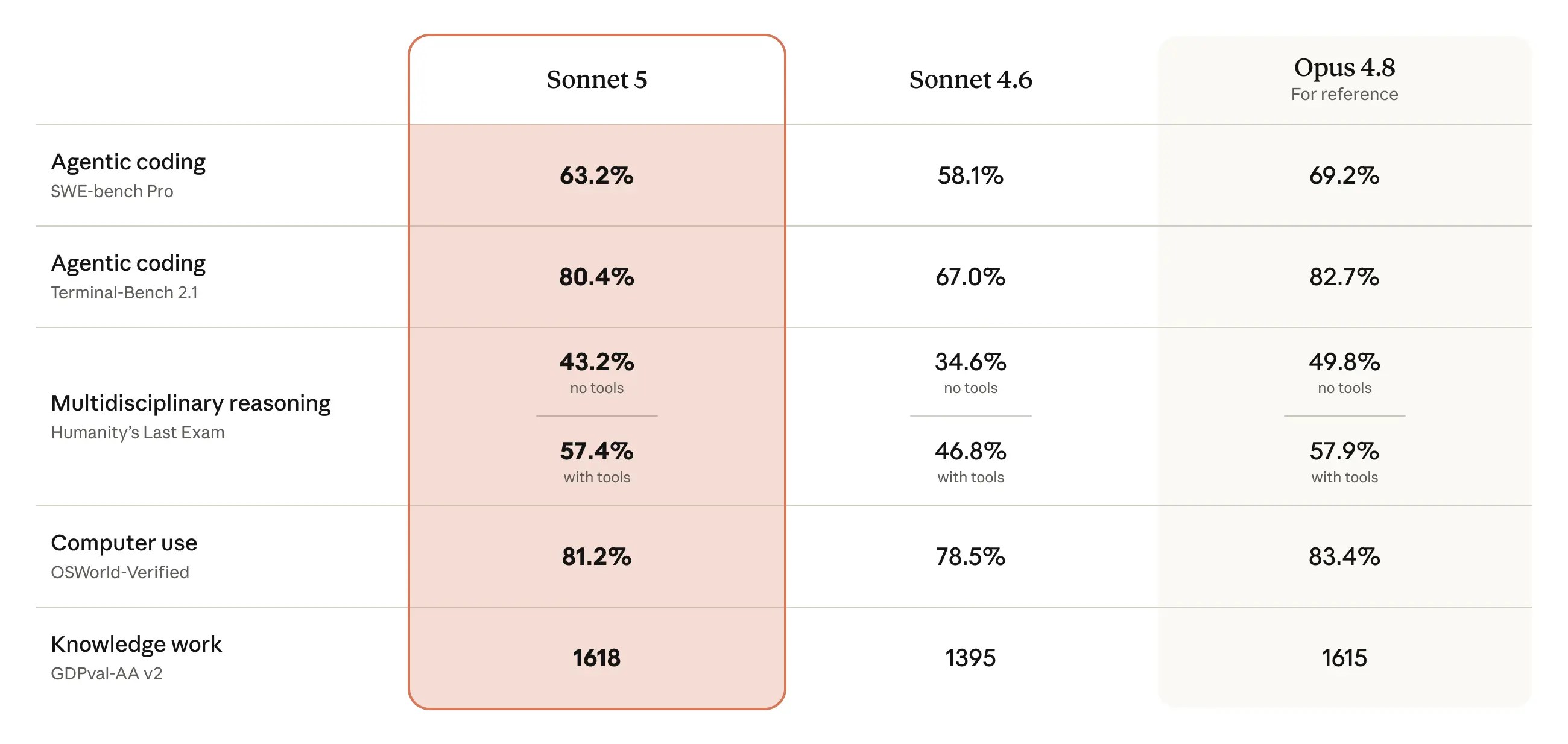
According to internal benchmarking data shared by the company, Sonnet 5 represents a substantial improvement over the 4.6 iteration across four critical pillars:
- Reasoning: The ability to break down high-level objectives into actionable sub-tasks.
- Tool Use: Improved accuracy when interacting with external APIs, databases, and local system environments.
- Coding: Enhanced syntax understanding and debugging capabilities, particularly in complex, multi-file codebases.
- Knowledge Work: Greater synthesis of large document sets, allowing for more nuanced information retrieval.
"Sonnet 5 narrows the gap," Anthropic noted in its official release documentation. "Its performance is close to that of Opus 4.8, but at a significantly lower price point, making it a viable tool for businesses that require high-level automation at scale."
Pricing and Accessibility: The New Default
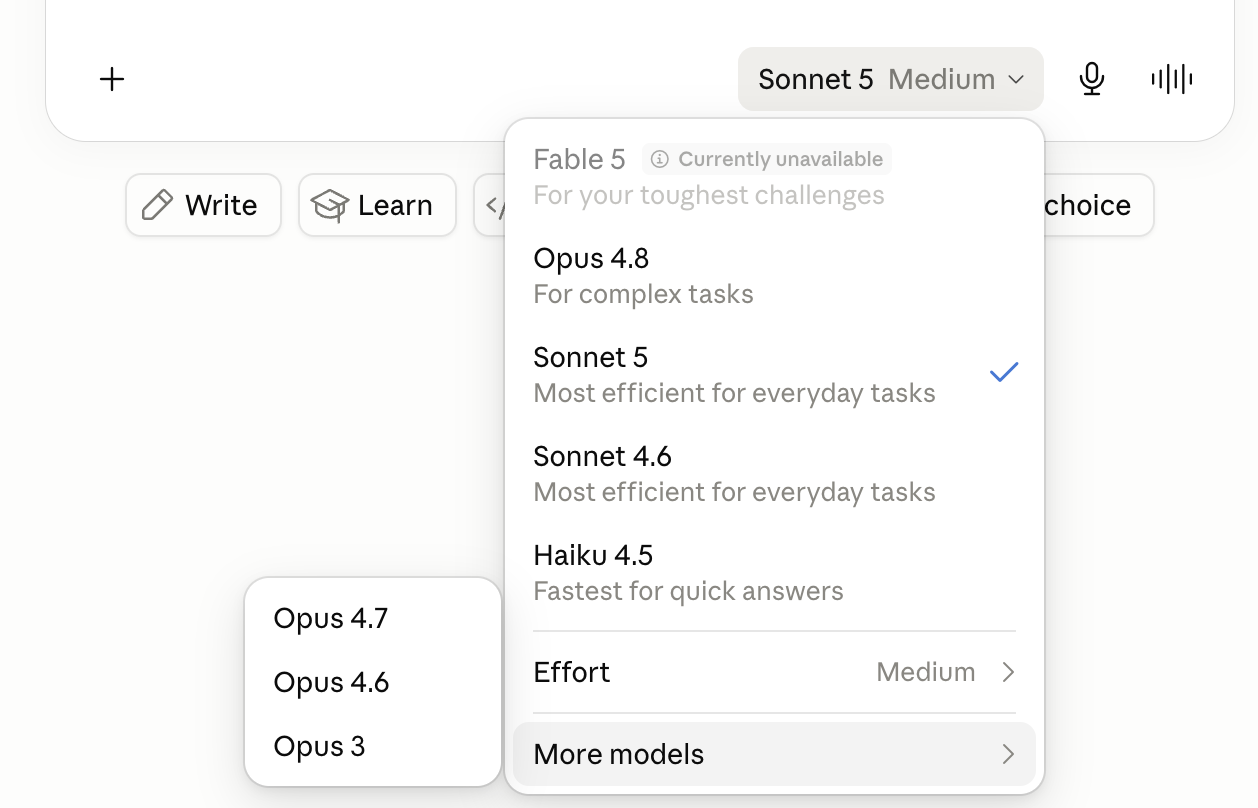
Reflecting its importance to the platform, Sonnet 5 has been set as the default model for all Claude users, including both the Free and Pro tiers. To encourage rapid adoption, Anthropic has implemented a tiered pricing structure for API developers and power users:
- Introductory Pricing (Until August 31, 2026): $2 per million input tokens and $10 per million output tokens.
- Standard Pricing (Effective September 1, 2026): $3 per million input tokens and $15 per million output tokens.
The company has also preemptively increased rate limits across its ecosystem—including Chat, Cowork, and Claude Code—to accommodate the higher computational "effort" required for these new agentic workflows. By allowing users to toggle between different "effort levels," Anthropic is giving developers and businesses the flexibility to balance cost and performance based on the specific demands of their projects.
Official Perspectives and Community Feedback
The developer community has been quick to embrace the update. ClaudeDevs, a prominent community resource, highlighted that the migration to the new model is relatively seamless. "Sonnet 5 is a clear upgrade from 4.6," they noted in a statement on X (formerly Twitter). "The new claude-api skill makes migration easier by automatically tuning prompts for Sonnet 5, recommending appropriate effort levels, and configuring ‘advisor mode’ for complex tasks."
Anthropic’s messaging emphasizes a commitment to safety, even as they roll out increasingly powerful capabilities. While models like Mythos 5 remain under restricted access due to their potential for misuse and lack of guardrails, the broad rollout of Sonnet 5 suggests that Anthropic believes they have successfully balanced "agentic autonomy" with the necessary safety protocols for public consumption.
Implications for the AI Landscape
The shift toward agentic models like Sonnet 5 carries profound implications for the software industry. By enabling AI to perform tasks that previously required human oversight—such as browsing, terminal navigation, and complex code deployment—Anthropic is moving toward a future where the AI becomes an active collaborator rather than a passive document generator.
1. The Impact on Enterprise Automation
Businesses that previously shied away from AI due to the high costs of models like Opus or the limited intelligence of entry-level models now have a "Goldilocks" solution. Sonnet 5 allows for the automation of repetitive IT workflows, data entry, and software testing at a price point that makes ROI much more attainable.
2. The Competitive Pressure
This release places significant pressure on competitors like OpenAI and Google. As the gap between "medium-sized" models and "flagship" models shrinks, the battleground shifts from raw parameter counts to practical utility, integration speed, and tool-use reliability.
3. Regulatory Considerations
The saga of the Mythos and Fable models highlights that the government is watching the AI sector with extreme scrutiny. Anthropic’s decision to prioritize the release of Sonnet 5—a model that provides high utility without crossing into the "unrestricted" territory of Mythos 5—is a calculated move to satisfy both the market demand for performance and the government’s demand for safety.

Looking Ahead: The Future of "Fable" and Beyond
While the focus is currently on the deployment of Sonnet 5, the status of the Fable 5 model remains a point of interest. Anthropic has stated that it is actively working with regulators to restore access to Fable 5, which was envisioned as a safer, more robust version of their high-capability models. The successful rollout of Sonnet 5 may serve as a testing ground, demonstrating that Anthropic can maintain safety protocols while deploying advanced agents in real-world environments.
For now, users on the Claude platform can expect a more capable, autonomous experience starting today. Whether you are a developer looking to optimize API costs or a casual user hoping for a smarter writing assistant, Sonnet 5 represents a major milestone in the ongoing quest to make AI a seamless, functional part of the modern digital toolkit.
For more information on the technical specifications and documentation for Claude Sonnet 5, visit the official Anthropic Newsroom.











