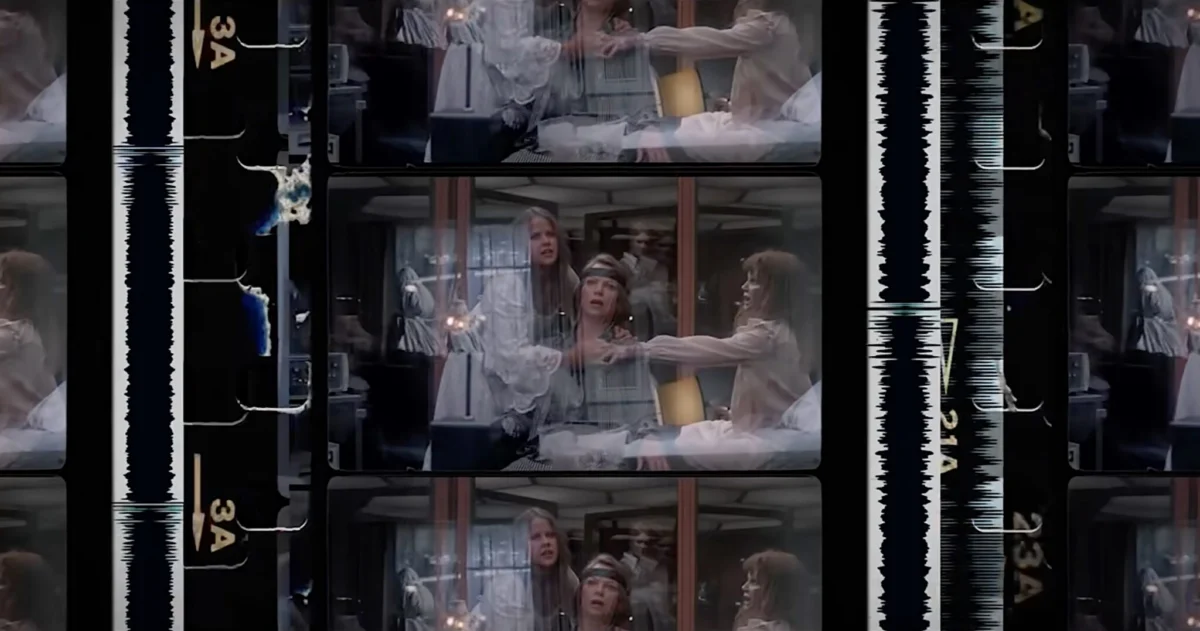
For nearly half a century, The Exorcist II: The Heretic (1977) has occupied a peculiar, often maligned position in the pantheon of cinema. Frequently cited as one of the most disastrous follow-ups to a seminal horror classic, the film is often reduced to a punchline—a surrealist fever dream featuring James Earl Jones in a locust costume, disconnected from the grounded terror of William Friedkin’s 1973 original. However, a transformative new documentary, Boorman and the Devil, directed by David Kittredge, seeks to dismantle these long-held perceptions. By tracing the ambitious, often harrowing production history of the film, Kittredge offers a compelling argument that The Exorcist II was never a cynical cash grab, but rather an earnest, albeit flawed, attempt at high-concept philosophical inquiry.
The Genesis of a Misunderstood Vision
To understand The Exorcist II, one must first understand what it was never intended to be. The prevailing narrative suggests that director John Boorman set out to create a standard horror sequel; in reality, he sought to create a spiritual antidote. Boorman, who had previously declined the opportunity to direct the first Exorcist due to his distaste for the script’s treatment of the young protagonist, Regan MacNeil, saw the sequel as a blank canvas.
Working from a draft by William Goodhart, Boorman pivoted away from the visceral, claustrophobic horror of the original. Instead, he aimed to explore themes of ESP, the nature of good and evil, and the evolutionary theories of Jesuit theologian Teilhard de Chardin. Boorman’s vision was one of transcendence: he wanted to portray Regan not as a victim, but as a potential spiritual leader, a force of enlightened consciousness capable of moving humanity toward a union with the divine. The documentary highlights that this was a fundamental rejection of the despair that characterized the first film, framing Boorman’s attempt as a daring, if ultimately doomed, act of artistic rebellion.
A Production Plagued by Reality
The production of The Exorcist II is often described as "cursed," and Kittredge’s film provides a meticulous, chronological breakdown of why that label feels earned. The chaos began early and persisted throughout the entire shoot. Richard Burton, cast in a lead role, struggled with sobriety, a reality that permeated the set. Boorman himself was sidelined by a severe, life-threatening case of San Joaquin Valley fever, forcing a five-week production hiatus.
The physical toll was not limited to the director; Kitty Wynn and Louise Fletcher both suffered from emergency gallbladder surgeries that bookended the filming process, creating a sense of mounting instability. As the project spiraled, the studio’s panic grew, leading to a series of frantic re-edits following disastrous test screenings. The documentary includes legendary director William Friedkin’s scathing, yet darkly comedic, recollections of these screenings, underscoring the friction between the studio’s expectations and the surreal, high-minded product Boorman was delivering.
The Anatomy of an Artistic Failure
What makes Boorman and the Devil more than a standard "making-of" feature is its analytical depth. Kittredge doesn’t just interview the participants; he contextualizes their work within the broader arc of Boorman’s career. By examining earlier works like Point Blank—with its dreamlike, surrealist editing—and the divisive but audacious Zardoz, the documentary illustrates that Boorman was a filmmaker who thrived on taking genre expectations and exploding them.
The interviews included in the film serve as a testament to the level of craft involved. Garrett Brown, the inventor of the Steadicam, discusses the technical challenges of capturing a locust’s point-of-view, while Linda Blair, who returned to the franchise only because she felt the script treated her character with dignity, provides a sobering look at the pressures placed on a young performer. The documentary also features insights from filmmakers such as Joe Dante, Karyn Kusama, and Mike Flanagan. Their participation adds a layer of intellectual rigor, moving the conversation away from "is this a bad movie?" toward "what is the responsibility of an artist to their audience?"

The Cost of Creation
Perhaps the most poignant segments of the documentary are those filmed at Boorman’s home in Ireland. Surrounded by artifacts of his storied career—including a Zardoz head and the sword from Excalibur—an aging Boorman reflects on the project. It becomes clear that even decades later, the rejection of The Exorcist II remains a source of profound professional pain.
Kittredge’s film does not shy away from the failure of the film’s execution. It admits that the "ghost glass" effects and the ambitious script rewrites—conducted by Boorman while he was bedridden with a near-fatal illness—often failed to bridge the gap between abstract concept and audience engagement. However, the film argues that the process was a work of art in itself. The care invested in every frame, the commitment to tactile, non-digital effects, and the sheer audacity of the vision stand in stark contrast to the modern studio landscape.
Implications for Modern Cinema
The primary implication of Boorman and the Devil is a challenge to our contemporary obsession with brand management and audience expectation. In an era where sequels are often meticulously calculated to satisfy fan bases and maximize franchise longevity, the chaotic, soul-searching, and ultimately unsuccessful nature of The Exorcist II feels like a radical relic of a different age.
For those who have long reviled the film, the documentary offers a necessary corrective. It reveals that the "badness" of The Exorcist II was not a result of incompetence, but of an artist reaching for something beyond his grasp. For those who have always defended the film as a misunderstood masterpiece, the documentary is a vindication. It confirms that beneath the surface-level absurdity lies a genuine, profound attempt to explore the cosmology of human existence.
Conclusion: The Value of the Effort
Boorman and the Devil is an essential watch for any student of film history. It successfully navigates the fine line between celebrating the triumphs of cinema and documenting the heartbreaking reality of its failures. By the time the credits roll, the viewer is left with a renewed appreciation for the fragility of the creative process.
We learn that art is often an act of desperation—a way to push back against the darkness, or in Boorman’s case, against the despair of a predecessor. Whether or not The Exorcist II ultimately succeeds is arguably secondary to the fact that it was made with such immense, misplaced, and beautiful sincerity. David Kittredge has crafted a documentary that is, in many ways, the mirror image of its subject: thoughtful, ambitious, and deeply moving. It serves as a reminder that even when an artist fails, the attempt itself remains a vital part of the cultural tapestry, worthy of our attention and, perhaps, our forgiveness.
Boorman and the Devil is currently playing in select theaters, with a wider release scheduled for September 4th. For those who find themselves captivated by this deep dive into one of cinema’s most notorious black sheep, the hope remains that a comprehensive home media release will eventually grant audiences the opportunity to see the full, 196-minute vision that Boorman originally intended to share with the world.