Layla Zulfa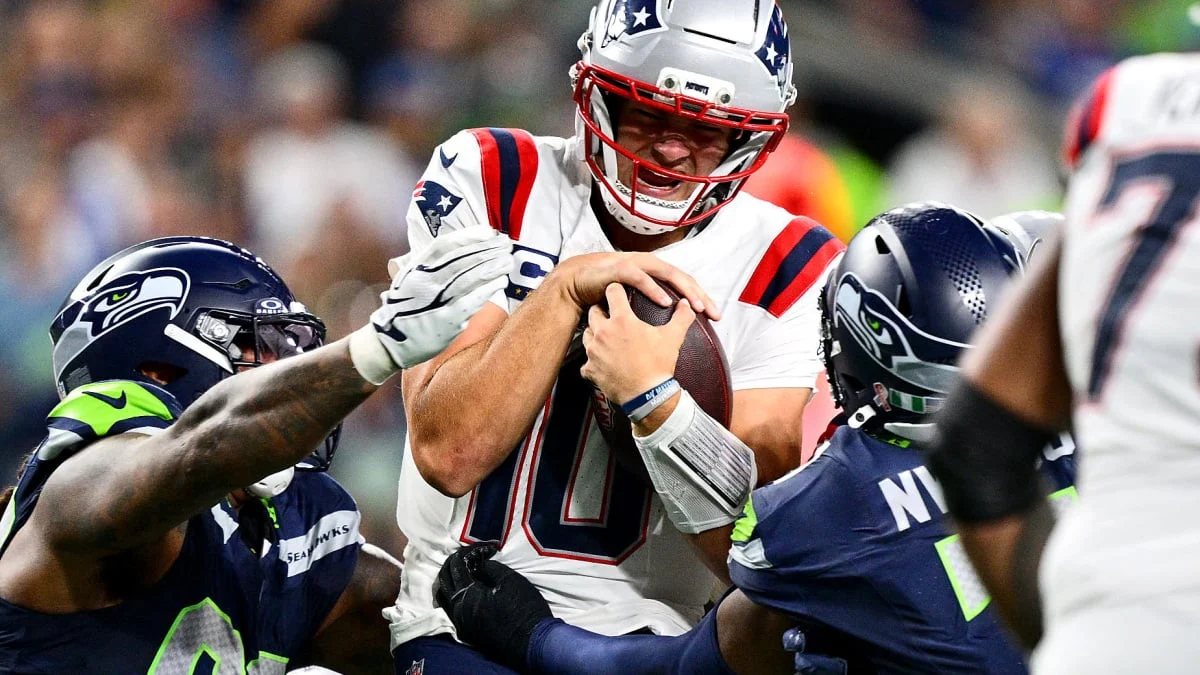
The return of college football and the NFL is, for many, a religious experience—a time for tactical analysis, strategic debates, and the celebration of elite athleticism. However, in the hyper-online ecosystem of 2024, the gridiron has also become the world’s most high-stakes deli counter. As the Uber Eats marketing campaign aptly posited, "Football is for food," and nowhere is that more evident than in the increasingly bizarre, carb-heavy lexicon currently used to mock struggling NFL quarterbacks.
In the fast-paced, often ruthless world of "Football Twitter," an interception is no longer just a turnover. It is a culinary disaster. When a quarterback makes a poor decision or throws a pick, they aren’t just "throwing a bad pass"—they are serving up a "meatball sub," a "pastrami on pumpernickel," or, in more creative instances, a "fully loaded shrimp po’boy." This trend, which sees users pairing elite athletic failures with increasingly absurd sandwich combinations, has become the dominant method of professional athlete "slander" this season.
The Chronology of a Viral Lexicon
While the current wave of "sandwich slander" hit a fever pitch during the opening week of the 2024 NFL season, the linguistic roots of the trend can be traced back to the previous year. The earliest notable instance of this specific brand of culinary mockery surfaced in late 2023, directed at New Orleans Saints quarterback Derek Carr. In a widely circulated social media post, a fan noted: "They got Carr in 4K throwing a fully loaded shrimp po’boy." The joke was multi-layered: it highlighted a poor performance while simultaneously leaning into the regional identity of the Saints’ home base, making the insult feel both creative and locally specific.
However, the term "meatball" has a much older pedigree in American sports, primarily inherited from baseball. In the Major League Baseball lexicon, a "meatball" is a pitch thrown right down the center of the plate—easy to hit, lacking movement, and generally serving as a gift to the batter. Because baseball is a game of precision and singular moments, the term fits perfectly.
Transitioning this concept to football was a logical leap for the internet generation. Since a football is an oblong, irregular shape, a "meatball" didn’t quite fit the physical geometry of the sport. The internet, in its infinite desire to refine its insults, pivoted to the "meatball sub." It implies a sloppy, heavy, and messy delivery—the antithesis of the "tight spiral" expected of an NFL signal-caller. By Week 1 of the 2024 season, the meme had evolved into a full-blown taxonomy of lunch meat and bread pairings, with fantasy football group chats serving as the primary laboratories for this new dialect.
Supporting Data: The Drake Maye Effect
While the trend began as a general way to mock interceptions, it found its "poster child" in New England Patriots quarterback Drake Maye. The narrative surrounding Maye is a quintessential case study in how modern digital discourse can accelerate the reputation of a professional athlete—for better or worse.
Maye, who had already become a lightning rod for criticism following a shaky offseason and a highly debated second-place finish in the previous year’s MVP voting, became the primary target for sandwich slander after a disastrous Week 1 outing against the Seattle Seahawks. The irony was palpable: Maye had, in previous years, been a fixture at local Jersey Mike’s locations in the Boston area, participating in charity events for "Best Buddies."
When Maye threw three interceptions against Seattle, the internet did not hesitate to synthesize his real-world association with the sandwich chain with his on-field failures. The resulting barrage of posts—linking his play directly to the deli counter—was swift and merciless. This phenomenon highlights how modern athletes are no longer just evaluated by their QBR (Quarterback Rating) or completion percentage; they are evaluated by the meme-worthiness of their mistakes. The "sandwich" meme became a shorthand for inefficiency, suggesting that the quarterback was not just playing poorly, but was actively "serving" the opposing defense.
The Evolution of Sports Slander
To understand why this trend has taken hold, one must look at the broader evolution of sports discourse. For over a decade, social media has allowed fans to move beyond traditional analysis into the realm of "football terrorism"—a hyperbolic term used to describe coaching decisions or player performances that are so frustrating they feel like an intentional act of malice against the fanbase.
In the NBA, this form of slander is well-established. For years, players who underperformed or seemed to be on the verge of being cut from their rosters were subjected to the "Get ready to learn Chinese, buddy" meme. This specific insult implies that the player’s career is so far gone that they will soon be relegated to the Chinese Basketball Association (CBA) or the Shanghai Sharks. It is a brutal, dismissive, and incredibly effective way to signal that a player no longer belongs in the top tier of their sport.
The NFL, however, lacked a direct equivalent to this "exile" narrative because there is no true secondary league that commands the same level of cultural recognition as the CBA does in basketball discourse. Therefore, when an NFL player performs poorly, the internet had to pivot to something else: the mundane reality of the post-football career. The "sandwich" meme serves this purpose. It suggests that if a quarterback cannot stop throwing interceptions, they might as well be working in a deli. It is a way of "de-professionalizing" the athlete, stripping them of their status as an elite warrior and replacing it with the image of a fast-food employee.
Official Responses and Industry Implications
While the NFL and its players generally maintain a "no comment" policy on social media trends, the impact of these memes on the sports media landscape is undeniable. Sports talk radio, podcast networks, and digital news outlets have begun to acknowledge the shift in how younger fans consume the game.
The integration of corporate branding into these memes—such as the aforementioned Uber Eats campaign—also complicates the dynamic. When a major corporation explicitly aligns itself with the idea that "football is for food," it inadvertently provides the vocabulary for fans to mock the very product the league is selling.
"There is a fatigue setting in," notes sports culture analyst Dr. Aris Thorne. "We are seeing the ‘meta-meme’ stage of this trend. Fans are now mocking the people who use the sandwich terms as much as they are mocking the quarterbacks. It has become a self-referential cycle where the language of the insult is as important as the insult itself."
Indeed, by the second week of the season, there were already signs of "sandwich fatigue." Fans began posting complaints about the overuse of the term, which is the natural death knell for any internet trend. However, the legacy of the "meatball sub" discourse will likely persist in the "generational" highlight reels and end-of-season recaps that aggregate the most absurd moments of the year.
The Future of Digital Sports Commentary
As the 2024 season progresses, the "sandwich slander" phenomenon provides a window into the future of sports fandom. We are moving toward a period where the broadcast experience is secondary to the "second-screen" experience—where the game on the television is merely the backdrop for the real action happening on X (formerly Twitter) or TikTok.
The implications for athletes are significant. In an era where a single bad throw can be immortalized as a "pastrami on pumpernickel" by millions of people within seconds, the psychological pressure on players is unprecedented. Athletes are no longer just competing against their opponents on the field; they are competing against a digital mob that is constantly refining the tools of their public humiliation.
Ultimately, whether the sandwich trend survives until the Super Bowl or fades into the obscurity of a forgotten meme remains to be seen. What is clear, however, is that the gatekeepers of sports discourse have changed. The professional analyst, with their clipboards and depth charts, is now sharing space with the internet comedian who sees a three-interception game not as a tactical failure, but as a lunch special. As long as the NFL continues to provide high-stakes drama, the internet will continue to find new, increasingly absurd ways to serve it up on a plate.

 Suro Senen
 Muslim