

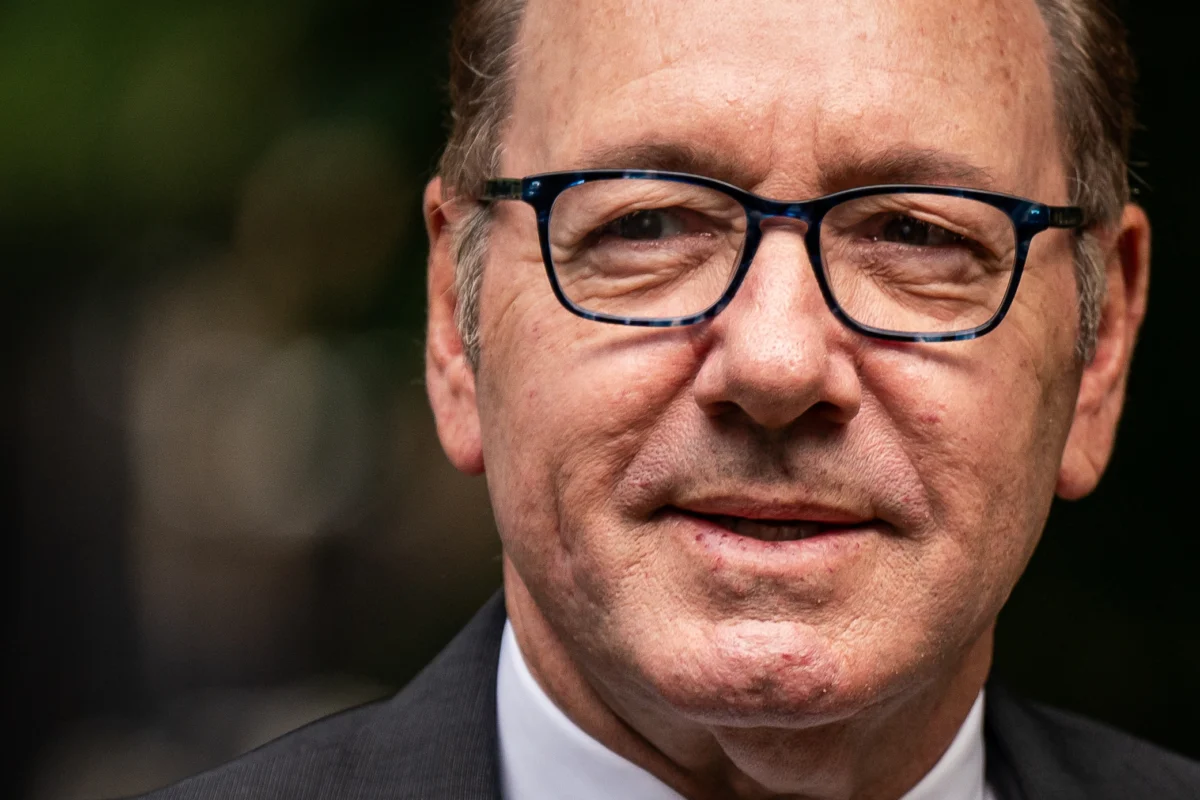
In a candid and often contentious appearance on Bill Maher’s podcast Club Random this week, actor Kevin Spacey confronted the shadow that has loomed over his career for the better part of a decade. The interview, which touched upon the nature of celebrity scandal, the mechanics of public perception, and the actor’s personal life, offered a rare, unfiltered look at how one of Hollywood’s most decorated stars views his own fall from grace.
The Maher Confrontation: Smoke and Fire
The conversation wasted no time in addressing the elephant in the room. Bill Maher, known for his acerbic and direct interview style, framed the discourse around the sheer volume of allegations that surfaced against Spacey starting in 2017.
"I’m not going to lie to you, I go by numbers with scandals," Maher told his guest. "If it’s like one person, I’m always like, ‘I don’t know if I wasn’t in the room.’ When it gets to like you had, it’s like, ‘Come on man, there’s too much smoke to be no fire.’"
Spacey’s response was measured, opting for a metaphor that sought to distinguish between criminal culpability and personal indiscretion. "I never said there was no fire," Spacey countered. "It just wasn’t a raging forest fire. It was a small kitchen fire that could have been put out with an extinguisher."
This distinction—between a catastrophic, systemic blaze and a localized, manageable event—serves as the cornerstone of Spacey’s current public relations strategy. He acknowledges that his behavior, while perhaps not illegal in the eyes of the law, was problematic, but he vehemently rejects the characterization of himself as a predatory monster.
A Chronology of Legal Battles and Clearing the Air
To understand the weight of the Club Random conversation, one must examine the legal gauntlet Spacey has endured since 2017.
The 2017 Catalyst
The initial allegations against Spacey coincided with the height of the #MeToo movement. Following an accusation by actor Anthony Rapp, who alleged that Spacey made sexual advances toward him in 1986 when Rapp was just 14, a flood of further allegations surfaced in both the United Kingdom and the United States. The immediate fallout was absolute: Spacey was written out of the hit series House of Cards, dropped by his talent agency, and scrubbed from completed film projects, most notably Ridley Scott’s All the Money in the World.
The U.S. Civil Victory
In 2022, Spacey faced a critical test in a New York federal court. Anthony Rapp’s civil suit, which sought $40 million in damages, centered on the claim of battery and intentional infliction of emotional distress. After a high-profile trial, the jury reached a verdict in favor of Spacey, finding him not liable. For Spacey, this was a pivotal moment in his attempt to rehabilitate his image.
The London Acquittal
The following year, 2023, brought the most significant legal hurdle: a criminal trial at London’s Southwark Crown Court. Spacey faced nine charges of sexual assault and other offenses, alleged to have been committed against four men between 2001 and 2013. The defense painted a picture of a man who had engaged in consensual, albeit unconventional, sexual behavior. After weeks of testimony, the jury cleared Spacey of all charges.
The Recent Settlement
Most recently, in March 2026, Spacey opted to settle a separate civil case in London brought by three men. While the settlement prevents the case from reaching a trial, it also leaves the details of the arrangement—including any potential financial payout—shrouded in confidentiality. This move is widely viewed by legal analysts as a strategic effort to avoid the uncertainty and cost of further litigation, effectively closing the chapter on his primary legal battles.
Admitting the Indiscretions: A "Fiercely Closeted" Life
Perhaps the most startling admission in the Club Random interview was Spacey’s acknowledgment of his past behavior regarding his sexuality. "I hit on a lot of guys," he admitted to Maher, while simultaneously refuting the validity of many of the specific allegations.
Spacey provided context for his past actions, explaining that he lived a "fiercely closeted" existence in Hollywood. He characterized his silence not as a lack of identity, but as a protective mechanism. "I didn’t want anyone to know anything about me and of course I thought I was so clever that no one knew," he said.
He further elaborated on the psychological toll of being a closeted gay man in an industry where he felt his personal life was constantly under surveillance. "There was so many stories about me. There was lots of talk about that I was gay and I just wasn’t out," Spacey stated. "Rather than the gay community understanding that… I always felt that I was being attacked."
By acknowledging his past promiscuity while insisting on the legality of his encounters, Spacey is attempting to pivot the narrative from one of criminal victimization to one of a messy, human, and highly private life that was unfairly dragged into the public spotlight.
Implications: The "Ten-Year Sentence" of Exile
The conversation eventually turned toward the practical implications of the last nine years: the total professional exile of a two-time Academy Award winner. Maher, reflecting on the industry’s reaction to the scandals, noted, "A 10-year sentence is a serious sentence."
For Spacey, the "sentence" has been more than just the loss of income; it has been the total erasure of his public persona. Yet, as the facts have emerged in courtrooms in both London and New York, Spacey believes the tide of public opinion is shifting.
"I feel less in jail than I did," Spacey reflected. "When people actually start to hear the facts, understand what we won in courts, I think people now look at this and think, ‘Maybe nine years has been enough.’"
This statement touches on a profound question regarding modern accountability: Is there a path back for those who have been "canceled"? For Hollywood, the answer remains complicated. While Spacey has been cleared by the judiciary, the industry remains risk-averse. The "sentence" Maher refers to is not a state-mandated prison term, but a social and professional boycott that has no clear expiration date.
Assessing the Strategy: Can Public Image Be Repaired?
Spacey’s appearance on Club Random is part of a calculated effort to regain control of his narrative. By opting for long-form, unscripted podcasts rather than traditional press junkets, he is able to speak directly to an audience without the mediation of a journalist who might challenge him with the harsh tone of an investigator.
However, the efficacy of this approach remains to be seen. While the legal system has exonerated him, the court of public opinion often operates on different, more nebulous standards. The "kitchen fire" metaphor is clever, but it risks minimizing the trauma of those who brought the allegations forward, a reality that critics of the actor are unlikely to forget.
Furthermore, the settlement of his remaining civil cases, while preventing damaging testimony from surfacing, also leaves many questions unanswered. In an era where "transparency" is demanded of public figures, silence and settlements can be interpreted as an admission of sorts by those already skeptical of the actor.
Conclusion
Kevin Spacey’s interview with Bill Maher represents a critical juncture in his post-scandal life. He is no longer fighting for his freedom in a courtroom; he is now fighting for his reputation in the culture. As he attempts to normalize his past, acknowledge his flaws, and plead for a return to the stage, he faces the daunting task of convincing an industry and an audience that the "fire" is out, the wreckage has been cleared, and that he deserves the opportunity to perform once more.
Whether the public is ready to accept this version of the story remains one of the most polarizing questions in contemporary entertainment. For now, Spacey remains in a state of professional limbo—legally free, yet still tethered to the consequences of a decade that fundamentally altered his life and his legacy.










