

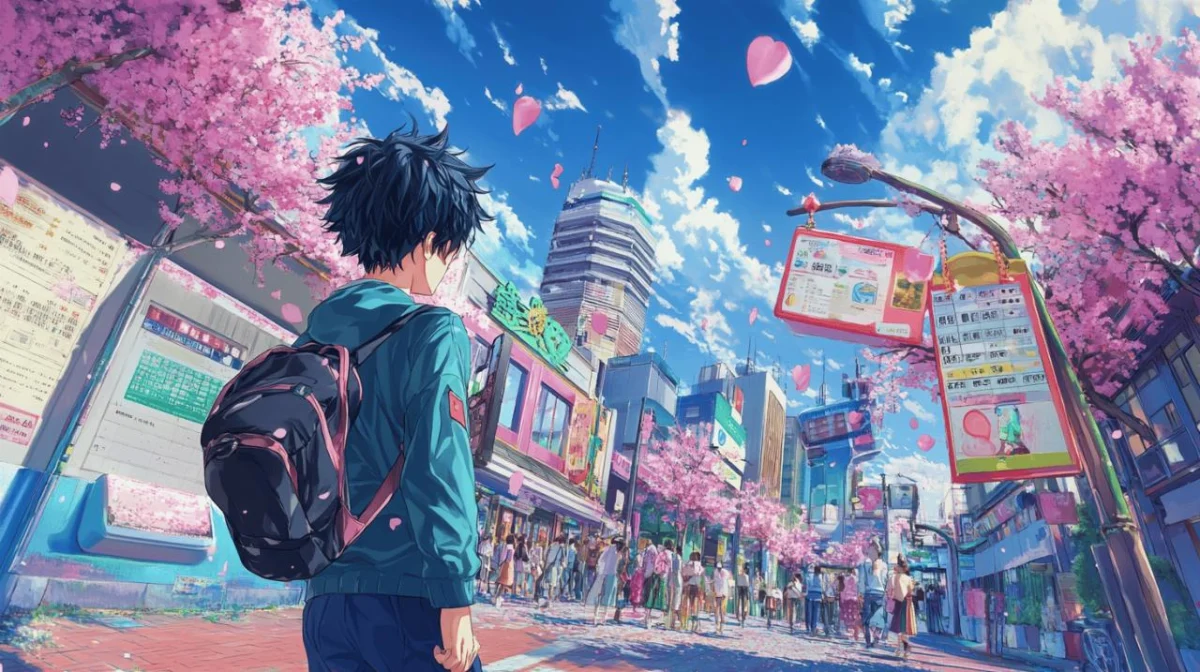
The landscape of romantic comedy in manga and anime is often populated by predictable tropes, yet few series manage to dismantle their own premises as effectively as Masamune-kun’s Revenge. Created by writer Hazuki Takeoka and illustrator Tiv, the saga has evolved from a seemingly straightforward tale of petty vengeance into a profound psychological exploration of identity, self-perception, and the lingering trauma of childhood rejection. As the franchise expands into its third animated season, it invites audiences to look past the "masks" worn by its protagonists and confront the uncomfortable realities of their past.
Main Facts: A Narrative of Transformation
At its core, Masamune-kun’s Revenge follows the life of Masamune Makabe, a young man who was cruelly bullied in his childhood for being overweight. His primary antagonist, Aki Adagaki, dubbed him "Piggy," a moniker that shattered his self-esteem and propelled him into a life of rigorous self-improvement. By the time he reaches high school, Masamune has transformed into a physically fit, classically handsome student. He returns to his hometown with a singular, calculated goal: to make Aki fall in love with him, only to ruthlessly reject her—a plan he calls the "Dead or Love" operation.
However, the genius of Takeoka’s writing lies in the failure of this plan. The narrative, serialized in Monthly Comic Rex (2012–2018) and published by Ichijinsha, quickly reveals that neither the "avenger" nor his "target" are who they appear to be. Aki, the "Cruel Princess," is far more vulnerable than her icy exterior suggests, and Masamune finds his carefully constructed persona beginning to crack under the weight of genuine human connection.
Chronology: From Vengeance to Vulnerability
The journey of Masamune-kun’s Revenge is best understood as a multi-stage deconstruction of the protagonist’s ego.
- The Foundation (The Childhood Trauma): The story anchors itself in the formative years of Masamune and Aki. This period provides the context for the "Porcelet" incident, which serves as the inciting motive for the entire series.
- The Transformation (The High School Arc): Masamune re-enters Aki’s life. The first season of the anime, produced by Silver Link, captures the initial "spy thriller" tone of his vengeance scheme.
- The Complication (Secondary Characters): The introduction of figures like the manipulative Yoshino Koiwai and the earnest Neko Fujinomiya shifts the narrative away from a binary conflict between two people, introducing the complexities of love triangles and hidden agendas.
- The Deconstruction (The Third Season Transition): As the story moves into the content covered by the latest adaptation, the focus shifts from doing (the plan) to being (the truth). The vengeance is no longer the primary engine of the plot; instead, the resolution of long-held secrets takes precedence.
Supporting Data: The Anatomy of an Adaptation
The transition of this story from 11 volumes of manga to an animated format required significant creative dexterity. Studio Silver Link, known for its work in the romantic comedy genre, faced the challenge of maintaining the aesthetic vibrancy of Tiv’s art while ensuring the emotional stakes remained high.
The Role of Physicality and Appearance
Appearance is not merely a cosmetic element in this series; it is the central metaphor. Masamune’s physical transformation is his "social armor." The series consistently demonstrates how physical beauty acts as a barrier to authentic connection. When characters interact, they are often performing roles: Aki performs the role of the untouchable heiress, while Masamune performs the role of the suave heartthrob. The narrative tension is derived entirely from the friction between these performances and the characters’ true, messy inner selves.
The Influence of Secondary Characters
Characters such as Yoshino Koiwai are not merely accessories to the main romance; they are the catalysts for the truth. Yoshino, who acts as the primary orchestrator of the "Porcelet" incident in the past, represents the guilt and the shifting loyalties that exist beneath the surface of high school hierarchies. Meanwhile, the addition of characters like Kanetsugu Gasou introduces a layer of gender-bending subversion that forces both Masamune and Aki to re-examine their own biases.
Official Responses and Production Insights
The production team at Silver Link has noted that the challenge of the third season lies in "emotional payoff." In interviews regarding the series’ development, staff members have emphasized that the audience’s investment in the characters has matured alongside the characters themselves. Since the original anime launch in 2017, the viewer demographic has grown, allowing the series to lean into more complex thematic territory without losing the lighthearted comedy that defines the genre.
The collaboration between Hazuki Takeoka and the animation studio has been praised for its fidelity to the original source material. By maintaining the specific, often neurotic, internal monologues of Masamune, the anime preserves the "shonen-romance" DNA that made the manga a bestseller for Ichijinsha and a successful import for publishers like Meian in France.
Implications: The Search for Authenticity
What does Masamune-kun’s Revenge ultimately say about the human condition? By the end of the series, the "revenge" is exposed as a hollow construct. The true, more difficult goal is the pursuit of "authenticity."
The Weight of Childhood Memories
Flashbacks are used throughout the series not as simple nostalgia, but as forensic tools. Both Masamune and Aki suffer from a skewed perception of their shared past. The series explores how memory is subjective—how one person’s trauma is another person’s misunderstanding. This divergence in perspective is the true antagonist of the series, far more dangerous than any rival student or external conflict.
The Evolution of the Genre
The "revenge romance" is a precarious sub-genre. If the revenge is too successful, the protagonist becomes unlikable; if it fails too early, the narrative loses its tension. Masamune-kun’s Revenge navigates this by having the revenge plot collapse under the weight of reality. The implication is clear: you cannot build a healthy relationship on the foundation of a lie. The transition to the third season signifies the end of the "performance" phase and the beginning of the "reconciliation" phase.
Conclusion: A Masterclass in Character Growth
As Masamune-kun’s Revenge continues to resonate with global audiences, it stands as a testament to the idea that growth is rarely linear. Masamune Makabe’s evolution—from an insecure, bullied child to a vengeful, arrogant teenager, and finally to a young man grappling with the complexities of forgiveness—mirrors the experiences of many young adults.
The series proves that even within the confines of a high school rom-com, there is room for profound psychological investigation. Whether it is through the meticulous animation of Silver Link or the sharp, witty dialogue written by Hazuki Takeoka, the series demands that we look beneath the surface. It asks us to question our own masks and to consider whether the "revenge" we seek on those who have wronged us is actually just a distraction from the work of healing ourselves. In the final analysis, Masamune-kun’s Revenge is not a story about getting even; it is a story about growing up.











No comments yet. Be the first to join the conversation!