Asep Darmawan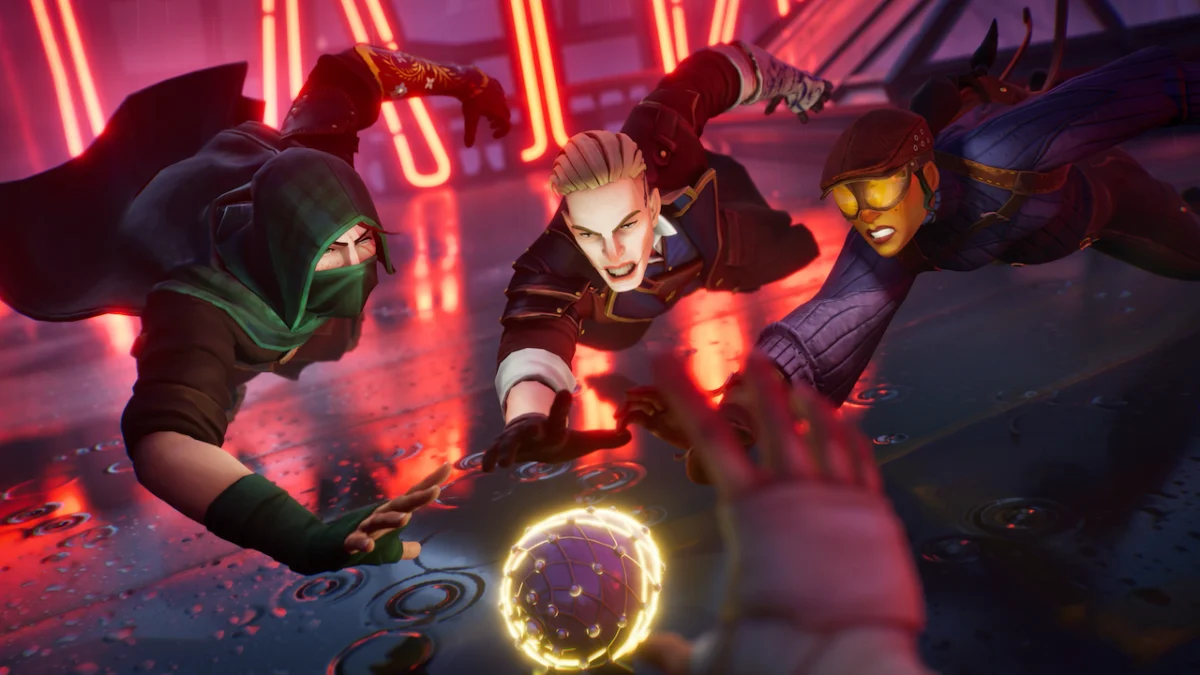
The landscape of independent game development has been marked by extreme volatility over the last twenty-four months, and few studios encapsulate this turbulence quite like OtherSide Entertainment. This week, the Boston-based developer confirmed a significant reduction in its workforce, with 18 employees being laid off from the team responsible for Thick as Thieves. This latest contraction follows a string of financial and structural setbacks that have left the future of the studio in serious doubt.
The Core Facts: A Studio in Retreat
The announcement, initially reported by Game Developer, signals a pivotal turning point for the studio founded by industry veteran Paul Neurath. According to company leadership, the decision to reduce staff was necessitated by the realization that "the continuation of the studio in its current shape is no longer a commercially viable path."
The impact is stark: 18 individuals have been let go, leaving behind a skeleton crew of fewer than ten employees. This remaining group has been tasked exclusively with performance maintenance for Thick as Thieves, a title that launched in May under the umbrella of Aonic Group’s publishing arm, Megabit. Perhaps most chilling for fans of the studio’s legacy is the explicit confirmation from a company spokesperson that there are "currently no plans for the studio to work on any future games."
Chronology of a Downward Spiral
To understand the gravity of the current situation, one must look at the timeline of OtherSide Entertainment’s recent history. The studio, which once held the promise of reviving the immersive sim genre, has faced a recurring pattern of project cancellations and workforce reductions.
The Foundation and Early Ambitions
Founded in 2014 by Paul Neurath—a luminary of the industry known for his work on Ultima Underworld and Thief—OtherSide was built on the pedigree of classic PC gaming. However, the studio struggled to maintain momentum in a changing market.
The 2020 System Shock Pivot
The first major sign of trouble arrived in 2020. Following a strategic move by Tencent to acquire the rights to the System Shock intellectual property, OtherSide saw a substantial portion of its development staff depart. This shift effectively signaled the end of the studio’s direct control over one of its most storied franchises, forcing the team to pivot toward new, original intellectual property.
The Argos Cancellation (July 2024)
Just one month prior to the current layoffs, OtherSide faced a devastating blow with the cancellation of an in-development project codenamed "Argos." At that time, the studio laid off 17 employees. Management cited a "brutally challenging" market environment, noting that the project was "unviable for now." This move was meant to streamline operations and focus resources on Thick as Thieves.
The Present Crisis (August 2024)
Despite the "encouraging response" to the introductory campaign of Thick as Thieves, the studio could not sustain its overhead. The August layoffs appear to be the final attempt to stabilize the company’s finances, albeit at the cost of its long-term viability as a game developer.
Supporting Data and Industry Context
The plight of OtherSide Entertainment is not an isolated event; it is a symptom of a broader industry crisis. Since the beginning of 2023, the games industry has seen tens of thousands of layoffs. High interest rates, a post-pandemic correction in consumer spending, and a shift in investor sentiment away from mid-tier development have created a "perfect storm."
The Aonic Group Relationship
In 2023, the Aonic Group acquired OtherSide Entertainment, intending to bolster its portfolio of mid-tier developers. The goal was to provide stability and capital to studios that could produce high-quality, niche-market titles. However, the acquisition clearly failed to provide the necessary runway for OtherSide to survive the current market squeeze. When an acquisition by a larger group—designed to provide a safety net—ends in layoffs, it highlights the extreme difficulty mid-sized studios face in securing long-term profitability.
Financial Viability and "The Mid-Tier Trap"
OtherSide’s situation illustrates the "mid-tier trap." While these studios produce games with higher production values than indie titles, they lack the marketing budgets and massive install bases of AAA blockbusters. When these games launch into a saturated market, even "encouraging" feedback isn’t enough to justify the burn rate of a full-scale development studio. The cost of labor, combined with the difficulty of breaking through the noise on storefronts like Steam, has rendered the traditional studio model increasingly risky.
Official Responses and Corporate Transparency
The studio’s communication regarding the layoffs has been brief, characterized by the somber tone common in corporate restructuring announcements. The official statement provided to media outlets emphasized that the studio had "pursued every alternative to find a preferable solution."
This language, while standard, underscores a sense of finality. By admitting that the studio is no longer a "commercially viable path" in its current form, the leadership is acknowledging that the current market conditions have effectively closed the door on their previous business model. The gratitude expressed toward the affected employees serves as a recognition of the team’s labor, yet it does little to mitigate the reality of the situation: a loss of 18 experienced professionals in a talent-rich but job-poor market.
Broader Implications: What Does This Mean for the Industry?
The collapse of a studio with the pedigree of OtherSide Entertainment sends a chilling message to the independent development community. If a studio founded by an industry legend, backed by a parent company like Aonic Group, and producing games with positive feedback cannot survive, who can?
The Death of the Immersive Sim?
OtherSide was seen as the spiritual home of the "Immersive Sim," a genre that emphasizes player agency and complex, systemic gameplay. With OtherSide’s development capabilities effectively shuttered, the industry loses one of the few bastions dedicated to this complex, expensive-to-produce style of gaming.
The Shift Toward Maintenance Over Innovation
The pivot to "performance maintenance" for Thick as Thieves reflects a broader trend: studios are increasingly being reduced to service-providers for their own existing back-catalogs rather than engines of innovation. By confirming they have no plans for future games, OtherSide has essentially transitioned from a creative studio to a maintenance firm. This is a common, often final, stage for studios before they are either fully absorbed, sold for assets, or closed down entirely.
A Warning for Investors and Talent
For investors, the OtherSide situation is a cautionary tale regarding the mid-tier market. For talent, it is a reminder that even established studios are not immune to the volatility of the current economic climate. The industry is currently undergoing a painful "right-sizing," where the focus is moving toward hyper-efficiency and risk aversion. Projects that are "encouraging" but not "explosive" are increasingly deemed insufficient to support the costs of a full development team.
Conclusion: The End of an Era?
As the dust settles on the OtherSide Entertainment offices in Boston, the reality is sobering. The loss of 18 jobs is not just a statistical increase in industry layoffs; it represents the silencing of a creative team and the potential end of a studio’s journey. While Thick as Thieves will continue to receive support, the creative heartbeat of the studio—the drive to build new worlds and push the boundaries of systemic gameplay—appears to have stopped.
In the coming months, the industry will be watching to see if the remaining skeleton crew can sustain the game’s presence in the market, or if this is merely a precursor to the final dissolution of the studio. For now, OtherSide stands as a stark reminder of the fragile ecosystem that underpins modern game development, where the line between "encouraging" and "unviable" is far thinner than anyone would like to admit.


 Neng Nana
 Pevita Pearce