

For decades, Hollywood’s approach to religion in film and television has largely operated within two rigid silos: the hyper-niche "faith-based" market, designed to affirm traditional dogma, or the cynical, satirical, or outright villainous depictions of believers in mainstream media. However, a seismic shift is occurring in the cultural landscape. According to a groundbreaking new study from the Center for Scholars & Storytellers (CSS) at UCLA, the next generation of viewers—Gen Z and Gen Alpha—is rejecting these binaries in favor of something far more nuanced: a raw, honest, and complex exploration of faith and spirituality.
The study, titled Future of Faith, surveyed over 2,000 young people between the ages of 14 and 24, revealing that for this demographic, religion is not a static relic of the past but a dynamic, often "messy" component of their identity that they are desperate to see reflected on screen.
The Core Findings: A Hunger for Authenticity
The data suggests that the entertainment industry is missing a significant opportunity by underestimating the spiritual appetite of its youngest audiences. A majority of the 2,000 respondents indicated that they are highly sensitive to how their beliefs—or their questions regarding belief—are portrayed in the media they consume.
The primary complaint among young viewers is not that faith is being depicted, but that it is being depicted incorrectly. They are tired of "performative religion" and the rigid, sanitized, or hypocritical portrayals that often characterize mainstream storytelling. Instead, these young audiences are looking for characters who, like them, are navigating the transition from the structured faith of their upbringing to a self-defined, often fluid, spiritual life.
"We heard from young people that they wanted to see the struggle of faith," explains Yalda T. Uhls, Ph.D., founder and CEO of the CSS and a professor in UCLA’s psychology department. "They’re at this age when they leave home, and they no longer have the structure of adults saying, ‘You go to church.’ They’re in college, they’re in the workplace, and they’re surrounded by diverse perspectives. Many of them are questioning their faith and trying to do so safely. They want to see that internal conflict represented."
Chronology of a Shifting Landscape
To understand why this demand is surfacing now, one must look at the recent evolution of media content. For years, the industry operated under the assumption that "secular" mainstream audiences were allergic to religious themes, while "faith-based" audiences were only interested in content that confirmed their existing worldview.
- The Traditional Era: Historically, religion in Hollywood was binary. You had films like The Ten Commandments or, later, the Left Behind series—projects created specifically for religious audiences. In the secular mainstream, religion was often portrayed through the lens of institutional abuse or comedic satire.
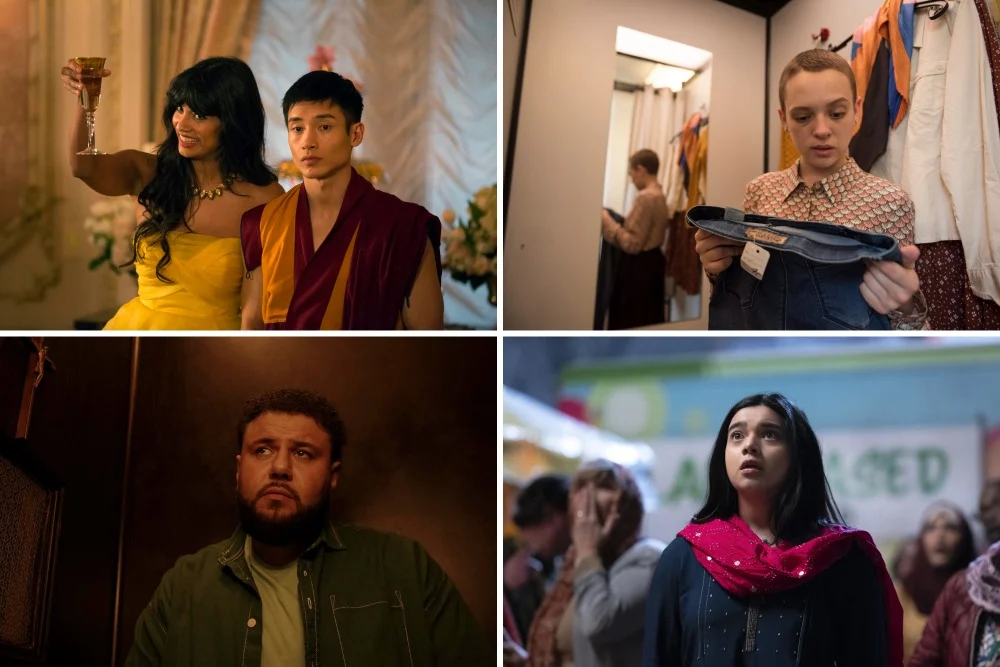
- The Transitional Period: Over the last decade, we began to see creators bridging the gap. Series like The Good Place utilized philosophy and metaphysical inquiry to address morality and the afterlife in a way that resonated with a younger, secular-adjacent audience. Similarly, the Marvel Cinematic Universe’s Ms. Marvel showcased a young protagonist whose faith was an intrinsic, beautiful, and non-policed part of her identity.
- The Present Moment: We are currently in a "Post-Stereotype" phase. Projects like Unorthodox on Netflix, which explored a young woman leaving an insular Jewish community, triggered intense debate—not because it was "anti-religious," but because it forced a conversation about the intersection of tradition, identity, and personal autonomy.
Supporting Data: What Young Viewers Are Watching
The CSS study highlights a list of titles that young people point to as "getting it right." These titles range from high-fantasy to grounded dramas, proving that spirituality doesn’t need to be the central plot point to be effective; it just needs to be authentic.
Respondents frequently cited:
- Avatar: The Last Airbender: Praised for its exploration of Eastern philosophy and spiritual growth.
- Mo: A Netflix series that tackles the complexities of the Palestinian-American experience, including the daily realities of Muslim life.
- The Good Place: Celebrated for its intelligent, humorous, and deeply human inquiry into what happens after death.
- Bend It Like Beckham: Noted for its portrayal of cultural and religious traditions as a natural part of a character’s life, rather than an obstacle to be overcome.
These examples share a common thread: they allow faith to be "messy." They do not attempt to evangelize or condemn; they allow characters to grapple with their beliefs in a way that mirrors the real-world experiences of the Gen Z and Gen Alpha audience.
Official Responses and Industry Reception
The findings were presented at the Future of Faith event on August 5, an gathering that drew significant interest from major studios, including Netflix, Amazon, NBC, and Lionsgate. For many executives, the study was a wake-up call.
"It’s a big opportunity," says Uhls, who brings a unique perspective as a former senior executive at Sony and MGM. "Lionsgate has several movies around this. They see that purely religious movies make a lot of money with that very specific audience, but there is a massive, untapped opportunity to integrate these themes into different divisions—not just the ‘faith-based’ department."
The keynote speaker at the event, Oscar-winning screenwriter Dustin Lance Black, provided a poignant bridge between these worlds. Discussing his work on Under the Banner of Heaven, Black shared his own journey as a queer man who grew up in the Mormon faith. "He felt lost," Uhls recounts. "He left the faith, but he went through a long period questioning it. He found that he could relate to the Bible, but that his reality wasn’t reflected in the religious structure he grew up in. That is the experience young people want to see—the search for truth, even when it’s uncomfortable."
Implications for the Future of Hollywood
The implications of this shift are profound. If Hollywood intends to maintain its relevance with younger generations, it must move beyond the "homework" approach to representation. Currently, most studios rely on individual creators to conduct their own research or on generic internal standards. As Uhls points out, there is rarely a person in a studio whose specific job is to "get faith right."
The "Realness" Requirement
Young people today are "information-rich." They can spot a sanitized, PR-managed portrayal of religion from a mile away. They are not asking for religious propaganda; they are asking for intellectual and emotional honesty. Whether it is Lee Daniels’ The Deliverance, which uses the horror genre to explore the necessity of a "Higher Power" in a dark world, or the upcoming Greta Gerwig adaptation of Narnia, which promises to lean into C.S. Lewis’s Christian themes without apology, the trend is clear.
The Opportunity for Storytellers
For creators, this is an invitation to lean into complexity. The "messiness" of faith—the doubt, the questioning, the community, the policing, and the personal liberation—is rich narrative territory.
As the industry moves forward, the success of these projects will likely depend on three factors:
- Consultation: Engaging with diverse voices who have lived experience in the faiths being portrayed.
- Avoidance of Performative Tropes: Moving away from the "villainous extremist" or "glossy, perfect believer" tropes that alienate modern viewers.
- Integration: Treating spiritual identity as a standard component of character development, just as race, gender, or political affiliation is treated today.
Conclusion: A New Era of Storytelling
The message from Gen Z and Gen Alpha is clear: they are not interested in a sanitized version of the world. They are living in an era of unprecedented access to information, and they are acutely aware of the "darkness" that Lee Daniels describes. They are looking for stories that acknowledge that darkness and offer a roadmap—or at least a conversation—about how to find light.
If Hollywood can move past its fear of offending or its desire to preach, it may find that faith, when handled with the same care as any other human element, is one of the most compelling frontiers in storytelling. The audience is waiting; they are just hoping for a little more honesty on the screen.










