Asep Darmawan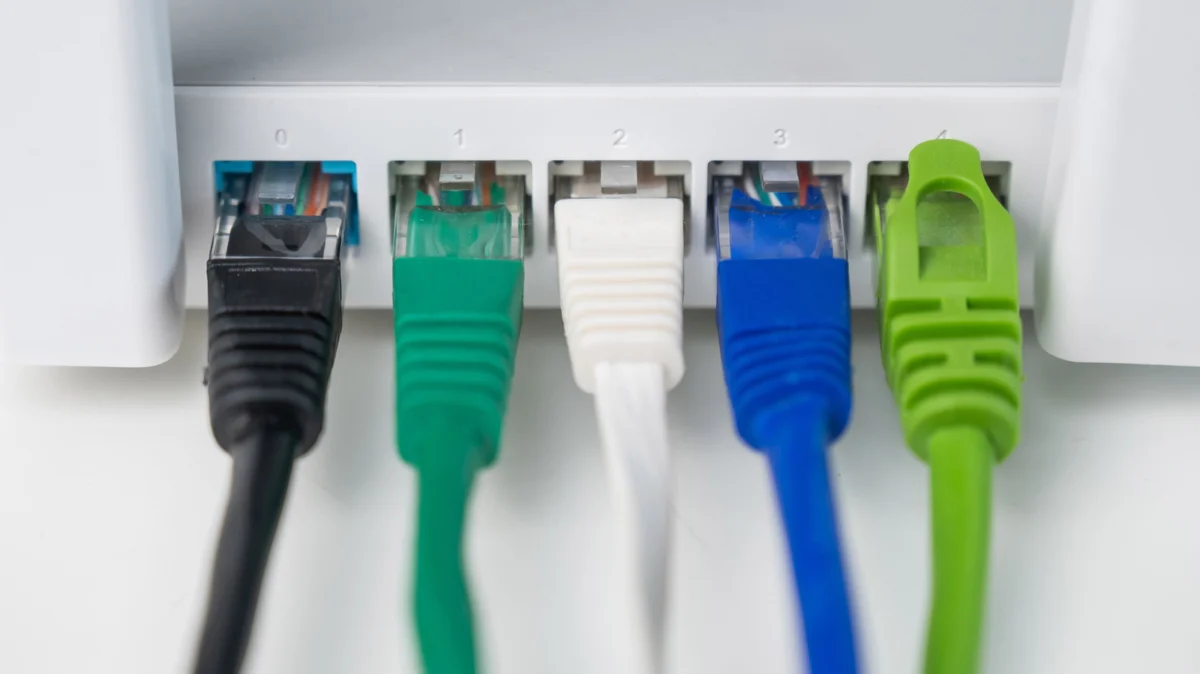
In the modern digital household, the demand for stable, high-speed wired connectivity has never been higher. While Wi-Fi 6E and Wi-Fi 7 have made impressive strides in wireless performance, there remains no substitute for the reliability, latency-free performance, and security of a physical Ethernet connection. From gaming consoles and desktop workstations to smart TVs, security NVRs, and home servers, the number of devices requiring a hardline connection continues to climb.
Inevitably, this creates a "port crunch." Most standard ISP-provided routers ship with only four LAN ports, leaving power users and tech enthusiasts scrambling for solutions. Fortunately, the era of needing to replace your entire router just to add a few more devices is over. The Netgear 5-Port Gigabit Ethernet Unmanaged Essentials Switch (GS305) stands out as a quintessential solution for expanding home and small office networks without breaking the bank.
Main Facts: The Anatomy of the GS305
At its core, the Netgear GS305 is designed to serve as a bridge between your router and your peripheral devices. It is an "unmanaged" switch, which, in networking parlance, means it operates on a "plug-and-play" architecture. There is no configuration, no software to install, no firmware to manage, and no login credentials to memorize.
Key Technical Specifications:
- Port Capacity: 5 Gigabit (10/100/1000 Mbps) Ethernet ports.
- Form Factor: Compact metal enclosure (4" x 3.7" x 1.1").
- Energy Management: Integrated Energy Efficient Ethernet (IEEE 802.3az) support.
- Mounting Options: Desktop-ready or wall-mountable via rear keyhole slots.
- Operating Noise: Silent, fanless design.
- Build Quality: Durable, industrial-grade metal casing.
The device functions by taking a single incoming signal from your router and distributing it across the remaining four ports, allowing you to connect up to four additional high-bandwidth devices simultaneously. With a price point currently hovering around $16 on Amazon and $22.99 MSRP on Netgear’s official site, it is arguably one of the most cost-effective hardware upgrades a consumer can make.
A Chronology of Connectivity: Why Switches Remain Relevant
The evolution of home networking has seen several shifts over the last decade. In the early 2010s, home networks were simple affairs involving a single modem-router combo. As the "Internet of Things" (IoT) began to proliferate, the need for more complex local area networks (LANs) became apparent.
- 2015-2018: The rise of streaming media devices and 4K gaming consoles shifted the bottleneck from wireless interference to hardware port limitations. Users began looking for "dumb" switches to handle the traffic load.
- 2019-2022: With the global shift toward remote work, home offices required more stable connections than consumer-grade Wi-Fi could reliably provide during peak hours. The GS305 became a staple for home offices needing to connect laptops, IP phones, and printers to a wired backhaul.
- 2023-Present: The current era is defined by ultra-high-definition streaming and smart home security systems. The GS305 remains a top-tier recommendation, maintaining its status as an "Amazon’s Choice" product, proving that the fundamentals of network expansion have remained constant despite the evolution of internet speeds.
Supporting Data: User Sentiment and Market Performance
The success of the GS305 is not anecdotal; it is backed by a massive volume of consumer data. As of mid-2026, the device boasts a 4.7-star average rating across more than 29,000 reviews on Amazon alone. This data point is critical for potential buyers: a product with nearly 30,000 reviews that maintains such a high score suggests an extremely low failure rate and high user satisfaction.
Comparative Metrics:
- Platform Consistency: The switch holds a 4.7-star rating or higher across major electronics retailers, including Newegg, Staples, and B&H Photo.
- User Satisfaction: Approximately 85% of verified purchasers have awarded the device a five-star rating, frequently citing the "plug-and-play" nature of the setup and the heavy-duty metal chassis as primary benefits.
- Performance Reliability: While some users report minor issues with port-to-port negotiation in complex, multi-switch environments, the vast majority of home users report that the device reaches near-line-speed performance (1,000 Mbps) without significant packet loss.
Official Perspectives and Product Ecosystem
Netgear has positioned the GS305 as the entry point into a broader ecosystem of networking hardware. By maintaining a consistent design language and feature set across their "Essentials" line, the company allows users to scale their network infrastructure as their needs grow.
The Scaling Path:
If a user outgrows the five-port limit, Netgear offers a clear upgrade path:
- 16-Port Model ($84.99): Ideal for home server enthusiasts or small businesses with a dense concentration of desktop PCs.
- 24-Port Model ($109.99): Targeted at home-lab hobbyists and small-office environments requiring rack-mountable or wall-mountable density.
- 48-Port Model ($379.99): An enterprise-grade solution for high-capacity environments, yet still retains the reliability of the simpler, smaller models.
Netgear’s engineering philosophy here is "reliability through simplicity." By removing complex management interfaces—which often require advanced IT knowledge to configure—they minimize the potential for user-side errors, ensuring the switch functions as a "set-it-and-forget-it" component.
Implications for the Modern Home Office
The inclusion of an unmanaged switch like the Netgear GS305 has significant implications for how we structure our domestic digital lives.
1. Reducing Network Congestion
Wi-Fi is a shared medium. When too many devices are competing for airtime, latency spikes—a death knell for competitive gaming or video conferencing. Offloading stationary devices (like a gaming console or a desktop PC) to a wired switch frees up the wireless spectrum for mobile devices like tablets and smartphones, improving overall network health.
2. Energy Efficiency and Environmental Impact
The GS305 features Energy Efficient Ethernet (EEE) support. In a world where smart home devices are constantly drawing power, the ability of the switch to detect when a port is inactive and power it down is a meaningful feature. It reduces unnecessary electricity consumption and heat generation, extending the longevity of the hardware.
3. Physical Durability
Unlike cheaper plastic-housed switches, the metal enclosure of the GS305 serves two purposes: it acts as a heat sink to dissipate warmth from the internal circuitry, and it provides a level of durability that allows the device to be tucked behind furniture or mounted in utility closets without fear of casing failure.
4. Future-Proofing
While 10Gbps networking is on the horizon, 1Gbps remains the standard for the vast majority of internet plans and internal network tasks. Investing in a reliable Gigabit switch today is a low-cost insurance policy against connectivity issues. It is a foundational piece of equipment that ensures your high-speed fiber or cable internet actually reaches the devices that need it most.
Final Assessment: Is It Worth the Investment?
In an era where technology is becoming increasingly expensive and complex, the Netgear GS305 represents a refreshing return to utility. It is not designed to be the "brain" of your network; it is designed to be the "nervous system," silently and efficiently distributing bandwidth where it is needed.
For the average consumer, the GS305 hits the "sweet spot" of performance, build quality, and affordability. Whether you are a remote worker struggling with a sluggish Wi-Fi connection, a gamer looking for the lowest possible ping, or simply someone trying to add more smart home devices to your network, this switch is a proven, reliable, and highly recommended tool.
With its compact footprint, silent operation, and stellar reputation in the marketplace, the Netgear GS305 remains the gold standard for basic network expansion. It proves that you don’t need a massive budget or a degree in computer science to create a professional-grade wired network in your own home.

 Asro
Asro
 Rifan Muazin