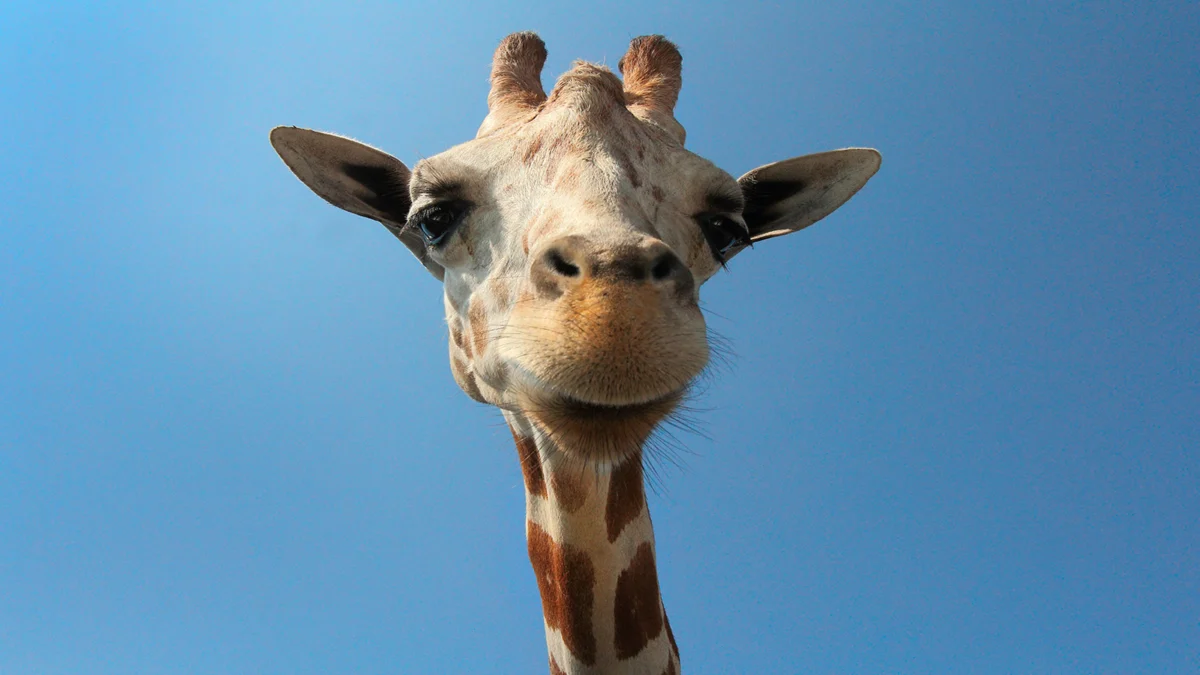
For decades, the giraffe (Giraffa camelopardalis) has been celebrated for its anatomical marvels: the towering height, the prehensile tongue, and the intricate, camouflage-like coat. However, a recent study conducted at the Barcelona Zoo suggests that these gentle giants possess a cognitive ability far more sophisticated than their physical presence might imply. In a first-of-its-kind experiment, researchers have discovered that giraffes are capable of performing basic addition, effectively tracking quantities in their heads—a cognitive feat previously thought to be reserved for primates, certain birds, and human toddlers.
The Experiment: Carrots and Cognitive Mapping
Led by behavioral researcher Iker Loidi at the University of Barcelona, the study sought to determine if giraffes could maintain a “running tally” of objects when those objects were removed from their line of sight. The subjects of this intellectual trial were four giraffes residing at the Barcelona Zoo: Nakuru, Njano, Nuru, and Yalinga.
The methodology was deceptively simple yet highly effective. Researchers utilized opaque boxes to hide piles of carrots. In the primary “addition” task, keepers would present two distinct piles of carrots to the giraffes. They would then observe as the keepers placed additional carrots into one of the piles. Because the boxes were opaque, the final total was obscured from the animals’ view. To retrieve the food, the giraffes had to remember the initial quantity and mentally add the subsequent items to arrive at the correct sum.
The results were statistically significant. Across multiple trials, the giraffes selected the larger pile correctly 68% of the time. While this may seem modest to a human, it sits well above the 50% probability threshold—the rate one would expect from pure chance. This discrepancy indicates that the animals were not merely guessing; they were actively processing numerical information and maintaining a memory of the quantity.
A Chronology of Numerical Discovery
The path to this discovery was not without its hurdles. The research team spent months acclimating the animals to the testing environment to ensure that stress or distraction did not interfere with the data collection.
- Phase I: Baseline Testing (Months 1-2): Researchers established that the giraffes could distinguish between different quantities of food when the items were visible. This confirmed that the animals had a basic sense of "more versus less."
- Phase II: The Opaque Challenge (Months 3-5): The introduction of opaque boxes required the giraffes to rely on working memory. During this phase, researchers closely monitored for “cues.” It was essential to rule out the possibility that the giraffes were simply following the movement of the researchers’ hands or focusing on the box that had been touched most recently.
- Phase III: The Subtraction Test (Months 6-7): Once the addition success was established, the team inverted the experiment. They asked the giraffes to perform subtraction—removing carrots from a hidden total.
- Phase IV: Data Verification (Month 8): The team scrutinized the results, separating the “high performers” (Nuru and Njano) from those who relied on behavioral cues (Nakuru and Yalinga).
Supporting Data: Addition vs. Subtraction
The most striking finding of the study is the cognitive divide between addition and subtraction. While the giraffes demonstrated a clear aptitude for additive logic, their performance plummeted during the subtraction trials. When tasked with calculating the result of a hidden subtraction, the giraffes’ success rate dropped to 50%, effectively mirroring the randomness of a coin flip.
This pattern is not unique to the giraffe. Researchers have observed similar developmental trajectories in human toddlers and certain avian species, such as pigeons. The ability to “count up” appears to be a more primitive or foundational cognitive skill than the ability to track a diminishing total.
Furthermore, the team addressed the variable of “mass perception.” Because carrots vary in size, it is possible that the giraffes were not counting individual units, but rather judging the total volume or bulk of the food. However, even when accounting for potential volume-based decision-making, the giraffes’ consistent performance in the addition trials suggests a sophisticated level of spatial and numerical tracking that remains highly impressive for a non-primate species.
Implications for Cognitive Biology
The revelation that giraffes possess numerical competence challenges long-held assumptions about the evolution of intelligence. Traditionally, researchers have looked to social complexity or tool-use as the primary drivers of brain evolution. Giraffes, which live in fluid social groups known as "fission-fusion" societies, face a different set of survival pressures than the primates typically tested for these skills.
The ability to track quantities could be an evolutionary holdover related to foraging. In the wild, a giraffe that can accurately assess which branch has more leaves or which patch of trees offers a higher density of nutrients would have a distinct survival advantage.

“This study forces us to re-evaluate what we mean by ‘intelligence’ in animals,” says Dr. Loidi. “We often look for intelligence that mirrors our own—complex language or tool manipulation. But when we look at how animals solve problems within their own ecological niches, we find that the capacity for math is far more widespread than we once dared to imagine.”
Addressing the Skeptics: The Human Factor
Despite the exciting nature of the findings, the researchers were rigorous in identifying potential flaws. A primary concern was the “Clever Hans” effect—a phenomenon where an animal appears to be performing a complex task but is actually reading subtle, involuntary cues from its human handler.
To mitigate this, the researchers performed double-blind testing. In the final, most rigorous trials, the individuals managing the boxes were unaware of the specific quantities being tested, or they remained entirely removed from the giraffe’s line of sight during the decision-making process.
Nuru and Njano emerged as the star performers, succeeding even in the absence of any human guidance or physical shortcuts. Nakuru and Yalinga, conversely, showed a dependency on human movement, succeeding only when they could track the experimenter’s hands. This distinction serves as a reminder that intelligence is not uniform, even within a single species, and underscores the necessity of high-quality data over anecdotal observation.
Broader Context: Why Animals Make Headlines
The public fascination with this study follows a broader trend of increased interest in animal cognition and the peculiar behaviors of species outside the primate order. From the high-profile case of a missing giraffe in Texas that gripped the public imagination to the tragic news of stolen pets, society is increasingly invested in the lives and minds of the creatures with whom we share the planet.
This study provides a necessary, scientific counterbalance to the often sensationalized narratives about animals. It shifts the focus from simple observation to structured, empirical inquiry. By treating the giraffe as a cognitive participant rather than a passive subject, the Barcelona team has opened a new door into the study of ungulate intelligence.
Future Directions
The team at the University of Barcelona has already begun planning follow-up studies. The next step is to determine if giraffes can perform basic arithmetic with non-food items, which would help clarify whether the motivation is purely hunger-driven or a genuine cognitive ability.
Moreover, they hope to investigate whether this ability is shared by other members of the Giraffidae family, such as the elusive okapi. If numerical competence is found to be a shared trait among these species, it could fundamentally alter our understanding of the evolution of the mammalian brain.
In conclusion, while the giraffe may never be asked to solve a complex algebraic equation, the fact that they can keep a tally in their heads represents a significant leap in our understanding of animal behavior. It serves as a humbling reminder that in the quiet, swaying world of the savannah, there is far more processing happening behind those large, dark eyes than we ever previously imagined. The giraffes of Barcelona have proven that math is not just a human invention; it is a fundamental tool for navigating the complexities of the natural world.