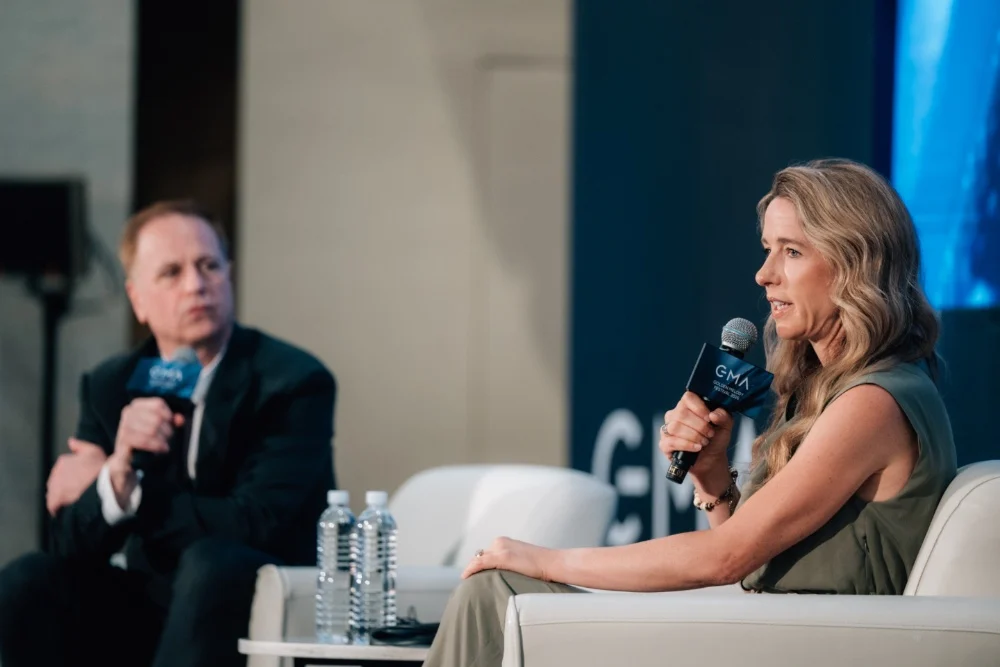
Music supervision is often romanticized as the glamorous task of choosing the perfect song for a cinematic moment—a "curator" role that sits at the intersection of taste and culture. However, for industry veteran Brittany Whyte, the reality is far more rigorous. At the 2026 Golden Melody Festival in Taiwan, Whyte—whose storied career spans cultural touchstones from The Handmaid’s Tale and Riverdale to the blockbuster The Hunger Games: Catching Fire—dismantled the myths surrounding the profession. In her keynote session, "The Art of Music Supervision: From Selection to Storytelling," she framed the discipline not as an aesthetic hobby, but as a complex, multi-disciplinary exercise in narrative engineering, legal precision, and budget management.
The Evolution of a "Record Detective"
To understand Whyte’s philosophy, one must first look at the unconventional path that led her to the helm of Whyte Room Music Supervision. Her entry into the industry was, in her own words, "accidental." While many in the field arrive through traditional academic pipelines, Whyte cut her teeth as a "record detective" for Steve Jones, the legendary guitarist of the Sex Pistols, during the run of his iconic radio show, Jonesy’s Jukebox.
This role required an encyclopedic knowledge of music and an ear for the obscure, training her to find the precise track that captured a specific, fleeting mood. This experience proved to be the perfect apprenticeship for a career in music supervision. Following a pivotal stint in A&R at Atlantic Records—where she learned the intricacies of label politics and artist relations—Whyte joined the powerhouse firm Chop Shop Music Supervision in 2007.
During her tenure at Chop Shop, she became a key architect of the soundscapes for an entire generation of television and film, including Twilight, The Perks of Being a Wallflower, and the teen drama phenomenon Gossip Girl. By the time she founded her own agency, Whyte Room Music Supervision, in 2023, she had already established herself as a titan in the field, capable of balancing the demands of high-budget studio projects with the nuanced, indie-leaning requirements of prestige television.
Case Study: The Architectural Sound of ‘Riverdale’
During her session at the Golden Melody Festival, moderated by Sync Summit CEO Mark Frieser, Whyte utilized the CW hit Riverdale as a primary case study to illustrate the "creative alignment" necessary for successful supervision. Contrary to the belief that music supervisors simply submit a list of tracks for a director to approve, Whyte explained that the process begins long before the cameras roll.
"Music supervision is the art of making music serve a story," Whyte stated. For Riverdale, the goal was to build a world that felt both contemporary and steeped in a noir-inspired, cinematic gloom. Whyte and the show’s creative team drew early inspiration from the aesthetic of Lana Del Rey, using that sonic palette to anchor the show’s identity.
The scale of the undertaking was immense: for a given season, Whyte often begins with an initial pool of nearly 300 tracks. Through a rigorous vetting process—involving constant dialogue with editors to ensure that the tempo, lyrical content, and emotional resonance of a song align with the "emotional rhythm" of a scene—that list is whittled down to a final, curated shortlist of 15. This process proves that supervision is a subtractive art form; the value lies as much in the songs that are rejected as in those that make the final cut.
The Pragmatic Constraints: Budget and Narrative
Whyte addressed one of the most persistent misconceptions in the industry: the idea that a high budget equals a better soundtrack. In reality, budgetary constraints are a vital creative tool.
"Recognizable songs can actually be a hindrance," Whyte argued. In a scene dominated by heavy dialogue or complex character development, a globally famous pop anthem can serve as a "distraction," pulling the audience out of the narrative and forcing them to focus on the star power of the song rather than the character’s internal state. In these moments, Whyte frequently turns to lesser-known tracks or custom-curated production music. These choices are often more cost-effective, but more importantly, they are more effective at maintaining the "diegetic immersion" required for a high-quality production.
The Legal Labyrinth: Licensing and Global Risks
While the creative process captures the headlines, the "legal dimension" of music supervision is where the job is won or lost. Whyte underscored that a music supervisor must be part lawyer, part strategist. Licensing a track requires an exhaustive, granular understanding of ownership splits, territorial rights, and expiration dates.
The stakes are higher than ever in the age of global streaming. Whyte issued a stern warning: a single oversight regarding regional rights can lead to a catastrophic result. "If you fail to clear a song for a specific territory, or if you ignore the expiration date of a license, a show can be pulled from global streaming platforms entirely," she noted. She even highlighted the danger of "micro-licensing"—the idea that even a character whistling a few bars of a popular tune requires formal clearance. In a global media landscape, the legal architecture of a soundtrack is just as crucial as the creative one.
The AI Question: Tools vs. Talent
The conversation inevitably turned to the role of Artificial Intelligence in the music industry. On this front, Whyte maintained a measured, pragmatic stance. While she acknowledges that AI is an effective tool for organizing copyright metadata and generating preliminary reference playlists, she remains skeptical of its ability to replicate the human element of the craft.
Both Whyte and Frieser agreed that music supervision relies on a "creative judgment" that is rooted in lived experience and cultural intuition. The legal and ethical quagmires surrounding the training data for AI models—many of which are built on copyrighted works without the consent of the original creators—pose a significant threat to the industry. For now, AI is a useful assistant, but it is nowhere near replacing the supervisor who understands the soul of a scene.
Implications for the Global Industry
Whyte concluded her session by looking toward the future of the industry, particularly in regions like Taiwan, where the music and film sectors are increasingly converging. She encouraged aspiring supervisors to prioritize hands-on experience, suggesting that students seek out short films and student productions to practice the craft in a low-stakes environment.
Moreover, she emphasized the importance of networking. Music supervision is a relationship-based business, built on trust between supervisors, editors, directors, and the rights holders at labels and publishing houses. Her call for the development of dedicated music supervision programs in Taiwan signals a shift in the global industry: as television and film production becomes more decentralized, the need for professional, legally savvy, and creatively bold music supervisors will only grow.
The message from the 2026 Golden Melody Festival was clear: music supervision is no longer a peripheral role. It is a fundamental pillar of modern storytelling. Whether navigating the complexities of copyright law or finding the perfect indie track to elevate a quiet, dialogue-heavy moment, the music supervisor is the silent architect of our emotional experience in front of the screen. As Brittany Whyte demonstrated, the art of the soundtrack is defined by precision, patience, and an unwavering commitment to the narrative—a testament to a profession that has finally come into its own.