Siti Muinah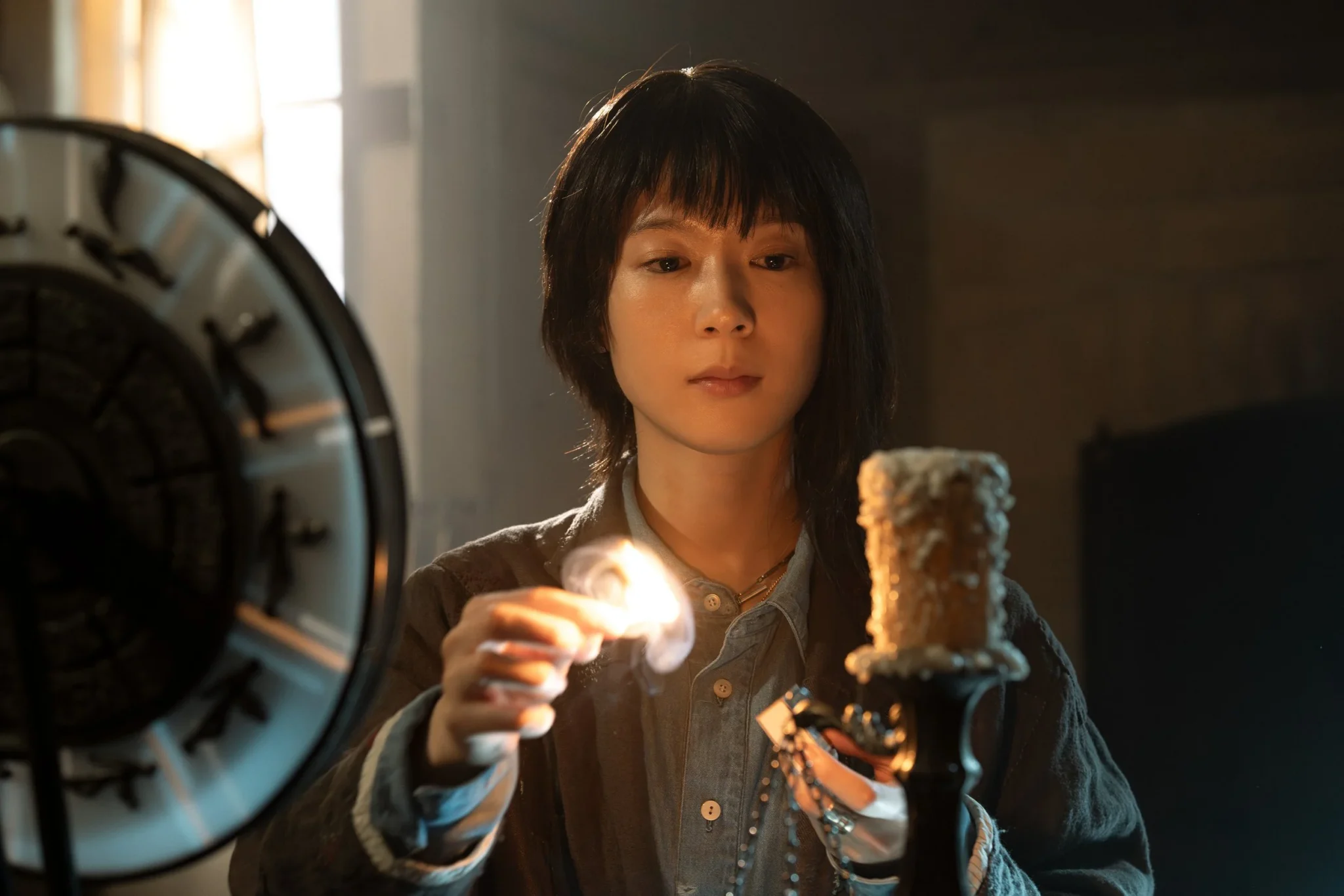
In the landscape of contemporary horror, where jump-scares and gore often overshadow narrative substance, director Dave Boyle’s latest feature, Never After Dark, arrives as a refreshing, chilling anomaly. Premiering to critical intrigue at Film at Lincoln Center’s "Scary Movies XIII" festival, the film masterfully blends the tropes of Western Gothic atmosphere with the nuanced, psychological dread signature to J-Horror.
At its core, Never After Dark is a character study disguised as a supernatural thriller. It follows Airi (played by the magnetic Moeka Hoshi), a freelance exorcist who operates under a strict, self-imposed rule: she never works after dark. By day, she acts as a bridge between the living and the dead, offering the restless a gentle transition into their next chapter. By night, she knows better than to disturb the spirits, who gain a malevolent, overwhelming potency under the shroud of darkness.
The Professional Life of an Exorcist: A World Built on Empathy
Airi is not the archetypal, world-weary paranormal investigator. She approaches her profession with a sense of clinical empathy; she sees her labor not as an act of combat, but as a form of spiritual hospice. Her companion in this journey is the ghost of her older sister, Miku (Kurumi Inagaki), who remains anchored to the mortal plane as a teenager. Miku serves as the film’s emotional anchor, constantly reminding her younger sister to prioritize the needs of the living over the affairs of the departed. Their dynamic is one of the film’s most successful elements—a lived-in, sisterly rapport that grounds the supernatural premise in human reality.
However, this professional equilibrium is shattered when Airi accepts a high-stakes commission: to clear a haunting in a remote, sprawling residence that was once a functioning hotel. The house, a masterpiece of production design by Yuji Hayashida, functions as a character unto itself. With its sheet-draped furniture, deep, cavernous shadows, and architectural quirks, it evokes the elegance of the Overlook Hotel while maintaining a distinctly Japanese sense of dread.
Chronology of a Haunting: From Skepticism to Terror
The narrative kicks off when Airi arrives at the residence, meeting her client, Teiko (Tae Kimura), a recently widowed socialite. Teiko is a complex figure—bubbly and stylish on the surface, yet masking a profound, raw grief. She is, in many ways, the emotional catalyst for the plot. Her desperation to find proof of an afterlife—to ensure her husband’s spirit is at peace—is a poignant motivation that resonates throughout the film.
The tension is immediately amplified by the presence of Teiko’s adult son, Gunji (Kento Kako). An avowed skeptic and vocal agnostic, Gunji views Airi with a mixture of professional suspicion and personal interest. He believes his mother is being swindled, and his frustration regarding the forced displacement required for the exorcism creates a friction that persists throughout the first act.
As the story progresses, the film shifts from a standard "haunted house" setup to something far more unpredictable. Boyle’s script subverts traditional expectations at every turn. While the audience anticipates the standard beats of a spectral invasion, the haunting begins to behave in ways that defy the conventions of the genre. Airi, usually in control of her craft, finds herself in uncharted territory, forced to confront a manifestation that refuses to adhere to the rules she has spent her life mastering.
Supporting Data: The Craft Behind the Horror
The film’s effectiveness is bolstered by the technical expertise behind the scenes. Dave Boyle, who previously helmed Netflix’s House of Ninjas, brings a seasoned eye to this project. His collaboration with special effects makeup artist Tomo Hyakutake is particularly noteworthy. The horror elements in Never After Dark are largely practical, eschewing modern CGI for visceral, tactile effects that feel both beautiful and unsettling.
The Musical and Performative Landscape
The film’s pacing is punctuated by an evocative soundtrack by Jonathan Snipes, which captures the quiet, mundane moments of Airi’s life—scenes where she waits for the "safe" hours, drinking beer and dancing to pop music, or debating the merits of Kraftwerk with a begrudgingly charming Gunji. These moments of levity are crucial; they create a sense of intimacy that makes the subsequent descent into horror far more jarring.

Furthermore, the supporting performances elevate the film beyond its genre constraints. Mutsuo Yoshioka delivers a standout performance in a pivotal role that remains one of the film’s most guarded secrets. His portrayal is a testament to the film’s commitment to character depth over cheap shock value.
Official Perspectives: The Vision of Dave Boyle
In interviews following the festival, Boyle has spoken extensively about his long-standing love for classic cinema, citing The Changeling as a primary inspiration. Like that classic, Never After Dark is less interested in jump-scares and more focused on the lingering, agonizing weight of grief.
"The haunting," Boyle notes, "is not a monster in the traditional sense; it is a manifestation of the past refusing to stay buried." By forming the production company Signal181, Inc. with Kento Kako, Boyle has established a creative environment that prioritizes these character-driven, cross-cultural horror narratives. The collaboration between the cast and crew is evident on screen; the chemistry between Hoshi, Kimura, and Kako feels authentic, creating a stakes-driven narrative where the viewer genuinely cares about the survival of the characters.
Implications: A New Standard for Supernatural Thrillers
Never After Dark is not merely "a horror movie." It is a meditation on the way trauma intersects with the mundane realities of life. Airi’s past, which is revealed with measured, deliberate pacing, is not a "twist" designed to shock the audience. Instead, it is an integrated part of her identity, one that explains why she is uniquely qualified—and uniquely vulnerable—to the entity in the hotel.
Why It Matters
The implications of this film for the genre are significant:
- Genre Fusion: It successfully merges Western Gothic architecture with J-Horror’s psychological weight, offering a template for international co-productions.
- Character-First Horror: By focusing on the emotional toll of the haunting on both the exorcist and the family, the film achieves a level of tension that cannot be manufactured through jump-scares alone.
- The Practical Renaissance: The reliance on Yuji Hayashida’s set design and Tomo Hyakutake’s practical effects proves that the most effective horror is often the most tangible.
Conclusion: A Must-Watch for the Genre Faithful
For those who have become jaded by the endless stream of derivative haunted house films, Never After Dark offers a necessary recalibration. It is a film that makes you lean in, that makes you clench your fists, and that lingers in the mind long after the credits roll.
As we approach the end of the year, Never After Dark firmly establishes itself as a high-water mark for 2026. It is a rare example of a film that respects its audience enough to build a world of genuine, human sorrow before it begins to dismantle that world with supernatural terror. Whether you are a devotee of Japanese horror, a fan of atmospheric gothic tales, or simply a viewer in search of a film that values character depth, Never After Dark is essential viewing.
The film stands alongside the best works of the decade, a haunting, elegant, and deeply unsettling masterpiece that proves that while the dead may be strong after dark, the stories we tell about them are stronger still.


 Nana Muazin
 Neng Nana