In the global landscape of speculative fiction, the voices of East and Southeast Asia have increasingly commanded the spotlight. While the "Golden Age" of Korean, Japanese, and Chinese speculative fiction in translation has been well-documented since the 2010s, a vital, distinct literary tradition has been simmering in the shadows of the Anglophone market: the surreal, history-drenched magical realism of Vietnam.
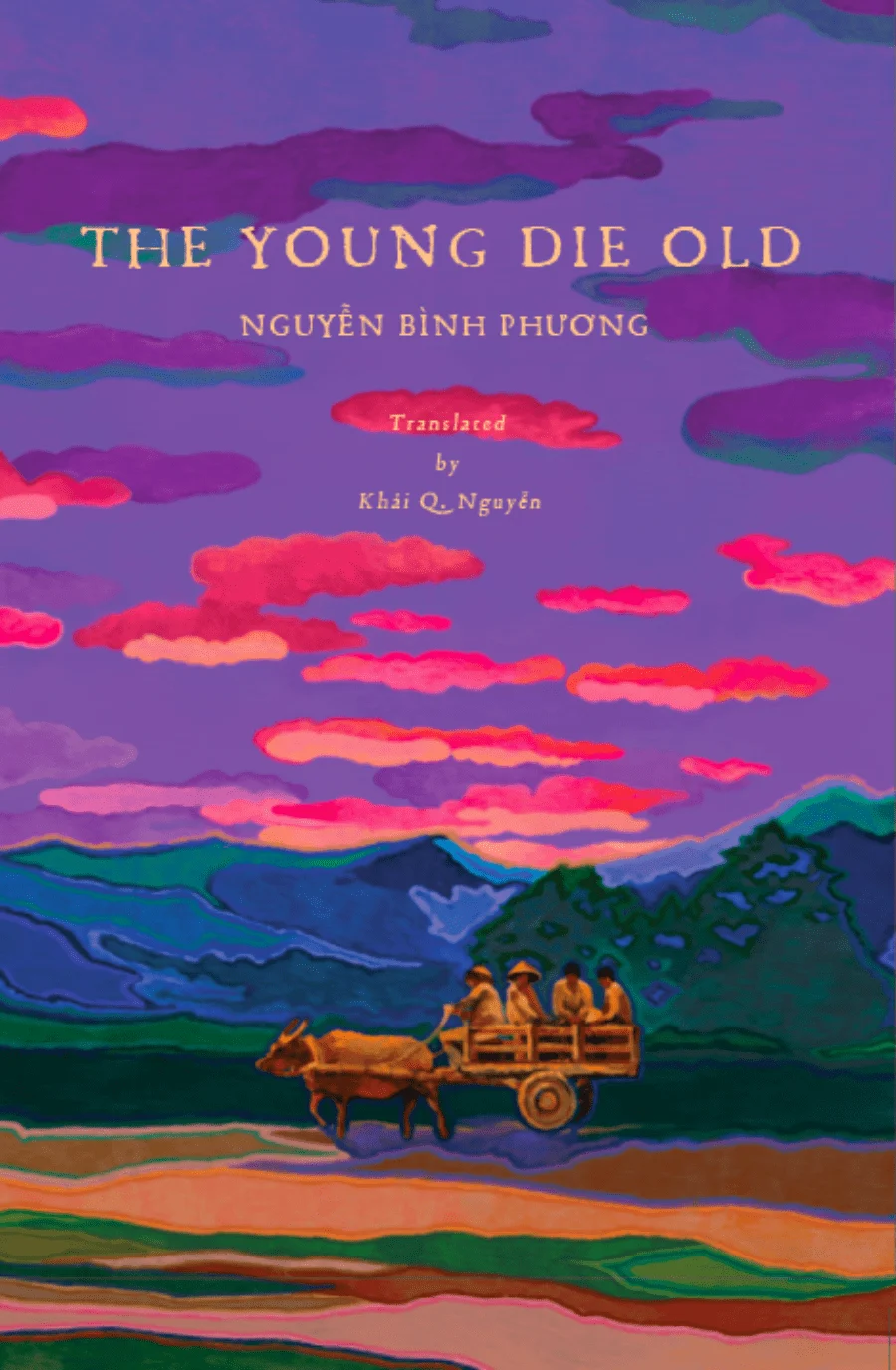
Nine years after a successful Kickstarter campaign promised to bridge this gap, Major Books has officially released The Young Die Old by Nguyễn Bình Phương. This publication marks a watershed moment, offering English-speaking readers a profound entry point into a literary culture where the boundaries between the living, the dead, the historical, and the mythical are porous, shifting, and deeply rooted in the Vietnamese experience.
A Chronology of Translation: Building a Bridge
The journey of Vietnamese speculative fiction into English has been a slow but deliberate process, primarily championed by independent presses and dedicated academic translators.
The groundwork was laid in 1998 with the publication of Behind the Red Mist by Hồ Anh Thái, released by Curbstone Press. This collection, translated by a collaborative team including Nguyễn Quí Đức and Dana Sachs, introduced Western readers to a post-war Vietnam filtered through the lens of the uncanny. In these stories, the mundane horrors of bureaucracy and the lingering trauma of war are manifested through surreal transformations: men turn into goats after consuming illicit media, American features replace Vietnamese ones, and protagonists engage in time-travel paradoxes to ensure their own births.
In 2005, this momentum continued with The Cemetery of Chua Village and Other Stories by Đoàn Lê. Translated by Rosemary Nguyen, Wayne Karlin, and Tuong Doung, this work cemented the trope of "everyday surrealism." Here, ghosts engage in petty village gossip, citizens transform into flies to escape the suffocating weight of housing authorities, and the biological reality of paternity is challenged by the appearance of human clones.
Now, in 2026, The Young Die Old arrives as the culmination of these efforts. It is not merely a single novel; it is a synthesis of decades of literary evolution, proving that the "supernatural haze" present in Vietnamese literature is not an imitation of Latin American magical realism, but a distinct, indigenous manifestation of Vietnamese folklore and history.
The Architecture of The Young Die Old
Nguyễn Bình Phương, widely regarded as one of Vietnam’s most formidable contemporary writers, crafts a narrative in The Young Die Old that functions less like a linear story and more like a fluid, dream-like tapestry.
Fluid Perspectives and Overlapping Realities
Phan Village, the setting of the novel, is a place where the present is constantly besieged by the past. Phương’s narrative technique is intentionally disorienting; he introduces characters with such velocity that their stories bleed into one another. A reader might begin a chapter firmly rooted in the perspective of a character named Phán, only to find themselves mid-paragraph inside the mind of his dying grandfather, recalling the distant memory of a man named Chan digging a pond. This fluidity mirrors the nature of memory itself—unpredictable, layered, and indifferent to chronological boundaries.
The Linguistic Philosophy of Time
One of the most compelling aspects of the novel is its relationship with time. The book alternates between standard chapters and "Soundless" chapters, which track a mysterious protagonist known only as "the Man," who is presumably returning from the 1979 Sino-Vietnamese War.
The translator, Khải Q. Nguyễn, notes that the structure of the novel is an attempt to capture the essence of the Vietnamese language, which operates without the rigid tense structures of English. In Vietnamese, one "speaks in the present tense," utilizing context markers to orient actions in time. This creates a narrative flow where the past is never truly "behind" the characters; it is a permanent, active presence. As Khải Q. Nguyễn argues, the reader is invited to "flow" alongside these characters, accepting that in a post-war society, the past is not a foreign country—it is the very ground upon which the present is built.
Supporting Data: The Supernatural as Cultural Reality
The imagery within The Young Die Old is unapologetically visceral. The author, who is also a distinguished poet, utilizes language that renders the immaterial tangible. When describing the onset of winter, Phương writes: "Winter came, dropping its veil over the landscape… The cold squeezed humans and animals into sorrowful ragged piles."
This commitment to the visceral extends to the supernatural. The presence of the Nghê—a mythical lion-dog—is not treated as a mere fantasy element, but as a cultural weight. When family members are on the verge of lethal violence, the intervention of such a creature serves as a disruption of both physical and moral reality.
In an interview included at the end of the volume, Phương addresses the comparison to Western or Latin American fantasy. He explicitly references Franz Kafka, not as a stylistic template, but as a philosophical companion—a writer who worked in isolation, following his own internal logic regardless of genre constraints. For Phương, the inclusion of dragons, ghosts, or age-regressing elderly women is not a stylistic flourish; it is a reflection of a culture that has lived through such profound, traumatic upheavals that the "normal" world is often insufficient to describe the experience of existence.
Implications for Global Literature
The publication of The Young Die Old carries significant implications for the future of Asian speculative fiction in the global market.
- Genre Defiance: The novel challenges the rigid Western categorization of "genre." By blending historical trauma, martial arts, myth, and existentialist dread, Phương forces the reader to discard the labels of "fantasy" or "realism" in favor of a more nuanced understanding of literary intent.
- Decentralizing the Canon: For too long, the "global" perspective on Asian speculative fiction has been dominated by Chinese, Japanese, and Korean outputs. The entry of Vietnamese voices provides a necessary counter-narrative, one that is informed by a distinct colonial and post-colonial history, as well as a unique linguistic structure.
- The Role of Independent Publishing: The success of Major Books and the long-term support of presses like Curbstone underscore the vital role of independent publishers in curating voices that the mainstream market might otherwise overlook.
Conclusion: A Window into the Haunted Present
The Young Die Old is more than a translation of a novel; it is an act of cultural reclamation. It invites the reader into the heart of a village that stands as a microcosm of Vietnam itself—a nation defined by its resilience, its ghosts, and its ability to exist in a state of constant, flowing transition.
As we look toward the future of world literature, the arrival of this work serves as a reminder that the most profound stories are often those that refuse to be neatly categorized. Whether it is a man turning into a goat to escape the memory of war or a grandfather’s dying thought blending into the present, these stories demand that we look closer at the "supernatural haze." In doing so, we might find that the distance between the real and the unreal is far shorter than we ever imagined.
For those curious about the motivations of writers in Southeast Asia, or those simply seeking a narrative that challenges the structural limitations of the English novel, The Young Die Old is an essential addition to the bookshelf. It is a bold, beautiful, and haunting testament to the fact that while the young may die old, their stories—if translated with care and intention—remain forever young.