Azzam Bilal Chamdy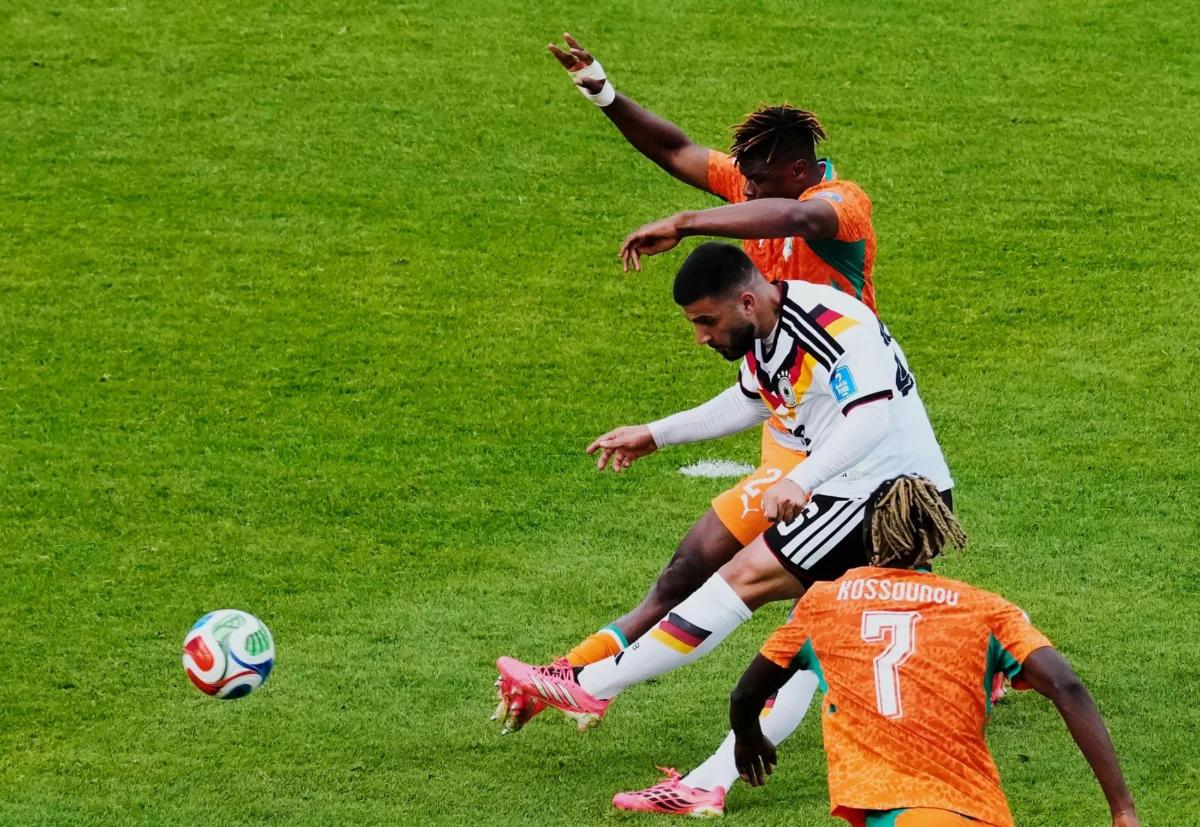
By Sports Editorial Staff
In a dramatic display of tactical depth and individual brilliance, Deniz Undav emerged as the unlikely hero for Germany on Saturday, netting a stunning second-half brace to secure a 2-1 comeback victory over the Ivory Coast. The win at the FIFA World Cup not only guarantees Germany a place in the knockout phase but also signals a potential return to the world-beating form that defined the nation’s 2014 championship run.
For the four-time world champions, this match served as both a redemption arc and a statement of intent. Having endured the humiliation of consecutive group-stage exits in 2018 and 2022, the victory marks a critical psychological hurdle cleared for the German squad, signaling that the ghosts of the past have finally been laid to rest.
Chronology of a Comeback
The match began with a tactical stalemate, as the Ivorian side—known for their pace and physicality—deployed a disciplined defensive block designed to stifle Germany’s fluid possession game. Throughout the first half, the German midfield struggled to penetrate the final third, while Ivory Coast looked dangerous on the counter-attack.
The First Half Stalemate
The Ivory Coast broke the deadlock early, capitalizing on a momentary lapse in German defensive concentration. As the match progressed toward the hour mark, the tension in the stadium was palpable. Germany looked stagnant, failing to capitalize on long-range efforts, while the Ivorian supporters grew increasingly confident that an upset was brewing.
The Double Substitution Pivot
With the clock ticking toward the 60-minute mark, Germany’s technical staff made a decisive double substitution that would ultimately change the complexion of the tournament. Nadiem Amiri and Deniz Undav were introduced to the pitch, injecting fresh legs and a different tactical rhythm into the German attack.
The impact was near-instantaneous. In the 68th minute, Amiri delivered a lofted ball into the penalty area. As the ball soared toward him, Kai Havertz—displaying high-level spatial awareness—executed a clever dummy run, allowing the ball to bypass him and drop perfectly into the path of Undav. Undav, showing composure beyond his years, hammered the ball into the back of the net to level the score.
The Stoppage-Time Clincher
With the match seemingly headed for a draw, Germany pushed forward with relentless intensity. Four minutes into the designated stoppage time, the breakthrough arrived. Felix Nmecha, acting as the primary playmaker, found a pocket of space near the edge of the box. He threaded a precise pass to Undav, who was stationed directly in front of the goal. With a clinical finish, Undav rifled the ball past the outstretched hands of Ivorian goalkeeper Yahia Fofana, sending the German bench and supporters into a frenzy.
Supporting Data: A Statistical Perspective
The statistical narrative of the match underscores the efficiency of Germany’s bench. While Germany held the majority of possession throughout the 90 minutes, it was the clinical nature of the second-half substitutes that defined the outcome.
- Impact Substitutions: Both Undav and Amiri entered the match at the 60th minute. Within eight minutes, they had engineered the equalizing goal.
- The Undav Factor: In his limited time on the pitch, Undav recorded two shots on target, both of which resulted in goals. His efficiency rating remains among the highest for any substitute in this tournament thus far.
- Historical Context: Germany’s victory is particularly significant given their recent World Cup history. Since their 2014 triumph, the team has struggled to navigate the group stage. This match serves as the first instance in 12 years that Germany has successfully navigated the opening round of the tournament, ending a decade-long drought of progression.
- Ivorian Resilience: Despite the loss, Ivory Coast maintained a high defensive work rate. Goalkeeper Yahia Fofana recorded five saves throughout the match, keeping his side in contention until the final seconds of stoppage time.
Official Responses and Tactical Analysis
Following the match, the German camp was characterized by a mix of relief and focused optimism. Head coach staff members praised the squad’s "mental fortitude," noting that the team had internalized the lessons of the 2018 and 2022 campaigns.
"It was never going to be easy," said a team spokesperson during the post-match press conference. "We knew Ivory Coast would pose a significant threat on the break. The key for us was to maintain our structure even when we were trailing. Deniz [Undav] and Nadiem [Amiri] changed the tempo exactly as we hoped they would."
On the other side of the tunnel, the Ivorian management expressed pride in their players’ performance despite the heartbreaking conclusion. "We were within seconds of a massive result," the Ivorian coach noted. "We played with heart and discipline, but at this level, individual brilliance—like what we saw from Undav—is often the difference between a point and a loss."
Tactical analysts have pointed to the "Havertz-Undav dynamic" as a key takeaway from the match. By allowing Havertz to draw defenders away, Undav was able to exploit the space between the Ivorian central defenders. This level of tactical flexibility is something Germany has lacked in previous tournaments and could be the key to their success in the knockout stages.
Implications for the Tournament
The repercussions of this match extend far beyond the final scoreline. For Germany, the implications are profound:
- Psychological Momentum: Having conquered the "group stage curse," Germany enters the Round of 16 with significant momentum. The ability to come from behind in a high-stakes scenario is a hallmark of championship-winning teams.
- Tournament Path: By clinching a spot in the knockout phase, Germany can now afford to rotate their squad in the final group game, potentially resting key starters to ensure maximum fitness for the high-intensity matches to come.
- The Ivorian Outlook: Despite the defeat, Ivory Coast is not out of the tournament. Their performance demonstrated that they are a force to be reckoned with. They remain in a position to qualify for the knockout stages if they can secure a win in their final group match, a feat that would mark a historic first for the nation.
- The Rise of Undav: Deniz Undav has effectively transformed his reputation from a bench option to a potential starter. His performance has created a "good problem" for the coaching staff, who must now decide whether to integrate him into the starting XI or continue utilizing him as a high-impact super-sub.
Looking Ahead
As the tournament shifts gears toward the knockout phase, the pressure on Germany will only intensify. The 2014 champions have proven they have the grit to survive, but the upcoming rounds will require a sustained level of performance that has been inconsistent over the last decade.
Ivory Coast, meanwhile, must now look toward their final group encounter with a "must-win" mentality. The support they received during this match—from both their traveling fans and neutrals who admired their tactical discipline—suggests that they will have a significant following as they push for a historic progression.
For now, the story of the day belongs to Deniz Undav and a German team that finally appears to have rediscovered its winning identity. As the world watches, the path to the trophy remains wide open, and for the first time in many years, Germany is firmly back in the conversation as a legitimate contender.
© Copyright 2026 The Associated Press. All rights reserved. This material may not be published, broadcast, rewritten, or redistributed without permission.


 Neng Nana
 Asro
Asro