In the vast, verdant pantheon of Studio Ghibli’s filmography, few entries occupy as charming and singular a space as the 2002 fantasy adventure The Cat Returns. While often overshadowed by the sweeping epics of Hayao Miyazaki, such as Spirited Away or Princess Mononoke, The Cat Returns stands as a masterclass in whimsical world-building and character-driven narrative. Far from being a simple, one-off fairy tale, the film serves as an intricate thematic successor to Yoshifumi Kondō’s 1995 classic Whisper of the Heart, expanding upon a meta-fictional foundation that bridges the gap between the mundane struggles of adolescence and the boundless possibilities of the imagination.
The Genesis of a Feline Fable: Main Facts
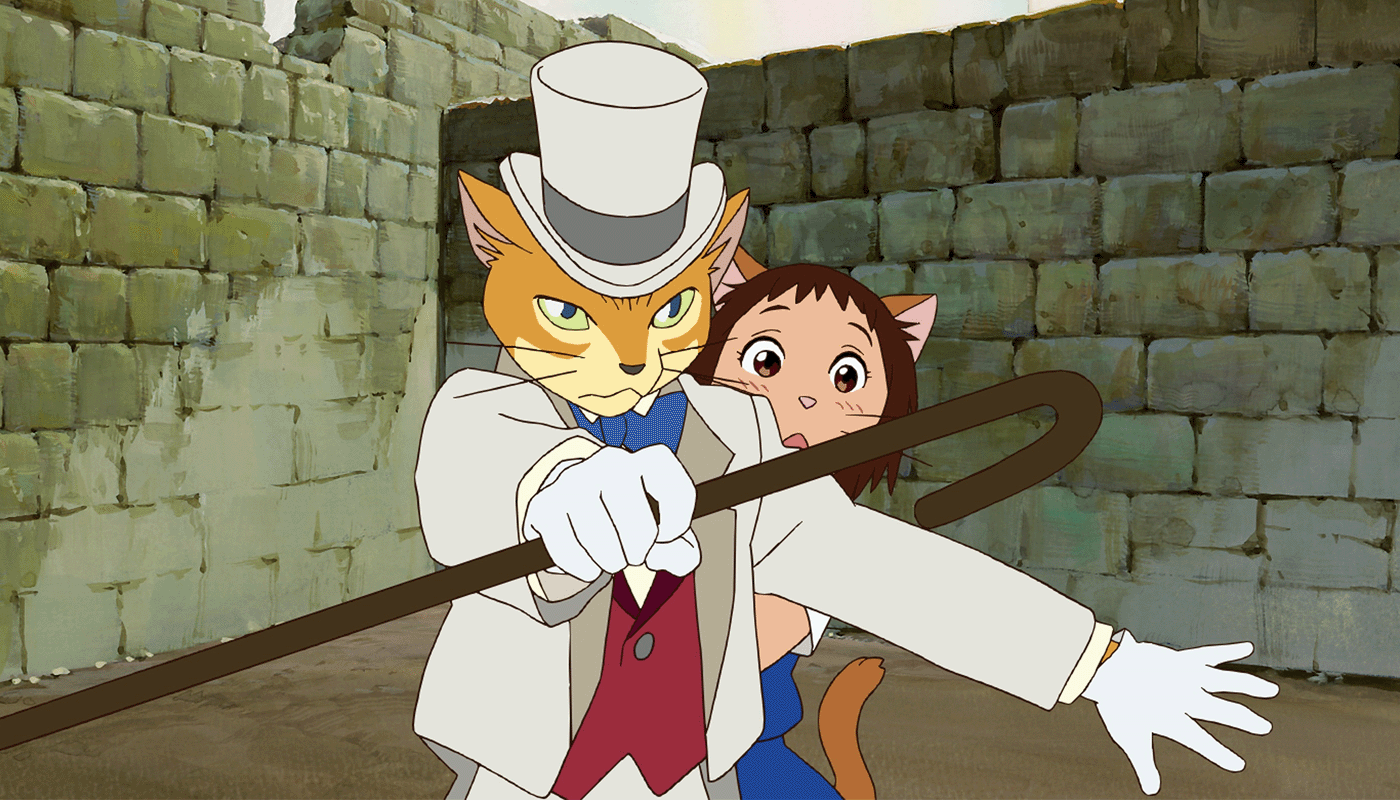
At its core, The Cat Returns is a spin-off that dares to bring a work of fiction to life. In Whisper of the Heart, the protagonist Shizuku Tsukishima, a budding novelist, crafts a story featuring "The Baron," an anthropomorphic cat statue donning Victorian finery. In a stroke of narrative genius, Studio Ghibli decided to grant that very character his own feature-length adventure.
The story centers on Haru, a high-school student grappling with the quintessential anxieties of youth: academic pressure, social awkwardness, and a lack of self-confidence. Her trajectory shifts irrevocably when she performs an act of singular bravery, rescuing a mysterious cat from the path of an oncoming truck. This is no ordinary feline; it is Prince Lune of the Kingdom of Cats. His gratitude—manifested as a surreal parade of bipedal, talking cats at her doorstep—triggers a journey that forces Haru to confront her identity, her desires, and the fine line between the world she knows and the magical "pocket universe" of the Cat Bureau.
Chronology of a Magical Intervention
The narrative structure of The Cat Returns follows a classic "hero’s journey" trajectory, albeit one filtered through a lens of feline surrealism.
The Catalyst of Kindness
The film opens in our world, presenting Haru as a girl adrift. Her rescue of Prince Lune is the inciting incident, an act of altruism that sets in motion a chain of supernatural events. The Prince’s initial bow of gratitude, delivered in perfect, courtly human speech, serves as the first fissure in the reality of Haru’s life.
The Call to the Bureau
Haru’s mother, in a moment of poignant exposition, recalls Haru’s childhood claims of speaking with cats. This connection is not merely nostalgic; it validates Haru’s innate empathy, which is precisely what the Kingdom of Cats aims to exploit. When the King of Cats begins to "reward" Haru with unwanted gifts—including a proposal of marriage to his son—Haru reaches her breaking point. Guided by a mysterious, gravelly voice, she seeks out the Cat Bureau, where she encounters the Baron and his unlikely associate, the gluttonous, street-smart feline Muta.
The Descent into the Kingdom
The middle act transitions into a high-stakes rescue mission. Haru is abducted by the feline court and whisked away to their domain. Here, the film explores the "uncanny valley" of the cat world: a place where architecture mirrors our own but is scaled for creatures who walk on two legs. Haru’s gradual transformation into a cat is a race against time. If she fails to escape the kingdom by sunrise, she will lose her humanity forever.
The Restoration of Self
The final act is a battle of wills rather than blades. The Baron and Muta infiltrate the palace, not to conquer it, but to force the King to recognize the autonomy of his subjects and his guests. Through the Baron’s calm, rational interventions, Haru realizes that the solution to her problem isn’t just fleeing the Kingdom, but reclaiming her own agency.
Supporting Data: The Anatomy of the Cast
The English-language dub of The Cat Returns remains a cornerstone of anime localization, boasting a cast that feels tailor-made for the film’s specific tonal requirements.
- Anne Hathaway (Haru): Bringing the same earnest, vulnerable energy she displayed in The Princess Diaries, Hathaway captures the transition of a girl who feels invisible to one who finds her voice.
- Cary Elwes (The Baron): Bringing the charm of Westley from The Princess Bride, Elwes provides the necessary gravitas for a character who is, quite literally, a work of art come to life.
- Tim Curry (The Cat King): In one of his most colorful performances, Curry plays the King not as a standard villain, but as an overbearing, mob-boss-like autocrat who mistakes control for love.
- Supporting Players: With Kristen Bell as the supportive best friend Hiromi and Kristine Sutherland as Haru’s mother, the film’s human world feels lived-in and grounded, providing a necessary contrast to the feline absurdity of the second act.
Official Responses and Thematic Implications
The reception of The Cat Returns has historically been warm, particularly among those who appreciate the film’s commentary on the act of creation. The Baron’s poignant line, "Whenever someone creates something with all their heart, that creation is given a soul," serves as a thesis statement for the entire Studio Ghibli ethos.
The film explores the tension between being "useful" and being "yourself." The King of Cats attempts to mold Haru into a princess, ignoring her own desires. The Baron, by contrast, represents the ideal mentor; he provides the tools for Haru to save herself rather than acting as a traditional "savior." This is a significant departure from the tropes of 2000s-era animated features, where the female lead was often a passive object to be rescued.
Furthermore, the film’s depiction of the "Cat Kingdom" serves as a critique of blind tradition. The cats of the kingdom are bound by elaborate, archaic rituals and the whims of a monarch who refuses to listen. By breaking these cycles, Haru and the Baron act as agents of change, emphasizing that tradition—and indeed, one’s own past—should not dictate one’s future.
Conclusion: A Legacy of Whimsy
The Cat Returns is often misinterpreted as a whimsical side-quest, but it is, in reality, a profound meditation on self-actualization. It reminds the audience that the "magic" we seek in the world is often a reflection of the passion we pour into our own lives.
Whether it is through the eyes of a young girl learning to stand up for her own happiness or the quiet dignity of a cat-statue who believes that help is always available if one only knows how to look, the film remains a vital part of the Ghibli library. It teaches us that while we may encounter worlds that feel impossible or traps that feel inescapable, the key to returning to our true selves often lies in the simple, brave decision to say "no" to that which does not serve our spirit.
In the final analysis, The Cat Returns is not just about cats; it is about the courage to define one’s own reality, a lesson as relevant today as it was at the turn of the millennium.