Rifan Muazin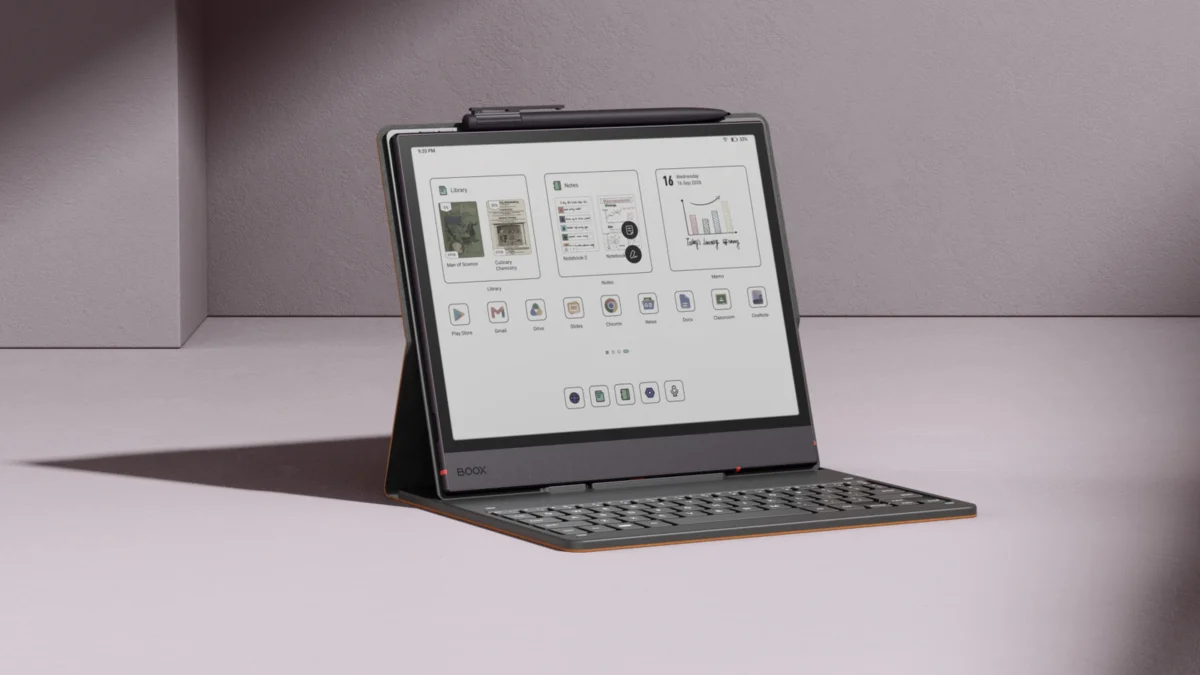
In an industry often criticized for incremental updates and sluggish processing speeds, Onyx Boox has taken a decisive step forward. The company has officially announced the launch of the Boox Note Air 6C, a 10.3-inch color E Ink tablet that aims to bridge the gap between dedicated e-reading devices and productivity-focused tablets. By integrating a significantly more powerful processor and the latest Android operating system, Boox is positioning the 6C not merely as a reader, but as a legitimate digital workspace for professionals and creatives.
Main Facts: The Evolution of the Note Air Series
The Boox Note Air 6C arrives with a suite of upgrades designed to address the primary pain point of E Ink technology: latency. At the heart of the device is a new processor capable of reaching clock speeds of 2.9GHz. According to internal benchmarks provided by Boox, this represents a 45 percent increase in raw processing power compared to its predecessor, the Note Air 5C.
For the end user, this performance jump manifests most tangibly in document navigation. The company reports a 40 percent improvement in PDF page-turning speed, a metric that is critical for users who rely on the device for academic research or professional documentation.
The device maintains the 10.3-inch form factor that has become a staple of the series, featuring a dual-resolution display: 300 PPI for crisp, high-contrast black-and-white text and 150 PPI for color content. Security and versatility remain key pillars of the design, with the power button now housing an integrated fingerprint sensor for rapid, secure access. Furthermore, the inclusion of a four-microphone array suggests that Boox is prioritizing the device’s utility as a voice-recording and transcription tool in professional meetings.
Chronology: From the 5C to the 6C
The evolution of the Note Air line has been one of consistent, iterative refinement. To understand the significance of the 6C, one must look at the trajectory of the series:
- The Foundation (Note Air 4C): The 4C established the brand’s reputation for high-quality, color-enabled E Ink tablets. It secured a permanent spot on various "Best E Ink Tablet" rankings due to its balance of screen quality and software flexibility.
- The Iteration (Note Air 5C): Building on the 4C, the 5C solidified the "Note Air" identity. It proved that color E Ink was not just a gimmick but a viable medium for annotating documents and browsing web content, albeit with the characteristic sluggishness associated with E Ink refresh rates.
- The Modernization (Note Air 6C): Announced today, the 6C represents the most substantial internal overhaul to date. By jumping to Android 16, Boox has future-proofed the device, ensuring compatibility with the latest applications from the Google Play Store.
This chronology highlights a clear shift in Boox’s strategy: moving away from "e-reader first" and toward "tablet-experience-on-E-Ink."
Supporting Data: Performance Metrics and Hardware Specs
The decision to keep the RAM at 6GB is a calculated move. While industry trends—often driven by the "RAMpocalypse" or fluctuating component costs—have seen many manufacturers slash memory to cut costs, Boox has opted for stability. 6GB remains a "sweet spot" for Android-based E Ink devices, providing enough overhead for background tasks and multi-app workflows without drawing the excessive power that would necessitate a larger, heavier battery.
Technical Specifications Breakdown
| Feature | Specification |
|---|---|
| Processor | Up to 2.9GHz (45% faster than 5C) |
| Operating System | Android 16 |
| Display | 10.3-inch (300 PPI B&W / 150 PPI Color) |
| RAM | 6GB |
| Storage | 64GB (expandable via microSD) |
| Audio | Dual Speakers, 4-Mic Array |
| Battery/Charging | Optimized for efficiency |
| Stylus | Pen3 (No charging/pairing required) |
Beyond raw specs, the updated refresh mode is perhaps the most critical software development. Boox has engineered this mode specifically to handle dynamic content. Users who have struggled with "ghosting" or stuttering when scrolling through web pages or navigating complex Android apps will likely find the 6C to be a significant upgrade. The integration of the Pen3 stylus—which functions without the need for active power or Bluetooth pairing—remains a highlight, providing a "pen-on-paper" experience that is essentially plug-and-play.
Official Perspectives: The Philosophy Behind the Refresh
In discussions regarding the launch, the focus from the development team has been on "fluidity." The company acknowledged the limitations of previous models, specifically in how they handled modern web browsing and third-party apps.
"The goal with the Note Air 6C was not to reinvent the wheel, but to ensure the wheel turns as smoothly as possible," a company spokesperson noted. By focusing on the interplay between the upgraded processor and the refined refresh algorithms, Boox is attempting to make the device feel less like a specialized tool and more like an extension of the user’s primary computer.
The inclusion of Android 16 is a major selling point. By moving to the latest version of the OS, Boox is addressing the longevity concerns often cited by power users. It ensures that the device will remain compatible with the latest security patches and app updates, a necessity for a device that is increasingly being used for professional email and cloud-based document management.
Implications: What the Note Air 6C Means for the Market
The release of the Note Air 6C has several implications for both the consumer market and the broader E Ink industry.
1. The Death of the "Slow" E Ink Tablet
For years, the argument against using E Ink tablets as general-purpose devices was the latency. The 6C directly challenges this by prioritizing high-speed processing and optimized refresh rates. As the gap between standard LCD/OLED tablets and E Ink devices narrows in terms of performance, we are likely to see a shift in consumer behavior, with more professionals opting for E Ink to mitigate eye strain during long hours of work.
2. Pricing and Value Proposition
Priced at $580 for the base bundle, the 6C represents a $50 increase over the 5C. While price hikes are rarely popular, the inclusion of the folio case and extra stylus tips attempts to offset this. However, the market will ultimately decide if a 40–45% performance boost justifies the premium. The higher-tier bundle, including the keyboard cover, positions the device directly against entry-level iPads and Android tablets, creating an interesting conflict: users must now choose between the vibrant, high-refresh rate of an LCD tablet and the eye-friendly, distraction-free environment of the Boox Note Air 6C.
3. The Future of Productivity
With its microSD slot and robust storage options, the 6C is clearly aimed at the "prosumer." It is a device for researchers, writers, and students who need a portable library that also happens to be a powerful, distraction-free writing surface.
Conclusion: A Worthy Successor
The Boox Note Air 6C is a textbook example of a mature product refresh. It does not attempt to change what users love about the series—the screen size, the stylus experience, and the software ecosystem—but rather strengthens the foundation upon which those features rest.
For those currently using a 4C or 5C, the jump to the 6C may not be an immediate necessity, but for those who have been waiting for E Ink to reach a level of performance that makes web browsing and app usage truly "fluid," this may finally be the device that makes the switch worthwhile. As we look toward putting the 6C through rigorous, real-world testing, the question remains: has Boox finally mastered the balance between the gentle, paper-like experience of E Ink and the raw power of a modern tablet? The early indicators are promising, suggesting that the Note Air 6C is not just a refresh, but a refinement of the digital reading and writing experience.