

The promise of smart glasses has long been the "holy grail" of consumer electronics: a discreet, wearable interface that bridges the gap between the digital and physical worlds. For years, tech executives have touted eyewear as the natural successor to the smartphone. Yet, as the market matures, a persistent hurdle remains—the tether. Even the most sophisticated hardware often finds itself crippled by a dependency on a smartphone, turning a revolutionary device into a mere peripheral.
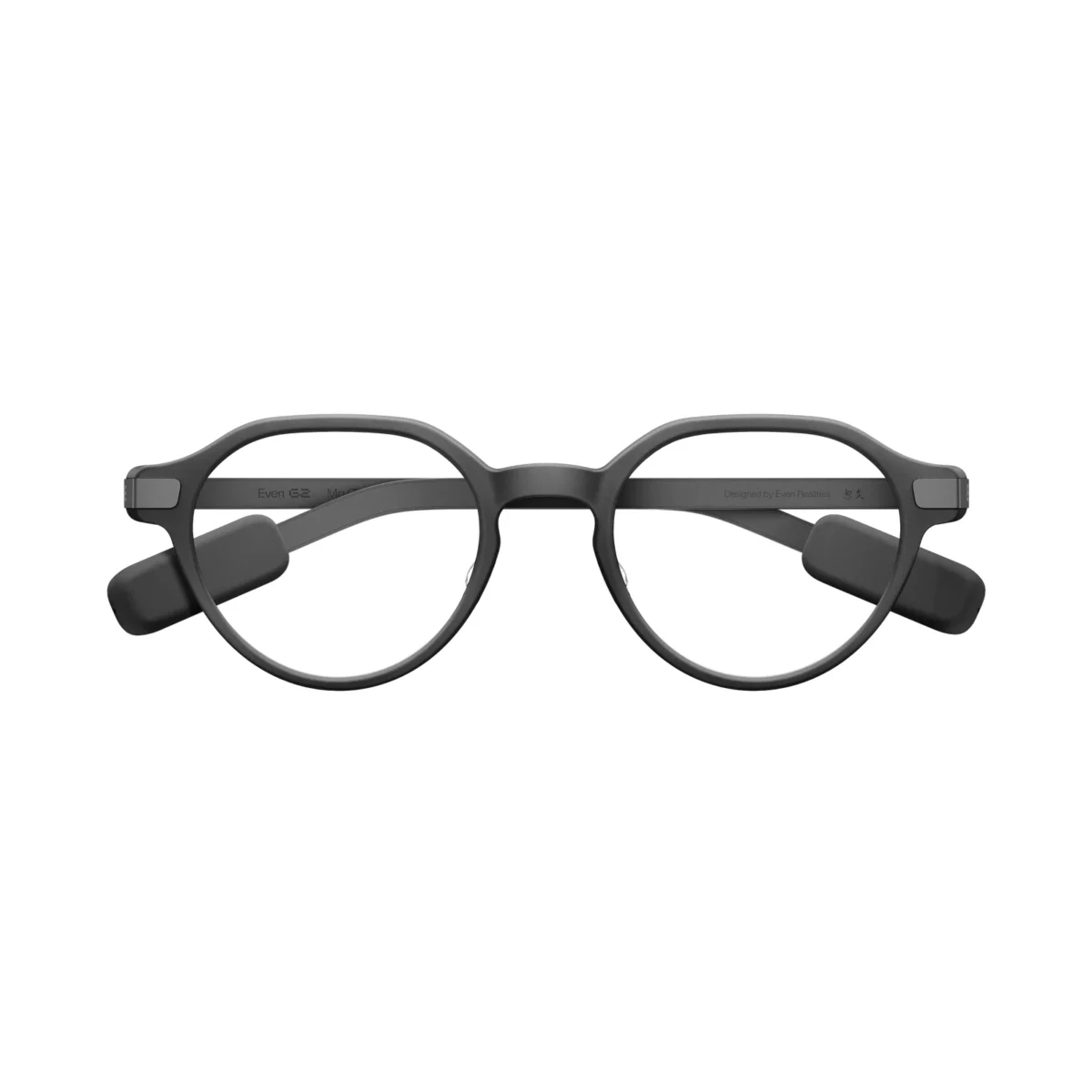
The Even Realities G2 smart glasses sit squarely in this intersection of high-end hardware and frustrating software limitations. With a sleek aesthetic and a unique neon-style heads-up display (HUD), the G2 makes a compelling visual first impression. However, as it enters a market crowded by giants like Meta and niche innovators like Rokid, the G2 serves as a case study in how far the category has come—and how much further it has to go to become truly indispensable.
Main Facts: A Pivot Toward Utility
Unlike the Meta Ray-Bans, which prioritize capturing the world through cameras and speakers, the Even Realities G2 is built with a singular, contentious philosophy: productivity first. By intentionally omitting cameras and speakers, the company has positioned the G2 as a privacy-conscious assistant that won’t make bystanders uncomfortable.
The device utilizes a monochrome, green-tinted HUD that projects text and information directly into the wearer’s field of vision. It is a minimalist approach that avoids the "cyborg" aesthetic in favor of something that looks, feels, and functions like premium eyewear. Constructed from a lightweight 35-gram magnesium alloy frame with titanium-alloy temples, the G2 is designed for all-day comfort.
However, the hardware’s elegance is contrasted by the software’s volatility. The G2 relies on an active Bluetooth connection to a smartphone app to process most of its features. While connectivity has improved significantly since the product’s early, rocky release, the dependence on the phone for everything from navigation to brightness adjustments remains a significant friction point for power users.
The Evolution: From G1 to G2
The journey of Even Realities reflects the rapid iteration cycle typical of the wearable tech sector. The G2 is a marked improvement over its predecessor, the G1, which struggled with display quality and connectivity issues.
Key Technical Upgrades:
- Display Luminance: The G2 features a 1,200-nit display, a notable step up from the G1’s 1,000-nit panel, ensuring better visibility in challenging lighting conditions.
- Refresh Rate: A massive jump from 20Hz on the G1 to 60Hz on the G2, which eliminates the jittery, ghosting effect that plagued the first-generation model.
- Audio Input: The transition from a two-microphone array to a four-microphone setup was intended to improve voice command accuracy, though real-world testing suggests environmental noise remains a hurdle.
- Display Surface: The active viewing area has been increased by 75%, allowing for longer strings of text—a crucial upgrade for the "Teleprompt" and "Conversate" features.
The Feature Set: Productivity in Your Periphery
The G2 is marketed toward professionals—the constant traveler, the presenter, and the meeting-heavy executive. Through a series of touch-sensitive inputs on the temple, users can access a suite of "life-hacks" designed to streamline information flow.

Navigation and Translation
The "Translate" feature is perhaps the G2’s most impressive tool. During recent field tests, the glasses successfully provided real-time subtitles for conversations in Chinese, French, and Spanish. It is a functional, if limited, tool: the wearer sees the translation, but the other party has no visual cue of the translated output unless they are also using the app.
The "Navigate" feature, conversely, highlights the software’s growing pains. By bypassing Google or Apple Maps in favor of a proprietary routing system within the Even Realities app, the device suffers from inconsistent address accuracy. While it works for simple, pre-planned routes, it lacks the robustness required for reliable urban navigation.
AI Integration: The Even Assistant
At the heart of the G2 is "Even AI." While the vision of having an AI assistant whisper information in your ear is seductive, the execution is currently a "mixed bag." The assistant often struggles with environmental noise, and its responses are frequently long, text-heavy blocks that the user cannot easily interrupt or scroll through. The "prep notes" feature, which allows AI to provide context-aware "bubbles" during a meeting (e.g., defining "Green Hydrogen"), is the most promising application of the tech, yet it requires a high degree of manual setup to be truly effective.
Supporting Data: The Case of the R1 Ring
To supplement the temple controls, Even Realities launched the R1 smart ring. Priced at $249, the ring aims to provide a discrete way to navigate the G2’s interface. While the hardware is competent, the value proposition is thin.
Most users find the touch-sensitive temples on the glasses sufficient for navigation, rendering the ring redundant. Furthermore, the inclusion of health tracking (steps, heart rate, SpO2) feels like a "check-the-box" feature rather than a core integration. When compared to dedicated health wearables like Oura or Ultrahuman, the R1 falls behind. For a user already invested in an ecosystem, the R1 is an expensive accessory that adds little to the primary experience of the glasses.
Implications: A Unicorn at a Crossroads
The recent news that Even Realities has reached a $1 billion valuation—achieving "unicorn" status—marks a significant shift in how investors view the smart glasses market. With $150 million in fresh funding led by giants like Meituan and Tencent, the company is clearly being backed to scale.
The Strategic Dilemma
The company’s decision to avoid cameras and speakers is a bold differentiator, but it creates a "content vacuum." Without the ability to capture moments (the primary driver for Meta’s Ray-Ban success), the G2 must prove its worth through pure utility. If the glasses are not saving the user time or providing information that their phone cannot, they will remain a niche product for tech enthusiasts.

The Path Forward
For the G2 to move from a "nice-to-have" toy to an essential professional tool, three things must happen:
- Software Ecosystem: The company must open its platform to more robust third-party applications. If developers can create custom "lenses" or information overlays that serve specific industries (e.g., medicine, engineering, or logistics), the value proposition will skyrocket.
- Hardware Autonomy: The "tethered" experience needs to feel invisible. The glasses must handle more processing locally to reduce the reliance on a shaky Bluetooth connection to a smartphone app.
- UI Refinement: The user interface needs to be more responsive to voice and gesture. Long, unskippable blocks of text are not a replacement for a smartphone screen; they are a hinderance.
Final Assessment: Is It Ready for Prime Time?
At $599, the Even Realities G2 is a premium investment for a device that is currently in a state of "perpetual beta." The hardware is undeniably beautiful—a testament to how far miniaturization has come—but the software has yet to provide the "killer app" that justifies the price for the average consumer.
If you are a professional who spends hours in multilingual meetings or a tinkerer who enjoys being at the bleeding edge of hardware, the G2 offers a fascinating, albeit imperfect, glimpse into the future. For the rest of the world, it is a reminder that while the interface may have shifted from the pocket to the face, the software must still do the heavy lifting to earn its place in our daily lives.
Even Realities has the funding, the vision, and the hardware prowess to succeed. Now, they must pivot from being a company that makes "cool gadgets" to one that solves actual, daily problems. Until then, the G2 will remain a conversation starter—a piece of sophisticated technology that is waiting for the ecosystem to catch up to its design.
Disclaimer: This review reflects the personal experience of the tester. As with all emerging technology, software updates may significantly alter the functionality of the G2 over time. When you purchase through links in our articles, we may earn a small commission, which helps support our independent journalism.











