


Thirty years is a lifetime in the rapidly evolving landscape of interactive entertainment. It is enough time for entire genres to rise and fall, for industry titans to collapse, and for once-beloved icons to fade into the digital ether. Yet, in the case of Bubsy—the wise-cracking, scarf-wearing bobcat who became the reluctant face of 1990s platforming frustration—history has proven to be a cyclical loop. On May 22, 2026, Atari and developer Fabraz officially released Bubsy 4D, a title that attempts to perform the Herculean task of rehabilitating a character whose very name was once synonymous with "so bad it’s legendary."
The Main Facts: A Modern Reimagining
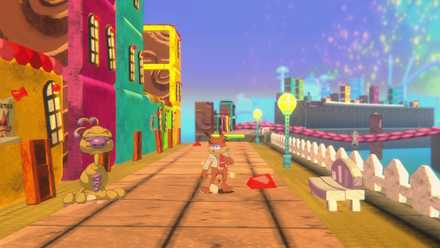
Bubsy 4D is a linear, level-based 3D platformer that attempts to distance itself from the infamous, clunky controls of its 1996 predecessor. The game drops players into a space-faring narrative where the titular bobcat must thwart the "BaaBots"—sheep-turned-mechanical-overlords who have usurped their former masters, the Woolies.
The core loop involves traversing three distinct planetary systems, each containing five levels, for a total of fifteen stages plus a tutorial. While the campaign is relatively compact, clocking in at roughly six to seven hours for a completionist run, the game’s focus is squarely on its movement mechanics. Players navigate environments using a mix of classic tropes—jumping, double-jumping, and gliding—alongside a new "hairball" mechanic that allows for momentum-based rolling. The game serves as a bridge between the arcade sensibilities of the 80s and the high-speed, precision-platforming demands of modern speedrunning communities.

A Chronological Perspective: From SNES to Space
To understand the significance of Bubsy 4D, one must look at the character’s erratic timeline. Bubsy made his debut in 1993 with Bubsy in Claws Encounters of the Furred Kind, a game that was technically impressive for the era but quickly garnered a reputation for being punishingly difficult and inherently "annoying."
The nadir of the franchise occurred in 1996 with Bubsy 3D on the PlayStation. Often cited as one of the worst games ever made, it became a cautionary tale of the industry’s struggle to transition from 2D to 3D spaces. For decades, Bubsy remained a punchline—a symbol of the "mascot with attitude" era that failed to capture the charm of Mario or Sonic.
However, the 2020s saw a shift in how the industry treated legacy intellectual properties. With the rise of retro-revivalism, publishers began looking for ways to recontextualize forgotten mascots. Fabraz, known for their work on titles like Slime-san, was tapped to handle the revival. The project spent years in development, with a demo released in late 2025 serving as a litmus test for whether the gaming public was ready to embrace the bobcat once more. The result is a game that is not a remake, but a total mechanical overhaul, scrubbing away the "insufferable" personality traits of the 90s in favor of a more refined, gameplay-first approach.

Supporting Data: Mechanical Depth and Performance
The success of Bubsy 4D rests almost entirely on its complex, layered move-set. Unlike the floaty, imprecise movement of the 1996 entry, Bubsy 4D demands high-level technical mastery.
The Moveset Architecture
- Basic Maneuvers: Jump, double-jump, pounce, and the controversial (yet iconic) glide.
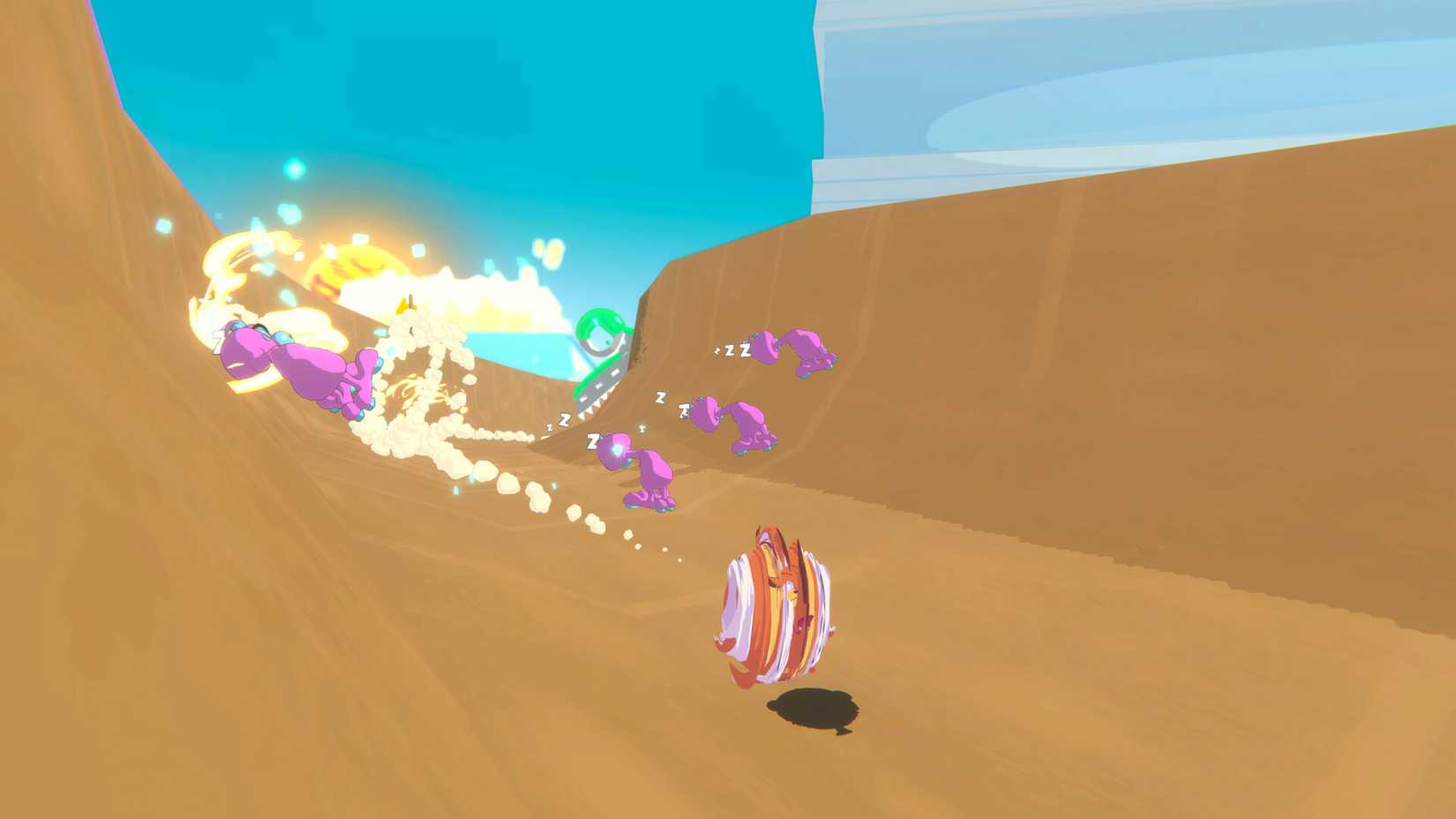
- The Hairball: A new addition that allows Bubsy to roll into a ball, gaining momentum and enabling automatic wall-jumping.
- Chained Abilities: The game is designed to allow players to link these moves—such as transitioning from a high-speed hairball roll into a double-jump and a terminal pounce—to clear gaps that seem impossible at first glance.
- Customization: Throughout the levels, players collect "blueprints" that unlock new abilities, such as the "Twirl-Jump" for added height or the "Zoomie" for explosive speed.
The depth is further highlighted by the time-trial mode. While the casual path through the game takes six hours, the leaderboard-driven speedrun community has already begun deconstructing the levels. Top-tier players are currently achieving sub-forty-second clears on maps that average players navigate in over two minutes, proving that the game’s physics engine is remarkably robust.
However, the data also reveals a "polish gap." While the movement is tight, environmental interactions occasionally falter. The camera system, while largely functional, struggles during high-speed half-pipe sections, and the lack of enemy density leaves the player feeling somewhat isolated in what should be a vibrant, chaotic world.
Official Responses and Industry Reception
The release of Bubsy 4D has been met with a mix of genuine surprise and cautious optimism. Atari, the publisher, has framed the release as a "reintroduction" rather than a reboot. In internal communications, representatives noted that the goal was to "reclaim the identity of a character lost to the transition of 3D gaming."
Fabraz, the developer, has maintained a focus on player feedback. Following the initial launch, the team acknowledged the "minor" gripes regarding facial animation syncing—where character mouths move independently of voice lines—and the occasional camera collision issues. They have signaled a commitment to post-launch support, specifically targeting these technical hurdles to ensure the "feel" of the movement remains the priority.
Critics have praised the game’s "scavenger hunt" accessibility. Unlike many platformers that force a player to restart a level if they miss a collectible, Bubsy 4D allows players to exit a stage immediately after securing a yarn ball, a quality-of-life improvement that has been widely celebrated in reviews.

Implications: Can a Mascot Ever Truly Retire?
The existence of Bubsy 4D raises an existential question for the gaming industry: Is there a statute of limitations on a bad reputation?
For decades, the "Bubsy" brand was a liability. Yet, by stripping away the narrative baggage and focusing on the raw, mechanical satisfaction of 3D platforming, Fabraz has proven that even the most reviled IPs can find a niche if the underlying gameplay is sound. The implication for other publishers is clear: consumers are less interested in the brand name on the box and more interested in the quality of the "feel."
Furthermore, the game’s success—or at least its ability to not be a total failure—demonstrates that the 3D platformer genre is in a renaissance. By catering to both the casual player and the speedrunning elite, Bubsy 4D manages to occupy a space that few mid-budget titles successfully navigate.
As we look toward the future, the success of this title suggests that the "mascot era" may not be dead, but rather waiting to be rebuilt by developers who understand that nostalgia is only a starting point. If a bobcat can be pulled from the depths of gaming infamy and turned into a precision-platforming machine, then perhaps no character is truly beyond redemption.
Whether Bubsy 4D becomes a cult classic or merely a footnote in a long-running experiment remains to be seen. However, for those who grew up in the 80s and 90s, the sight of a competent, fun-to-play Bubsy game is perhaps the most surprising plot twist of 2026. The bobcat is back, and for the first time in thirty years, the punchline isn’t the game itself—it’s the fact that it’s actually worth playing.












No comments yet. Be the first to join the conversation!