
 Asep Darmawan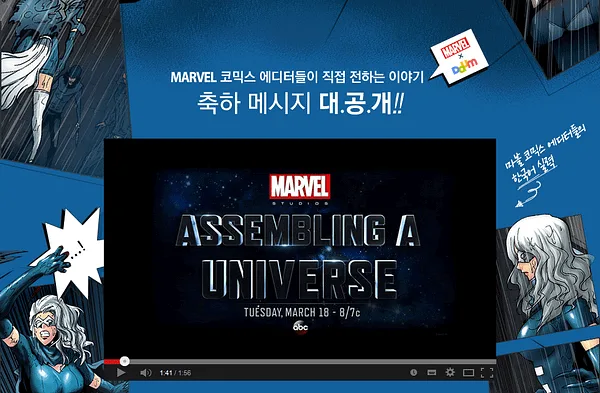
In the rapidly evolving landscape of global digital entertainment, the intersection of Western superhero mythology and Eastern sequential art has reached a new milestone. Avengers: Electric Rain, an original webtoon series, represents a pivotal collaboration between Marvel Comics and the Korean digital publishing giant Daum. By transplanting the world-renowned Avengers franchise into the heart of South Korea and introducing an entirely original character to the Marvel canon, the project serves as a case study in how intellectual property can be localized to engage international audiences while retaining the core tenets of the source material.

The Genesis of a Transnational Collaboration
The collaboration between Marvel and Daum—facilitated by the regional presence of Disney Korea—was not merely a licensing agreement; it was a creative experiment designed to tap into the unique aesthetic and narrative conventions of manhwa (Korean comics). For decades, the Avengers were synonymous with the skyline of New York City. By shifting the setting to Seoul, the creative team sought to explore how global icons would interact with a distinct cultural environment.

At the center of this project is the artist Younghoon Ko. Tasked with the responsibility of visualizing a story that feels both authentically "Marvel" and distinctly "Korean," Ko’s work has been praised for its dynamic kinetic energy and high-fidelity digital rendering. Webtoons, characterized by their vertical scrolling format and vibrant, full-color presentation, demand a specific pacing—a challenge Ko navigated with technical precision.

Chronology: From Concept to Digital Publication
The development of Avengers: Electric Rain followed a structured timeline that highlights the logistical complexity of international creative partnerships.

- Initial Conceptualization (Pre-2014): Marvel and Disney Korea initiated discussions with Daum to explore a native digital comic format that would resonate with the Korean market. The goal was to avoid a simple translation of existing American issues, opting instead for a "ground-up" original story.
- Creative Integration (Early 2014): Marvel editorial staff, including industry veterans such as Axel Alonso and Tom Brevoort, began a collaborative dialogue with Korean creators. This period was marked by an exchange of narrative styles, as the American editors had to adapt their traditional monthly-book expectations to the continuous, fluid structure of webtoons.
- The Launch (Mid-2014): Avengers: Electric Rain officially serialized on the Daum platform. The premiere was met with significant local fanfare, as it marked the first time a major American superhero team had been re-contextualized within a dedicated Korean narrative environment.
- The "New Avenger" Reveal: As the series progressed, the introduction of a new character—tailored for the Korean audience—solidified the project’s status as a canonical entry rather than a derivative spin-off.
Supporting Data: The Rise of the Webtoon Format
To understand the weight of Avengers: Electric Rain, one must look at the data driving the webtoon industry. In the 2010s, South Korea became the epicenter of a digital comic revolution. Unlike the print-heavy model of the United States, the Korean market transitioned almost entirely to mobile-first consumption.

According to industry reports from the era, the "Webtoon" format saw a compound annual growth rate that significantly outpaced traditional print media. By partnering with Daum, Marvel was not just reaching comic fans; they were tapping into a massive demographic of smartphone-native readers. The visual aesthetic of the series, as showcased in the promotional imagery and panels, emphasizes bright, saturated colors and dramatic lighting—a hallmark of the digital medium that distinguishes it from the more muted, ink-heavy aesthetic of traditional American comic books.

Official Responses and Cross-Cultural Friction
The project has not been without its humorous and challenging moments, particularly regarding the cross-pollination of cultures. Promotional materials released during the launch featured a roundtable discussion involving high-profile Marvel figures, including C.B. Cebulski, Axel Alonso, Tom Brevoort, Ellie Pye, Jordan White, and Nick Lowe.
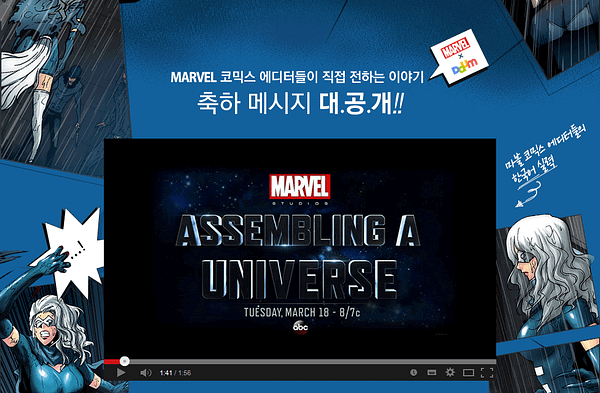
While these figures were eager to champion the project, the videos also highlighted the inherent difficulties in navigating linguistic and cultural barriers. The lighthearted "mutilation" of the Korean language by the American editors in these promotional clips served as a candid—if clumsy—admission that the partnership was a learning experience.

However, the contrast between the executives’ struggle with the language and Younghoon Ko’s effortless command of the medium was stark. Where the editorial team focused on the business and narrative logistics, Ko’s contribution served as the true anchor of the project. His ability to translate the "Marvel House Style" into a vertical-scroll format was universally recognized as the series’ greatest asset.

Implications for Global IP Management
The success—and the learning curve—of Avengers: Electric Rain has profound implications for how global media conglomerates manage their properties in the 21st century.

1. Localization vs. Globalization
The project demonstrates that modern fans are no longer content with passive consumption of imported media. Instead, they desire stories that reflect their own geography and cultural touchstones. By embedding the Avengers in Seoul, Marvel validated the importance of "cultural proximity" in storytelling.
2. The Future of the "Digital-First" Strategy
Avengers: Electric Rain proved that digital platforms could serve as primary incubators for content rather than just secondary distribution channels. Following this, other publishers began to experiment more aggressively with web-native formats, realizing that the vertical scroll allows for a unique cinematic experience that cannot be replicated in a physical comic.
3. Collaborative Synthesis
The project stands as a testament to the fact that when Western editorial oversight meets Eastern artistic innovation, the result is often a hybrid product that appeals to a broader demographic. The inclusion of a brand-new, region-specific character suggests a blueprint for future expansions: instead of just licensing existing characters, studios can co-create new lore that belongs to both the parent company and the local creative talent.

Conclusion
Avengers: Electric Rain remains a fascinating chapter in comic book history. It serves as a reminder that the world of superheroes is not bound by borders, but it must be willing to adapt its aesthetic and narrative DNA to survive in foreign markets. Younghoon Ko’s work on the title remains a standard-bearer for how international collaborations should be handled: with respect for the source material, a commitment to local talent, and an eye toward the future of digital storytelling. As the industry continues to globalize, the lessons learned from this Korean-Marvel experiment continue to inform how the biggest franchises in the world navigate the digital, hyper-connected landscape of the modern era.


 Pevita Pearce
 Neng Nana





