Creality has long been a titan in the world of accessible additive manufacturing, consistently driving down the price of high-quality 3D printers for the home enthusiast. However, the company is now making a bold play for the professional sector with the release of the Sermoon P1 3D Scanner. By positioning this device as a high-precision, standalone powerhouse, Creality is signaling a departure from its entry-level roots to challenge the likes of Revopoint in the competitive world of prosumer and industrial scanning.
In a market saturated with tethered scanners that require cumbersome PC setups, the Sermoon P1 arrives as a beacon of mobility. But does it deliver the metrology-grade accuracy required by modern engineers and digital artists? We spent extensive time with the device to find out.
The Core Proposition: What is the Sermoon P1?
The Creality Sermoon P1 is designed to occupy the "middle ground" of the 3D scanning market—a space that bridges the gap between affordable consumer gadgets and astronomical industrial rigs. Its defining feature is its complete independence from a PC.
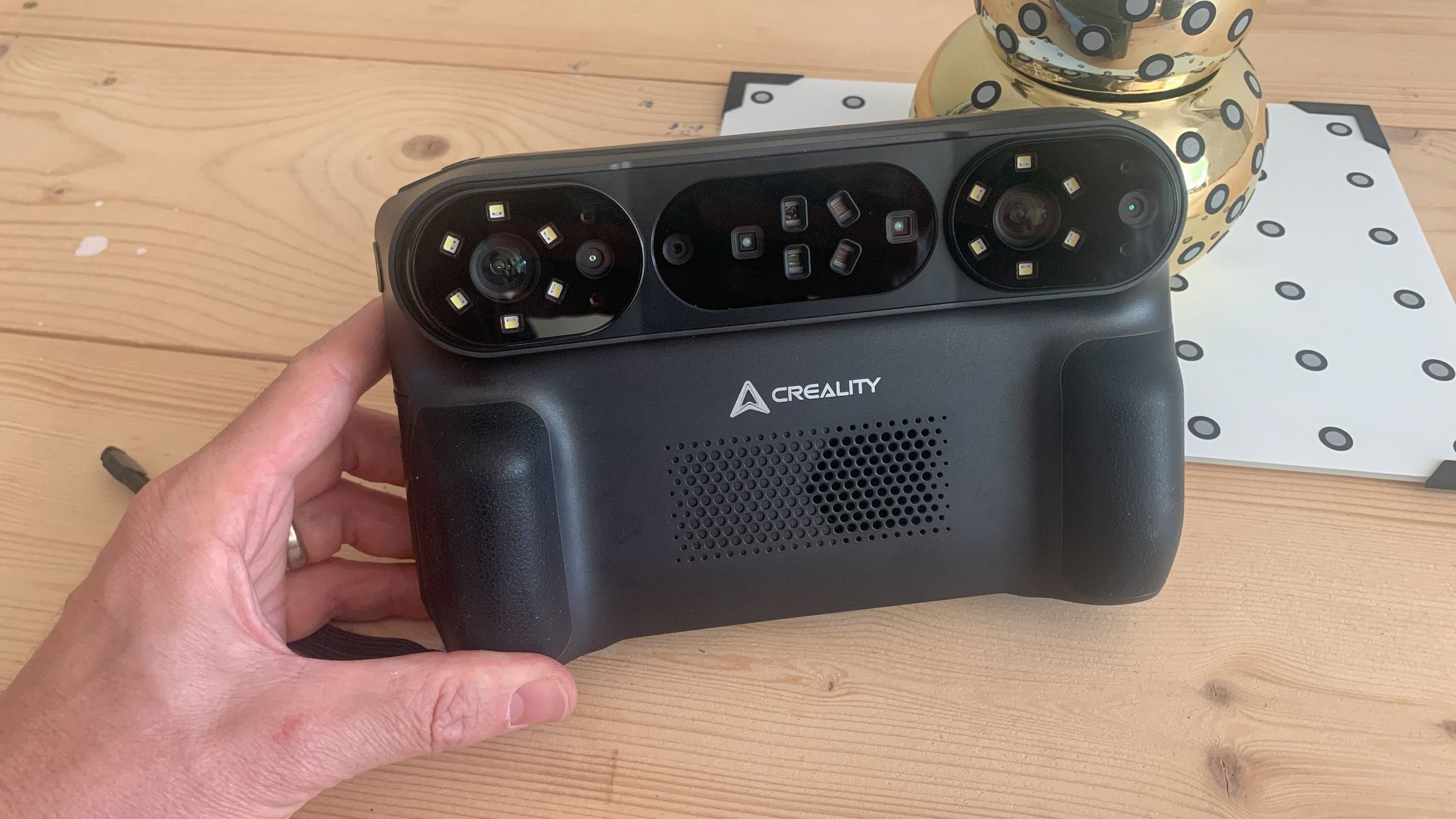
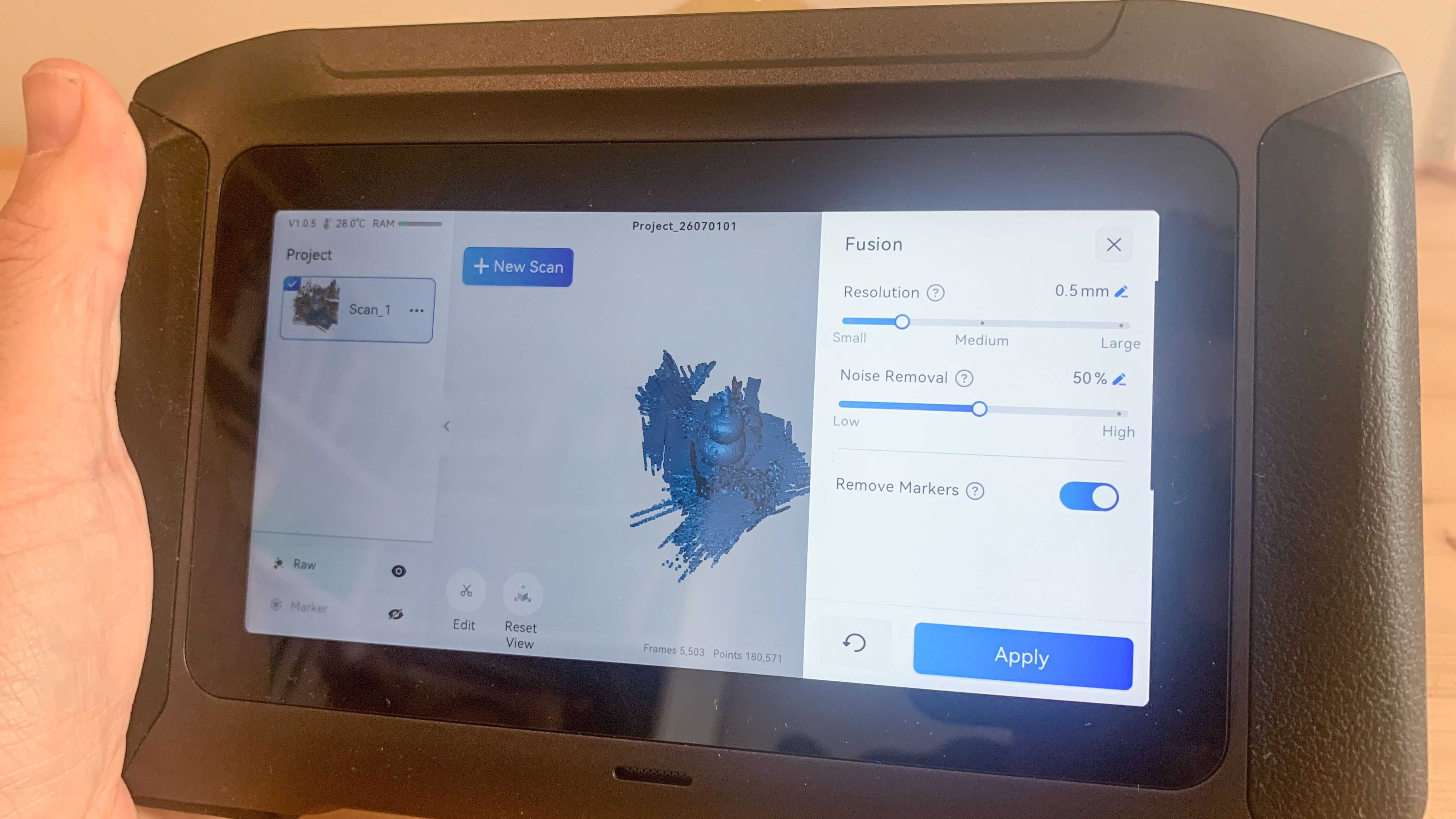
Equipped with a potent 8-core processor, 24GB of RAM, and 256GB of onboard storage, the device handles complex tasks like point-cloud fusion, meshing, and editing directly on its 6-inch Full HD touchscreen. This architecture allows for true "in-the-field" scanning, liberating users from the constraints of desk-bound cables and high-performance workstations.
Key Technical Specifications
- Scanning Volume: 5 mm³ to 4 m³
- Accuracy: Up to 0.02 mm (Blue Laser mode)
- Scanning Speed: Up to 60 fps (Laser) / 15 fps (NIR)
- Hybrid System: Dual-light technology (Blue Laser + Near-Infrared)
- Interface: 6-inch FHD Touchscreen
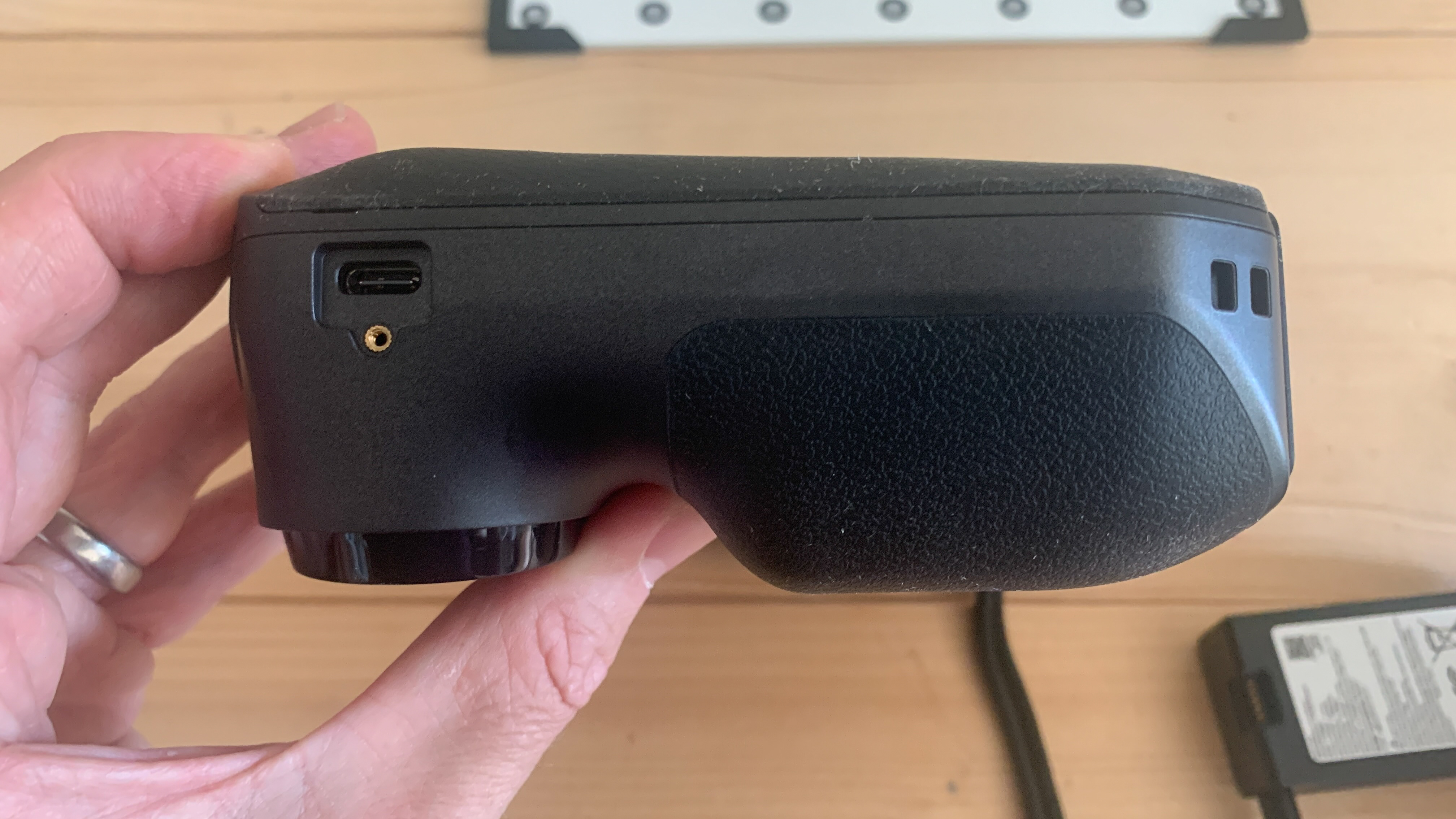
- Connectivity: Wi-Fi 7, USB-C
- Weight: 830g
A Chronology of the Testing Process
To provide a comprehensive assessment, our testing followed a rigorous, multi-stage protocol designed to push the scanner to its operational limits.
Stage 1: Unboxing and Ergonomics
The Sermoon P1 arrives in a purpose-built carry case. The attention to detail is evident; every component, including the power unit, adapters, and the all-important reflective markers, has a dedicated, foam-cutout housing. For professionals on the move, this is a significant quality-of-life feature.
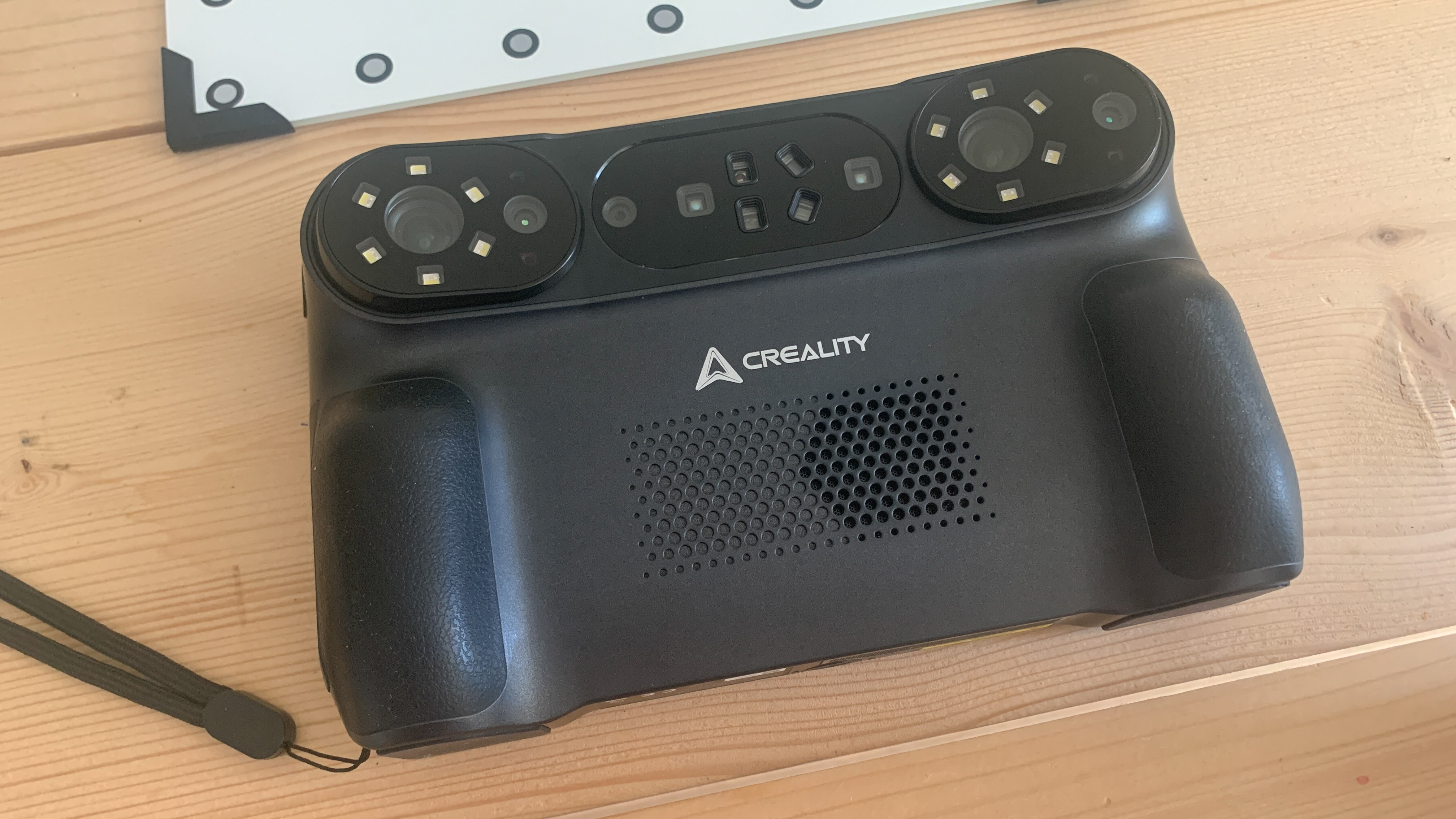
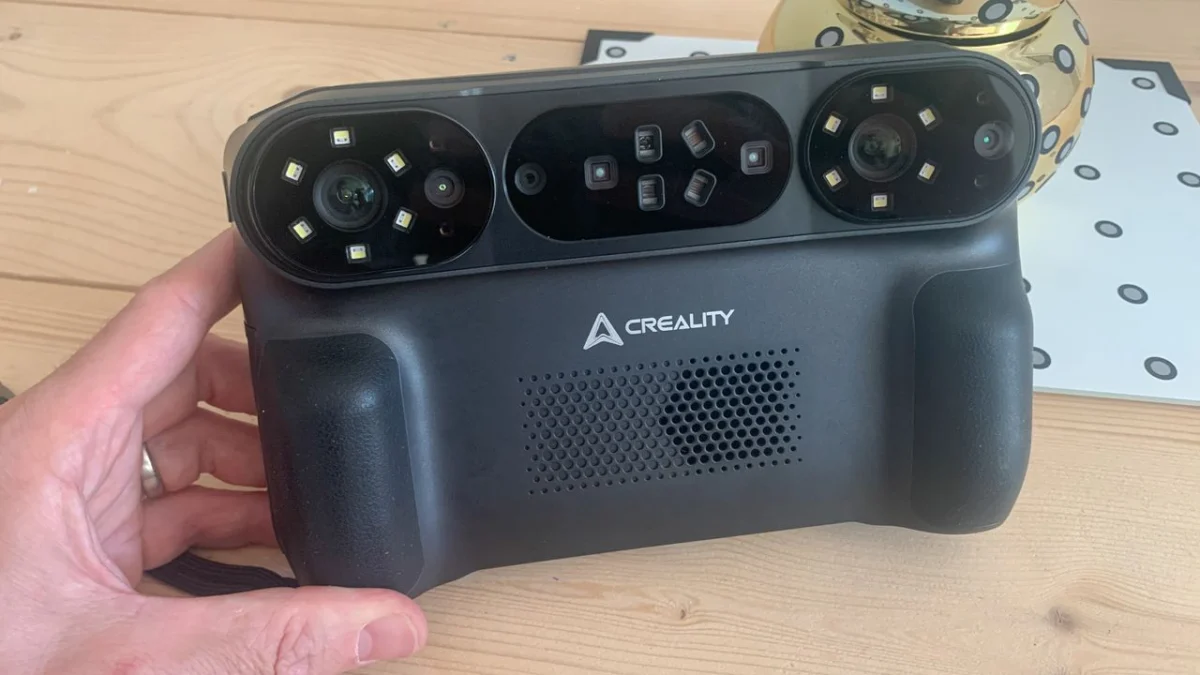
Physically, the device is well-balanced. With rubberized grips on both sides of the chassis, it feels secure in the hand. However, at 830g, it is not a "flick-of-the-wrist" tool. During our testing, we found that sessions lasting over an hour began to induce wrist fatigue. While it features a standard tripod thread, the omission of a dedicated tripod in the box is a minor, if notable, oversight for a product at this price point.
Stage 2: The "Difficult Object" Challenge
We began our performance testing with an notoriously challenging subject: a shiny, curved, gold-colored gourd. In the world of 3D scanning, gloss and curves are the enemies of precision. We applied tracking markers and initiated the Blue Laser mode.
Initial results were mixed. The scanner occasionally lost its "lock" on the geometry, leading to duplicated meshes in offset positions. This is, however, typical for laser scanners when dealing with high-specular highlights. Through trial and error—adjusting the exposure settings and movement speed—we were able to achieve a highly accurate, clean mesh.
Stage 3: Real-World Application
To contrast the difficult test, we scanned a standard tape measure without the use of markers. The Sermoon P1 performed flawlessly, capturing the point cloud with remarkable speed and minimal noise. This confirmed that for standard industrial objects, the device is a "plug-and-play" solution.
Deep Dive: Performance and Software Integration
The real brilliance of the Sermoon P1 lies in its onboard software ecosystem. The fusion and meshing processes are surprisingly robust. The software includes a sophisticated "hole-filling" algorithm, which allows users to reconstruct missing data along curves and tangents—a task that would usually require hours of manual clean-up in third-party software like Blender or Geomagic.
The Hybrid Advantage
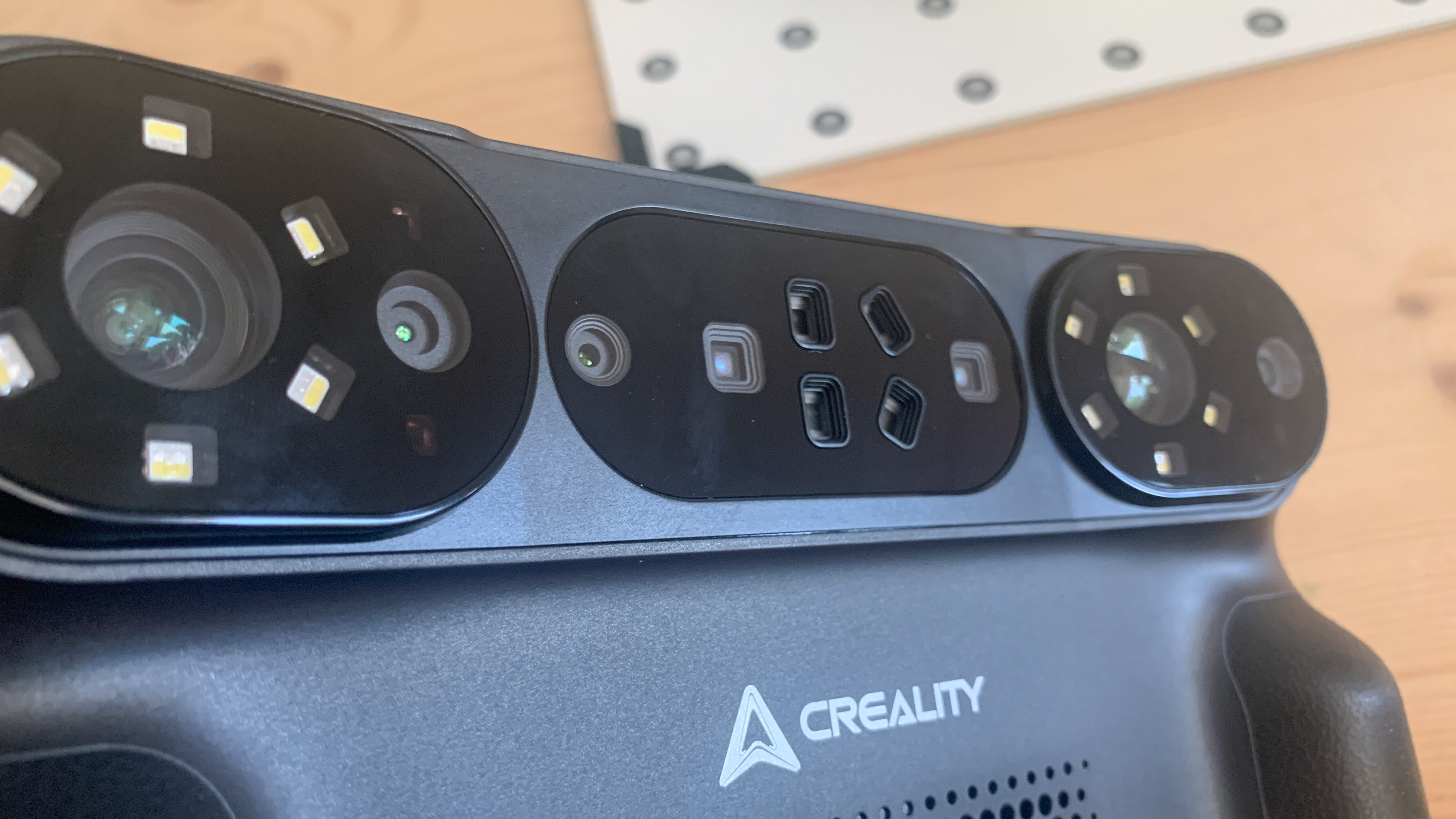
The Sermoon P1 utilizes a hybrid optical system. The blue lasers provide the high-detail, metrology-grade accuracy for small-to-medium parts, while the Near-Infrared (NIR) light handles larger surfaces and human faces. This dual-capability is what justifies the price. While many competitors offer one or the other, having both integrated into a single, mobile unit makes the Sermoon P1 an incredibly versatile tool for automotive workshops, prop designers, and archaeologists.
Data Management
With 256GB of storage, you can capture multiple complex projects before needing to offload data. Transfer speeds via Wi-Fi 7 are impressively fast, though the included USB-C cable remains the preferred method for transferring massive, high-density point clouds to a workstation for final post-processing.
Competitive Landscape: How It Compares
The current market leader in our testing guide, the Revopoint Miraco Plus, shares many of the same standalone features as the Sermoon P1. Both devices offer a high-resolution screen and onboard processing.
However, the Sermoon P1 distinguishes itself through its specific approach to blue laser lines. The density and precision of the P1’s laser array feel more tuned toward mechanical engineering and reverse engineering than the general-purpose scanning of the Miraco. At a retail price of $3,299 (currently discounted in some markets), it is a premium investment. The decision to buy the P1 over the competition will likely come down to the specific nature of your projects: if you are scanning automotive parts, dark metallic surfaces, or engine components, the P1’s blue laser system provides a noticeable edge.
Implications for Professionals
Who is this for?
The Sermoon P1 is squarely aimed at:
- Industrial Engineers: Those needing to conduct on-site quality control without hauling a server-grade PC.
- Automotive Customizers: Technicians who need to scan engine bays or body panels where ambient light and reflections are constant issues.
- Digital Artists: Professionals who require high-fidelity assets for game development and visual effects, where the ability to capture objects on-location is worth the premium price.
The Verdict: Is the investment justified?
The Creality Sermoon P1 is a serious piece of kit. It is not an entry-level "toy" scanner for casual hobbyists. The price point reflects the hardware—a powerful CPU/GPU combination and high-precision optics. While we experienced some initial hurdles with highly reflective surfaces, the ability to troubleshoot and re-scan on the device itself, without needing to return to a PC, is a game-changer for workflow efficiency.
Pros:
- True standalone operation with powerful onboard processing.
- Excellent dual-light system (Blue Laser + NIR) for varied applications.
- Large, responsive 6-inch FHD display.
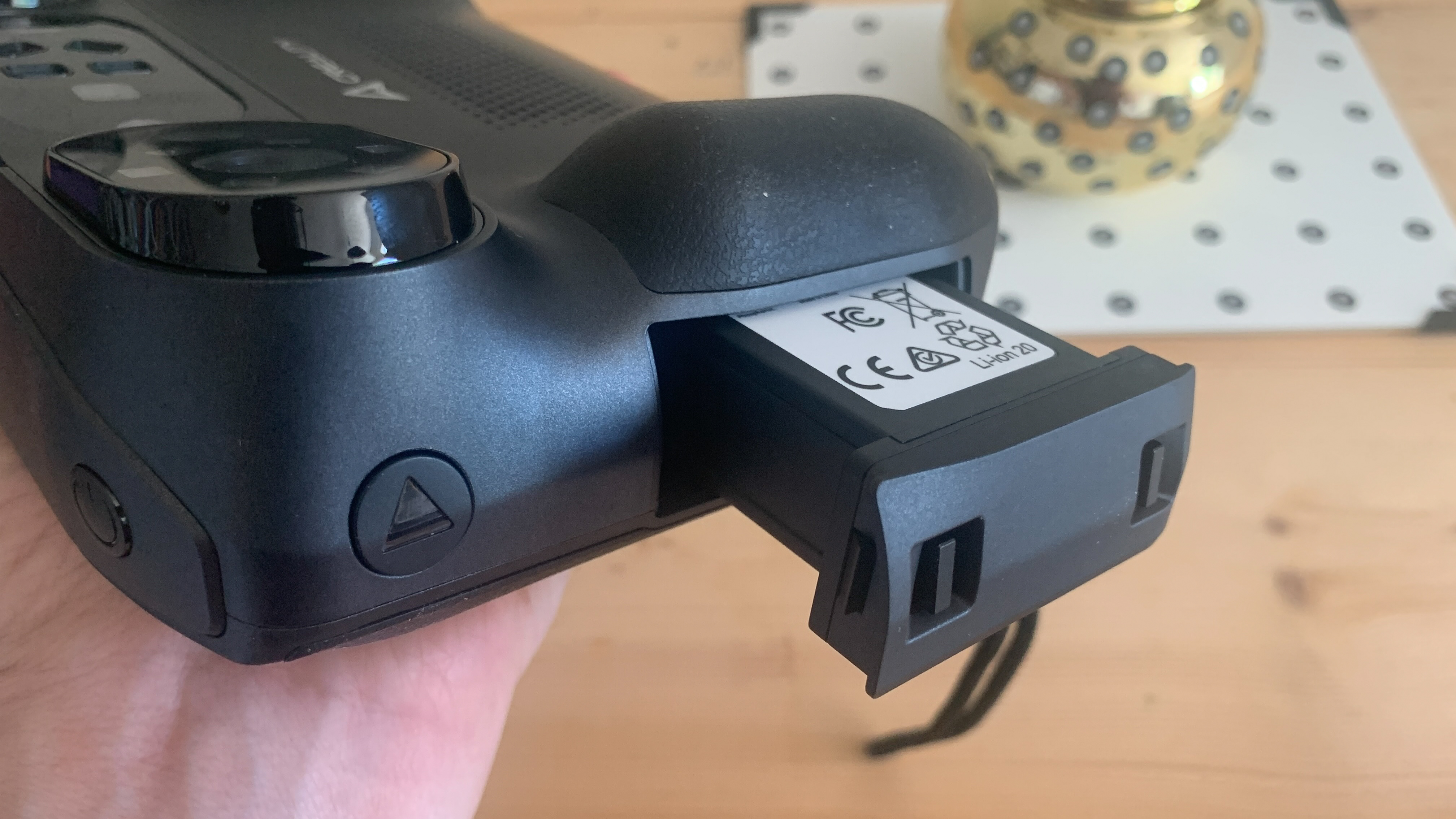
- Two hot-swappable batteries included for extended field use.
- High-quality carry case for professional portability.
Cons:
- High entry price compared to basic hobbyist models.
- Wrist fatigue during extended, handheld scanning sessions.
- No tripod included in the base package.
Final Thoughts: A New Standard?
Creality has successfully pivoted from the printer desk to the field. The Sermoon P1 is a testament to how far standalone scanning technology has progressed in such a short window of time. It isn’t perfect—laser scanning will always require a degree of operator skill and patience when dealing with tricky materials—but it is arguably one of the most capable, portable, and "smart" scanners on the market today.
For the professional who values time as much as accuracy, the ability to walk into a room, scan a complex part, and have a usable mesh before they walk out the door is not just a convenience; it is a competitive advantage. The Sermoon P1 is, without a doubt, a formidable contender for the best professional 3D scanner in its class.