By Editorial Staff
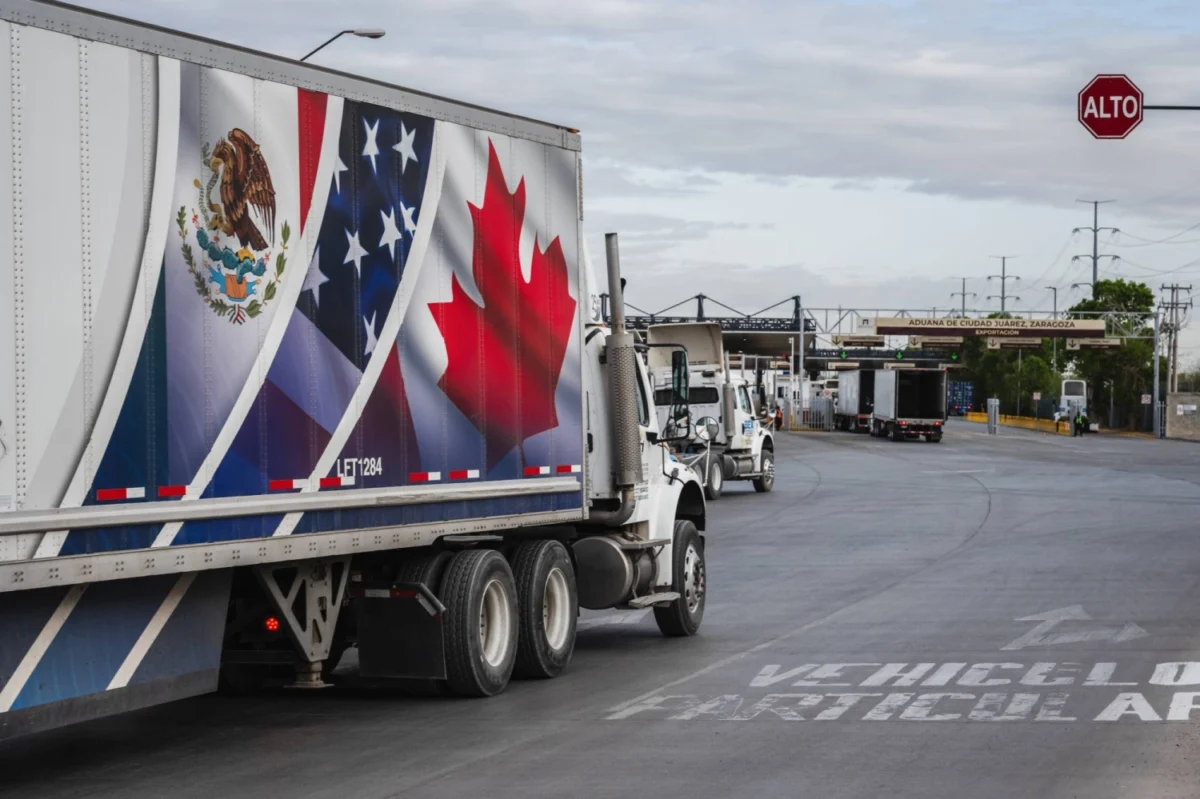
In a move that has sent shockwaves through the corridors of international commerce, the United States has officially signaled that it will not seek a long-term renewal of the United States-Mexico-Canada Agreement (USMCA). Instead, the Trump administration has opted for a strategy of annual reviews, effectively placing the continent’s foundational trade pact under a perpetual microscope. This decision, while technically keeping the agreement in force for the next decade, introduces a layer of structural instability that many economists and corporate leaders warn could stifle investment and complicate supply chain logistics across North America.
The Shift in Trade Policy: Moving Beyond "Rubber Stamps"
The USMCA, which replaced the North American Free Trade Agreement (NAFTA) in 2020, was designed to modernize trade rules for the 21st century. However, the current U.S. administration has made it clear that the status quo is no longer acceptable.
"We are not prepared to rubber-stamp the agreement," stated U.S. Trade Representative Jamieson Greer in a recent interview. "We think there are substantial issues that have not been adequately addressed in the intervening years. An annual review process ensures that the agreement remains dynamic and responsive to American interests, rather than a static document that fails to evolve with the economic landscape."
For industries ranging from automotive manufacturing and agriculture to energy and retail, this pivot away from long-term certainty represents a significant departure from the stability they have historically relied upon to plan capital expenditures and cross-border operations.
Chronology: The Evolution of North American Trade
To understand the weight of this decision, one must look at the historical trajectory of trade in North America:
- 1994: The North American Free Trade Agreement (NAFTA) comes into effect, eliminating most tariffs on goods traded between the U.S., Canada, and Mexico.
- 2017–2018: The Trump administration initiates the renegotiation of NAFTA, citing concerns over trade deficits and the displacement of American manufacturing jobs.
- 2020: The USMCA is officially signed and enters into force, introducing stricter rules of origin for automobiles and enhanced protections for digital trade and intellectual property.
- 2026: The administration announces its refusal to pursue a long-term renewal, choosing instead to implement an annual review mechanism that subjects the pact to constant re-evaluation.
Supporting Data: The Economic Stakes
The economic integration of North America is profound. The USMCA covers a market of over 500 million people and facilitates more than $1.5 trillion in annual trade.
The Automotive Sector
The automotive industry is perhaps the most sensitive to these changes. Under the USMCA, vehicles must meet specific "rules of origin" requirements to qualify for duty-free status. These include a high percentage of regional content and wage requirements. Investors in this sector have long cited the "regulatory certainty" of the USMCA as a primary reason for locating production facilities within the trade bloc. With the threat of annual reviews, manufacturers may face a "rolling uncertainty," where the rules governing their production lines could change on a year-to-year basis.
Agricultural Exports
For American farmers, Canada and Mexico represent two of the largest export markets. The ability to export grains, dairy, and livestock without the threat of sudden tariff hikes has been a cornerstone of agricultural stability. Annual reviews raise the specter of agricultural goods being used as leverage in broader, unrelated geopolitical disputes.
Supply Chain Resilience
In the post-pandemic era, "near-shoring" and "friend-shoring" have become buzzwords for companies looking to insulate their supply chains from global volatility. If the U.S. trade policy becomes unpredictable, the incentive to move manufacturing closer to home is dampened by the risk of potential trade barriers appearing during the next review cycle.
Official Responses and Diplomatic Friction
The decision has drawn varied reactions from international partners and domestic stakeholders.

The U.S. Perspective
Trade Representative Greer’s rhetoric emphasizes a "tough on trade" approach. The administration argues that previous trade agreements were lopsided and that annual reviews are a necessary tool to force trading partners to the table to resolve outstanding grievances regarding labor standards, environmental protections, and market access for U.S. firms.
Canadian and Mexican Concerns
Officials in Ottawa and Mexico City have expressed cautious concern. Canadian trade representatives have emphasized the importance of a predictable "rules-based order" for businesses. In Mexico, the government faces the dual challenge of maintaining foreign direct investment while navigating a U.S. political climate that remains deeply skeptical of the trade balance. Both nations are expected to seek formal consultations to understand what metrics the U.S. will use during these annual reviews.
Implications for the Future of North American Commerce
The decision to forgo long-term renewal is not merely a procedural change; it is a fundamental shift in the philosophy of trade.
1. Increased Compliance Costs
Companies will likely need to expand their legal and trade compliance departments to handle the potential volatility of an annual review cycle. This adds a "hidden tax" on business, as resources are diverted from innovation to regulatory monitoring.
2. Market Volatility
Financial markets thrive on predictability. The prospect of an annual "re-negotiation" cycle could lead to increased currency volatility between the U.S. dollar, the Canadian dollar, and the Mexican peso, as traders price in the risk of trade disruptions every twelve months.
3. Geopolitical Leverage
By keeping the USMCA on a "short leash," the U.S. is signaling that it intends to use the trade pact as a permanent geopolitical lever. This could be used to influence non-trade-related policy areas, such as migration, border security, or energy policy. While this may achieve short-term diplomatic wins, critics argue it risks fracturing the deep, long-term economic alliance that has defined North America for decades.
4. Long-term Investment Hesitation
The most significant impact may be felt in capital-intensive industries. When a company builds a factory, it looks at a 15-to-20-year horizon. If the framework of the trade agreement is up for debate every year, the risk-adjusted return on such investments drops significantly. We may see a cooling of cross-border investment as firms choose to wait and see how the first few review cycles unfold.
Conclusion: A New Era of "Transactional Trade"
The U.S. administration’s move represents a decisive turn toward transactional trade policy. By rejecting the stability of a long-term extension in favor of an annual review, the U.S. is demanding that its North American neighbors prove their value—and adherence to American standards—on a continuous basis.
While the administration views this as a necessary strategy to protect American workers and industries, the broader business community remains wary. As the first cycle of these reviews approaches, the focus will be on whether the process remains a forum for technical adjustments or if it descends into a recurring political spectacle. For the average consumer, the potential for higher prices, supply chain bottlenecks, and market uncertainty looms as the unintended consequences of this new trade paradigm.
North America stands at a crossroads. The USMCA, once seen as a bedrock of regional stability, has been transformed into a flexible, and potentially volatile, instrument of U.S. economic statecraft. Whether this strategy yields a more favorable trade environment or simply erodes the competitive advantage of the North American bloc remains the defining question for the years ahead.