Laily UPN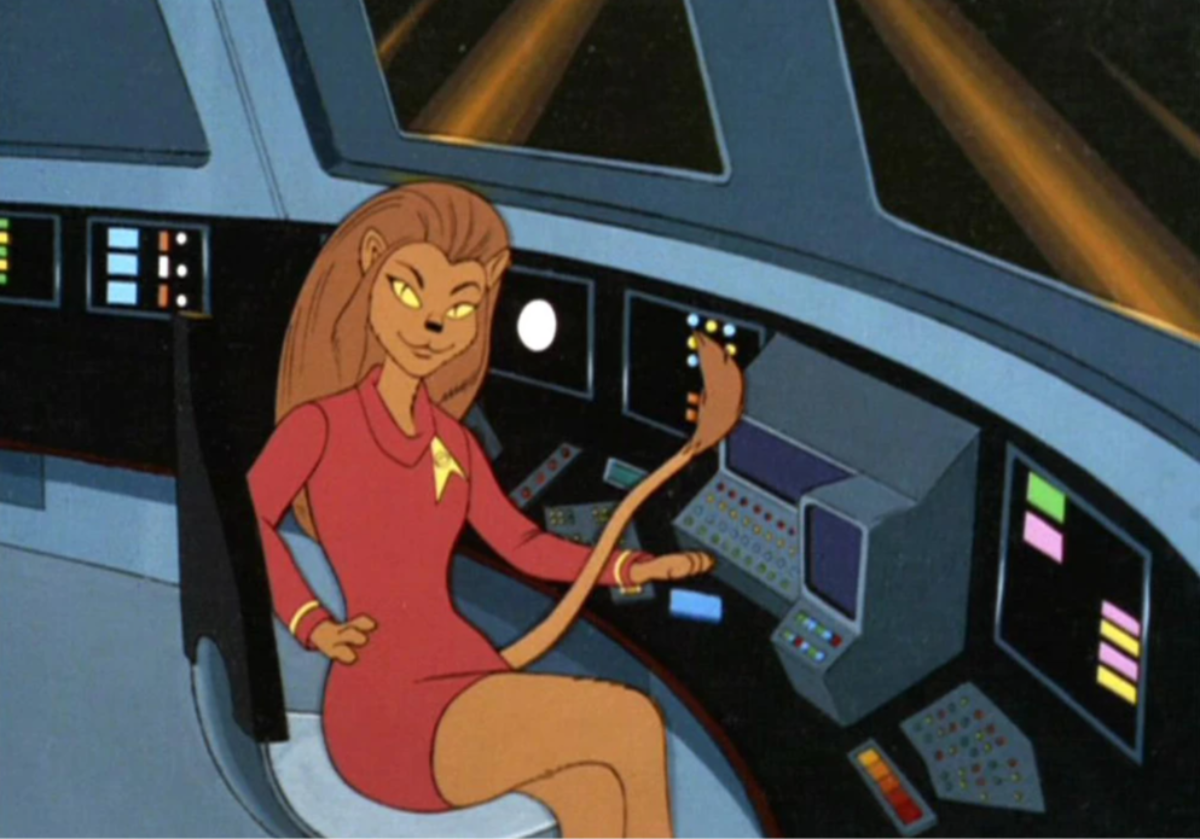
The latest installment of Paramount+’s Star Trek: Strange New Worlds has left the dedicated Star Trek fandom in a state of fervent speculation. Known for its ability to balance high-concept science fiction with the character-driven heart of the franchise, the series has frequently dipped its toes into the "what-if" scenarios that define the best of Star Trek’s temporal explorations. However, while the narrative pivots and emotional stakes of the episode—titled "Tomorrow’s Enterprise"—have generated significant critical praise, it is a blink-and-you-miss-it visual detail that has dominated the digital watercooler.
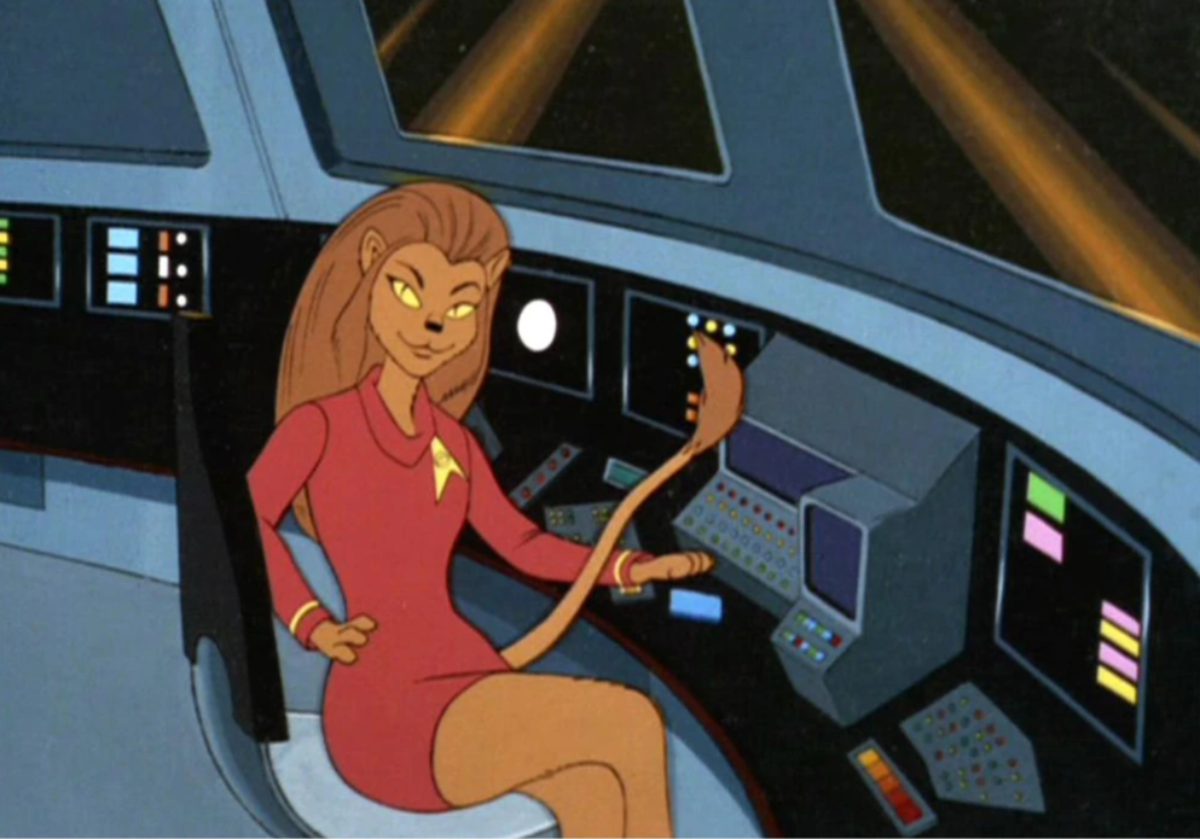
Eagle-eyed viewers have identified two distinct, highly significant cameos that pay homage to the often-overlooked Star Trek: The Animated Series (TAS) of the early 1970s. As Lieutenant Uhura prepares for a high-stakes spacewalk, the background of the shuttle bay reveals two figures that appear to be none other than the feline navigator M’Ress and the bird-like Aurelian, Aleek-Om. This article breaks down the historical significance, the chronological implications, and the potential narrative fallout of these unexpected guest stars.
Main Facts: The Return of the Caitian and the Aurelian
The primary subject of the online fervor is the character of M’Ress. First introduced in the 1973 animated series, M’Ress is a Caitian—a feline humanoid species known for their distinct vocal patterns and superior sensory abilities. In the original animation, she served as a communications officer, frequently filling in for Lieutenant Nyota Uhura, and acted as a substitute science officer for Commander Spock during his off-ship assignments.
In Strange New Worlds, the character appears in the background of a bustling shuttle bay, dressed in a standard-issue Starfleet uniform. While the lighting and rapid camera movement prevent a lingering close-up, the distinct silhouette, fur texture, and feline features are unmistakable to long-time fans.
Simultaneously, sharp-eyed observers noted a second figure: a tall, yellow, bird-like alien, bearing a striking resemblance to Aleek-Om. A member of the Aurelian species, Aleek-Om previously appeared in the TAS episode "Yesteryear." The presence of these two characters, who were cornerstones of the animated era, suggests a deliberate effort by the show’s creative team to bridge the gap between the 1960s/70s source material and the modern production design of the current live-action canon.
Chronology: The "Glass Canon" Problem
One of the most engaging aspects of being a Star Trek fan is the attempt to reconcile the sprawling, decades-long timeline of the franchise. The appearance of M’Ress and Aleek-Om presents an immediate chronological puzzle.
According to established Star Trek lore, the events of The Animated Series take place during the final years of the USS Enterprise’s original five-year mission, specifically around the year 2269. The current timeline for Strange New Worlds is generally accepted to be in the mid-2260s—likely 2263 or thereabouts.
This creates a discrepancy: if M’Ress is serving aboard the Enterprise in 2263, why does she appear to be a fresh face or a secondary character in the 2269 timeline of The Animated Series? Critics of the timeline might label this a "continuity error," but showrunners have long treated the Star Trek timeline as a "glass canon"—fragile, yet capable of holding complex histories if handled with care.
It is entirely possible that M’Ress was serving elsewhere in the fleet or was a guest on the Enterprise during the events of the latest episode. By choosing not to draw explicit attention to these characters, the production team has successfully avoided a heavy-handed exposition dump, allowing the characters to exist in the background as "flavor" while maintaining the flexibility to explain their presence—or lack thereof—in future seasons.
Supporting Data: The Case for Intentionality
Why include these specific characters? The answer lies in the deep-cut nature of the fandom. In the literary universe of Star Trek, particularly the novels that have fleshed out the background of the Department of Temporal Investigations, characters like Aleek-Om have been given significant depth.
Aleek-Om’s history, specifically his involvement with the Guardian of Forever and his study of temporal anomalies, makes his presence in an episode dealing with time travel and "what-if" scenarios profoundly meaningful. If the character is indeed the same Aleek-Om from "Yesteryear," his presence in the shuttle bay could suggest that he was on-site to monitor or investigate the very temporal fluctuations that form the core of the episode’s plot.
Furthermore, the choice of M’Ress provides a mirror to the episode’s focus on Uhura. By placing the character who famously "covered" for Uhura in the animated series in the same room as the live-action Uhura, the showrunners are engaging in a meta-textual nod to the history of the character. It acknowledges the lineage of the role, serving as a subtle tribute to the performers and writers who first brought these alien species to life in the 1970s.
Official Responses and Creative Philosophy
While there has been no official "canon update" from the Strange New Worlds production team regarding the specific identities of these background extras, the creative team has never been shy about their love for "Easter eggs."
In past interviews, producers have expressed a desire to populate the background of the Enterprise with a wider variety of alien species than was budgetarily possible during the production of the 1966 series. By utilizing modern CGI and high-quality practical effects, the team is effectively "fixing" the limitations of the original series. They are not merely adding random aliens; they are choosing from a deep reservoir of established species—Caitians, Aurelians, and others—to make the world feel lived-in and historically connected.
This philosophy of "inclusive expansion" suggests that whether or not the background figures are explicitly named in dialogue, they are intended to be recognized by the dedicated viewership. It is a form of fan service that rewards observation without alienating casual viewers who may simply see a diverse and colorful crew.
Implications: Where Does the Franchise Go From Here?
The inclusion of these characters has significant implications for the future of Strange New Worlds. Firstly, it demonstrates a willingness to treat the entirety of the franchise—even the animated series—as a legitimate source of world-building. For years, fans have debated the "canonicity" of the 1970s show; this episode serves as a definitive statement that the animated era is part of the tapestry.
Secondly, it raises the possibility of further "cameo" appearances from the animated archives. Could we see a live-action Arex, the three-armed Edosian navigator? The door has been left wide open.
Finally, the implications for character development are intriguing. If the showrunners are willing to acknowledge the history of characters like M’Ress, they are signaling that they view the Enterprise crew as part of a legacy that extends beyond the bridge crew. By integrating these characters, the show enriches the environment of the ship, making it feel like a true melting pot of the Federation’s best and brightest.
Conclusion
The "Tomorrow’s Enterprise" episode of Strange New Worlds is a triumph of modern Star Trek production, blending high-concept temporal stakes with a profound respect for the franchise’s history. The appearance of M’Ress and Aleek-Om is more than just a nod to nostalgia; it is a testament to the care and attention to detail that the current production team brings to the table.
Whether these characters serve as mere background color or potential future plot points remains to be seen. However, their inclusion serves as a reminder that in the vast, ever-expanding universe of Star Trek, every corner of the ship—and every moment in history—holds the potential for discovery. For the fans who have been watching the stars since 1966, these small, furry, and feathered details are exactly what make the journey worthwhile.

 Nana Muazin
 Siti Muinah