
 Nana
Nana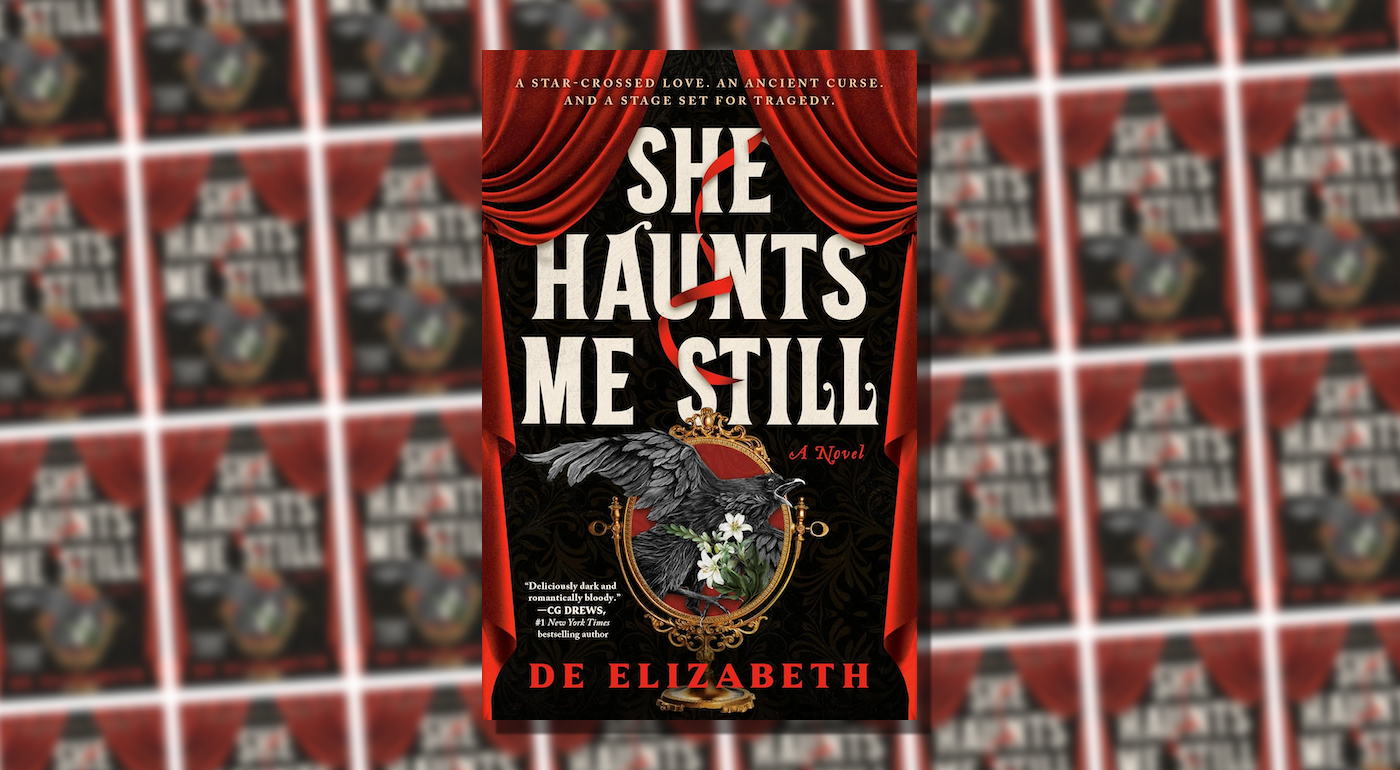
The history of literature is littered with stories of hauntings, but few authors have so deftly mapped the intersection of supernatural occupation and the art of acting as De Elizabeth in her latest novel, She Haunts Me Still. By grounding a tale of spectral possession within the hallowed, echo-filled halls of a prestigious collegiate drama department, Elizabeth creates a narrative that feels less like a traditional ghost story and more like a visceral exploration of what it means to lose one’s self to a role.
Main Facts: A Convergence of Curses and Performance
She Haunts Me Still serves as both a psychological thriller and a profound meditation on the Gothic tradition. Set against the backdrop of Shore College in 1999, the novel follows two longtime friends, Mallory and Arden, as they immerse themselves in a drama program steeped in hidden histories.
The central conflict is twofold: Mallory is grappling with a generational family curse—a dark legacy that may have claimed her mother’s life—while simultaneously navigating the precarious professional demands of a lead role in a high-stakes production of William Shakespeare’s Romeo and Juliet. The novel’s premise is rooted in the "Great New England Vampire Panic" of the 19th century, a historical phenomenon where grieving families, desperate to stop the spread of illness, exhumed their dead in the belief that the deceased were literally feeding on the living. Elizabeth utilizes this grim history to anchor her supernatural elements, creating a world where the boundary between the living, the dead, and the performed is porous.
Chronology: The Anatomy of a Descent
The narrative trajectory of She Haunts Me Still is a masterclass in pacing, transitioning from the quiet, intellectual atmosphere of late-90s campus life to a frenetic, hallucinatory climax.
- 1999 (The Baseline): The story opens with Mallory and Arden’s arrival at Shore College. By setting the novel in 1999, Elizabeth skillfully avoids the "always-on" anxiety of the social media era. The students of Shore College interact in a physical, tangible space, allowing their relationships to develop with a depth that is often lost in modern digital narratives.
- The Audition: Mallory secures the role of Juliet, an act that serves as the catalyst for her meeting the enigmatic Saskia Garin and the older, mysterious student Ezra Pierce. This is where the "possession" begins—not just by ghosts, but by the characters they inhabit on stage.
- The Unraveling: As the rehearsals for Romeo and Juliet intensify, so too do the supernatural manifestations. Mallory begins experiencing visions of the dead, while Saskia is haunted by spectral flashes. The investigation into the college’s history—which served as a sanitarium long before it became an institution of higher learning—begins to bleed into the students’ present.
- The Climax: The tension reaches an ecstatic, over-the-top crescendo. The barriers between theater, history, and the paranormal collapse, culminating in a sequence where one character undergoes a transformation so jarringly surreal it forces the reader to question the reliability of the entire narrative.
Supporting Data: Bodies, Blood, and Bird-Like Visions
What elevates She Haunts Me Still above standard genre fiction is its preoccupation with the physical form. Elizabeth treats the human body as a site of trauma and transformation.
- The Visceral Body: The curse affecting Mallory is not merely an abstract omen; it has tangible, often gruesome consequences that mirror the physical decline of her mother.
- Signs of Survival: Saskia’s character is defined by her history with childhood cancer—an experience that left literal, physical scars. Elizabeth weaves this into the narrative, suggesting that the body remembers trauma in ways the mind cannot escape.
- The Vampire-Adjacent Aesthetic: The novel’s references to biting during intimate encounters and the historical context of the New England vampire panic provide a chilling, eroticized layer to the story. This is not merely "vampire fiction"; it is a study of how we consume one another, whether through obsession, performance, or literal hunger.
- The Avian Shift: The novel’s most "over-the-top" sequence—involving a character taking on avian qualities—serves as a pivotal moment. By pushing the narrative into the realm of the grotesque and the hallucinatory, Elizabeth demonstrates a commitment to the "ecstatic" style of Gothic horror, reminiscent of Dario Argento’s Opera.
Official Context and Literary Implications
In the broader literary landscape, She Haunts Me Still occupies a unique space. It shares thematic DNA with works like Emily M. Danforth’s Plain Bad Heroines, where the craft of acting and the weight of history create a suffocatingly evocative atmosphere. However, Elizabeth’s work stands apart due to her surgical precision in depicting the "possession" of the actor.
The implications of the novel’s structure—specifically the use of Shakespearean motifs—suggest that the "ghosts" in this story are not just specters of the past, but the cultural archetypes we inherit and embody. When Mallory plays Juliet, she is not just reciting lines; she is stepping into a vessel that has been occupied by generations of actors. This is the "possession" the author refers to in the opening passages: the terrifying, exhilarating realization that when you perform a role, you are no longer entirely yourself.

The Gothic Register: Why Underplaying is Not an Option
Critics have noted that the novel begins as a slow-burn before spiraling into a high-octane exploration of madness and memory. Some might argue that the shift is abrupt, but in the context of the Gothic, this is a feature, not a bug. Gothic literature requires an abandonment of restraint. If a story is built on the foundation of a sanitarium-turned-college and a family curse, a subdued ending would be a disservice to the reader.
Elizabeth’s decision to allow the narrative to "reach an ecstatic level" pays off. The novel’s opening line, "Secrets are a kind of sickness," sets a tone that is sustained throughout. The "sickness" of the secret—the family curse, the truth about Ezra’s father, the history of the sanitarium—infects the prose, making the reader feel as though they, too, are being consumed by the story.
Conclusion: A Performance Worthy of the Stage
She Haunts Me Still is a sophisticated, haunting, and deeply intelligent novel. It successfully argues that the stage is the perfect theater for the supernatural because both require the actor to vacate their own soul to make room for another.
While the book excels in its grander, more operatic moments, it also reveals that De Elizabeth is a master of the quiet, character-driven moments of the actor’s craft. The internal struggle of Mallory—torn between the safety of her past and the terrifying, beckoning future of her theatrical career—is handled with a subtlety that hints at an even greater range yet to be explored.
For those who enjoy the dark, intellectual thrill of a well-researched Gothic novel, She Haunts Me Still is an essential addition to the bookshelf. It is a reminder that we are all, in some capacity, playing roles—and that sometimes, the roles we choose (or are chosen for) can possess us entirely. Whether the visions in the book are real or merely the result of the intense, claustrophobic pressure of performance is, ultimately, irrelevant. In the world of De Elizabeth, the truth of the haunting is found in the feeling of the performance, and the performance is, in every way, a haunting.
Publication Details:
- She Haunts Me Still
- Author: De Elizabeth
- Publisher: Dutton
- Genre: Gothic Fiction / Horror
- Setting: 1999, Shore College


 Nana Wu
 Ali Ikhwan





