

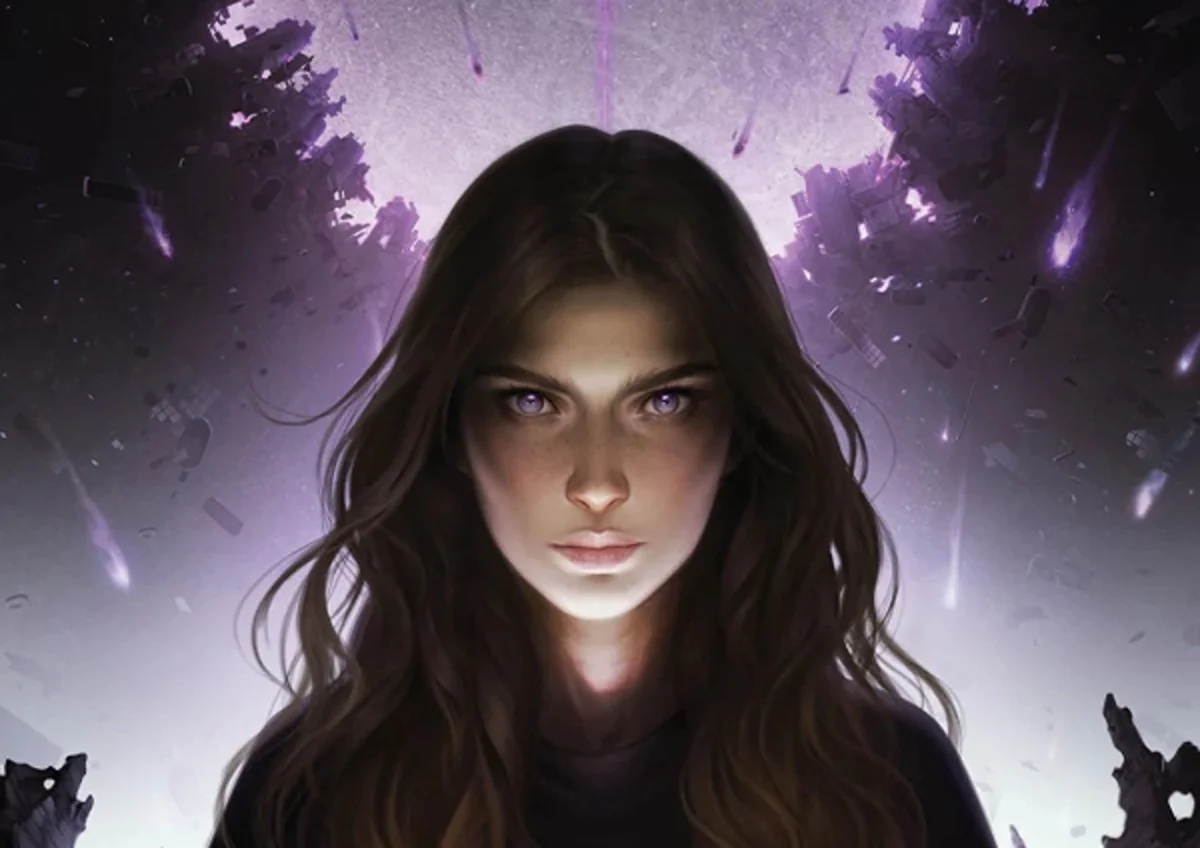
In a development that has electrified the science fiction community, Brandon Sanderson’s acclaimed Skyward series is officially making the transition from the printed page to the small screen. Deadline confirmed earlier this week that the high-stakes, interstellar saga—a cornerstone of the author’s expansive "Cytoverse"—is being developed into a television series, marking yet another massive milestone in the meteoric career of one of modern fantasy and sci-fi’s most prolific voices.
The project is set to be spearheaded by a powerhouse creative team, with Sanderson himself slated to pen the pilot episode. He will be joined by the veteran writing and producing duo of Jed Whedon and Maurissa Tancharoen, who earned significant industry acclaim for their tenure as showrunners on Marvel’s Agents of S.H.I.E.L.D. The series will be produced by Tomorrow Studios, the boutique production house recently lauded for their successful translation of the dense, manga-inspired world of Netflix’s One Piece into live-action.
The Core Narrative: A Legacy of Defiance
At the heart of the project is the story of Spensa, a teenage girl living in a brutal, claustrophobic reality on the planet Detritus. As a member of a shipwrecked human colony, Spensa exists under the constant threat of extinction, surrounded by the debris of ancient, forgotten wars. Her deepest ambition is to join the Defiant Defense Force and ascend to the stars as a pilot, but she is perpetually shackled by the shadow of her father, a pilot who was branded a coward and a traitor years prior.
The series is expected to capture the visceral intensity of the novel, which balances high-octane aerial combat with deep-seated questions regarding history, truth, and the nature of intelligence. As the Skyward narrative progresses, the scope expands to include the "Cytoverse"—an imaginative, future-based landscape where select individuals possess psionic abilities known as "Cytonics." While the current announcement focuses solely on the first book, the breadth of the source material provides an expansive sandbox for future seasons, encompassing the subsequent sequels and the prequel short story Defending Elysium.
A Chronology of Success: From Utah to the Screen
Brandon Sanderson’s journey to this moment has been a testament to his unique model of independent success.
- The Origins (2018): The publication of Skyward introduced readers to the Cytoverse, quickly becoming a New York Times bestseller and a staple of Young Adult science fiction shelves.
- Expansion of the Cytoverse (2019–2023): The series grew with subsequent installments (Starsight, Cytonic, and Defiant), building a dedicated fanbase that championed the series’ blend of humor, heart, and hard science fiction.
- The Media Pivot (2024–2025): Following his record-breaking Kickstarter campaigns and the continued growth of his Cosmere universe, Sanderson shifted focus toward securing high-level partnerships for screen adaptations.
- The Tomorrow Studios Deal (May 2026): The formal announcement of the Skyward TV project signals the beginning of an aggressive expansion phase for Sanderson’s intellectual properties in the visual media space.
Supporting Data: Why Skyward is Primed for TV
The decision to adapt Skyward comes at a time when "prestige" science fiction is enjoying a significant resurgence in the streaming market. Several key factors make this property a high-value asset:
- Genre Versatility: Skyward occupies a "sweet spot" in the market. It offers the accessibility of a coming-of-age story while maintaining the technical, world-building rigor associated with "hard" sci-fi.
- Proven Creative Pedigree: The selection of Jed Whedon and Maurissa Tancharoen is a strategic move. Their history with the Marvel Cinematic Universe demonstrates an ability to balance ensemble-cast dynamics with long-form serialized storytelling, a necessity for a property as vast as the Cytoverse.
- Production Synergy: Tomorrow Studios has already proven its mettle by navigating the complexities of adapting a beloved, visual-heavy property like One Piece. With their expertise, the technical hurdles of portraying starfighter dogfights and alien environments are likely to be met with high production standards.
- Fanbase Engagement: Unlike many authors, Sanderson maintains an incredibly close, direct line of communication with his readers. The built-in, pre-existing audience for his works minimizes the "discovery risk" that many new television series face.
Official Responses: "Defiant to the End"
The excitement surrounding the project is not limited to the fanbase; the production team is vocal about their commitment to capturing the spirit of the source material. Marty Adelstein, CEO of Tomorrow Studios, provided a glowing endorsement of the collaboration in his recent statement:
"Brandon has created a thrilling universe where courage, curiosity, and determination to challenge what we think can change the fate of entire worlds. The vision that he, Jed, and Maurissa have for a television adaptation is ‘defiant to the end.’"
This mantra—a nod to the series’ recurring themes of resistance against overwhelming odds—seems to reflect the creative ethos being brought to the project. Sanderson himself has remained characteristically involved, ensuring that the transition from page to screen maintains the character-driven focus that fans of the Cytoverse have come to expect.
Implications: The Sanderson Media Empire
The announcement of Skyward is not an isolated event; it represents a tectonic shift in how Brandon Sanderson’s work is being treated by Hollywood.
In recent months, it was revealed that the author had secured a massive, multifaceted deal with Apple TV to develop his two most significant literary pillars: The Stormlight Archive and the Mistborn series. The current strategy appears to be a bifurcated approach: The Stormlight Archive is being positioned as a sprawling, episodic television series, likely to take advantage of the format’s ability to handle complex world-building, while the Mistborn series is being treated as a cinematic franchise, intended for feature-length film releases.
The Skyward project stands apart from this Apple TV deal, suggesting that Sanderson is building a diversified portfolio of projects across multiple platforms. This decentralized approach allows him to retain a level of creative control while ensuring that each distinct world—the Cosmere and the Cytoverse—receives the specific type of adaptation that best suits its narrative structure.
The Broader Landscape
The implications for the industry are clear: Brandon Sanderson is no longer just a "best-selling author." He is a multimedia architect. By managing his own IPs and selecting partners who understand the integrity of his vision, he is setting a new precedent for how authors can protect their work while entering the mainstream media market.
As of now, there is no word on whether Skyward will ultimately land on a specific network or streaming platform, though the caliber of the production team suggests it will be a highly sought-after acquisition. Furthermore, there is currently no indication of plans to adapt the Defending Elysium prequel or the subsequent sequels, though it is highly probable that the studio is treating the pilot as a "proof of concept" to gauge audience reception.
For the legions of fans who have followed Spensa from the skies of Detritus to the far reaches of the galaxy, the wait for a visual representation of the Cytoverse is finally nearing an end. As production gears up, all eyes will be on the pilot script to see if the team can truly capture the lightning-in-a-bottle magic that made the books a modern classic. We will continue to track this story as casting announcements and further development updates emerge.









No comments yet. Be the first to join the conversation!