

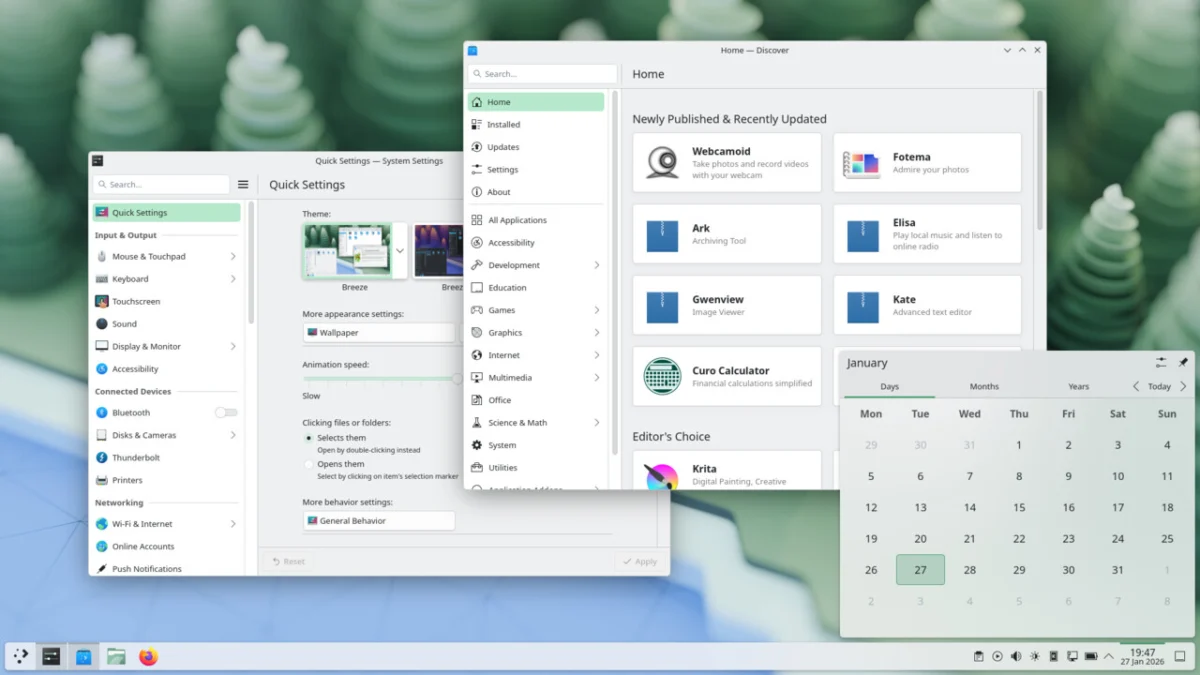
In a significant move toward bolstering the digital infrastructure of Europe, the KDE Project—the powerhouse behind the renowned KDE Plasma desktop environment—has secured a major financial injection. Nearly €1.3 million in public funds is being funneled into the open-source project via the Sovereign Tech Fund (STF). This investment, marked by its explicit focus on security, modernization, and structural resilience, underscores a growing recognition by government bodies of the critical role open-source software plays in the modern digital economy.
The Institutional Backbone: KDE e.V.
At the heart of the KDE ecosystem lies the KDE e.V., a registered non-profit association based in Berlin. While the global KDE community thrives on voluntary contributions, the e.V. serves as the essential legal and financial entity. By acting as a formal organization, the e.V. provides the necessary structure to sign contracts, hold assets, and, crucially, employ developers.
In its role as a professional steward, the KDE e.V. manages the lifecycle of the project’s vast array of applications. The recent influx of capital from the Sovereign Tech Fund allows the e.V. to expand its professional workforce, enabling the hiring of specialized engineers to tackle complex, long-term technical debt that often plagues volunteer-driven projects. This shift toward a hybrid model—combining community passion with professionalized full-time development—is seen as a blueprint for the future of sustainable open-source software.
Million-Euro Injection: A Strategic Investment
The funding is managed by the Sovereign Tech Agency, a subsidiary of the Federal Agency for Disruptive Innovation (SPRIND). Operating under the mandate of the German Federal Ministry for Digital and Transport (BMDV), the agency is tasked with the maintenance and preservation of open-source software that constitutes the backbone of the German and European digital landscape.
With an annual budget that reached €29 million in 2025, the Sovereign Tech Fund is specifically designed to address the "missing link" in open-source development: long-term sustainability. The Sovereign Tech Agency summarized the goal of the investment as the "strengthening of structural resilience and the modernization of the technology stack of a leading desktop platform."
This is not merely a donation; it is a strategic investment in digital sovereignty. By ensuring that critical software like KDE Plasma remains secure and cutting-edge, the German government aims to reduce dependency on proprietary, closed-source ecosystems that offer little transparency or control.
Chronology of the Investment
- Early 2025: Discussions intensify between KDE stakeholders and the Sovereign Tech Agency regarding the long-term technical health of the Plasma desktop environment.
- Mid-2025: Formal assessment of the KDE codebase and its strategic importance to the European Linux ecosystem is completed by the Agency.
- Late 2025: The funding package is finalized, with strict requirements regarding the implementation of security patches and modernization of the core framework.
- Early 2026: Public announcement of the €1.3 million grant, accompanied by official job postings for platform engineers to lead the modernization efforts.
Technical Scope: Modernizing the Plasma Stack
The investment is strictly tied to specific milestones. KDE Plasma, built upon the powerful Qt framework, has long been a pioneer in the Linux world. It is frequently the first to implement modern display technologies, such as advanced High Dynamic Range (HDR) support and Wayland integration. However, maintaining this lead requires constant refactoring.
Key Focus Areas:
- Security Hardening: Implementing rigorous audit procedures to identify and remediate vulnerabilities in the core desktop libraries.
- Modernizing the Stack: Transitioning legacy components to more modern paradigms, ensuring that Plasma remains compatible with the evolving demands of modern hardware.
- Accessibility and Stability: Enhancing the user experience to ensure that the desktop remains inclusive and reliable for professional use-cases.
By automating build processes and streamlining the development pipeline, the project aims to reduce the "bus factor"—the risk that the project would collapse if key contributors were to step away.
A Multifaceted Ecosystem
KDE is far more than just a desktop environment. Its ecosystem encompasses a vast library of applications that have become staples for professionals worldwide. Applications such as Kdenlive (a non-linear video editor) and Krita (a professional-grade digital painting suite) are cross-platform, meaning they bring KDE’s technical philosophy to Windows and macOS users alike.
The recent funding acknowledges that these applications are not "side projects" but are integral components of the creative software industry. By improving the core frameworks (like the underlying libraries used by Krita and Kdenlive), the investment ripples outward, benefiting the entire open-source community, not just the Plasma desktop users.
Official Responses and Perspectives
The reaction from the KDE community has been one of cautious optimism. While the project has thrived on a decentralized model for decades, the influx of institutional money represents a shift in scale.
"This funding allows us to address the ‘boring’ but vital parts of software development—documentation, security audits, and infrastructure maintenance—that are often overlooked," noted a representative from the KDE e.V. "It provides the stability required to plan years in advance rather than months."
From the government’s perspective, the logic is clear. In a world where digital infrastructure is increasingly subject to supply-chain attacks, supporting the development of open-source software is an act of national security. By investing in KDE, the Sovereign Tech Agency is effectively buying insurance for the digital tools that keep European institutions running.
Implications for the Linux Desktop
The long-term implications of this €1.3 million investment are profound:
- Standardization: As KDE receives professional oversight, it is likely to become an even more reliable standard for enterprise and public administration adoption of Linux.
- Professionalization of Open Source: This partnership serves as a high-profile case study for how public funds can be injected into open-source projects without compromising their community-driven, transparent nature.
- Competitive Edge: With the added resources, the gap between Linux desktop environments and proprietary alternatives like Windows or macOS in terms of polish and reliability is expected to shrink even further.
Furthermore, KDE’s current experimentation with its own Linux distribution, while not intended for immediate mass-market productization, shows the project’s ambition to control its own destiny. The support from the Sovereign Tech Fund provides the necessary runway to refine these experimental technologies into stable, production-ready solutions.
Conclusion: A New Era for KDE
The €1.3 million grant is a milestone for the KDE project. It validates years of community work and signals that the "Linux Desktop" is no longer a hobbyist pursuit, but a critical pillar of the digital future. As the KDE e.V. begins the process of hiring new engineers and implementing the stipulated technical improvements, the global open-source community will be watching closely.
If this experiment in state-funded, open-source development proves successful, it could pave the way for similar investments in other critical projects like GNOME, LibreOffice, or the Linux kernel itself. For now, the KDE community is focused on the task at hand: building a more secure, modern, and resilient desktop experience that stands as a testament to the power of collaborative, open technology.
As Europe continues to prioritize digital autonomy, the collaboration between the Sovereign Tech Agency and the KDE Project serves as a powerful reminder: the software that powers our world is only as strong as the community and the support behind it. With this investment, that foundation has never been more secure.










No comments yet. Be the first to join the conversation!