


The landscape of international streaming has reached a critical inflection point, shifting from a general scramble for subscribers to a highly specialized battle over specific genres and subcultures. At the forefront of this evolution is Japanese animation, or anime—a medium that has transformed from a niche interest into a cornerstone of global pop culture. While Netflix, Sony’s Crunchyroll, and Disney+ have long been established players in this arena, Amazon Prime Video has officially signaled its intent to move beyond being a mere participant. The tech giant is now positioning itself to become the definitive global hub for anime content.
Main Facts: The Ambition for Global Dominance
During the "Prime Video Presents: International Originals" online showcase held on February 12, 2026, Amazon Prime Video leadership unveiled a comprehensive strategy aimed at capturing the global anime market. Gaurav Gandhi, Vice President of Prime Video’s Oceania region, articulated a vision that places anime at the center of Amazon’s international growth strategy.
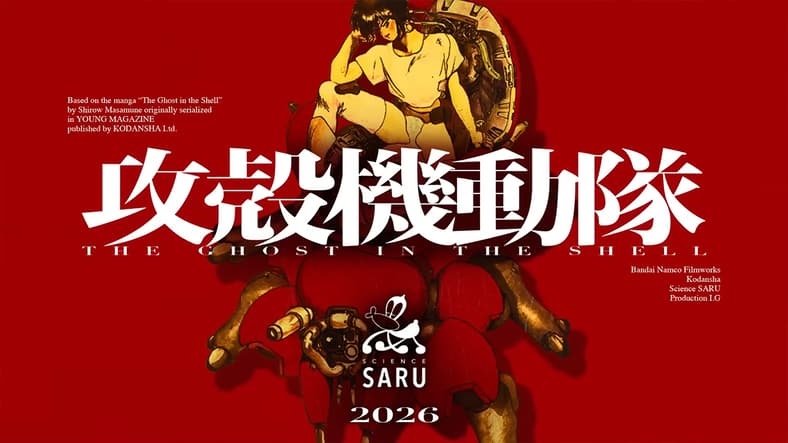
The core of this announcement revolves around a massive expansion of exclusive content. Amazon is moving away from the "scattershot" licensing approach of previous years, instead focusing on high-profile reboots of legendary franchises and the continuation of modern "sleeper hits." The strategy is backed by significant investments in three pillar productions slated for 2026: a high-budget reboot of Fist of the North Star, a new iteration of the cyberpunk masterpiece The Ghost in the Shell, and a second season of the breakout fantasy hit From Old Country Bumpkin to Master Swordsman.

Gandhi’s proclamation was clear: Amazon does not want to be "one of many" platforms where fans can find anime; it intends to be the "preferred destination" globally. This involves not only licensing existing shows but also deepening ties with Japanese production committees to ensure Prime Video is the exclusive home for the industry’s most significant intellectual properties (IP).
A Chronological Evolution: From Niche Subscriptions to Global Powerhouse
To understand Amazon’s current trajectory, one must look at the company’s decade-long, often turbulent relationship with the anime medium.
The "Anime Strike" Era (2017–2018)
In early 2017, Amazon launched "Anime Strike," a specialized subscription channel that required users to pay an additional monthly fee on top of their Prime membership. While the service secured exclusive rights to heavy hitters like Vinland Saga and Made in Abyss, the "double-paywall" model was met with significant backlash from the fan community. By early 2018, Amazon shuttered the service, folding its anime library into the standard Prime Video offering.

The Era of Prestige Acquisitions (2019–2023)
Following the collapse of Anime Strike, Amazon shifted toward "prestige" acquisitions. The most notable of these was the global distribution of Evangelion: 3.0+1.0 Thrice Upon a Time in 2021. By securing the final chapter of one of the most influential anime franchises in history, Amazon proved it could handle massive global launches. This period also saw the platform experiment with "mature" Japanese content, such as the live-action Kamen Rider Black Sun, signaling an interest in the broader "otaku" ecosystem beyond just animation.
The Current Expansion (2024–Present)
By 2025, Amazon began aggressively building a library of distribution exclusives, including Mobile Suit Gundam GQuuuuuuX and New Panty & Stocking with Garterbelt. The current 2026 roadmap represents the culmination of this evolution—a transition from a passive licensor to an active, dominant force in the production and global dissemination of Japanese content.
Supporting Data: The 2026 Roadmap and Performance Metrics
The success of Amazon’s strategy is predicated on the performance of its current library and the pedigree of its upcoming slate. During the showcase, Gandhi highlighted several key titles that serve as the foundation for this global push.

1. The Ghost in the Shell (2026)
Perhaps the most significant announcement is the new adaptation of Masamune Shirow’s The Ghost in the Shell. Gandhi referred to the IP as "the most influential Japanese sci-fi work of all time." This production is a collaborative effort between Science Saru—the studio known for Devilman Crybaby and Scott Pilgrim Takes Off—and a production committee featuring industry titans Bandai Namco Filmworks, Kodansha, and Production I.G. By involving the original creators and high-end studios, Amazon is aiming for "prestige anime" status.
2. Fist of the North Star: Hokuto No Ken
To celebrate the 40th anniversary of the original series, Amazon has green-lit a reboot produced by TMS Entertainment. TMS is a legendary studio with a portfolio including Lupin III and Detective Conan. This move targets the "nostalgia market," appealing to older fans while introducing a seminal "battle shonen" to a new generation.
3. From Old Country Bumpkin to Master Swordsman
While reboots of classics provide prestige, Amazon’s data shows that modern fantasy—specifically the "isekai" and "master-apprentice" tropes—drives consistent viewership. Season 1 of Bumpkin was a massive success, ranking among Prime Video’s top ten titles in 45 different countries. The swift renewal for Season 2, scheduled for July 2026, demonstrates Amazon’s commitment to data-driven content curation.
Global Market Trends
The "explosive growth" Gandhi cited is backed by industry figures. The global anime market was valued at approximately $28.6 billion in 2022 and is projected to exceed $60 billion by 2030. Amazon’s shift is a direct response to this trajectory, aiming to capture the "Asia-Pacific" market while simultaneously exporting that content to hungry audiences in North America, Europe, and India.
Official Responses: The Vision of Gaurav Gandhi
The rhetoric used by Gaurav Gandhi during the International Originals showcase suggests a shift in how Amazon views "local" content. No longer seen as regional products that might find a secondary audience abroad, Japanese productions are now viewed as global anchors for the Prime Video service.
"When we look at [the countries in the Asia-Pacific area], there’s an extraordinary opportunity to take exceptional local content from multiple entertainment ecosystems across the region and bring it to the world," Gandhi stated. He emphasized that the "tremendous appetite" for Japanese anime, alongside Korean dramas and Indian cinema, has fundamentally changed Prime Video’s viewership maps.

Crucially, Gandhi noted that these genres are now "amongst the most watched shows and movies outside their countries of origin on Prime Video." This data point is the primary driver behind the company’s decision to "champion Asian content on the world stage." By positioning Prime Video as a global champion for these works, Amazon aims to build brand loyalty in regions where they face stiff competition from local services and other global giants like Netflix.
Implications: A New Era for the Anime Industry
Amazon’s aggressive stance carries profound implications for the streaming industry, the Japanese production model, and the fans themselves.
Challenging the Crunchyroll Monopoly
For years, Sony’s Crunchyroll has been the undisputed "home of anime," boasting the largest library in the world. However, Amazon’s massive infrastructure and "all-in-one" Prime membership offer a value proposition that is difficult to beat. If Amazon continues to secure exclusive rights to "tentpole" franchises like Gundam and Ghost in the Shell, fans may find themselves forced to maintain a Prime subscription as their primary anime source, potentially eroding Crunchyroll’s market share.

The "Anime Content" vs. "Anime" Distinction
Industry analysts have noted Gandhi’s specific use of the phrase "anime content" rather than just "anime." This nuance suggests that Amazon may be looking to expand into live-action adaptations of manga and anime—a strategy Netflix has found success with via One Piece and YuYu Hakusho. Furthermore, there is speculation that Amazon may revive its interest in tokusatsu (live-action special effects shows). Given their history with Kamen Rider, a high-budget, global live-action adaptation of a major anime property could be the next logical step in their "global hub" strategy.
Impact on Japanese Production Committees
Amazon’s entry as a major financier could change the power dynamics within Japanese production committees. Historically, these committees were dominated by Japanese domestic companies (publishers, record labels, and TV stations). The influx of "Amazon money" allows for higher production values and better pay for animators, but it also comes with the pressure of global sensibilities. This tension was recently highlighted by the original Ghost in the Shell director, Mamoru Oshii, who expressed concerns about the rise of "political correctness" and corporate oversight in the medium. As Amazon takes a larger role, the balance between Japanese creative autonomy and global corporate standards will remain a point of contention.
Conclusion
Amazon Prime Video’s 2026 roadmap is more than just a release schedule; it is a declaration of intent. By leveraging legendary IPs like Fist of the North Star and Ghost in the Shell alongside modern global hits, the company is attempting to construct an ecosystem where "anime" and "Prime Video" are synonymous. As the July 2026 premiere dates approach, the industry will be watching closely to see if Amazon can truly become the global hub it aspires to be, or if the ghost of "Anime Strike" still haunts its ambitions. For fans, however, the result is clear: more high-budget content and a front-row seat to the most intense battle in the history of streaming.











No comments yet. Be the first to join the conversation!