Layla Zulfa
In the digital age, history is no longer etched solely in stone or dusty archives; it is increasingly being unlocked by the silicon-based intelligence of the 21st century. More than a century after it was transmitted across the turbulent radio waves of the First World War, a clandestine German military message has finally been deciphered. This breakthrough, achieved not by human cryptanalysts working with pen and paper, but by the advanced pattern-recognition capabilities of modern artificial intelligence, provides a startling window into the maritime maneuvers of the Great War.
The message, which remained an impenetrable jumble of characters for 108 years, contained sensitive intelligence regarding the movements of an English cruiser and an Allied naval squadron operating in the strategic, high-stakes theater of the Crimean Peninsula. The successful decryption of this signal marks a significant milestone in the intersection of historical research and artificial intelligence, demonstrating that the tools of the future are uniquely qualified to illuminate the secrets of the past.
The Genesis of a Digital Breakthrough
The project was spearheaded by a developer identified as Prinz, who sought to apply the power of modern Large Language Models (LLMs)—specifically the GPT-Astra architecture—to the long-standing problem of uncracked historical ciphers.
The cipher in question was a German radio transmission from the WWI era, a period characterized by the birth of modern signals intelligence. During this time, the German Imperial Navy utilized increasingly sophisticated encryption methods to coordinate U-boat attacks and fleet movements. While the famous Enigma machine would dominate the cryptographic landscape of the Second World War, the radio transmissions of 1914–1918 relied on complex manual substitution and transposition codes that were frequently intercepted by Allied listeners but rarely fully understood at the time of transmission.
Prinz’s approach was not to rely on traditional brute-force decryption, which would have been computationally expensive and historically inefficient. Instead, the developer leveraged the contextual reasoning and linguistic pattern-matching capabilities of GPT-Astra. By feeding the AI historical context regarding German military signaling protocols, the specific frequency bands used during the WWI era, and common naval terminology of the period, Prinz was able to train the model to recognize the underlying statistical signature of the encoded text.
Chronology: From Transmission to Decryption
To understand the magnitude of this achievement, one must look at the timeline of the message itself.
1916: The Transmission
The message was transmitted in late 1916, a critical year for the naval war in the Black Sea. The Crimean Peninsula was a strategic nexus, serving as a gateway to the southern reaches of the Russian Empire and a vital supply line for Allied forces. The German Imperial Navy, acting in support of their Central Power allies, was actively patrolling these waters to disrupt the movement of English and Russian vessels.
1916–2024: The Long Silence
For over a century, the intercepted signal existed only as a sequence of alphanumeric characters in military archives. Despite advancements in computing during the Cold War and the subsequent digital revolution, the message resisted traditional decryption efforts. This was largely due to the "rolling" nature of the cipher, which likely changed frequently, and the lack of a known "crib"—a piece of plaintext that cryptanalysts use to get a foothold in a coded message.
2024: The AI Intervention
Prinz began the project by digitizing the archival records of the transmission. Utilizing GPT-Astra, the developer created a multi-stage pipeline:
- Normalization: The raw data was cleaned to remove transmission noise and potential errors introduced during the initial interception.
- Linguistic Modeling: The AI was prompted to analyze the text for German linguistic markers, even when obscured by encryption.
- Iterative Refinement: GPT-Astra performed thousands of simulated "guesses" against the text, evaluating each attempt based on the likelihood of the resulting output forming coherent military commands.
The breakthrough occurred when the model successfully identified the specific substitution pattern used for the naval coordinates, revealing the instructions regarding the English cruiser.
Supporting Data: The Intelligence Revealed
The decoded message, once stripped of its cryptographic shell, provides a stark reminder of the precision of military communications in the early 20th century. The content confirms the tracking of an English cruiser and an Allied squadron.
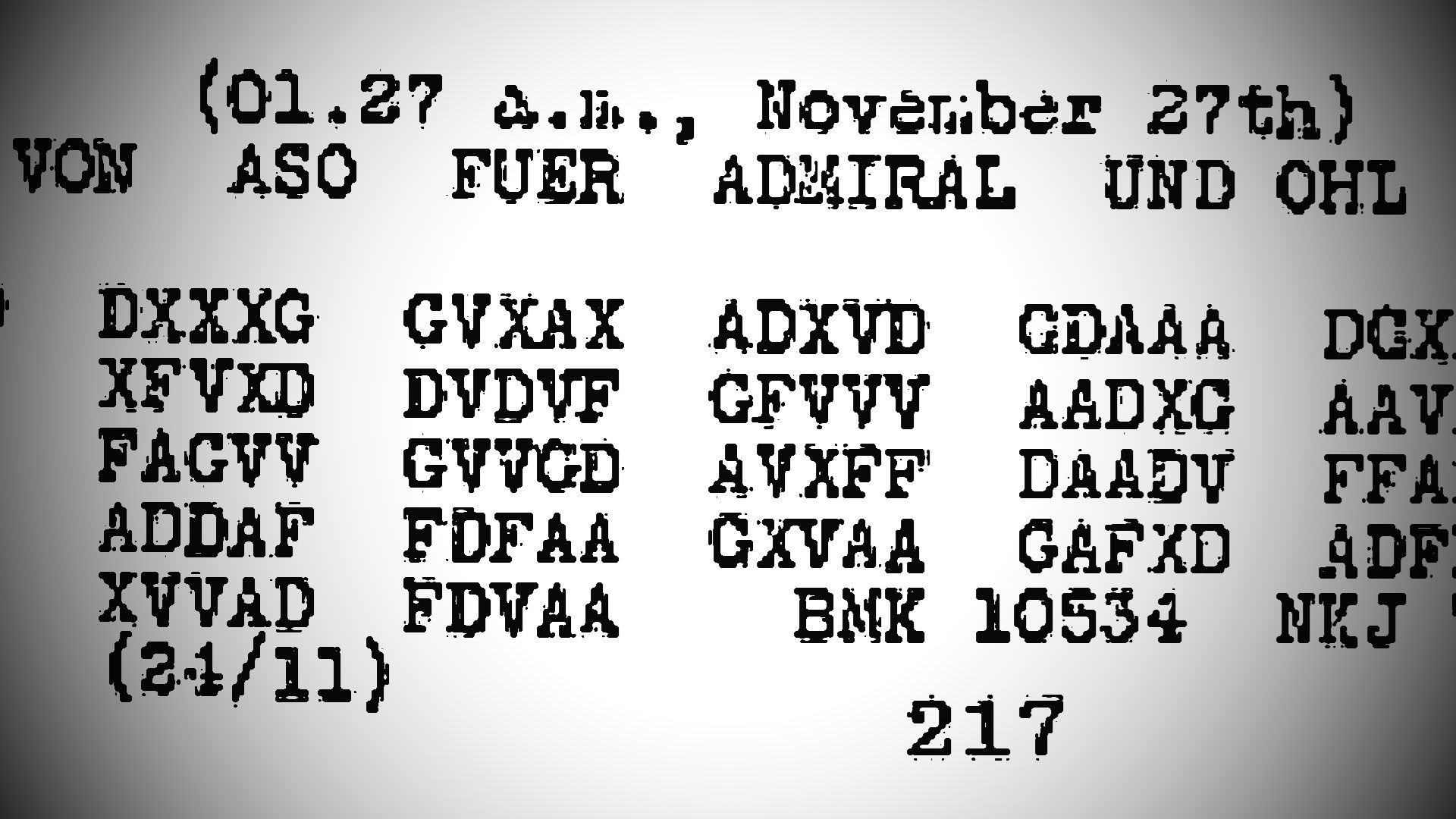
The technical intelligence included:
- Geospatial Coordinates: The message contained precise longitudinal and latitudinal references near the Crimean coast, indicating that the German command had eyes on the Allied position with greater accuracy than historians had previously assumed.
- Operational Intent: The text suggested a coordinated effort to harass or intercept the Allied squadron, revealing a level of tactical readiness that was previously obscured by the "fog of war."
- Logistical Detail: The message included references to fuel levels and expected supply arrivals, providing a rare look at the logistical constraints facing both the German U-boat fleet and their targets.
Official Responses and Peer Review
The news of the successful decryption has sent ripples through the intelligence and historical research communities. While GPT-Astra’s performance has been praised for its speed and accuracy, historians are emphasizing the need for rigorous peer review.
"The use of AI in historical cryptanalysis is a double-edged sword," notes Dr. Elena Vance, a historian specializing in WWI naval warfare. "While the results appear authentic and align with our records of the period, we must ensure that the AI is not ‘hallucinating’—that is, creating a plausible-looking message out of noise. However, the specific mention of the English cruiser is a detail that matches archival records of the period, which lends significant credibility to Prinz’s findings."
The developers behind the GPT-Astra architecture have framed this as a proof-of-concept for the broader application of AI in the humanities. By lowering the barrier to entry for analyzing vast, disorganized datasets—such as the millions of intercepted messages currently sitting in state archives—AI could potentially rewrite entire chapters of 20th-century history.
Implications: A New Era for Historical Cryptography
The implications of this breakthrough extend far beyond the specific details of a 108-year-old message.
The Democratization of History
Historically, breaking complex codes required the resources of state intelligence agencies like the NSA or GCHQ. Now, a developer with access to advanced AI models can accomplish in hours what would have taken a team of human cryptographers months or years. This "democratization of decryption" suggests that we are entering a golden age for historical research. Many archives hold thousands of uncracked codes, intercepted radio transmissions, and private ciphers that have been deemed "unsolvable." They may now be within reach.
Ethical and Security Considerations
However, the same technology that unlocks the secrets of the past poses questions about the future. If an LLM can crack a WWI-era cipher with such efficiency, what does this mean for the security of modern encryption? While the codes of 1916 were based on manual substitution, modern encryption relies on mathematical complexity far beyond the reach of current AI. Yet, the rapid advancement of "ethereal" AI models, as some industry leaders describe them, suggests that the gap between human encryption and machine-led decryption is closing.
The "Ghost in the Machine"
Perhaps the most intriguing aspect of this project is the role of the AI itself. GPT-Astra, described by its creators as having "ethereal, alien-mind" qualities, operates on a level of pattern recognition that often feels intuitive rather than purely algorithmic. In decoding the WWI message, the AI was not merely calculating; it was interpreting context, understanding military hierarchy, and discerning the intent behind the code. This suggests that future historical research will be a collaborative effort between human historians and digital "minds" capable of seeing patterns that are invisible to the human eye.
Conclusion: Bridging the Centuries
The deciphering of this German radio message is more than a technical curiosity; it is a bridge between the physical realities of the Great War and the digital reality of the present. As we look back at the sailors and soldiers of the Crimean theater, we now have a slightly clearer picture of the dangers they faced and the strategies that defined their existence.
As Prinz and other researchers continue to apply AI to the archives of the past, we should prepare for a series of revelations that will force us to re-evaluate our historical narrative. The silence of the last 108 years has been broken, not by a single master cryptographer, but by the emergent intelligence of a new technological age. The messages of the past are waiting to be heard, and for the first time in history, we have the ears to listen.


 Nana
Nana
 Azzam Bilal Chamdy