

Introduction: A Convergence of Eras
In the vast, azure expanse of the South China Sea, history and modernity collided this month during Exercise Balikatan 2026. A multinational coalition—comprising forces from the Philippines, Japan, Australia, Canada, and the United States—converged to conduct a sophisticated series of live-fire drills. While the exercise served as a critical platform for interoperability among these allied nations, the most striking moment arrived when a relic of the Second World War met the cutting edge of contemporary missile technology.
The centerpiece of the demonstration was the Japan Ground Self-Defense Force’s (JGSDF) Type 88 Surface-to-Ship Missile (SSM-1). To test the efficacy of this system, the coalition utilized a decommissioned Philippine Navy corvette, the BRP Quezon. What followed was a swift, decisive display of naval precision that underscored the shifting geopolitical landscape of the Indo-Pacific.
The Main Facts: A Lethal Demonstration of Capability
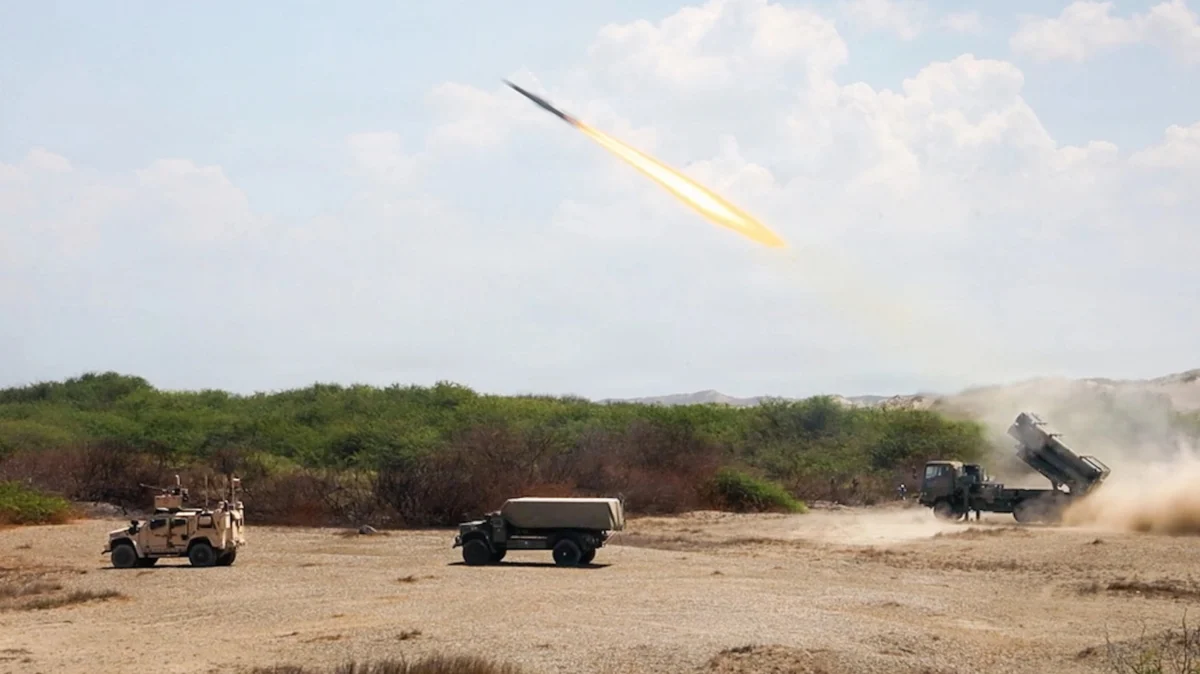
The primary objective of the live-fire evolution was twofold: to stress-test the Type 88 missile system in a real-world maritime environment and to showcase the lethal potential of Japanese-manufactured weaponry to regional partners. With Japan having recently relaxed its stringent post-war restrictions on military exports, the exercise served as a high-profile "showroom" for the capabilities of the Japan Self-Defense Forces (JSDF).
The BRP Quezon, long since removed from active service, was towed into position to serve as the target vessel. The engagement saw two Type 88 missiles launched against the aging hull. According to reports from the U.S. Naval Institute, the first projectile struck the vessel with devastating accuracy, causing immediate, catastrophic structural failure. While the second missile reportedly missed its mark, the mission was already a success; the Quezon was sent to the bottom of the ocean within minutes of the initial impact.
Beyond the Type 88, the exercise featured a multi-domain array of assets. The U.S. Army deployed the High Mobility Artillery Rocket System (HIMARS)—a platform that has gained global notoriety for its performance in the Russo-Ukrainian War—while the Philippine Air Force provided air support via its A-29 Super Tucano light attack aircraft.
Chronology: From World War II to Modernity
The BRP Quezon was not merely a target; it was a ghost of a bygone era, carrying a lineage that spanned eight decades.
1944: The Birth of the U.S.S. Vigilance
Commissioned in 1944 as the U.S.S. Vigilance (AM-324), the ship began its life as an Auk-class minesweeper. At 221 feet and 2 inches in length, it was designed for the rigors of the Pacific Theater. During the Allied island-hopping campaign, the Vigilance proved its worth as a workhorse of the fleet. It escorted vital supply convoys, cleared shipping lanes of dangerous mines, and provided critical air defense for larger capital ships.
A Storied Wartime Career
The Vigilance earned three battle stars for its service. Historical records recount the vessel’s role in the defense of Allied task forces, where it was credited with successfully downing Imperial Japanese aircraft during fierce aerial engagements. It was also noted for its humanitarian role, frequently aiding in the rescue of sailors from sinking ships during the chaos of naval combat.
1967–1980: The Philippine Tenure
Following the conclusion of World War II and its subsequent service, the ship was eventually transferred to the Philippine Navy. Recommissioned as the BRP Quezon (PS-70), it served as a corvette for over a decade. It became a staple of the Philippine maritime fleet, providing coastal patrol and sovereignty protection until its decommissioning in 1980.
2026: The Final Curtain
After decades of serving as a training platform and, later, a static vessel, the Quezon was selected to fulfill one final duty: to provide the necessary data for modern naval warfare. Its sinking in 2026 marked the end of a long, distinguished service record that bridged the gap between the mid-20th century and the current era of precision-guided munitions.
Supporting Data: The Arsenal of Balikatan 2026
The inclusion of diverse weapon systems at Balikatan 2026 highlights the evolving nature of maritime warfare in the Indo-Pacific.
- Type 88 Surface-to-Ship Missile (SSM-1): Developed by Mitsubishi Heavy Industries, the Type 88 is a truck-mounted anti-ship missile system. It uses an inertial navigation system with terminal active radar homing, making it highly effective at neutralizing naval surface targets from coastal positions. Its performance during this exercise confirms its viability as a deterrent in "Anti-Access/Area Denial" (A2/AD) strategies.
- HIMARS (M142): The HIMARS system represents the "shoot and scoot" capability critical for modern maneuver warfare. By integrating long-range precision fires, the U.S. and Philippine forces demonstrated that land-based assets could effectively control maritime chokepoints.
- A-29 Super Tucano: Known for its low operating costs and high versatility, the Super Tucano provides the Philippine Air Force with the ability to conduct close air support and maritime surveillance in challenging environments where expensive, high-performance jets might be overkill.
Official Responses and Strategic Implications
The sinking of the Quezon was not an act of wanton destruction but a calculated exercise in strategic signaling.
Strengthening the Security Architecture
Defense analysts note that the presence of Canadian and Australian forces, alongside the U.S., Japan, and the Philippines, reflects a broader trend: the "networked" security architecture of the Pacific. By training together, these nations are moving beyond simple bilateral agreements toward a more cohesive, multilateral defense posture.
Japan’s New Export Policy
The participation of the Type 88 system is perhaps the most significant political development. For decades, Japan maintained a "Three Principles on Arms Exports" policy that effectively banned the sale of military equipment to foreign nations. The recent relaxation of these rules is a direct response to the changing security environment in East Asia. By showcasing its hardware to the Philippines, Japan is positioning itself as a reliable regional security partner, capable of providing both diplomatic support and high-end military technology.
The Message to the Region
While the exercise was described as a routine training event, the timing and composition of the participating forces sent a clear message. As regional tensions over territorial sovereignty continue to mount, the ability to rapidly sink a naval vessel using land-based, mobile missile batteries provides a potent deterrent against large-scale maritime aggression.
The Future of Multinational Drills
The use of decommissioned World War II vessels for target practice—a practice historically known as "SINKEX"—remains a standard procedure for modern navies. It offers the only opportunity to observe the terminal effects of modern missiles on actual hull structures, providing invaluable data for missile guidance and warhead lethality.
However, as Exercise Balikatan 2026 concludes, the broader takeaway is the integration of diverse military cultures. The coordination between the JSDF’s precision engineering, the U.S. military’s long-range fire capabilities, and the Philippine military’s local domain expertise represents a formidable shift in regional power dynamics.
The BRP Quezon, which once fought against Japanese aircraft in the 1940s, ended its life as the subject of a Japanese-led exercise in the 2020s. This irony is not lost on observers; it symbolizes the dramatic reconciliation and subsequent strategic alignment that has defined the post-war era. As the Pacific continues to evolve into the primary theater of global geopolitical competition, the lessons learned from the Quezon’s final moments will likely inform the development of defense strategies for decades to come.
The era of massive, ironclad warships duking it out in close quarters has passed, replaced by the silent, swift lethality of modern, networked missile systems. In the depths of the Pacific, the Quezon now rests, a final witness to the relentless march of technological progress in the name of regional security.












No comments yet. Be the first to join the conversation!