

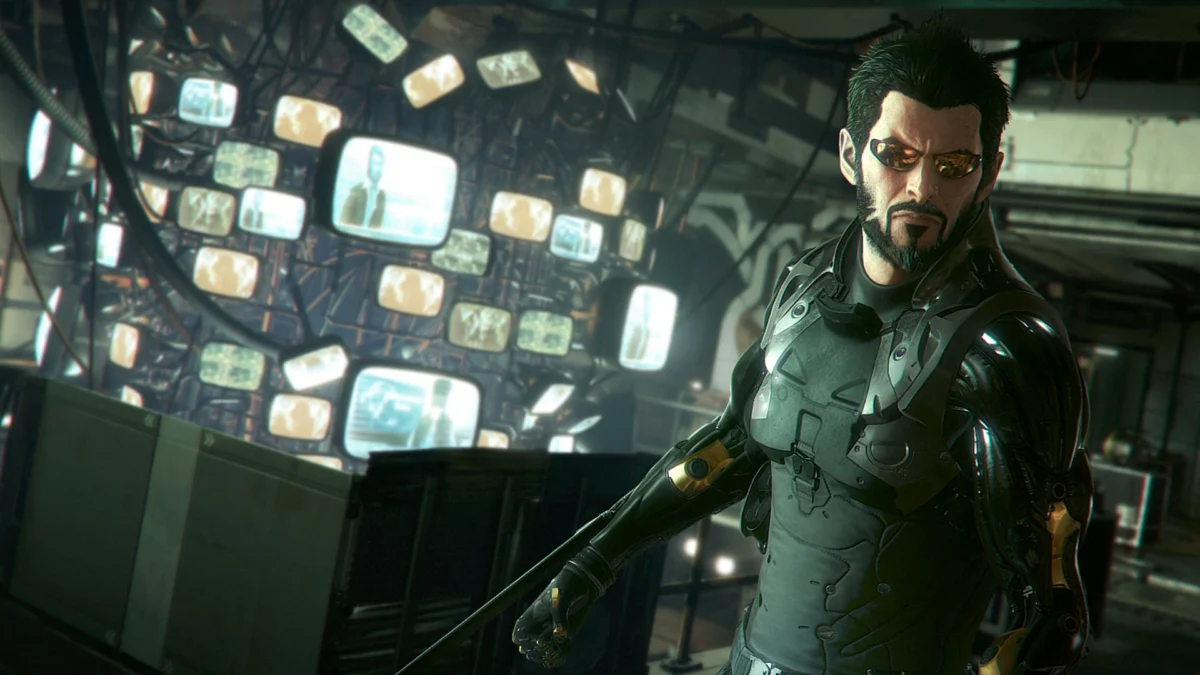
In a move that signals a significant shift in corporate philosophy, the gaming conglomerate Embracer Group has announced a major restructuring effort. Fresh off the heels of a turbulent period marked by aggressive acquisitions and subsequent cost-cutting measures, the Swedish-based publisher is splitting its massive portfolio into three distinct entities. Amidst this corporate reorganization, CEO Lars Wingefors has hinted at a new strategy for the company’s "sleeping" intellectual properties (IPs). Rather than allowing storied franchises like Deus Ex, Saints Row, Thief, and TimeSplitters to languish in development limbo, the company is signaling an openness to licensing these brands to external partners.
For fans who have watched these series remain dormant for years, the news offers a glimmer of hope—though, as with all corporate maneuvers, the reality may be more nuanced than a simple revival of beloved classics.
The Chronology of a Conglomerate
To understand why Embracer is suddenly looking to offload its IP assets to outside developers, one must look at the meteoric rise and subsequent correction of the group.
The Era of Hyper-Acquisition (2018–2022)
Under the leadership of Lars Wingefors, Embracer Group grew through a relentless acquisition spree. They absorbed THQ Nordic, Coffee Stain, Koch Media, Gearbox Entertainment, and eventually, the massive assets of Square Enix Montreal and Eidos-Montréal. During this period, Embracer became the "owner of everything," holding thousands of IPs and dozens of studios.
The Correction and Contraction (2023–2024)
The strategy hit a wall in 2023 when a major partnership deal collapsed, leading to a liquidity crisis. Embracer was forced to undergo a "restructuring program," which resulted in studio closures (notably Volition and Free Radical Design), mass layoffs, and the cancellation of multiple unannounced projects. The Deus Ex franchise, in particular, was hit hard when a planned sequel was reportedly axed in early 2024.
The Split (2024–Present)
The current announcement of a three-way split—dividing the business into "Embracer," "Fellowship Entertainment" (focused on Lord of the Rings and Tomb Raider), and a third entity—is an attempt to streamline operations and appease investors who have seen the company’s valuation suffer over the last 18 months.
Decoding the Strategy: Who Gets What?
The restructuring divides the company’s assets into specialized units. Understanding this division is vital to predicting the fate of specific franchises.
- Fellowship Entertainment: This unit will function as a hub for major "transmedia" properties. Its portfolio includes the lucrative Lord of the Rings license and the Tomb Raider franchise. With developers like Warhorse Studios (Kingdom Come: Deliverance) and Crystal Dynamics under its wing, this division is clearly positioned as the "premium" arm of the company.
- The "Core" Embracer Unit: This entity retains massive publishers like THQ Nordic and Milestone. It remains the home for mid-tier and legacy titles, such as Darksiders and Dead Island.
- The IP & Licensing Business Unit: This is where the most significant change lies. Embracer plans to leverage its "dark horse" assets—properties that are currently not in active development—by seeking external partners to handle production.
Official Responses and Strategic Intent
In an open letter to investors, Lars Wingefors provided the rationale for this pivot. "In addition to expanding our largest transmedia IPs… we see great potential to invest own capital in and form new partnerships for our largest other AAA IPs," Wingefors wrote.
Crucially, the language used suggests that Embracer is moving away from a model of internal vertical integration. By inviting external partners to handle franchises like TimeSplitters or Red Faction, the company is attempting to generate revenue from its "back catalog" without bearing the overhead costs of internal development.
The inclusion of Dark Horse Media—now part of the IP & Licensing unit—is a telling detail. Dark Horse has a long history of collaborating with Hollywood. This suggests that for many of these franchises, the goal may not be a new video game, but rather a film or television adaptation. For fans of Deus Ex or Thief, this creates a bifurcation of expectations: while a game might be the dream, a media adaptation is arguably more likely under this new, risk-averse framework.
The Implications: Revivals or Remakes?
The prospect of external licensing brings both excitement and skepticism.
The Argument for Quality
Industry experts note that licensing can lead to creative renaissances. By handing an IP to a studio with a genuine passion for the source material, a franchise can be "reimagined" rather than "recycled." For example, the success of independent studios tackling retro-horror or classic CRPG formulas suggests that if the right developer is matched with the right IP, the results could be stellar.
The Risk of "Corporate Necromancy"
Conversely, the history of licensed games is littered with low-effort cash grabs. There is a palpable fear that these titles could be farmed out to developers solely to generate quick royalty checks. If Saints Row is handed to a developer with no affinity for the series’ signature blend of absurdity and satire, the brand may suffer further damage.
Furthermore, the "ghosting" of developers—a sentiment expressed by former leads on various projects—has left a bitter taste in the community. When a studio is shut down and its IP is then "shopped around," it suggests a lack of institutional memory. Can a new, external team truly capture the "immersive sim" complexity that made the original Deus Ex or Thief titles so culturally significant?
Economic Reality: Why Now?
The shift is fundamentally a financial one. Embracer is currently burdened with debt and a massive, unwieldy portfolio. Licensing is a low-risk, high-margin strategy. By moving from a "developer" to a "licensor," Embracer shifts the risk of development to the partner. If a new TimeSplitters game fails, the external partner takes the financial hit, while Embracer retains the IP and continues to collect royalty fees.
Conclusion: A Precarious Future
For the gaming industry, the next few years will serve as a litmus test for Embracer’s new strategy. The company is currently a "giant in transition," attempting to pivot from a growth-at-all-costs acquisition model to a sustainable, licensing-led business.
The potential for greatness exists. The vast, dusty archives of the Embracer Group hold some of the most influential games of the last two decades. If the company is willing to empower creative, smaller studios—rather than simply selling to the highest bidder—we could see a resurgence of cult classics.
However, until a major title is announced, funded, and released, these franchises remain in a state of suspended animation. Whether they are "rotting in the shed" or being prepared for a new lease on life remains to be seen. For now, the gaming community remains in a state of cautious, and perhaps cynical, anticipation. The "great embrace" may finally be loosening its grip, but whether that leads to freedom or abandonment is the central question of this corporate saga.











No comments yet. Be the first to join the conversation!