Main Facts
Erabit Studio, a prominent name in mobile game development, has officially launched its latest title, "Replicat," on mobile platforms. Billing itself as a fresh, roguelike take on the classic memory-matching card game, "Replicat" invites players into a vibrant, cat-filled universe where strategic thinking slowly eclipses pure recall. Available now on the Google Play Store for a one-time purchase of $4.99, the game promises a unique blend of familiar mechanics with the unpredictable depth of modern deckbuilders.
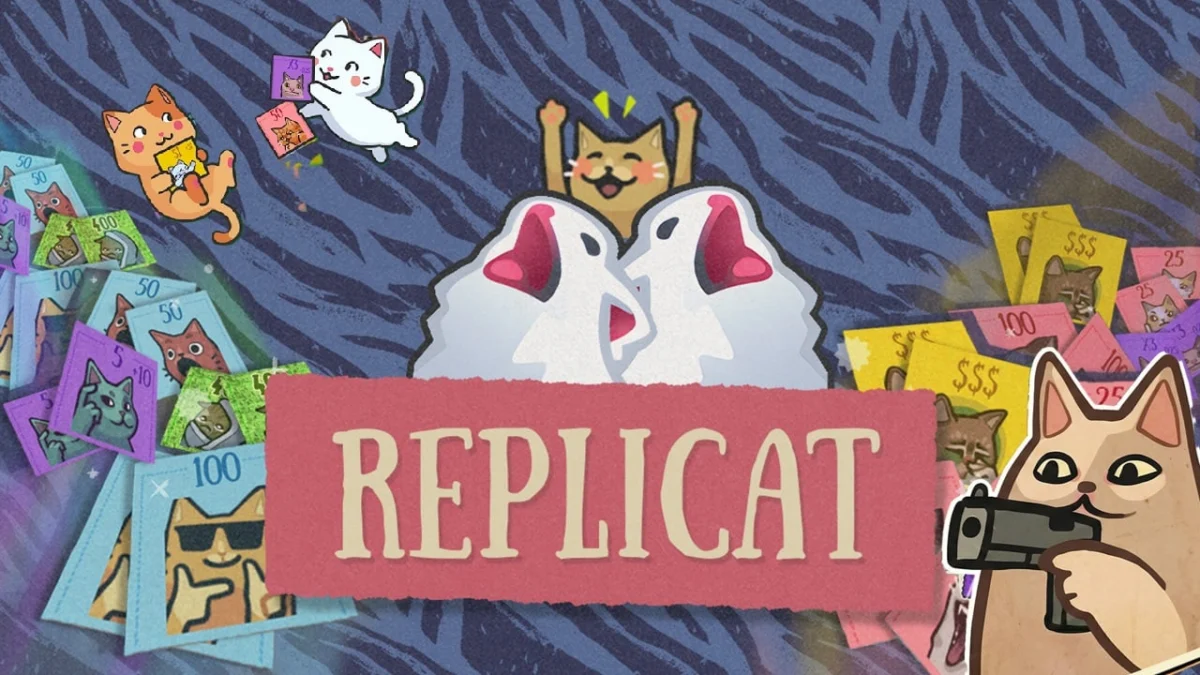
Unlike the often intricate and complex card systems found in titles like "Balatro," "Replicat" grounds its gameplay in the simple, universally understood action of flipping cards to match pairs. However, this seemingly straightforward premise quickly evolves through the introduction of roguelike elements such as "Curios" and "Essences," which fundamentally alter gameplay with each successive run. Players will burn cards to refine their decks, stack powerful effects, and ultimately push the boundaries of traditional memory matching into an expansive strategic challenge. With its adorable cat artwork, colorful presentation, and a charming nod to internet cat memes, "Replicat" aims to captivate both casual players and seasoned deckbuilder enthusiasts looking for a distinctive mobile experience.
The Evolution of a Classic: A Deep Dive into Replicat’s Mechanics
"Replicat" distinguishes itself by taking a beloved, albeit often simplistic, game format and infusing it with layers of strategic depth typically associated with roguelike deckbuilders. The core loop remains accessible: players reveal cards, striving to find matching pairs of feline characters to earn points and progress. Yet, this foundation is merely the starting point for a system designed for dynamic evolution and unexpected outcomes.
Reimagining Memory Matching
At its heart, "Replicat" is a game of recall. Players are presented with a grid of face-down cards and must use their memory to locate and match identical pairs of cats. This fundamental mechanic is universally understood and serves as an inviting entry point. However, the game cleverly subverts the predictability of traditional memory games by introducing persistent changes and strategic interventions. Each successful match contributes to a score, but the true challenge and fun emerge as players begin to manipulate the board and their deck, transforming simple memory tasks into calculated strategic plays. The initial runs might lean heavily on pure memory, but as the game progresses, players quickly discover that smart card management and synergistic power-ups are far more crucial for long-term success.
The Power of Curios and Essences
Central to "Replicat’s" roguelike identity are its "Curios" and "Essences." These elements serve as the primary drivers of run-to-run variation and player strategy, reminiscent of the game-altering power-ups seen in other acclaimed deckbuilders.
- Curios: These function similarly to "Jokers" in games like "Balatro," but with a crucial distinction: players are not limited in how many Curios they can acquire. This lack of restriction allows for increasingly complex and often wildly unpredictable builds. Curios introduce unique effects that can range from manipulating the board state, altering card values, providing bonus moves, or even completely changing the rules of matching. Their cumulative nature means that a player’s strategy can pivot dramatically based on the Curios they collect, leading to truly bespoke gameplay experiences in every session. The unlimited acquisition policy encourages experimentation and rewards creative synergy, ensuring that no two runs feel identical.
- Essences: In contrast to the temporary, run-specific nature of Curios, Essences offer permanent enhancements to cards. This mechanic introduces a meta-progression layer, allowing players to incrementally strengthen their foundational deck over time. By investing Essences, players can make their favorite cards more potent, more reliable, or imbue them with new properties. This system smartly bypasses the need for consumable items, streamlining the progression and focusing player choice on lasting upgrades. The interplay between temporary Curios and permanent Essences creates a compelling strategic loop, where short-term tactical decisions meet long-term strategic development.
Dynamic Deckbuilding and Strategic Depth
"Replicat" extends its strategic depth through nuanced deck manipulation. Players aren’t just matching cards; they’re actively shaping their entire experience. A key mechanic involves "burning cards," a process that allows players to remove unwanted or less effective cards from their deck. This vital deck-thinning strategy is a cornerstone of many successful deckbuilders, enabling players to fine-tune their draws, increase the consistency of powerful combos, and adapt their strategy to the challenges of a specific run.
Beyond burning cards, players can "stack effects" that gradually push the game’s rules away from basic memory matching. These effects, often derived from Curios or specific card interactions, might include revealing multiple cards at once, creating wild card substitutions, or even granting extra turns. The accumulation of these effects transforms the game from a simple recall exercise into a complex puzzle where players must manage resources, anticipate outcomes, and execute multi-step strategies. The longer a run persists, the more these strategic layers become paramount, rewarding foresight and adaptability over sheer memorization.
Unleashing Feline Abilities
The strategic toolkit available to players in "Replicat" is rich and varied, offering multiple avenues to manipulate the game board and overcome challenges. These abilities directly empower players to control the flow of the game, injecting skill and decision-making into what could otherwise be a purely luck-based endeavor.
- Reveal Extra Cards: This ability directly assists memory by temporarily exposing additional cards, giving players a broader overview of the board and aiding in locating matches.
- Keep Tiles Face-Up: A powerful strategic tool, this allows certain cards to remain visible after being flipped, removing the memory burden for those specific tiles and simplifying subsequent turns. This can be crucial for setting up larger combos or securing difficult matches.
- Use Wild Jokers: These versatile cards can complete any match, acting as a universal substitute. Strategic deployment of Wild Jokers can salvage difficult situations, complete high-value matches, or clear the board efficiently.
- Convert Failed Matches into Successful Ones: Perhaps one of the most intriguing abilities, this allows players to mitigate errors. A failed match, which would typically result in a loss of a turn or other penalty, can be retroactively transformed into a successful one, providing a safety net and rewarding clever resource management.
These abilities collectively ensure that memory, while still important, becomes just one facet of a broader strategic tapestry. The decision of when and how to deploy these powers becomes a critical element of success, shifting the gameplay from reactive matching to proactive board manipulation.
A Universe of Feline Variety: Replayability and Content
"Replicat" is designed with replayability at its core, offering a vast array of content and strategic pathways to ensure that each session feels fresh and engaging. The game doesn’t just promise variation; it delivers it through a meticulously crafted system of cards, curios, stages, and distinct gameplay styles.
Endless Builds and Strategic Pathways
One of the game’s most compelling features is the sheer diversity of build possibilities. Players are not funneled into a single optimal strategy; instead, they are encouraged to experiment and discover synergistic combinations that resonate with their playstyle.
- Extra Moves Builds: Focus on maximizing the number of actions per turn, allowing for rapid board clearing and high-score generation. This might involve Curios that grant additional flips or Essences that refund moves upon certain conditions.
- Passive Reveals Builds: Center around automatically revealing cards without expending actions. This lessens the memory burden significantly, allowing players to focus more on strategic matching and combo creation.
- Multiplier Chains Builds: Aim to stack bonus points and effects, turning small matches into explosive scoring opportunities. This often requires careful planning to sequence matches and activate cascading multipliers.
- Turn Control Builds: Emphasize manipulating the turn order, skipping opponent turns (if applicable in certain modes), or extending player turns to execute complex strategies.
This flexibility ensures that players can tailor their experience, whether they prefer an aggressive, high-scoring approach or a more controlled, analytical strategy. The constant discovery of new card and Curio interactions keeps the gameplay dynamic and rewarding.
The Chromatic Cats: Card Colors and Mechanics
"Replicat" incorporates a system of five distinct card colors, each imbued with its own unique set of mechanics. While the specific details of each color’s influence are left for players to discover, this system inherently creates strategic depth and encourages diverse deckbuilding. For instance:
- One color might focus on aggressive scoring, granting bonus points for rapid matches or chaining combos.
- Another could specialize in defensive capabilities, providing shields or ways to mitigate negative effects from boss modifiers.
- A third might lean into resource generation, producing extra moves, currency for Curios, or drawing additional cards.
- A fourth could focus on board manipulation, allowing players to rearrange tiles, swap card positions, or reveal hidden information.
- The fifth might introduce unique utility, such as special wild card properties or effects that trigger only under specific board conditions.
This chromatic system adds a layer of strategic choice before a run even begins, as players might choose a starter deck based on their preferred color mechanics, or adapt their strategy mid-run by prioritizing cards of a certain hue. It ensures that the core matching mechanic is constantly being reinterpreted through the lens of these distinct mechanical identities.
Vast Collections: Cards, Curios, and Starter Decks
The sheer volume of content available in "Replicat" is impressive for a mobile title, bolstering its replayability and strategic depth.
- Over 90 Cards: This extensive card pool ensures that players will constantly encounter new match types, abilities, and strategic possibilities. The variety prevents the game from becoming stale, as new combinations and synergies are always waiting to be discovered.
- Over 80 Curios: The robust collection of Curios guarantees that each run’s build will feel unique. With so many potential game-altering effects, players will consistently be challenged to adapt their strategy and find powerful new interactions. The combination of Curios can lead to truly game-breaking (in a fun way) synergies that define a run.
- 10 Starter Decks: Catering to players of all skill levels and preferences, these starter decks offer different initial strategic angles and difficulty levels. A beginner might choose a deck focused on ease of memory, while an experienced player might opt for one that rewards complex combo setups, providing an immediate entry point into varied playstyles.
Challenging Expeditions: Stages and Boss Modifiers
Progression in "Replicat" is structured through a series of increasingly difficult stages, culminating in encounters with unique boss modifiers that demand strategic adaptation.
- 21 Stages: This extensive campaign ensures a long and engaging single-player experience. Each stage likely introduces new card types, environmental hazards, or mechanical twists that keep players on their toes. The gradual increase in difficulty provides a satisfying challenge curve, preparing players for the later, more demanding encounters.
- Unique Boss Modifiers: At the end of certain stages, players will face bosses that don’t just increase difficulty through sheer numbers, but by introducing unique rule-bending modifiers. These could range from altering the visibility of cards, introducing negative effects on failed matches, changing the scoring system, or even requiring specific card types to be matched to defeat them. These modifiers force players to rethink their current build and adapt their strategy, preventing rote memorization and encouraging creative problem-solving.
The Art of Adorable Destruction: Visuals and Theme
Beyond its innovative gameplay mechanics, "Replicat" immediately distinguishes itself through its captivating visual presentation, centered around an irresistible feline theme. The game’s aesthetic is not merely decorative; it’s integral to its charm and broad appeal.
A Purr-fect Aesthetic
"Replicat" fully embraces its cat theme with an art style that is both "adorable" and "vibrant." The game features a colorful presentation that pops on mobile screens, utilizing a bright and engaging palette that makes the experience visually pleasing. Each cat card is individually illustrated with a distinct personality, ranging from mischievous kittens to regal felines, contributing to the game’s overall charm. The animations for flipping cards, making matches, and activating abilities are likely fluid and satisfying, enhancing the tactile experience of playing a card game on a touchscreen. This consistent and high-quality artistic direction makes "Replicat" not just fun to play, but also a joy to look at.
Internet Meme Integration
A particularly clever touch in "Replicat" is the inclusion of "cat cards inspired by internet memes." This element taps into a universal well of humor and relatability, instantly connecting with a vast audience familiar with the internet’s obsession with feline antics. Imagine matching cards featuring Grumpy Cat, a dramatic opera cat, or even the ubiquitous Nyan Cat. This integration adds a layer of whimsy and personality, making the cards feel more alive and recognizable. It’s a subtle yet effective way to inject contemporary culture into a classic game format, demonstrating the developers’ understanding of their audience and their willingness to infuse humor into the game’s fabric.
Audio Experience
While not explicitly detailed in the initial announcement, a game as visually charming as "Replicat" would undoubtedly benefit from a complementary audio experience. One can imagine a delightful soundscape featuring charming meows and purrs upon successful matches, satisfying card-flipping sounds, and perhaps a playful, upbeat soundtrack that maintains a lighthearted yet engaging atmosphere. Well-crafted sound effects for activating Curios, burning cards, and triggering special abilities would further enhance player feedback and immersion, rounding out the overall sensory experience of this feline-themed adventure.
Chronology of Development and Release
The journey of a mobile game from concept to global launch is often a testament to dedication and iterative design. While specific development milestones for "Replicat" are not publicly detailed, we can infer a typical trajectory for a title of this scope. Erabit Studio, with its experience in the mobile gaming market, likely embarked on "Replicat" with a clear vision: to create an accessible yet deep roguelike experience.
Development would have commenced with initial conceptualization and prototyping, exploring how to effectively blend memory matching with deckbuilding mechanics. This phase would involve extensive internal testing to refine the core loop of card flipping, matching, and the introduction of Curios and Essences. Given the complexity of balancing roguelike elements with a casual foundation, numerous iterations would have been necessary to ensure both challenge and fairness.
Following core gameplay solidification, attention would have turned to content generation – designing the 90+ cards, 80+ Curios, 5 card color mechanics, and the 21 stages with their unique boss modifiers. The art team would have simultaneously brought the adorable cat artwork to life, painstakingly illustrating each feline character and integrating the internet meme inspirations.
Prior to its global launch, "Replicat" likely underwent a period of closed alpha and beta testing, perhaps even a soft launch in specific regions. This crucial phase allows developers to gather real-world player feedback, identify bugs, and fine-tune game balance before a wider release. The decision to opt for a premium, one-time purchase model for $4.99 suggests confidence in the game’s content and replayability, aiming to attract players seeking a complete experience free from in-app purchases or predatory monetization. The official launch on the Google Play Store marks the culmination of this development cycle, making "Replicat" widely available to a global audience.
Supporting Data and Market Context
"Replicat" enters a mobile gaming market that is both highly competitive and increasingly sophisticated. Its strategic positioning within the roguelike deckbuilder genre, coupled with a premium monetization model, offers several points of interest for players and industry observers alike.
The Roguelike Deckbuilder Boom
The roguelike deckbuilder genre has experienced a significant surge in popularity over the past few years, largely popularized by PC and console hits like "Slay the Spire," "Monster Train," and most recently, "Balatro." These games have cultivated a dedicated following due to their deep strategic layers, immense replayability, and the satisfying progression of building increasingly powerful and often absurd card combinations. "Replicat" smartly taps into this trend by offering a mobile-first interpretation. While it explicitly states "Not Balatro-like complex decks," its integration of "Curios" akin to "Jokers" clearly positions it within this beloved subgenre, promising a similar sense of emergent strategy and unpredictable fun, but with a more accessible core mechanic. This allows "Replicat" to appeal to existing fans of the genre while simultaneously lowering the barrier to entry for newcomers.
Mobile Gaming Landscape and Premium Models
The mobile gaming market is largely dominated by free-to-play (F2P) titles that rely on in-app purchases (IAPs), subscriptions, or advertising for revenue. "Replicat’s" choice of a one-time premium purchase of $4.99 is a deliberate and increasingly welcomed strategy by a segment of the mobile gaming community. This model signals a commitment to a complete, uninterrupted gameplay experience, free from manipulative monetization tactics often associated with F2P games. Players are assured that all content is unlocked from the outset, and progression is based purely on skill and strategy, not spending. This premium approach resonates with players who value quality, depth, and a fair transaction, and it positions "Replicat" alongside other successful premium mobile titles that prioritize gameplay integrity over predatory monetization.
Erabit Studio’s Portfolio
While the news article doesn’t detail Erabit Studio’s full portfolio, their consistent output suggests a developer attuned to the mobile market’s demands. Creating a title like "Replicat" demonstrates an ambition to innovate within established genres and provide polished experiences. Their prior work, whatever it may be, would have provided the foundational experience in mobile optimization, user interface design, and community engagement necessary to launch a successful premium title in a competitive space. This track record lends credibility to "Replicat" as a carefully crafted and well-supported game.
Official Responses and Developer Insights
While specific quotes from Erabit Studio regarding "Replicat" were not provided in the original text, a professional journalistic piece would often seek out or infer the developer’s vision and philosophy behind such a release.
One could imagine a spokesperson from Erabit Studio expressing enthusiasm for bringing a fresh perspective to both memory games and the roguelike deckbuilder genre. They might emphasize their goal of creating a game that is "easy to learn but difficult to master," perfectly encapsulating the balance between the simple memory-matching core and the deep strategic layers introduced by Curios, Essences, and card abilities.
The developers would likely highlight their deliberate choice to make the game premium, stating a desire to offer a "complete and uncompromised experience" to players who value high-quality mobile gaming. They might articulate their design philosophy behind the unlimited Curio system, explaining that it was intended to foster unparalleled player creativity and emergent gameplay, moving beyond the predictable builds of other card games.
Furthermore, the team would undoubtedly express their delight in the game’s charming cat aesthetic and the integration of internet memes, seeing it as a way to connect with a broad audience and infuse the game with a unique personality. The design challenge, they might explain, was to blend this lighthearted visual style with genuinely deep and engaging gameplay, ensuring that "Replicat" appeals to both casual cat lovers and hardcore strategy enthusiasts alike. Their focus, ultimately, would be on player enjoyment and long-term engagement through varied content and rewarding progression.
Implications for Players and the Mobile Gaming Market
The launch of "Replicat" carries several implications for both its potential player base and the broader mobile gaming ecosystem. Its unique blend of genres and monetization model could set new benchmarks and influence future development trends.
A Fresh Take for Memory Game Enthusiasts
For players who grew up with or still enjoy classic memory-matching games, "Replicat" offers a much-needed evolutionary step. It takes the familiar comfort of finding pairs and elevates it with dynamic systems that prevent boredom and reward strategic thinking. This means that fans of the genre are no longer limited to simplistic, repetitive experiences but can now engage with a game that offers genuine depth, replayability, and a sense of progression. It challenges the notion that memory games must be purely casual, demonstrating how they can be fused with complex mechanics to create a rich, engaging experience.
Accessibility for Deckbuilder Newcomers
Conversely, "Replicat" serves as an excellent gateway for players curious about roguelike deckbuilders but intimidated by the complexity of titles like "Slay the Spire" or "Balatro." Its simple memory-matching core provides an intuitive starting point, gradually introducing deeper mechanics like Curios, Essences, and card burning. This gentle learning curve allows new players to grasp the fundamental concepts of deck optimization and synergistic builds without being overwhelmed by intricate rule sets or vast card pools from the outset. It demystifies the genre, making it approachable and enjoyable for a wider audience.
The Premium Mobile Game Renaissance
"Replicat’s" success as a premium title could further fuel the growing demand for high-quality, one-time purchase mobile games. In an era where many players are fatigued by aggressive monetization and pay-to-win mechanics, games that prioritize a complete and fair experience stand out. Should "Replicat" achieve significant commercial and critical success, it could encourage more developers to invest in premium models, fostering a more diverse and quality-driven mobile gaming landscape, moving away from the dominance of ad-supported or IAP-heavy F2P titles.
Future Content and Community Engagement
As a roguelike deckbuilder, "Replicat" is inherently poised for ongoing content updates. Players can anticipate potential expansions that introduce new card colors, additional Curios, more unique boss modifiers, and even new game modes. Erabit Studio will likely engage with its community, listening to feedback and using it to inform future development, ensuring the game remains fresh and relevant. The robust foundation of 90+ cards and 80+ Curios suggests a system designed for expansion, promising a long and rewarding life for this charming and strategically rich feline adventure.