

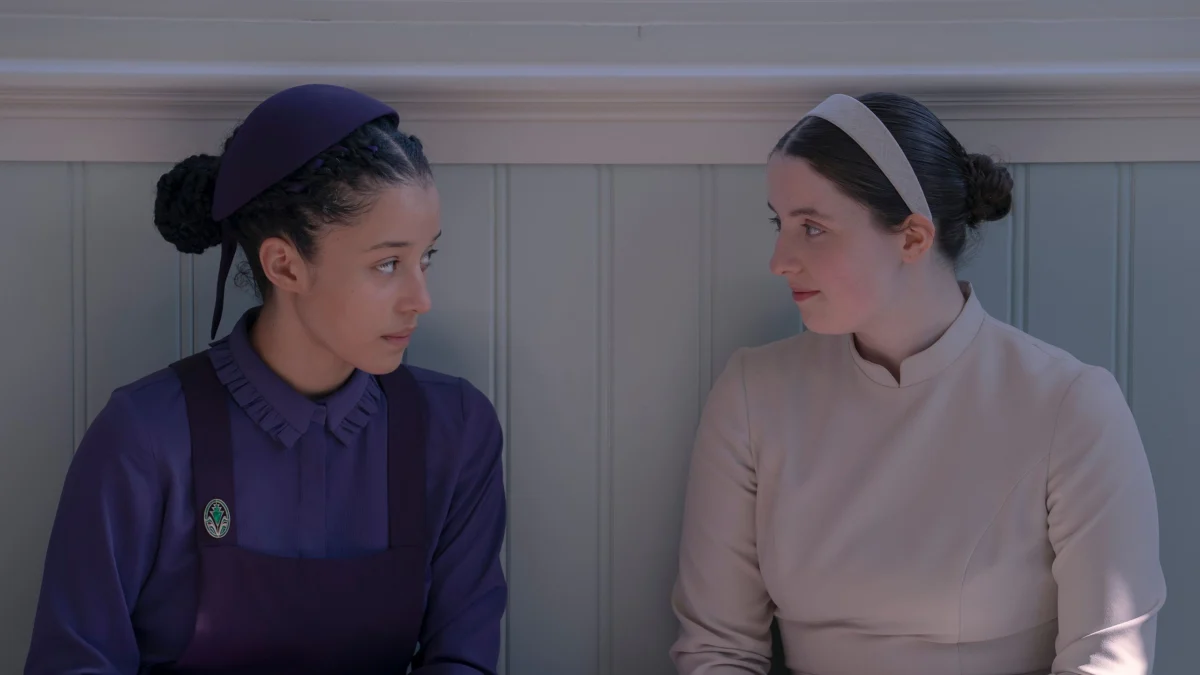
The television landscape was shaken to its core on May 22, 2026, as the latest episode of The Testaments delivered a narrative gut-punch that will likely define the series’ legacy. In a sequence described by critics as both harrowing and inevitable, the character of Becka—portrayed with haunting intensity by Mattea Conforti—committed an act of violence that has fundamentally altered the trajectory of the show.
As the dust settles on the shocking murder of Dr. Grove (Randal Edwards) and the subsequent betrayal felt by Agnes (Chase Infiniti), Conforti has stepped forward to offer a rare, in-depth look at the internal and external pressures that drove her character to such a dark extreme.
The Catalyst: A World Built on Conditioning
To understand Becka’s actions, one must first understand the suffocating reality of Gilead. Throughout the season, the series has meticulously explored the indoctrination of its youth. For Becka, the killing of Dr. Grove was not a momentary lapse in judgment or a crime of passion; it was, in her eyes, a supreme act of "divine justice."
Conforti explains that for a girl raised within the rigid, patriarchal hierarchies of Gilead, the line between murder and moral duty is dangerously blurred. "This is the justice that she’s been told is righteous," Conforti noted during an interview. "When men commit these acts—when they touch girls, when they aren’t being godly—they deserve to be punishable by death. We see that in episode one with the hanging bodies. This is what she has been told her entire life."
For the audience, the act may appear as a descent into madness, but for the character, it was an attempt to finally find her place within a society that has often left her feeling like an outsider. By eliminating a predator, Becka convinced herself she was finally fulfilling the "divine calling" that had been drilled into her since childhood.
Chronology of a Breakdown: From Dinner Table to Execution
The narrative buildup to the murder was a masterclass in slow-burn tension. The episode opened with a deceptively quiet dinner table scene, which served as the powder keg for the events that followed.
When Daisy leveled accusations of assault against Dr. Grove, Becka’s immediate reaction—a defensive, "Are you trying to ruin my life?"—was not born out of a desire to protect the predator, but rather a profound fear of the systemic instability that such an accusation would bring. At this juncture, Becka was still navigating the rocky waters of her own identity and her burgeoning, complex relationship with Agnes.
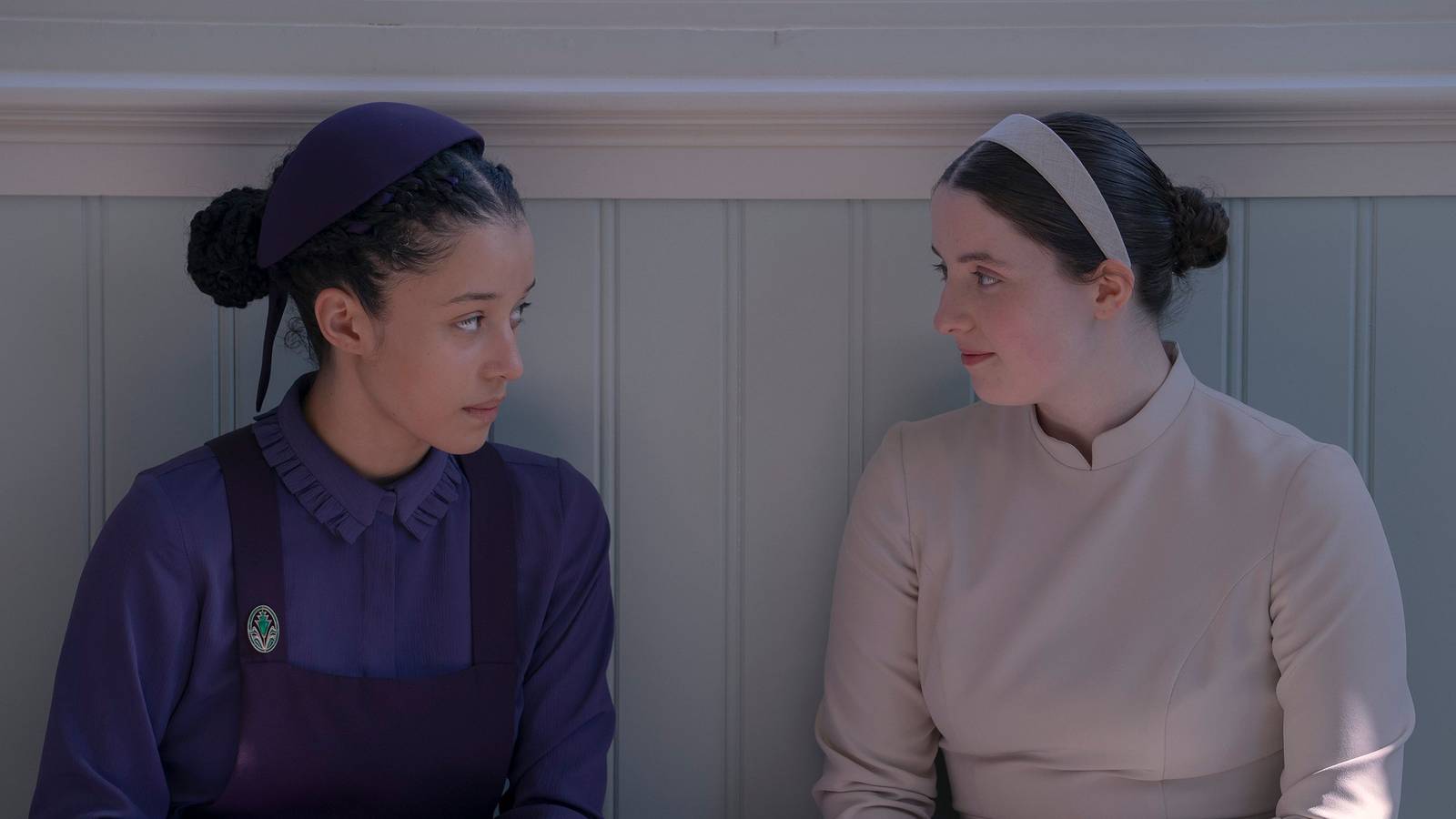
The turning point came when Agnes herself shared her truth, exposing the trauma inflicted upon her by her father. The realization hit home with devastating precision. "When she’s at that dinner table and she asks her father if he’s ever touched the Pearl Girl, and he denies it, she has her confirmation," Conforti explained. The subsequent silence in the room was, according to the actor, "deafening." It was the moment the "elephant in the room" could no longer be ignored, setting the stage for the violent resolution.
Behind the Lens: The Physical and Emotional Toll
The production of the episode’s climax was as grueling as the narrative arc itself. Filming the sequence where Becka is apprehended by The Eyes was a marathon of emotional output, lasting roughly 14 hours.
Conforti described the experience as one of the most physically and mentally demanding of her career. "I had no voice when we were filming that," the actor revealed. "It was just screaming and screaming and screaming. We had to do a lot of takes where I would either mouth my screams because I had no voice, or we’d be shooting at 3:00 or 4:00 in the morning, and I was just being carried by these really strong women."
This commitment to the role stemmed from a desire to deliver an authentic portrayal of a girl pushed to her absolute breaking point. Conforti sought a level of exhaustion that would translate through the screen, wanting to go home "mentally and physically fatigued" to ensure the gravity of the scene was felt by every viewer.
Supporting Data: The Complexity of the ‘Becka-Agnes’ Dynamic
Central to the tragedy is the bond between Becka and Agnes. Their relationship acts as the moral anchor of the show, making the betrayal—Agnes turning Becka over to The Eyes—all the more agonizing.
Conforti is quick to emphasize that despite the betrayal, Becka’s love for Agnes remains unshaken. "She would never blame Agnes for anything," Conforti stated. "She has so much love for her. I think she does feel that immediate sense of betrayal, but it’s a complicated, deep-seated love that goes beyond simple resentment."
This dynamic is further complicated by the political machinations of Gilead. Even as Becka sought a future where she could remain close to Agnes, she found herself caught in a web of shifting alliances. Her choice of Garth, for instance, was driven not by traditional romantic longing, but by a pragmatic need to keep her inner circle intact. It was an arrangement that offered her the most protection, highlighting the transactional nature of life for women in this dystopian nightmare.

Implications for the Future of Gilead
The repercussions of episode 9 are expected to ripple through the remainder of the season. Becka’s act of "divine justice" has brought her into the crosshairs of the state’s most powerful instruments of control: The Eyes.
For the audience, the question remains: Can the bond between Becka and Agnes survive the ultimate betrayal? And more importantly, does the killing of a predator within Gilead actually change anything, or does it simply provide the state with a new martyr or a new scapegoat?
The critical reception of Conforti’s performance has been overwhelmingly positive, with many praising the nuance she brings to a character who is simultaneously a victim of systemic indoctrination and a perpetrator of extreme violence. As the series moves forward, the character of Becka will likely remain a focal point for the show’s exploration of what happens to the human psyche when forced to survive in a world without mercy.
A Final Reflection on Character Growth
Looking back on the season, Conforti expresses gratitude for the opportunity to explore such a challenging character. When she first booked the role, she worked closely with showrunner Bruce Miller to define Becka’s hesitation and doubt—traits that are largely suppressed in the girls raised entirely within Gilead.
"The girls don’t necessarily experience doubt, given the fact that they’re so accustomed to Gilead and have no outside reference," Conforti noted. "Exploring that hesitation—the moments where she realizes the reality of her world doesn’t match the promise of it—was the most rewarding part of the journey."
As The Testaments continues, fans are left to wonder if the "divine calling" Becka felt will lead to her redemption, or if she has already sealed her fate. One thing is certain: the performance delivered in episode 9 has set a new high-water mark for the series, cementing its place as a harrowing, essential examination of power, loyalty, and the devastating cost of survival in a broken world.











No comments yet. Be the first to join the conversation!